Iaso Bio and Chinese Hematologic Oncology Experts Visit Unicamp Blood Center in Brazil to Explore Collaboration in Tumor Therapy

IASO Biotechnology
Cancer Treatment New Drug Developer


On September 23, Brazil time, prior to the annual meeting of the International Myeloma Society (IMS), Dr. Yongke Zhang, Chief Scientific Officer of IASO Bio, and authoritative experts in the field of Chinese hematological oncologyProfessor Qi Luogui from the Institute of Hematology, Chinese Academy of Medical Sciences,The First Affiliated Hospital of Zhejiang University School of MedicineProfessor Jie JinThe Chinese delegation visited the Blood Center of Unicamp (State University of Campinas) in Brazil, engaging in in-depth exchanges of experience with Brazilian experts and researchers, and actively exploring potential collaboration opportunities in developing innovative therapies for cancer patients.
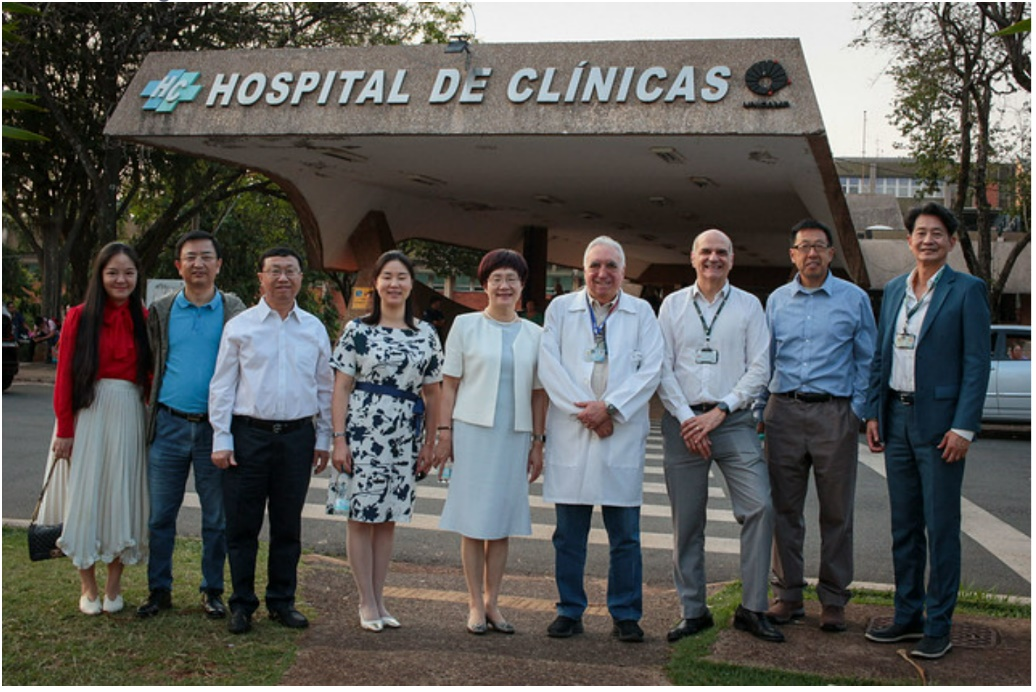
Chinese Delegation Poses for a Group Photo with Experts and Researchers from Brazil's Unicamp University
(Image source: CEPID CancerThera official website)
During the talks at the Unicamp Blood Center, the Brazilian side mainly introduced its progress in expanding the accessibility of innovative tumor therapies. For instance, CEPID CancerThera (the organizer of this visit) provided detailed insights into its Theranostic theranostic model under development, while the Ribeirão Preto Advanced Therapy Center (Nutera) presented on its CAR-T cell research. The Chinese side showed great interest in Brazil's advancements in this field, particularly in the area of hematological tumors.
The Chinese representative then highlighted the therapeutic advantages of CAR-T cell therapy — CAR-T therapy uses the immune cells from the bodies of cancer patients to treat hematologic malignancies, offering a new treatment option for patients who have failed first- to third-line treatments with proteasome inhibitors, immunomodulatory agents, and anti-CD38 monoclonal antibodies.
After the talks, the Chinese delegation visited the lymphocyte collection devices used for developing CAR-T cell therapy at the blood center, as well as the nuclear medicine services at Unicamp Hospital de Clínicas, and toured the advanced facilities equipped for patients in the recovery phase after bone marrow transplantation.。This visit has opened new doors for cooperation, and the Chinese delegation emphasizedThe Importance of Future Collaboration in the Fields of Biotechnology, Hospitals, or Research Institutions。
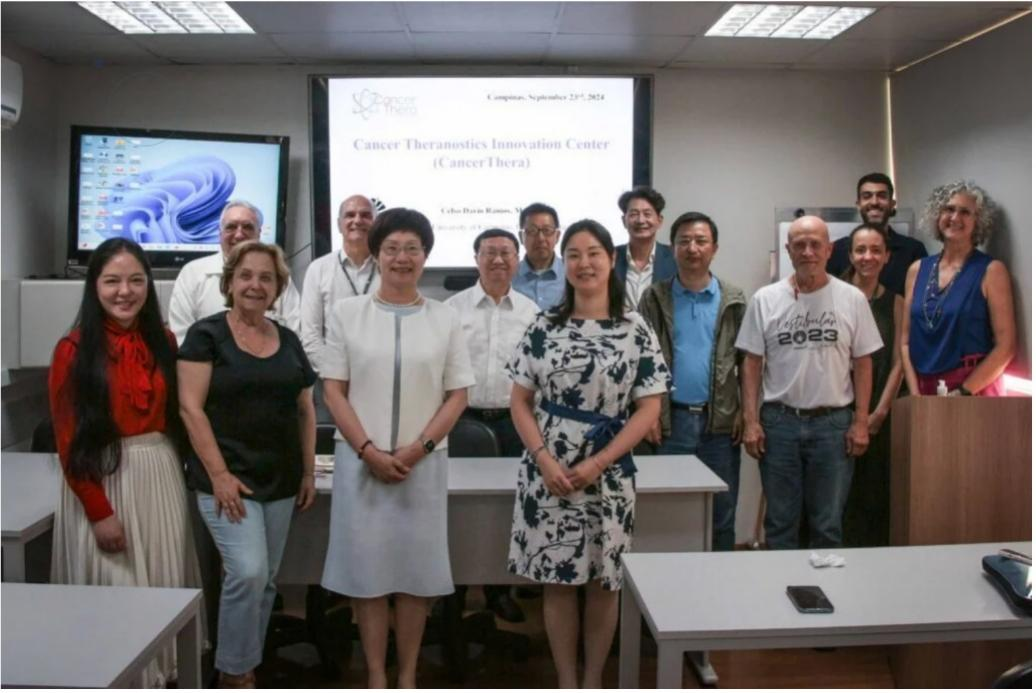
From left to right:In the front row are Claudia Wu (Shamano Group), Camen S. P. Lima (CancerThera), Jin Jie (First Affiliated Hospital of Zhejiang University School of Medicine), and Hao Mu (Blood Disease Hospital, Chinese Academy of Medical Sciences); in the middle row are Qiu Lugui (Blood Disease Hospital, Chinese Academy of Medical Sciences), Wang Wei (Shamano Group), and Francisco Pessine (Chemistry Institute/Unicamp); in the third row are Carmino A. de Souza (CancerThera), Celso D. Ramos (CancerThera), Zhang Yongke (IASO Bio), Li Li Min (Medical Sciences College/Unicamp), Maria Carolina S. Mendes (CancerThera), Bruno D. Benites (Hemocentro/Unicamp), and Elvira Correa (CancerThera).
(Image source: CEPID CancerThera official website)
"Since half of the members of the Chinese delegation are hematological oncology experts, the delegation's greatest interest lies in understanding our advancements in the CAR-T field."Carmino Antonio de Souza, Ph.D., Brazilian Hemato-Oncologist, Professor at the Faculty of Medical Sciences, Unicamp, and Researcher at RIDC CancerTheraCommented.
"We highly value our relationship with Brazil, and we have a long history of cooperation in multiple fields."Now, we are working hard to bring the product independently developed by IASO Bio here. Our goal is to deliver this new CAR-T therapy to more patients.”Dr. Yongke Zhang, Chief Scientific Officer of IASO BioRepresentation.
IASO Bio is committed to bringing curable and accessible CAR-T therapies to patients in China and around the world. At the same time, it is actively exploring innovative cooperation models with global partners from research, technology, clinical, and commercialization fields to accelerate the broader clinical application of innovative therapies such as CAR-T.
(This news is sourced from the CEPID CancerThera official website)