

Breaking Import Monopolies and Surging to a RMB 330B Valuation: How China's Pharma Leader Was Built
Hengrui Pharmaceutical
Chemical Drug Manufacturer
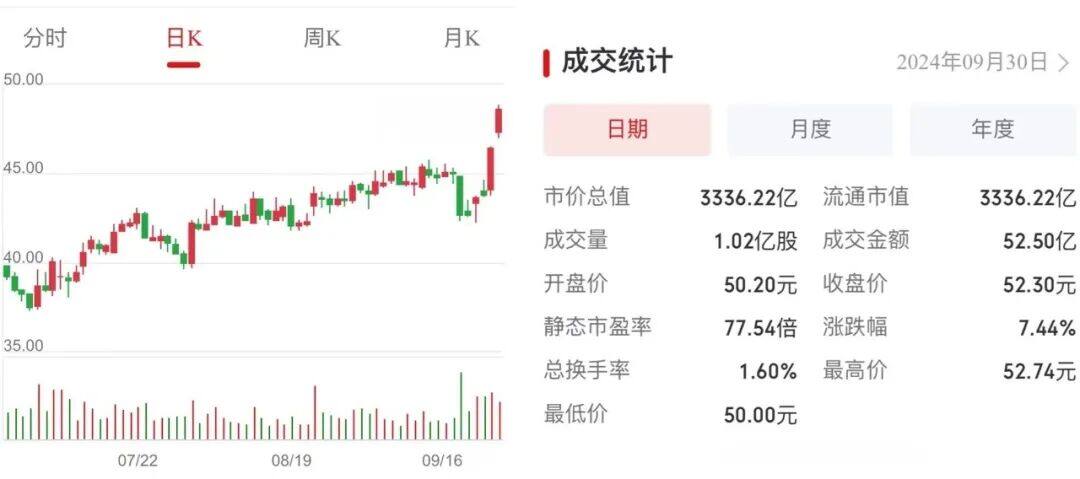
Recently, Hengrui Pharmaceutical closed with a market value of 333.6 billion yuan, reclaiming the 300 billion yuan mark.
Recently, Yige's return has been very impressive.
On the 21st of last month, a record-breaking semi-annual report was released.Revenue of 13.601 billion yuan, a year-on-year increase of 21.78%; net profit of 3.432 billion yuan, a year-on-year surge of 48.67%. [1];On the 27th, Hengrui Pharmaceutical announced the launch of the first innovative drug in China for autoimmune diseases, breaking the monopoly of imported drugs for psoriasis patients. [2]。
As other competitors only reach a fraction of its market valueChina "Medical"Brother Medicine", in the past three years, Hengrui has faced survival challenges——
Sales of generic drugs plummeted, with market value dropping from a peak of 600 billion to a bottom, evaporating by 70% at one point. After lingering at the bottom for three years, the market once believed that Hengrui Pharmaceutical could not survive the winter.
At this moment, BGM seems to be playing in the distance:
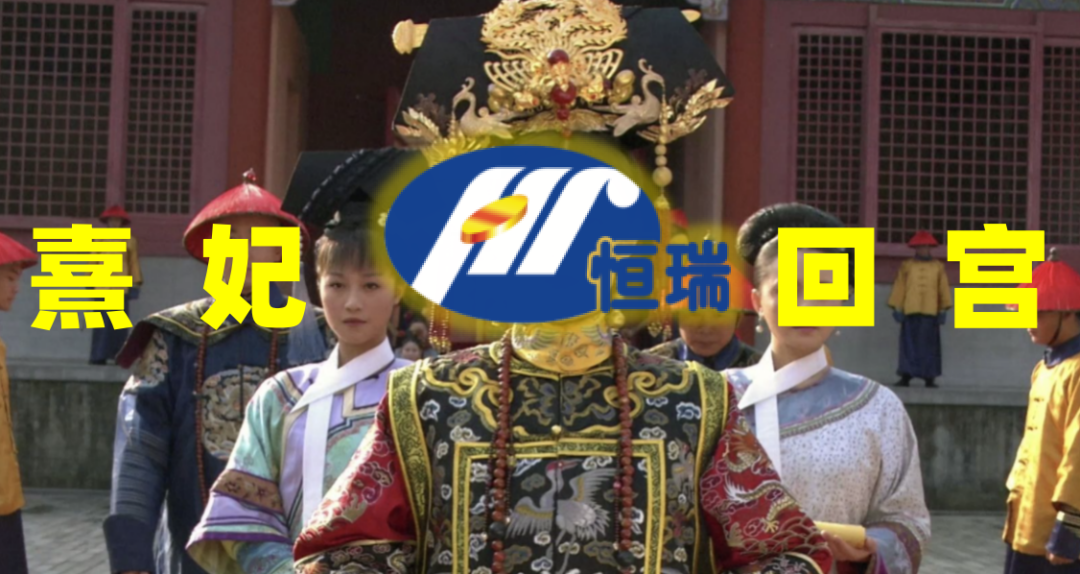
Source of the image:Homemade
Niu Hulu · Hengrui
It is said that to understand China's pharmaceutical industry, one cannot overlook Hengrui, the epitome of a traditional Chinese pharmaceutical company that rose through imitation and moved towards innovation.
In the field of innovative drugs, Chinese companies have been playing catch-up for a long time. Around 2015, the number of pharmaceutical companies in China was about 5,000, and out of the existing 190,000 drug approval numbers, over 95% were for generic drugs. [3]。
The History of Hengrui's Rise: Imitation as the Backbone.
"During the 'Lianyungang Pharmaceutical Factory' period, innovation began in a situation that was almost unsustainable. The factory director decided to produce drugs that 'large pharmaceutical factories were unwilling to make, and small pharmaceutical factories couldn't make.' From then on, Hengrui Pharmaceutical started continuous development beginning with the cancer chemotherapy drug etoposide."From focusing on first-to-market generic drugs to high-end generic drugs, achieving import substitution.
But as the centralized procurement of generic drugs began, the value of this model plummeted rapidly, becoming increasingly apparent over time.Sales of eight varieties in the fifth batch of national procurement fell by 88%, directly causing a dual decline in revenue and net profit. The stock price also plummeted, with a drop of more than 70% at one point.
This semi-annual report is impressive overall, but the downward trend in the revenue of generic drugs has not changed.
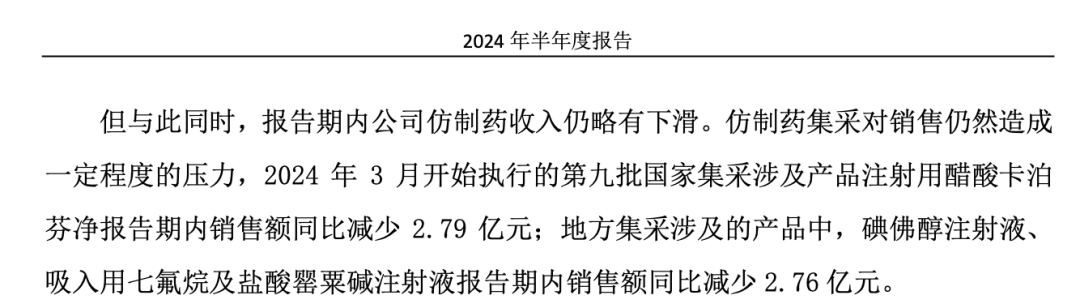
Source: Reference 1
The "fast-follow" strategy once secured a stable market for Hengrui Pharmaceutical, gradually shaping its experience in focusing on large therapeutic categories. Having sustained Hengrui and numerous Chinese pharmaceutical companies for over a decade, this approach has now reached its limit. What’s next?
There are two types of innovation: one is following, competing in the existing market, and the other is pioneering, exploring new markets.What is affected by the centralized procurement is actually the first type.
Therefore, Hengrui Pharmaceutical did not hesitate and decisively switched to another pre-prepared plan.
In the year 2000 when it went public, Hengrui Pharmaceutical invested a total of 350 million yuan to establish an innovative drug research and development center in Shanghai. In June 2011, Airexib was approved. This Class 1.1 innovative drug, which took 14 years of independent research and development, marked the beginning of Hengrui Pharmaceutical's era of innovative drugs.
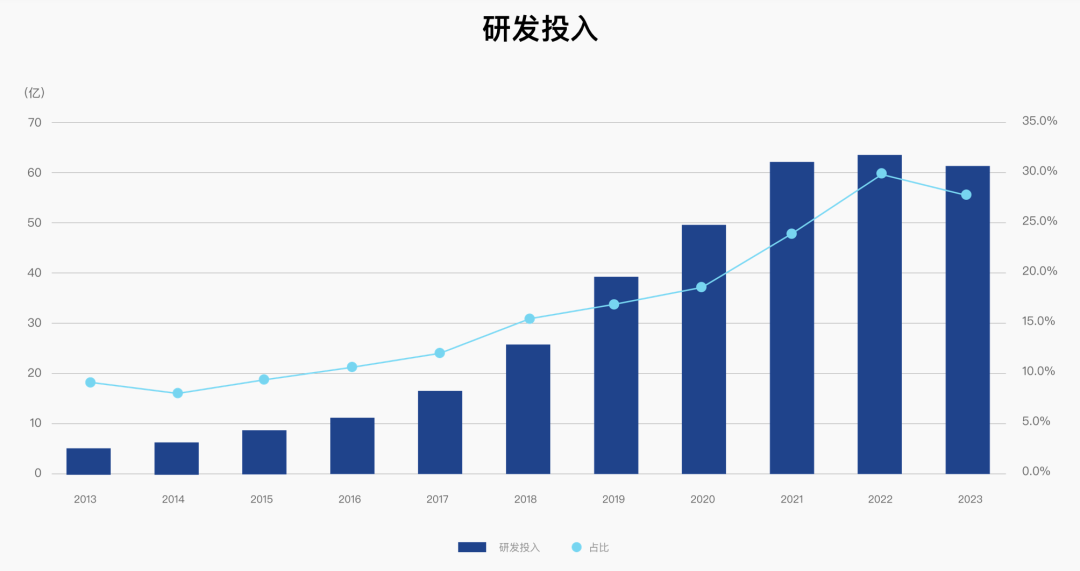
Thereafter, Hengrui's R&D expenses increased from 400 million yuan to 6.15 billion yuan in 2023.The investment proportion increased from about 5% to nearly 30% at its peak.
Source: Hengrui official website
Large-scale investments have reaped rewards after 2018, with more than two new drugs approved each year, and the revenue from innovative drugs has risen accordingly.
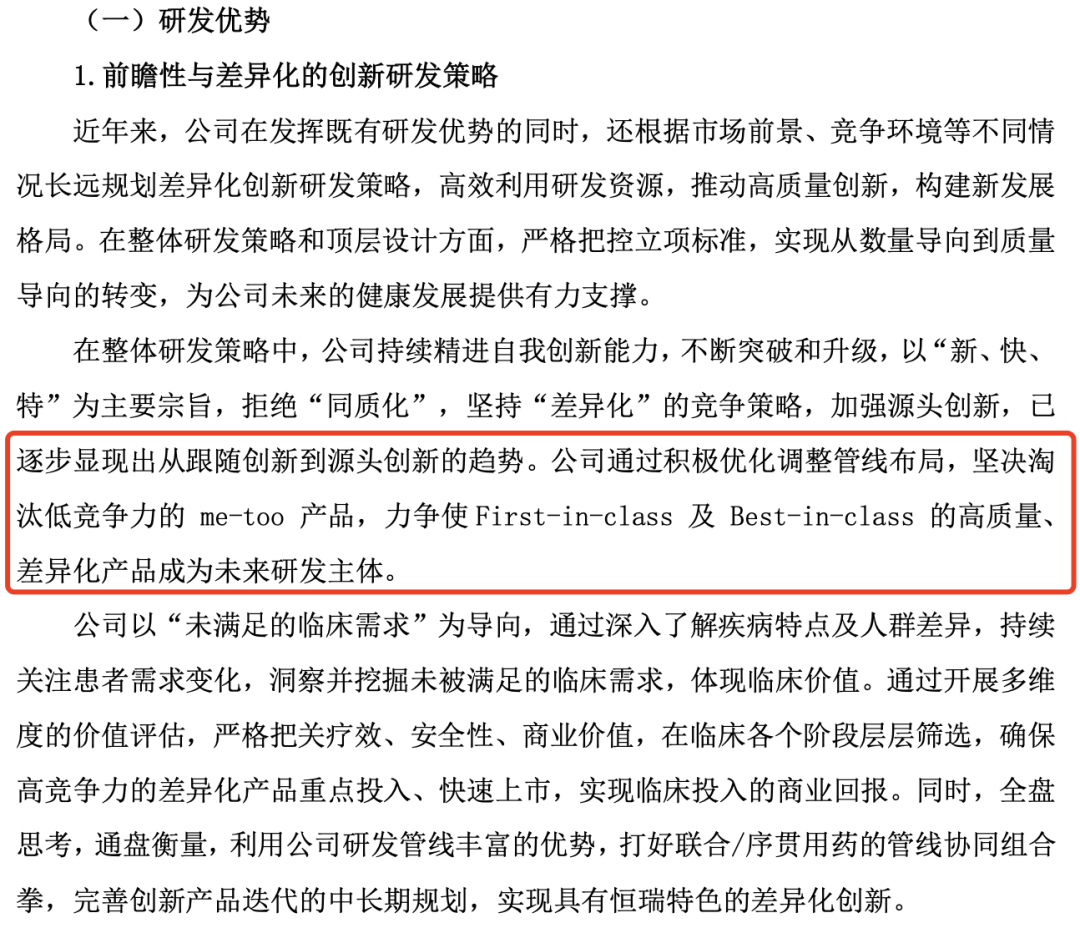
We all know that large enterprises are slow to change course and tend to cling to models that have already been validated in the past.In the case of Hengrui Pharmaceutical, although traces can still be seen of its innovative achievements rarely appearing in cutting-edge fields, with more focus on large-category drugs overseas that have already been validated, it has long begun to change course.
Source: Reference 1
Today, the truth is finally revealed.
Transformation, at a Watershed
Hengrui Pharmaceutical's historic best half-year report this time includes a one-time payment.
The semi-annual report included the upfront payment of 1.6 billion euros (approximately 1.27 billion yuan) from a major innovative drug overseas licensing deal confirmed last year.
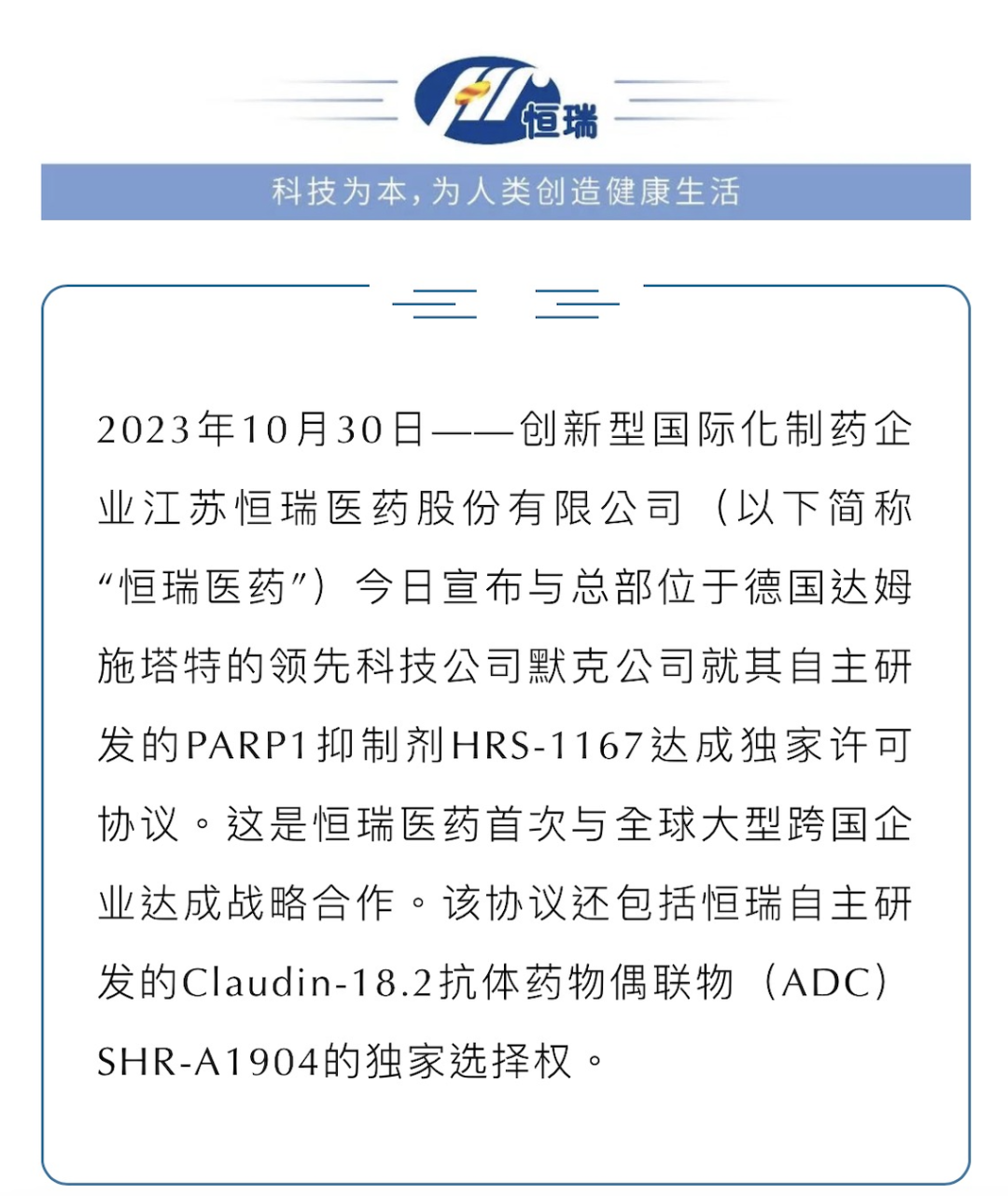
On October 30 last year, Hengrui Pharmaceutical granted a paid license for two Class 1 new drugs to Merck KGaA. In addition to the upfront payment included in the first half of the year's financial report, there are also technology transfer fees, exercise fees, and milestone payments amounting to up to 90 million euros. Merck will also pay Hengrui Pharmaceutical sales royalties of up to double-digit percentages. [4]。
Source: Reference 4
So, can this one-time huge income of Hengrui help alleviate short-term financial pressure and indicate the success of Hengrui's transformation? Is the return of Brother Yi secure?
This will depend on the results of other research and development.
In the first half of this year, Hengrui Pharmaceutical had 3 innovative drugs approved, increasing the total number of marketed Class 1 innovative drugs to 16; it has cumulatively applied for 2,527 invention patents, including 691 PCT patents, and owns 585 valid authorized invention patents in China, as well as 705 authorized patents in foreign countries such as Europe, the US, and Japan.
Although Hengrui Pharmaceutical has been in a downturn since 2021, the revenue from its innovative drug business has steadily increased, contrary to the company's bleak performance and stock price. In the past three years, the revenues were 5.207 billion yuan, 8.116 billion yuan, and 10.637 billion yuan respectively, accounting for 39.15%, 38.15%, and 46.61% of the total revenue during the same period.
And facing the overseas market where more money can be earned, Hengrui Pharmaceutical also displayed its top-dog demeanor in the first half of the year.
Innovative Drugs Going Global: One direct model is "building ships to sail overseas," meaning local pharmaceutical companies independently conduct clinical trials abroad, apply for market approval, and open up markets on their own. This approach is straightforward, and all profits belong to the company itself, but it requires substantial resources and rich international experience.
At present, Chinese pharmaceutical companies going global are still in the exploratory stage. Therefore, the vast majority of them are not selling drugs directly but rather the "pipelines" of new drugs under research. This is commonly referred to as "going global by borrowing a ship," meaning completing development and commercialization through transactions by leveraging the mature platforms of partners.
And at this moment, Hengrui Pharmaceutical has once again presented an "innovation" example.
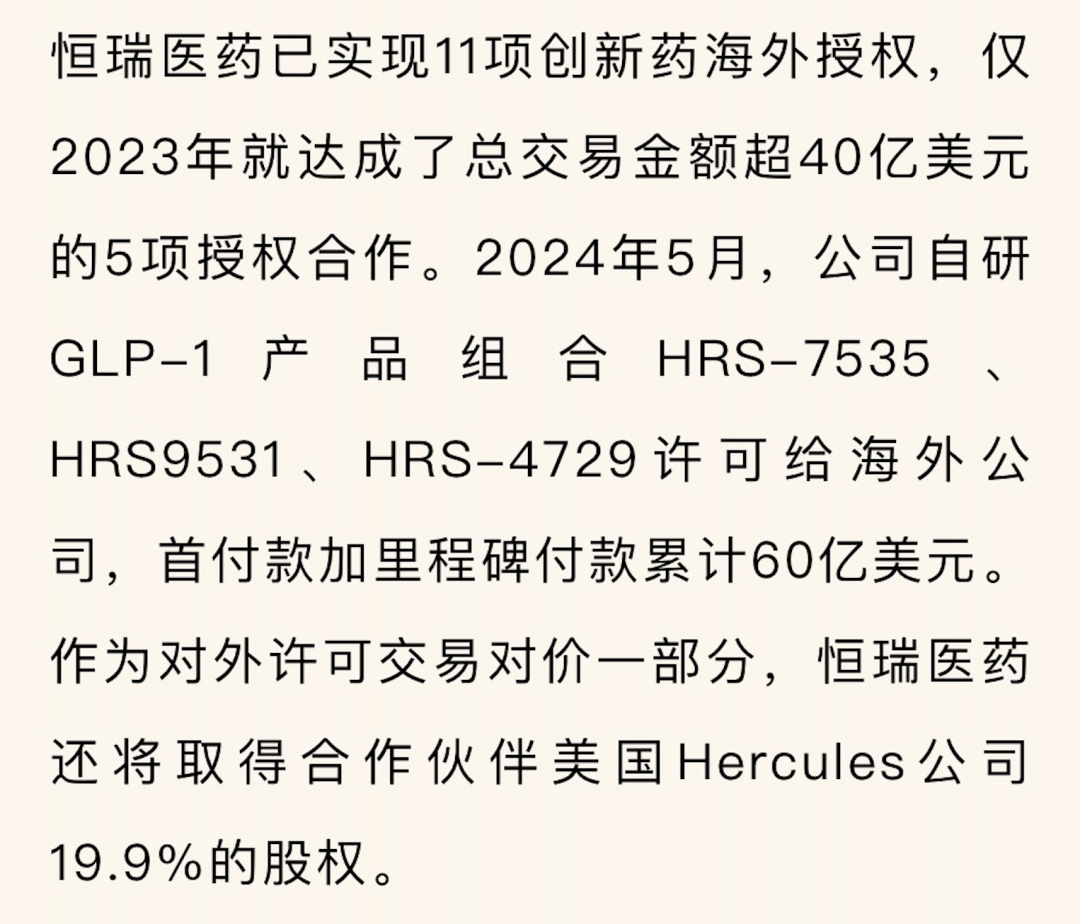
On May 16, Hengrui Pharmaceutical licensed its GLP-1 series of innovative drugs to U.S.-based Hercules for a total amount of up to $6 billion, with the $110 million upfront payment expected to be recognized in the second half of the year.
What is special is that Hengrui Pharmaceutical obtained 19.9% of the equity in the transaction target. [5]。
Source: Reference 5
Though it may seem like merely a change in the payment and profit model, in fact, Hengrui Pharmaceutical can directly participate in overseas research and development as well as commercialization, gain a certain degree of influence in decision-making, and secure a share in both operational profit distribution and capital gains.
This presents an opportunity to turn overseas markets into a home ground, acting as a transitional form between "borrowing a ship to go global" and "building a ship to go global," and is likely to be an important step in eventually becoming a major player on the high seas.
The proportion of innovative drugs in the company's total revenue has approached 50%, nearly equal to that of generic drugs.
Hengrui Pharmaceutical's Transition: A Watershed Moment.
Average 300,000 per person, pledge to conquer new territories
Indeed, Hengrui Pharmaceutical has truly demonstrated the style of the "leading pharmaceutical company" returning, but in the innovative and globalized fields it is transitioning into, there are also top players.
BeiGene, known in the industry as the "Big Brother of Innovative Drugs,"Revenue Breaks Through the 10 Billion Yuan Mark in Half a Year, Achieving 11.996 Billion Yuan, a Year-on-Year Increase of 65.4%; Net Loss Attributable to Shareholders of 2.877 Billion Yuan, Narrowing by 45% Year-on-Year——After Years of Losses in R&D, BeiGene Finally Sees the Dawn of Profitability [6]。
Similarly, with a brilliant semi-annual report, Fosun PharmaThe export of biosimilars is in full swing, with some reports dubbing them the "Globalization Leader."
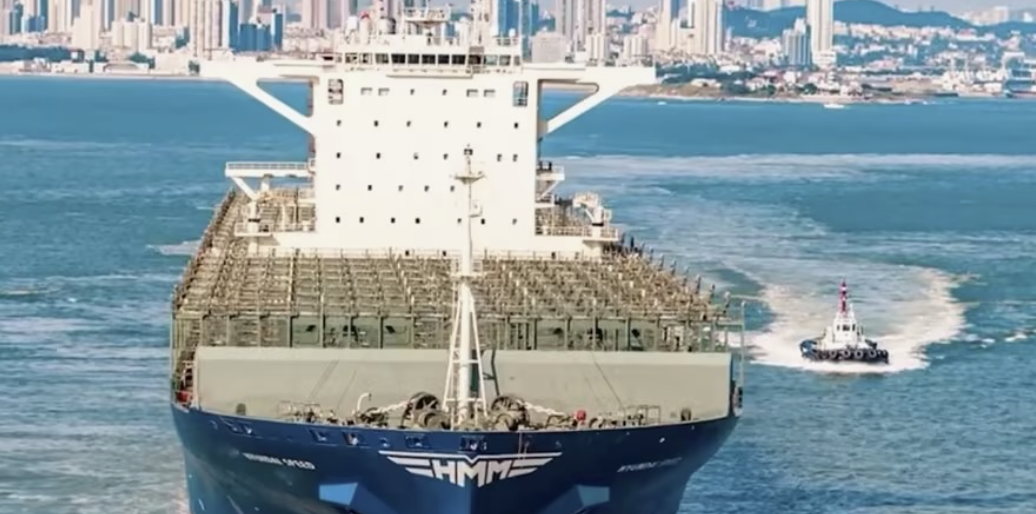
The competition in the innovative drug blue ocean is like a naval battle. The younger innovative pharmaceutical companies have already become well-equipped, highly agile destroyers. However, although aircraft carriers are slow to turn, they also have their own "massive" advantages.
Source: Hengrui Official Website
First, Hengrui Pharmaceutical remains the company with the strongest clinical execution capability in China. Even if its pipeline enters clinical trials later, it can still catch up and surpass others due to its astonishing clinical execution ability. For example, the PCSK9 monoclonal antibody took only 62 months from the investigational application to the marketing submission by Hengrui, much faster than companies that started earlier.
On the other hand, it is well known that drug development has three "10s": 10 years of research and development, an investment of 1 billion US dollars, and a 10% success rate in clinical trials.Profit growth driven by revenue is generally considered to better represent strength.
But using this to question Hengrui is like using a small weight to challenge a much heavier one ——Hengrui's innovation also comes with quantity.
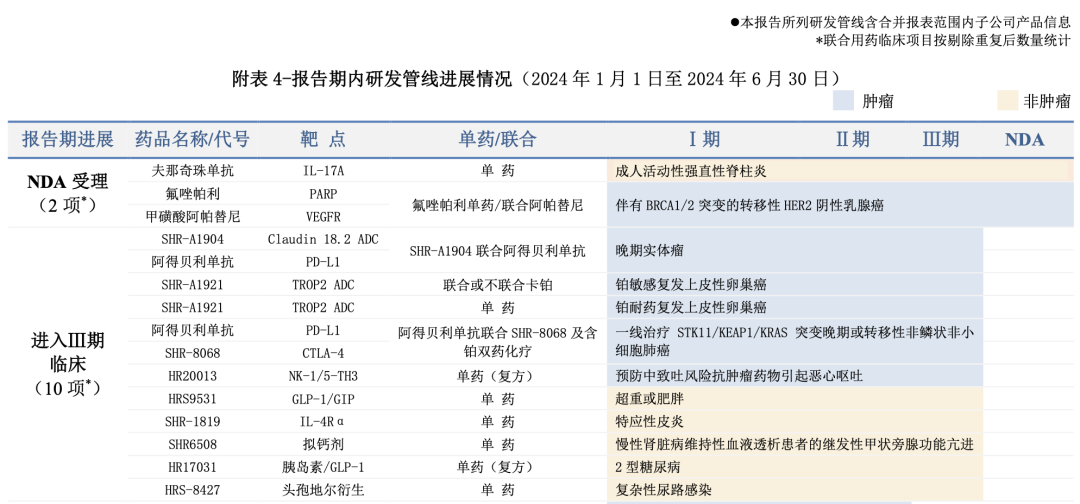
Hengrui Pharmaceutical's R&D pipeline is rich and well-structured, obtaining 57 clinical trial approvals for innovative drugs in the first half of the year, advancing 10 to Phase III, 20 to Phase II, and 19 to Phase I, with over 90 currently in clinical development and more than 300 clinical trials being conducted both in China and internationally. [1]。
Source: Reference 1
According to Clinicaltrial data, AstraZeneca once initiated the most clinical trials in a single month during the first four months of this year, with Hengrui Pharmaceutical tying for the highest total number.Hengrui Pharmaceutical's R&D investment continues to increase, reaching 3.037 billion yuan in the first half of the year, accounting for 22.34% of total revenue, a year-on-year increase of 30.3%. [1]。
Continuously intensifying R&D efforts is Hengrui Pharmaceutical's primary method to solidify its position in the innovative drug sector.This month, Hengrui Pharmaceutical has introduced a stunning "employee stock ownership plan," which is equivalent to issuing a "military order" in the innovative drug sector.
The PlanActually, it isThe reason why employees voluntarily purchase shares can be considered a significant incentive is the affordable subscription price, as long as$21.2/share。
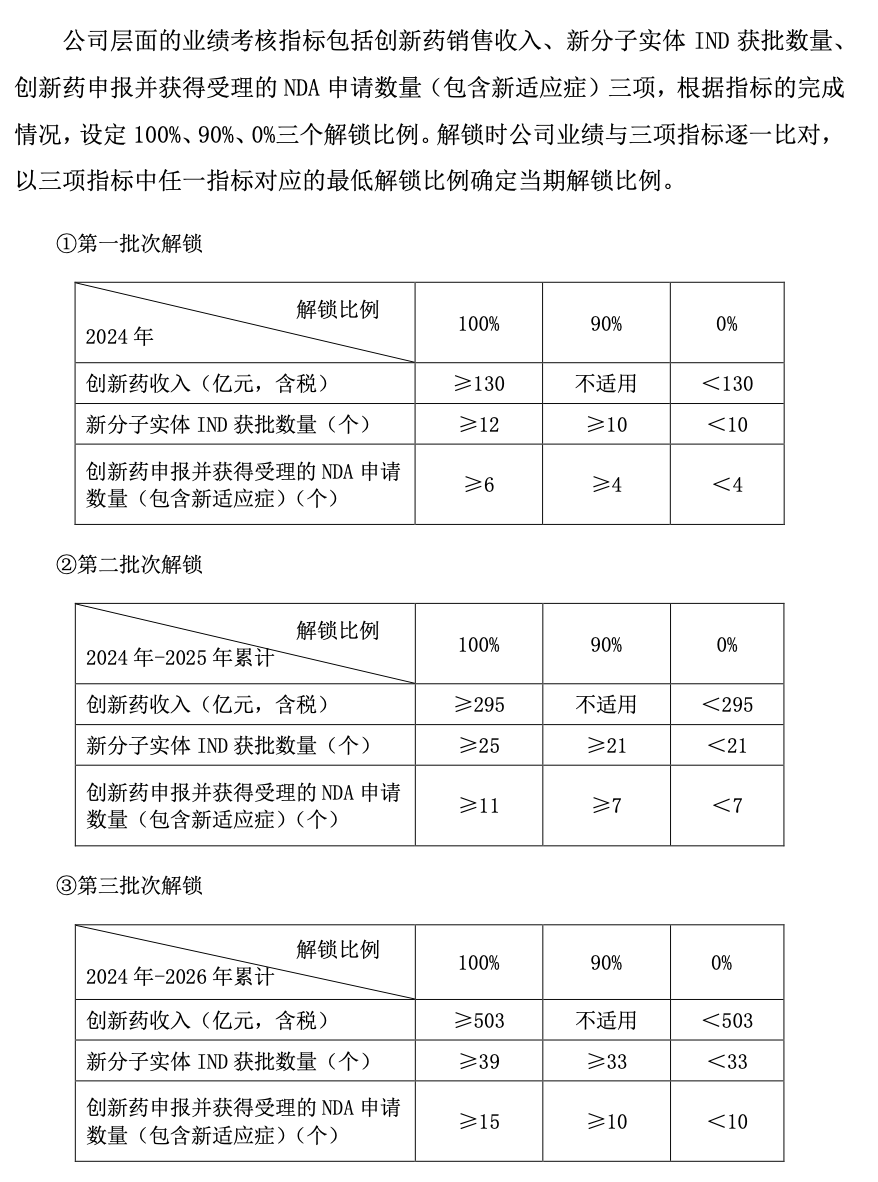
Set goals for the innovative drug field,Including innovative drug sales revenue, the number of new molecular entity IND approvals, and the number of innovative drug NDA submissions accepted (including new indications).
Among which, the revenue from innovative drugs is the core indicator.The target is to achieve an annual growth rate of over 26% in the next two years, with innovative drug sales breaking through 20 billion yuan by 2026, and the cumulative sales target over three years exceeding 50.3 billion yuan.
Set three unlocking ratios for the target plan, whereRevenue from innovative drugs is not subject to 90% unlocking, which can be described as "do or die."」。
Source of the image:Data 7
According to the closing price of Hengrui today,12.2 million shares allocated to1,203 people (91.3% are employees other than senior management),The average benefit per person is about 300,000 yuan. The premise of receiving this money is the achievement of the innovative drug strategy.
A strong heart never grows old, and its ambition is commendable. What remains to be seen is whether, after the giant ship changes course, its substantial foundation can withstand the massive waves of the distant blue ocean.