Source: MedRobot; Editor: Seven Kite
Reprint Requirements: Please indicate the source of the article at the beginning of the text, and you can reprint it directly.
Recently,Carl Zeiss MeditecRelease NewKinevo 900 S Robotic Surgical Microscope System,An upgraded version of the Kinevo 900 platform introduced by Carl Zeiss in 2017,For Neurosurgical Procedures。
The system is characterized by excellent digital visualization, intelligent collaboration functions, and interconnected technology, aiming to enhance the precision and efficiency of complex neurosurgical procedures while also being applicable to other surgical fields.
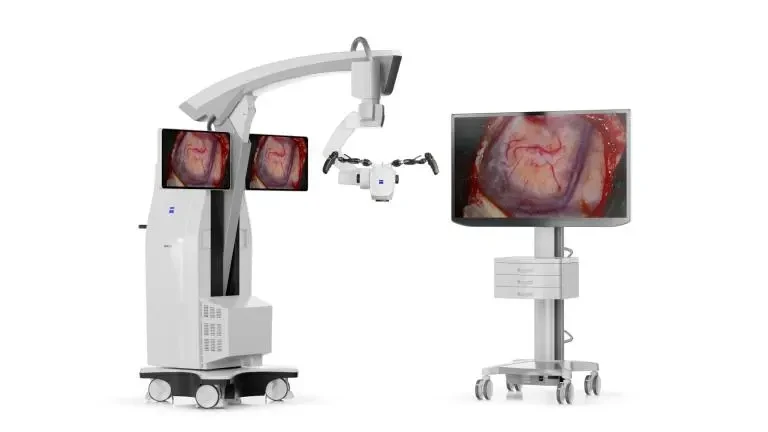
▲Kinevo 900 S
# Product Introduction
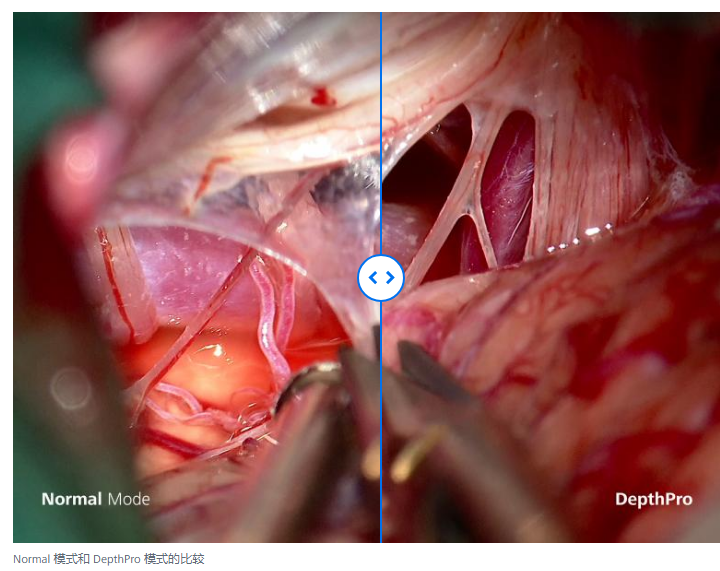
(1)The Highest Standard of Digital VisualizationKinevo 900 S is equipped withAdvanced 4K 3D Digital Imaging Technology, which can provide the highest standard of digital visualization. With the most cutting-edge technology, its enhanced 4K camera can precisely display clearer detail lines, higher resolution, and richer colors.At the same time, its newly launched DepthPro mode further enhances depth of field selection and optimizes field of view performance during surgery.The hybrid visualization design of the system ensures the continuity of the surgical process.Greatly improved the smoothness and comfort of the surgical operation.Each member of the surgical team can receive the same high-definition 3D video images as the lead surgeon. This means that students and assistants, even when operating through the eyepiece, are able to clearly see every step of the surgery on an external monitor, fully synchronized with the lead surgeon’s field of view.
(II) AI Automation FunctionKinevo 900 S is equipped withAI-supported automation features, including the PointLock and PositionMemory positioning systems, as well as the AutoCenter automatic centering function, which can precisely place the surgical area at the center of the field of view, further optimizing the illumination and visualization effects of the surgery.Carl Zeiss AG also provides a wealth of supporting services through digital platforms, such as the ZEISS Surgical Cloud and ZEISS Live Streaming functions, facilitating real-time sharing of clinical cases, data management, and educational collaboration.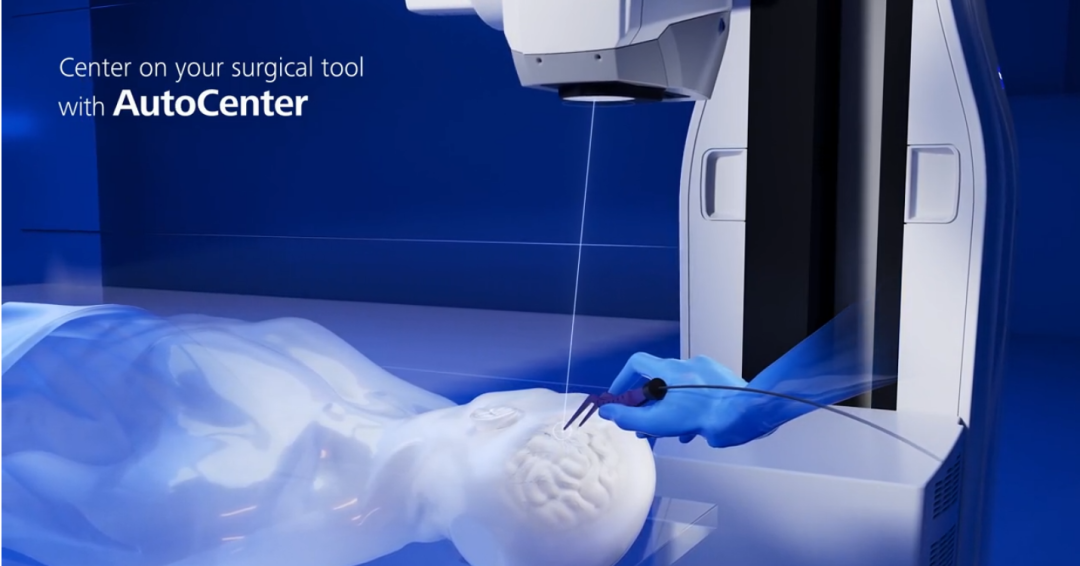
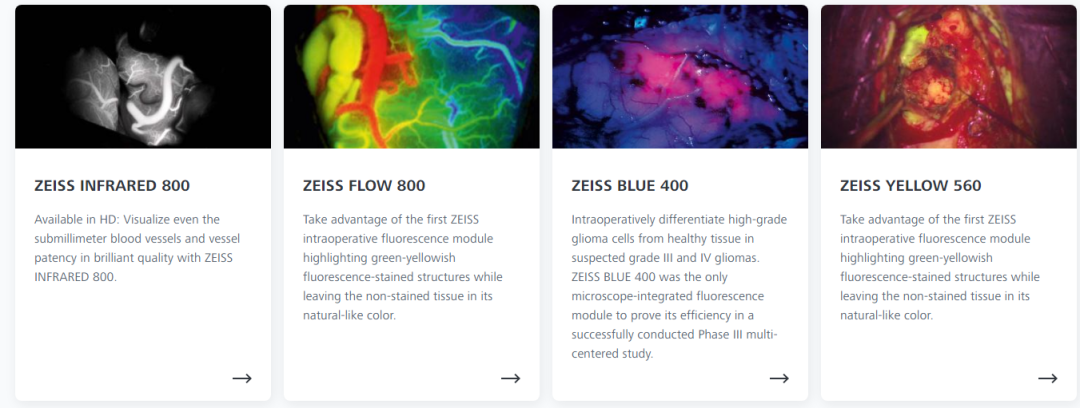
(III)Fluorescence Imaging Module UpdateKinevo 900 S has also updated its fluorescence imaging module, from the previous Blue 400 to Blue 400 S, aiming to help surgeons more accurately identify and differentiate various tissue structures during surgery.It is reported that Blue 400 SBy combining fluorescence and white light imaging technologies, particularly suitable for observing tissues associated with high-grade gliomas (such as Grade III and IV gliomas).The key advantage lies in its high-quality imaging capabilities, particularly in the visualization of non-fluorescent tissues, with effects close to those of white light.。This imaging mode reduces the frequent switching between fluorescence and white light modes, allowing surgeons to more continuously and intuitively identify tumors and the surrounding normal tissue during the procedure.In addition,Kinevo 900 S also supports other fluorescence module options from Carl Zeiss., such as Infrared 800, Flow 800, Blue 400, Yellow 560, etc., each module represents different fluorescence imaging technologies and applications, capable of meeting the needs of various surgical procedures.- Infrared 800:Mainly used for vascular imaging and monitoring, helping surgeons clearly visualize blood vessels and blood flow through near-infrared fluorescence imaging technology. It is commonly used in cardiovascular surgeries and tumor resection procedures.
- Flow 800:Focused on dynamic blood flow monitoring, it can evaluate blood flow conditions in real time, suitable for surgeries requiring blood flow change monitoring, helping surgeons manage surgical risks more effectively.
- Blue 400:Mainly used in neurosurgical procedures, providing high-contrast visualization of tumors and their boundaries to assist surgeons in making more precise decisions during surgery.
- Yellow 560:Used for tumor identification and visualization, helping to identify specific types of tumor tissue through its specific fluorescent wavelength, suitable for various surgical applications.
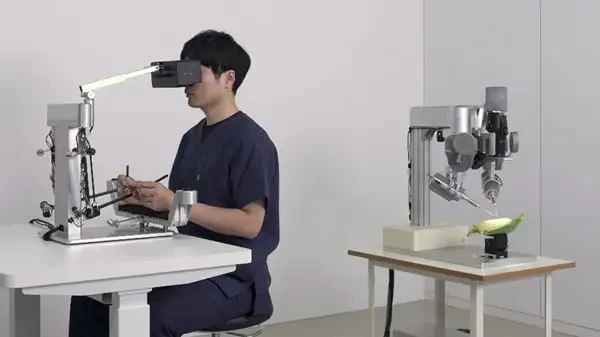
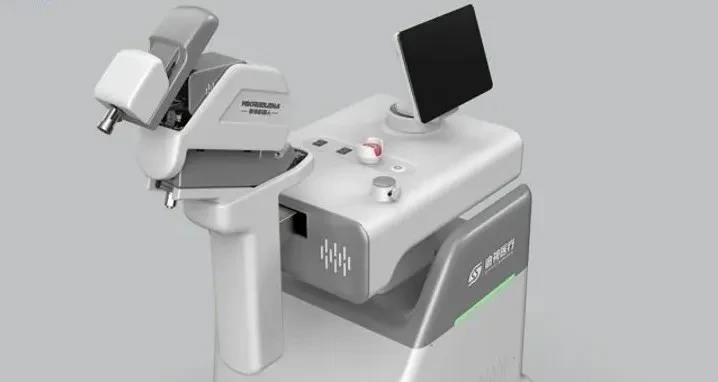
In the field of surgical operations, microsurgery is undoubtedly the technological high ground.Microsurgery refers to the use of optical magnification devices and microsurgical instruments to perform complex and precise surgeries within a very small range.In recent years, with the increasing clinical demand for minimally invasive surgery and the continuous emergence of surgical procedures with high operational requirements, a new type of surgical platform, the microsurgical robot, has emerged. This surgical robot not only enhances the visualization of the surgery but also significantly improves the flexibility and accuracy of surgeons during delicate operations, paving a new way for the future development of microsurgery.As microsurgical robotic operations are still in their infancy, there is significant room for growth.Data shows that the global microsurgical robotics market was approximately US$1 billion in 2020 and is expected to grow at a compound annual growth rate (CAGR) of over 15% in the next five years, with the potential to exceed US$15 billion by 2025.It is reported that by 2028, the market for microsurgical robotsWill increase from 3 million units per year to 22 million units。From the perspective of market competition, as an innovative field, there are relatively fewer companies involved in microscopic surgical robots compared to other surgical robot fields.In overseas markets,Companies such as Carl Zeiss, Sony, and Medical Microinstruments have established operations in China, with products already on the market.In the Chinese market, numerous companies such as Antai Jingwei and Disi Medical have entered the field, continuously receiving financial support to accelerate their progress.Sony announced in May this year that it would develop a new type of microsurgical assistance robot, marking Sony's first entry into the surgical robot market.Reportedly, this new type of robot can not only automatically exchange surgical instruments but also achieve precise control. Its prototype made its debut on May 13, 2024, at the Sony booth during the 2024 IEEE International Conference on Robotics and Automation (ICRA 2024) held in Yokohama. Sony stated that the robot aims to provide higher efficiency and precision for microsurgical procedures, particularly showcasing its exceptional performance in complex and delicate surgeries.AntMicro Precision, as the builder of the world's first robotic platform focused on small-scale precision surgeries, has successfully achieved a tremor-free operation throughout the surgical robot system., and has currently overcome the core difficulties in product development.Reportedly, the diameter of its robotic end-wrist structured instruments is less than 3mm, the smallest in the world, capable of precisely anastomosing with 0.3mm blood vessels, lymphatics, and nerves. It meets the demands across the entire surgical field, including otolaryngology, neurosurgery, vascular surgery, plastic surgery, ophthalmology, etc., performing procedures that existing medical robots (such as orthopedic robots, endoscopic robots, vascular interventional robots, etc.) cannot achieve and which require high precision."Di Shi Wei Feng" Ophthalmic Surgical RobotIt is the first product produced by the microsurgical robot platform independently developed by Hangzhou Disi Medical Biotechnology Co., Ltd., and also the first ophthalmic surgical robot product in China to enter the multi-center registration clinical trial stage."Di Shi Wei Feng" Ophthalmic Surgical Robot Aims to Reduce the Gap in Doctor-Patient Ratio for Fundus Surgery, Extend the Career Span of Frontline Doctors, Improve Surgical Success Rates, and Minimize Complications, While Providing a Powerful Delivery Tool for Gene and Cell Therapies.Early animal clinical data shows that, compared to the 85.5% success rate of manual operations by clinicians, the success rate of subretinal injections assisted by the "Di Shi Wei Feng" ophthalmic surgical robot can be increased to 100%.Carl Zeiss AG is an internationally leading technology enterprise operating in the optical and optoelectronic industries, dedicated to the development, production, and sales of cutting-edge innovative industrial metrology and quality assurance solutions, microscopy solutions for the biosciences and materials science fields, and medical technology solutions for ophthalmology and microsurgery diagnostics and treatment. Carl Zeiss is also a global leader in lithography technology, whose techniques are applied by the semiconductor industry for manufacturing chip components. Additionally, Carl Zeiss branded eyeglass lenses, camera lenses, and binoculars are sold worldwide.In 2022, Carl Zeiss AG's annual revenue across four sectors—Industrial Quality and Research, Medical Technology, Consumer Markets, and Semiconductor Manufacturing Technology—exceeded 8.8 billion euros, equivalent to 64.063 billion yuan.In terms of medical technology, Carl Zeiss provides products and solutions for ophthalmology, neurosurgery, ENT surgery, spinal surgery, dentistry, and oncology. The company offers cataract and intraocular lens solutions for ophthalmologists, enabling visualization in microsurgery. Its products include surgical microscopes and medical dental loupes used in neurosurgery, ENT, spinal surgery, and dentistry. Additionally, Carl Zeiss provides intraoperative radiotherapy systems.
Well-known Surgical Robotics Companies in China: