Writing: Tianji Weibu Editing: Vitamin
On October 4, BRL Medicine and others published in Cell the world's first successful clinical outcome of off-the-shelf universal CAR-T therapy for treating autoimmune diseases.It is worth mentioning that,This is the first international report of successful treatment of autoimmune diseases using allogeneic universal CAR-T.
The great significance of this technology lies inAllogeneic Universal TechnologyThe breakthrough has taken a crucial first step toward the large-scale production of CAR-T cell therapy for treating autoimmune diseases. Previously, multiple clinical cases abroad have shown that CAR-T can cure autoimmune diseases such as systemic lupus erythematosus and multiple sclerosis, but these were all limited to autologous CAR-T.Against this backdrop, there is a growing belief in the enormous future potential of CAR-T in the field of autoimmune diseases. However, how are pharmaceutical companies progressing in their research and development, and how does it compare to solid tumors? The author will take you to explore.From Autologous to Allogeneic Universal Technology Breakthrough
CAR-T Shows Promising Potential in the Autoimmune Field
Given the remarkable achievements CAR-T has demonstrated in the field of autoimmune treatment, its future potential is still highly certain.- On August 5, 2021, researchers from the University of Erlangen-Nuremberg in Germany published their findings in the New England Journal of Medicine (NEJM). They treated a 20-year-old female patient with severe systemic lupus erythematosus using autologous CD19 CAR-T cell therapy. The treatment quickly alleviated her condition without significant side effects.This patient also became the world's first lupus patient to receive CAR-T cell therapy.
- In September 2022, a paper published in the journal Nature Medicine reported that five patients with refractory systemic lupus erythematosus experienced improvement in their condition after receiving CAR-T cell therapy. During a follow-up period of up to 17 months, none of the patients experienced a relapse, and all achieved drug-free remission.
- In February 2023, Georg Schett's team and others published a clinical research paper in The Lancet, stating that CAR-T cell therapy was successfully used to treat a new autoimmune disease—idiopathic inflammatory myopathy.
- On December 9, 2023, Dr. Fabian Müller from the University of Erlangen-Nuremberg in Germany reported the latest research data. Fifteen patients with autoimmune diseases (8 with systemic lupus erythematosus, 4 with systemic sclerosis, and 3 with idiopathic inflammatory myopathy) have achieved remission after receiving CAR-T cell therapy, showing no symptoms or no longer requiring new treatments.
- In February 2024, a study published in the top journal *The New England Journal of Medicine* showed that for patients with systemic lupus erythematosus, idiopathic inflammatory myositis, and systemic sclerosis, after CAR-T treatment, autoantibodies disappeared in all patients, and they completely stopped treatments including glucocorticoids among other immunosuppressive and anti-inflammatory drugs.
- On October 4, 2024, the headline of Nature's official website reported that BRL Medicine and others used CRISPR-Cas9 gene editing technology to transform allogeneic universal CAR-T cells, helping two patients with systemic sclerosis and one patient with immune-mediated necrotizing myopathy achieve long-term remission...
From the initial systemic lupus erythematosus, gradually extending to idiopathic inflammatory myositis, systemic sclerosis, necrotizing myopathy and other autoimmune diseases, CAR-T therapy has shown curative effects. Moreover, this year witnessed a breakthrough in allogeneic universal CAR-T technology, providing support for large-scale production and low-cost supply.These landmark studies have increasingly highlighted the commercial value of CAR-T therapy in the autoimmune field, and its market expectations are gradually heating up.How Did BRL Medicine Achieve the Breakthrough in Allogeneic Universal CAR-T Technology? As is known to all, allogeneic cells tend to trigger immune rejection in the body.BRL Medicine Used CRISPR-Cas9 Gene Editing Tool to Knock Out 5 Genes in CAR-T Cells(HLA-A, HLA-B, CIITA, TRAC, and PD-1), these genes play important roles in the immune system. HLA-A and HLA-B are mainly involved in presenting endogenous antigens, CIITA ensures the correct expression of MHC class II molecules and the presentation of exogenous antigens to helper T cells. Knocking them out can avoid graft-versus-host reactions caused by allogeneic T cells.Solid Tumors VS Autoimmune Diseases
Autoimmune CAR-T Expected to Take the Lead in Clinical Success
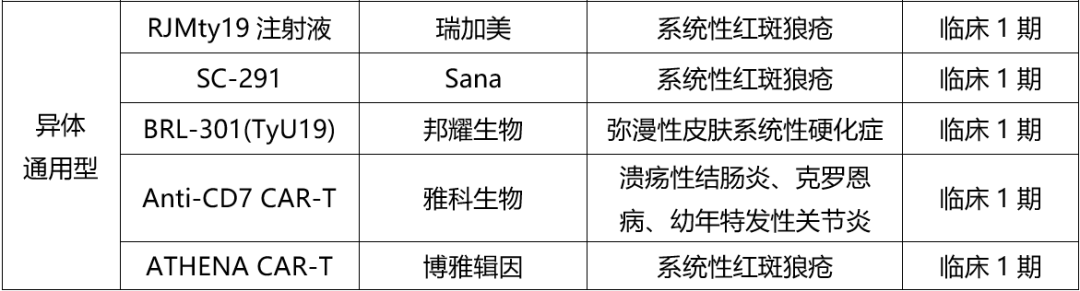
Previously, CAR-T has achieved more commercial applications in the field of hematological tumors. Currently, the hotspot for enterprise research and development is in the direction of solid tumors, where there is a large patient demand and a vast market space. However, due to factors such as fewer tumor-specific antigens in solid tumors, complex tumor microenvironments, and immunosuppressive mechanisms, it has led to...CAR-TTherapy is difficult to successfully develop for application in solid tumors.However, autoimmune diseases are different. The pathogenic mechanisms of many autoimmune diseases have some similarities to B-cell lymphoma. For instance, systemic lupus erythematosus occurs because B cells become abnormally active and attack the body's own tissues. The difference is that B-cell lymphoma involves uncontrolled proliferation and differentiation of B cells, forming a hematological tumor, while autoimmune diseases involve abnormal B-cell expression. In any case, B cells are the target. Most autoimmune diseases do not have a physical barrier like the tumor microenvironment, so CAR-T cells can more easily approach and enter. Therefore,It is easier for CAR-T therapy to shift from previous hematologic tumors to autoimmune diseases.Because of this, many people believe that autoimmune diseases are more likely to be the direction where CAR-T therapy could achieve clinical breakthroughs earlier than in solid tumors.According to PharmaDJ data, as of now,The CAR-T drug pipeline in the field of autoimmune diseases has exceeded 280, with the fastest already entering Phase 2 clinical trials, and there are 10 such drugs. Companies like Novartis, HemaCyte Biotech, Kyverna, and Wuxi JWCAR are at the forefront.Not a few previous hematological tumor CAR-T companies have expanded into autoimmune indications:Novartis' CD19 CAR-T Product Rapcabtagene Autoleucel, adopts the same CAR structure as the approved Kymriah, for the treatment of systemic lupus erythematosus and lupus nephritis;
Hoyuncell's NajiolumabApplied for a new indication - Systemic Lupus Erythematosus with Thrombocytopenia;
Also,Relma-cel by JW TherapeuticsAlso targeting refractory systemic lupus erythematosus for research and development.
Table 1. Global CAR-T Development Progress for Autoimmune Diseases (As of 2024.10),Source: PharmaData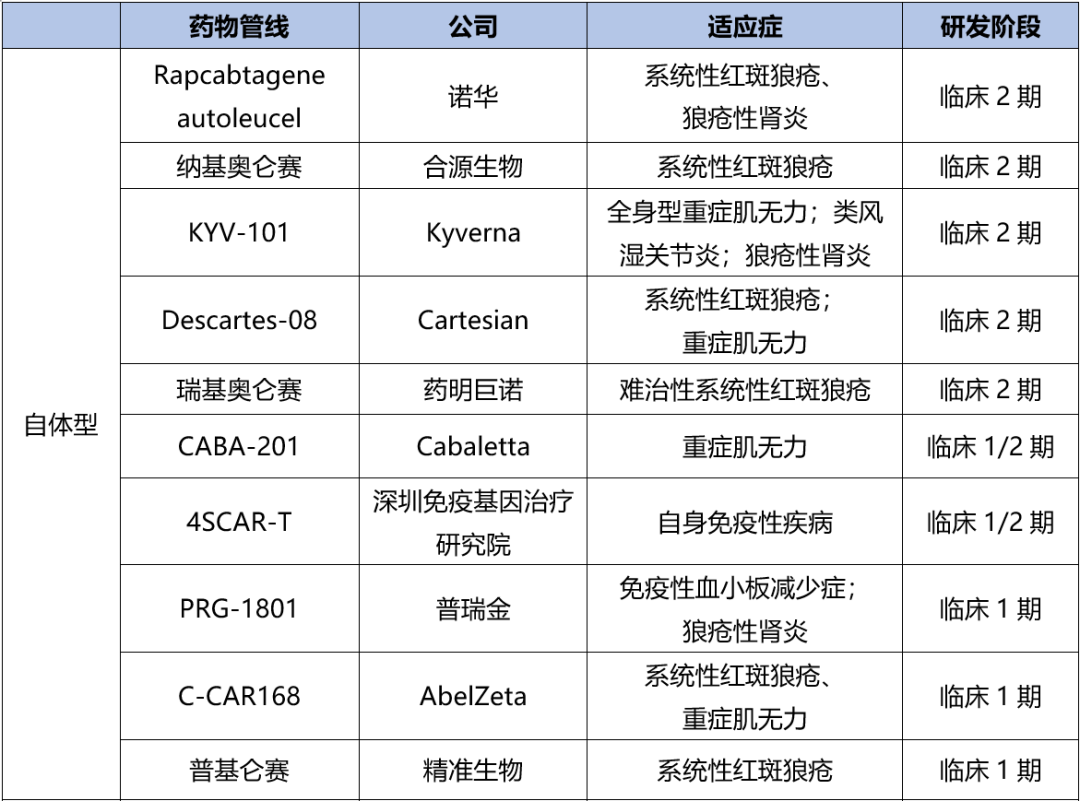
In the field of solid tumors, as of now, the CAR-T drug pipeline has exceeded 1,500, with the fastest having entered Phase 2 clinical trials, totaling 40. Cancer types include liver cancer, colorectal cancer, esophageal cancer, head and neck tumors, etc.Table 2. Global Solid Tumor CAR-T Research and Development Progress (As of 2024.10), Source: Pharma Data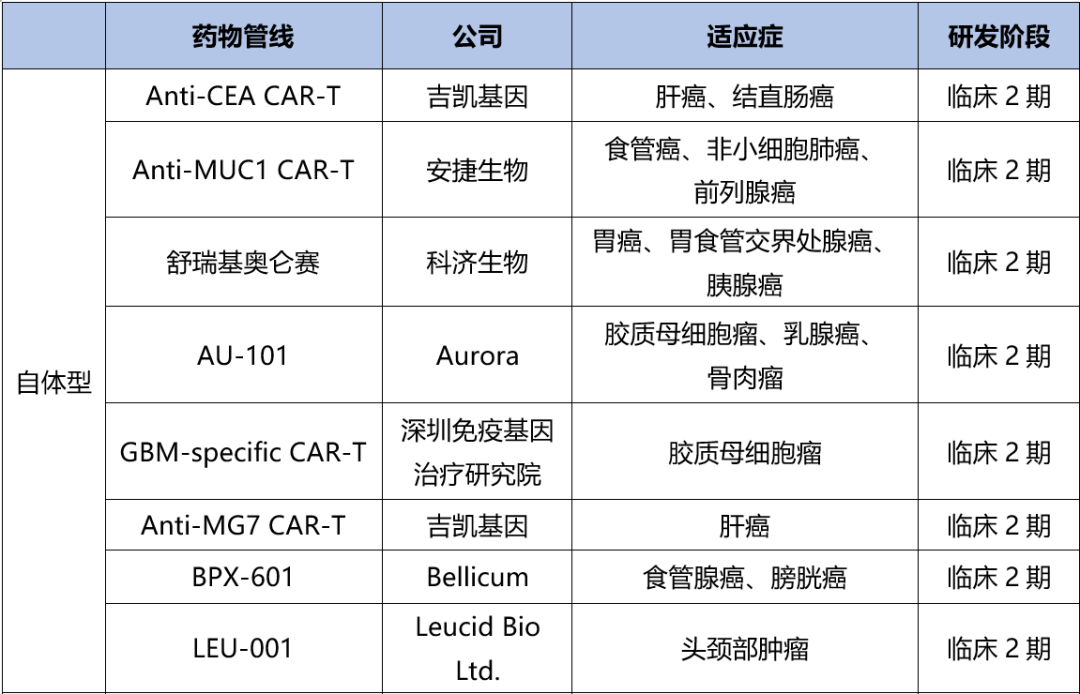
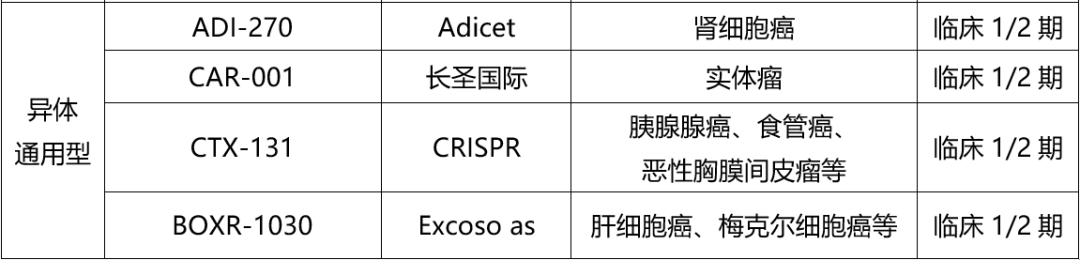
In summary, although the scale of CAR-T in the autoimmune field is not as large as that in solid tumors in terms of pipeline numbers, the progress of development in both fields is comparable, with the most advanced projects in both fields being in Phase 2 clinical trials. Moreover, in terms of technical difficulty and development speed, the technical difficulty of CAR-T in autoimmune diseases is lower than that in solid tumors, and the development progresses faster. It may achieve clinical success ahead of solid tumors.
References:
https://www.biospace.com/biospace-layoff-tracker
*Disclaimer: This article only introduces the research progress in the pharmaceutical and medical field, briefly describes the research overview, or shares pharmaceutical-related information. It does not recommend any treatment or diagnostic plans, nor does it constitute any advice on related investments.If there are any omissions in the content, please feel free to communicate and point them out!