

Weekly Summary of Domestic IND/NDA Submissions and Global Phase III Clinical Updates for Innovative Drugs (Oct 21–25)
SCG Cell Therapy
Innovative Immunotherapy Developer

Sanofi
Pharmaceutical Manufacturer

Welcome to follow Asymchem Pharma News
(Collection period: 10.21-10.25, domestic part refers to innovative drugs for the first clinical application and first market application in China))
Summary of IND for Innovative Drugs in China
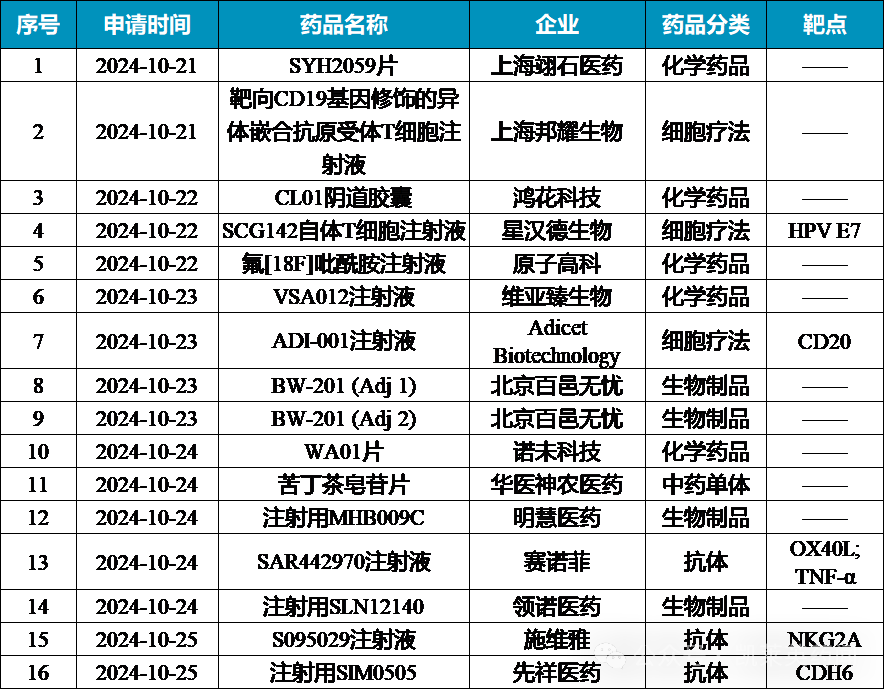
1. SCG SCIENCE (DALIAN) CO., LTD: SCG142 Autologous T-cell Injection
Mechanism of Action: Targeted HPV E7 TCR-T
Indications: HPV-related solid tumors
On October 22, the clinical trial application for SCG142 Autologous T Cell Injection developed by SCG SCIENCE (DALIAN) CO., LTD was accepted by the CDE. SCG142 is a next-generation chimeric switch receptor-enhanced TCR-T cell therapy product that successfully screens and isolates natural high-affinity HPV-specific TCR using SCG SCIENCE's proprietary GianTCRTM technology platform, combined with a chimeric switch receptor. Compared to traditional TCR-T cell therapies, this treatment significantly enhances T-cell proliferation and tumor suppression effects, demonstrating specific tumor-killing activity against various tumors related to HPV-16 and HPV-52 genotypes, such as cervical cancer. It is suitable for multiple malignant tumors caused by HPV, including cervical cancer, oropharyngeal cancer, head and neck cancer, vaginal cancer, vulvar cancer, and penile cancer.
Research shows that SCG142 TCR-T cell therapy demonstrates excellent anti-tumor activity and good safety in HPV-related tumor models. Without relying on CD8 co-receptor signaling, SCG142 can dual-activate CD8+ and CD4+ TCR-T cells, triggering potent anti-tumor activity in suppressive tumor microenvironments and promoting long-term persistence of memory T cells. Additionally, SCG142 possesses high-affinity characteristics, enabling effective recognition of various HPV virus-associated tumors induced by HPV-16 and HPV-52 genotypes.
2. Adicet: ADI-001 Injection
Mechanism of Action: Targeted CD20 CAR-T
Indications: Lupus Nephritis
On October 23, the clinical trial application for Adicet Biotechnology's ADI-001 injection was accepted by the CDE. ADI-001 is an allogeneic γδ CAR-T cell therapy that targets malignant B cells through a CD20-directed CAR and innate γδ and T cell endogenous cytotoxic receptors. Currently, ADI-001 is being developed for indications such as relapsed/refractory B-cell non-Hodgkin lymphoma (NHL) and lupus nephritis, and has been granted Fast Track designation by the FDA for lupus nephritis and relapsed/refractory NHL. Preclinical models have shown that this cell therapy exhibits potent anti-tumor activity, leading to long-term disease stabilization.
3. Sanofi: SAR442970 Injection
Mechanism of Action: Bispecific Antibody Targeting TNFα/OX40L
Indications: ——
On October 24, the clinical trial application for Sanofi's SAR442970 injection was accepted by the CDE. SAR442970 is a bispecific nanobody (VHH) targeting TNFα and OX40L, developed based on Nanobody technology; according to company disclosures, "multivalent" nanobody molecules formed by linking Nanobody molecular fragments can assist the body's immune system in combating cancer by binding to multiple sites on tumor cells and immune cells. Currently, the company’s development of SAR442970 is in Phase II clinical trials, intended for the treatment of hidradenitis suppurativa, minimal change nephrotic syndrome, and focal segmental glomerulosclerosis.
4. Lennovate Pharmaceuticals: Injectable SLN12140
Mechanism of Action: ——
Indications: IgA Nephropathy
On October 24, the clinical trial application for SLN12140, an injectable drug developed by Lingen Biopharma, was accepted by the CDE. SLN12140 is a next-generation complement inhibitor that has demonstrated the fundamental characteristics of a new generation of complement drugs in preclinical PK, PD, CMC, and GLP TOX studies. Compared with existing complement drugs, SLN12140 selectively inhibits the alternative complement pathway, effectively addressing the issue of insufficient efficacy associated with C5-targeting molecules. Due to its favorable safety profile, it has the potential to expand into more indications. The drug exhibits several pharmacological features such as a long half-life in the body, strong tissue penetration, and high bioavailability. It can treat patients through a more convenient subcutaneous administration method and longer dosing intervals, improving both therapeutic outcomes and patient compliance.
5. Xianxiang Pharmaceuticals: Injectable SIM0505
Mechanism of Action: Targeted CDH6 ADC
Indications: Tumor
On October 25, the clinical trial application for Xianxiang Pharmaceutical's SIM0505 for injection was accepted by the CDE. SIM0505 is an antibody-drug conjugate (ADC) targeting Cadherin-6 (CDH6). CDH6, also known as fetal kidney cadherin or K-cadherin, belongs to the type II classical cadherins. CDH6 plays a role in the morphogenesis and development of embryonic kidneys and drives mesenchymal-epithelial differentiation, which is essential for kidney formation. In normal adult tissues, CDH6 expression is restricted to renal tubules in the kidney, bile duct epithelial cells, etc. Additionally, CDH6 is expressed in platelets and plays a functional role in platelet aggregation and thrombosis. It has been reported that CDH6 is highly expressed in thyroid cancer, gastric cancer, pancreatic cancer, and ovarian cancer, with renal cell carcinoma being the first cancer discovered to exhibit high CDH6 expression.
Summary of NDA for Innovative Drugs in China

1. Shuanglu/First Drug Holdings: Kaitai Granules
Mechanism of Action: ALK Inhibitor
Indications: Non-Small Cell Lung Cancer
On October 23, the new drug application for Contatini Granules from Shouyao Holdings was accepted by the CDE for the treatment of patients with locally advanced or metastatic non-small cell lung cancer (NSCLC) positive for anaplastic lymphoma kinase (ALK). Contatini (CT-707) is a precision-targeted drug targeting ALK gene fusion mutations. The pivotal Phase III clinical trial for treating ALK-positive NSCLC patients was read out in the first half of 2024, showing significant and clinically meaningful improvement compared to the control group, while also demonstrating unique advantages in terms of safety. Additionally, in in vivo studies using xenograft (CDX) models derived from various cell lines, the combination of KRAS G12C inhibitor SY-5933 and CT-707 consistently exhibited stronger anti-tumor activity than either monotherapy alone.
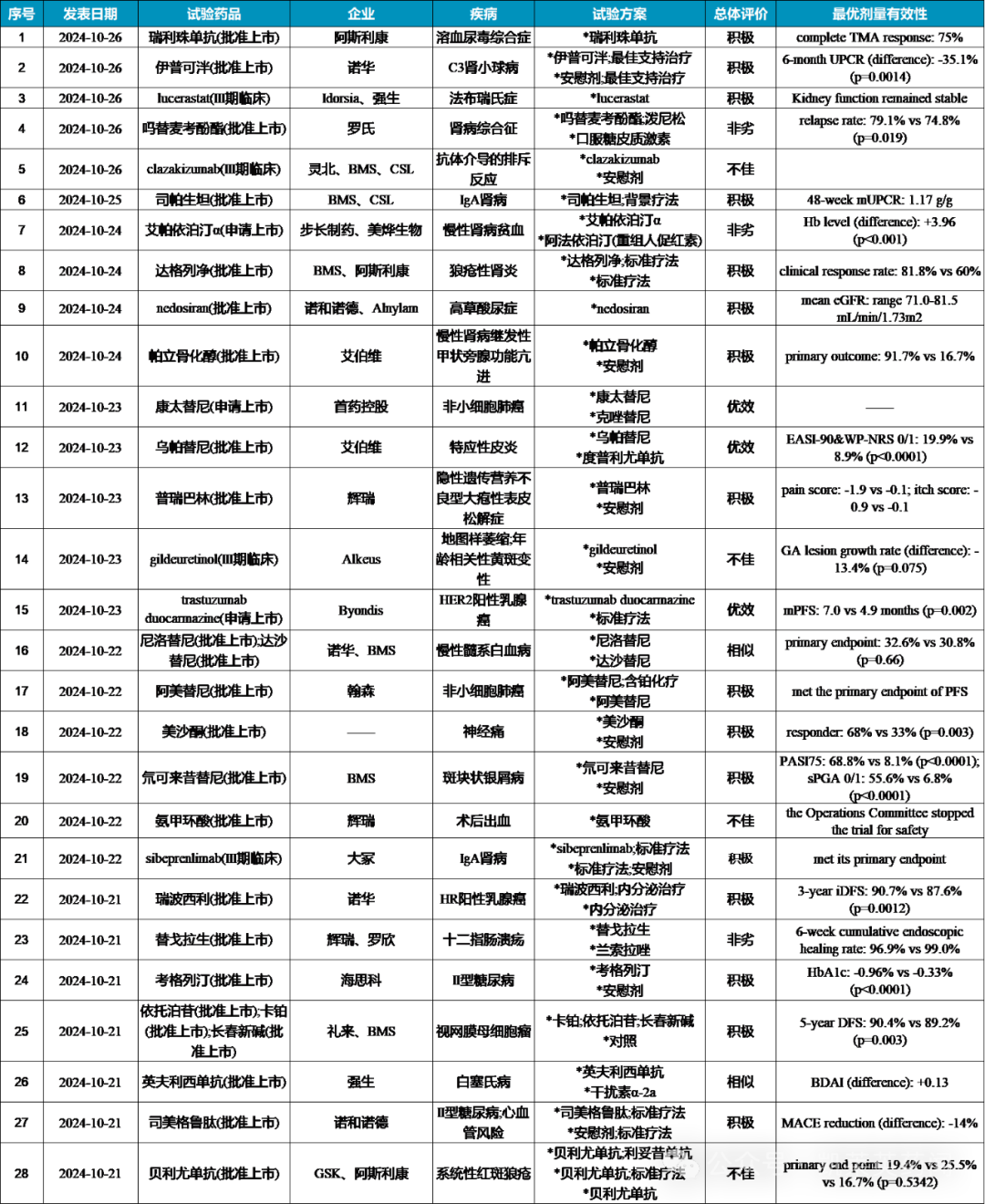
Global New Drug Phase III Clinical Summary


"Under Observation"Click once