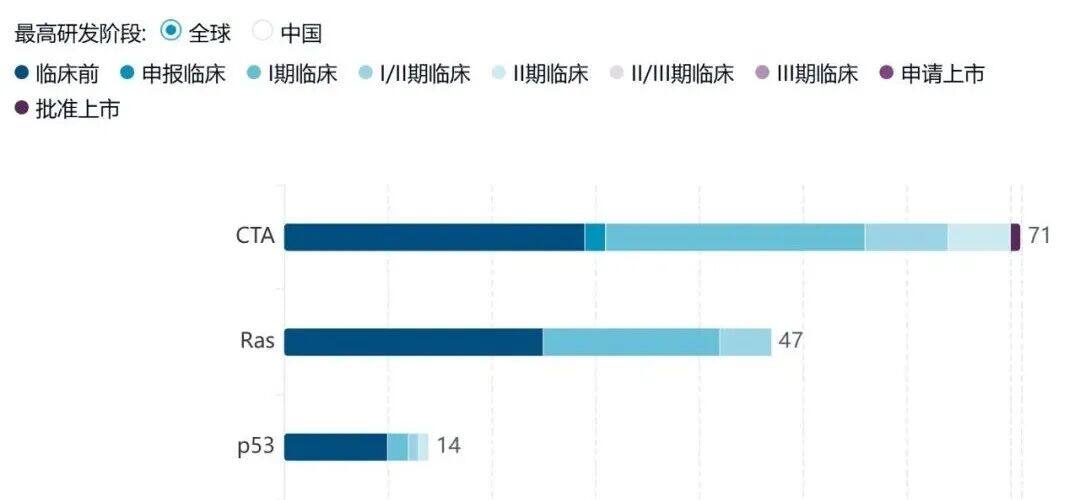
In August this year,Adaptimmune TherapeuticsAnnounces Approval of Engineered T-Cell (TCR-T) Therapy Afami-cel for Second-Line Treatment of Adult Patients with Unresectable or Metastatic Synovial Sarcoma Previously Treated with Chemotherapy.This marks the birth of the world's first TCR-T therapy for the treatment of solid tumors, as well as the first effective treatment for synovial sarcoma in over a decade: patients treated with Afami-cel achieved an ORR of 39%, nearly ten times higher than the previously approved innovative drug pazopanib for advanced synovial sarcoma, and the historical median overall survival (mOS) of patients also increased from less than 12 months to approximately 17 months.The success of Afami-cel has once again ignited people's expectations for TCR-T: While CAR-T has already made significant strides in hematologic malignancies, the TCR structure can recognize a broader range of intracellular antigens compared to the CAR structure, thereby activating tumor-specific T cells. Therefore, it is considered to have tremendous potential in treating advanced malignant solid tumors — a notoriously difficult challenge.But the current TCR-T still has a considerable distance from this goal: only a few targets have been proven safe and effective, such as tumor-associated antigens like MAGE-A4 and NY-ESO-1, thus limiting its application to a small number of indications, such as melanoma and soft tissue sarcoma. Afami-cel specifically targets and destroys synovial sarcoma expressing the MAGE-A4 antigen.Top 3 Targets of TCR-T Therapy
Source of the image: NextPharma database by PharmaCubeIn fact, the "scarcity of effective targets" is only a surface issue; the real bottleneck in the TCR-T field lies in the difficulty of drug development: multiple different natural TCRs can recognize the same antigen target, but their affinity, killing ability, and safety vary greatly. Artificially discovering a TCR with high affinity, high killing ability, and guaranteed safety for an antigen target is like finding a needle in a haystack.Peng Songming, PhD, an "80s-born" expert who has been deeply engaged in the forefront of TCR-T research for many years, made a firm decision to fundamentally solve the problem through establishing a technical platform after discovering the difficulties and critical nature of pairing issues during his first entrepreneurial venture.To this end, in 2020, Dr. Peng foundedNeowise Biotechnology, firmly made the decision to "first fully build the technology platform, then develop the clinical pipeline," and even during the industry boom of promoting pipelines and expanding production capacity around 2021, chose to sit on the "cold bench," spending the entire first three years of entrepreneurship diligently building.Three years later,Dr. Peng led the team to successfully develop a high-throughput, high-sensitivity target antigen-TCR discovery and validation platform, which has identified more than 7,000 pairs of target antigen-natural TCR pairing data to date, addressing the bottleneck in the TCR-T industry and establishing the world's largest database of target antigen-TCR specific pairings.。By utilizing this platform, Neowise Biotechnology can discover multiple natural antigen-specific TCRs targeting the same antigen, and select TCRs with high affinity and strong cytotoxicity for clinical translational development. This approach not only has the potential to significantly improve the success rate of clinical trials but also helps avoid the potential off-target risks that may arise from affinity optimization modifications of TCRs.Meanwhile, the MedAlpha Innovative Drug Investment and Financing Database of PharmCube shows that Neowise Biotechnology completed its Series A+ financing on March 15, 2023, with an amount close to 200 million yuan.With its excellent innovation capabilities and impressive financing achievements amidst the cold winter, Neowise Biotechnology has also been selected."Top 15 Innovative Drug Startups in China 2023" Selected by PharmaCube。Why persist in building the technical platform first and then developing the clinical pipeline? How was such a groundbreaking technical platform, one that tackles industry challenges, established? With this leading platform in hand, how does Neowise Biotechnology approach the development of its clinical pipeline? In an interview with Dr. Peng, PharmaCube Invest found the answers.Break Through Industry Bottlenecks

"When we first started, some investors said that our team was great and could 'aim high and act decisively.' However, in the TCR-T field, you can't have molecules right from the start. Instead, you must build a technology platform to screen for good molecules, which is inherently one of the hardest parts of this field. At that point, I felt we needed to follow our own pace."Dr. Peng, founder and CEO of Neowise Biotechnology, said in an interview with PharmaCube Invest.Dr. Peng's "obsession" with the technology platform stems precisely from his first entrepreneurial experience, during which he observed that while fully personalized TCR-T therapy showed promising efficacy, the excessively high costs in time and money significantly reduced its accessibility, practically issuing a "death sentence" to this treatment.In 2016, while conducting postdoctoral research at the California Institute of Technology under James Heath, the discoverer of footballene, Dr. Peng first directly isolated T-cells capable of recognizing patient tumors from blood samples of cancer patients. The team he was part of decided to commercialize this technology and thus founded Neowise Biotechnology, Co., Ltd.PACT Pharma, committed to developing personalized cell therapy drugs.Dr. Peng introduced that this "personalized customization" is precisely tailored according to the patient's own tumor and immune system conditions at every step, from personalized sequencing, bioinformatics analysis, to immunoassays, genetic engineering, and cell manufacturing."The advantage is that there are no limitations on indications, and any patient can be treated through this method. However, the challenges are significant: first, the process takes a very long time, with the median duration from enrollment to receiving treatment being 9 months. Many advanced-stage patients cannot wait that long, resulting in a high clinical dropout rate; second, the cost, which is at least 1 million US dollars per patient, making commercial promotion extremely difficult."This experience led Dr. Peng to start thinking about a more universal technical approach: "We were wondering at the time if we could find good TCRs for relatively 'good' targets in advance, so that while it may not be able to treat all patients, for those who meet the treatment criteria, not only would the treatment cycle be significantly shortened to two weeks, but the cost would also come down.""Good targets" refer to antigens that are highly expressed in tumors and lowly expressed in normal tissues. There are already many such targets in the industry, including several tumor-associated antigens (TAA) that have been proven safe and effective, cancer virus antigens represented by HPV, and new antigens (neoantigens) produced by tumor driver gene mutations such as KRAS mutations.The real challenge lies in "pairing." If we want to avoid following the "old path" of PACT Pharma, which involves identifying neoantigens and isolating TCR sequences for each patient individually, the only way to transform TCR-T from a personalized therapy into a cancer treatment applicable to a broader population and more indications is to pre-identify TCR sequences that recognize various known tumor antigens.To this end, Dr. Peng decided to tackle the core issue head-on and fundamentally solve the problem of antigen target-TCR pairing. His vision is to independently develop a high-throughput antigen target-TCR screening technology, extensively analyze patient samples, and thereby establish a database rich in antigen target-natural TCR pairing information, enabling the rapid selection of TCR sequences that accurately recognize solid tumors.With this idea, Dr. Peng approached the other two founders, decided to establish the company, and began to fully commit to building the platform."All of our founders are people who don't hesitate or overthink when it comes to taking action. Once we've decided to do something, we focus entirely and work hard to get it done well," said Dr. Peng candidly. "It's not just the founders; other senior executives have also returned from abroad to join full-time, which has made our team’s overall operational efficiency and execution relatively strong."Despite having a strong and efficient team, the start was still difficult."The hardest part was at the very beginning, because we were working on a platform for bioinformatics prediction and experimental validation, training models. The quality of the dataset is crucial — if the dataset used for training is poor, it’s impossible to train a good model, and the dataset involves a massive amount of experimental work. At the start, out of 100 sequences we validated, only a few were correct. Accumulating those accurate data points was the most difficult part," recalled Dr. Peng.In this process, Dr. Peng and the team not only have to face the innovative challenge of "global first" alone but also need to maintain a clear mind and judgment, seeing their direction clearly amidst the ups and downs.Find Your Own Rhythm

During 2020-2021, when Dr. Peng founded Neowise Biotechnology and devoted himself to building the platform, it was the peak period of investment and financing in the TCR-T field in China.According to the PharmaCube InvestGo database, from 2020 to 2021, there were 25 investment events in the TCR-T sector in China, with a total amount exceeding 3.7 billion yuan, reaching the highest point in history.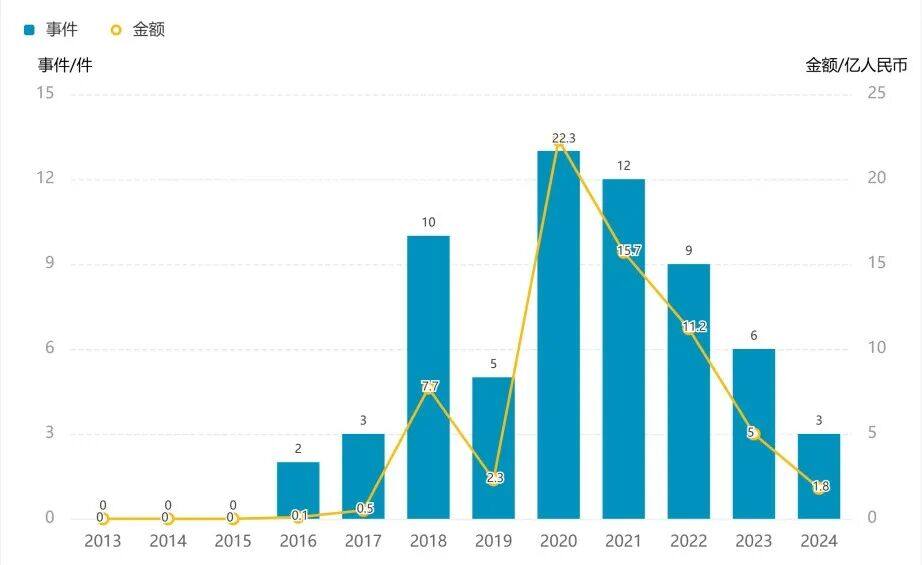 TCR-T Track: Investment and Financing Trends in the Past DecadeSource of the image: PharmaCube InvestGo DatabaseAmid the热潮, Dr. Peng, a founder who returned from overseas and has solid scientific research and industry experience in the TCR-T field, naturally attracted the attention of many investors. At that time, some investors, seeing the advantages of Neowise Biotechnology's team background, urged Dr. Peng to "take bold actions" and "buy time with money" to quickly advance clinical trials while resources were relatively abundant.But Dr. Peng judged based on past scientific research and industry experience that in the TCR-T field, the "good molecules" capable of exhibiting high affinity and killing power for a specific target are the core competitiveness. To continuously screen out excellent TCRs, it is essential to rely on independently developed, solid, and powerful platform technology. There is no shortcut to solving this bottleneck issue."In some particularly competitive fields, 'speed' may be the key, but the technical and innovative attributes of drug development are very strong. It's not always possible to make drugs just by spending money. We still believe in taking a steady and solid approach, one step at a time."Dr. Peng said.In the second year of its establishment, Dr. Peng led the team to complete the verification of hundreds of target antigen-TCR pairing data, and initially built a high-throughput target antigen-natural TCR screening technology platform.While being steadfast in the company's strategic direction, Dr. Peng also has corresponding considerations when it comes to the selection of investors."When we were established, the financing environment was very hot, and many companies had their valuations pushed relatively high."We previously had experience operating PACT Pharma, and the equity financing abroad was heavily diluted. In this entrepreneurial endeavor, we are considering not only the valuation but also, more importantly, how many resources the company can realistically secure."He said, 'In extreme cases, an investment institution can invest 1 million yuan to take 1% of a company's shares, making the valuation 100 million yuan, but it doesn't mean much for the company.'"Such an idea has led Dr. Peng to find like-minded investment partners such as Baidu Ventures, BioMap, TF Capital, and Jianyi Capital, jointly assisting Neowise Biotechnology in advancing towards the goal of "building the world's largest database of target antigen-natural TCR pairing relationships."In 2022, Neowise Biotechnology's target-TCR discovery platform was further improved, accumulating over a thousand data sets. It can efficiently validate and select the best-performing TCRs, which are superior to similar products from top global pharmaceutical companies in terms of affinity, killing activity, and safety.With this, Dr. Peng led Neowise Biotechnology to complete a nearly 200 million yuan A+ round of financing in early 2023. Well-known biopharmaceutical investment institutions such as Oriza Seed, Yuan Yi Capital, Tonggao Capital, GEM, Tianze Capital, Zhongxin Capital, and Lingjun Venture Capital have all increased their investments, recognizing the "superpower" of this discovery platform and database in addressing the bottleneck in the TCR-T industry.In addition to solid progress, the ability to maintain such a financing pace during the industry's peak and subsequent downturn from 2022 to 2023, shifting from hot to cold, is also due to Dr. Peng's control over the valuation."The valuation is not only about this round but also considers how much it can support after reaching the milestones in the next round. Therefore, we have maintained a certain level of control over the valuation from the very beginning."He said.This pragmatism and restraint are also reflected in Dr. Peng's planning for production capacity. After initially completing the technical platform validation, he raised Series A funding to build a 3,500-square-meter GMP facility. As the platform has been running stably and moved from drug discovery into clinical trials, this GMP facility was officially commissioned in 2023."We haven't invested heavily in heavy assets. IIT trials generally only require about 20 patients, and a factory of approximately 3,000 square meters is sufficient," explained Dr. Peng.Amid the craze, Dr. Peng adhered to the principle of "tailoring to specific needs," neither pursuing high valuations nor blindly expanding production capacity. This saved funds and, more importantly, ensured that he wasn't slowed down by the sudden onset of a downturn."We have always adhered to the principle of 'spending money where it matters most,' and the efficiency of our fund utilization is relatively high," summarized Dr. Peng. "Developing innovative drugs and running a business is, in essence, a commercial endeavor. It's crucial to consider the input-to-output ratio—save where you can, or ensure resources last longer, or achieve lower costs and better profits."
Differentiated Layout, Returning to the Essence of Business

The philosophy of "returning to the essence of business" not only enabled Dr. Peng to lead Neowise Biotechnology in avoiding the pitfalls of "chasing valuations" and "expanding production capacity," ensuring the company's stable operation amid a rapidly changing environment, but also allowed him to fully consider market size and competitive landscape when strategizing targets and indications, identify Neowise’s unique advantages, and gain the potential to "overtake competitors from behind.""In the TCR-T field, we are relatively young, as many companies were established three to four years earlier than us and have accumulated a great deal of knowledge and experience," said Dr. Peng. "When planning our pipeline, our primary consideration is a differentiated advantage. For some common targets that have already been pursued by multiple companies, we still aim to avoid them."Besides, another key factor Dr. Peng focuses on is the market size of the indications. "After the technological breakthrough, we still need to return to the essence of commerce — considering how many people can use this drug and how much sales revenue it can generate. If the indication is too small, commercialization will face significant challenges."Considering these two aspects, Neowise Biotechnology is currently promoting two main pipelines. The first is NW-101C, targeting PRAME, with indications primarily including advanced malignant tumors such as ovarian cancer and squamous cell carcinoma of the lung; the second is NW-301, specifically targeting KRAS mutations, mainly for indications like advanced malignant colorectal cancer and pancreatic cancer.In such a layout, although Neowise Biotechnology is a "latecomer," it has quickly entered the first tier in China and even globally in terms of TCR-T related targets and some major cancer types. For instance, NW-101C—before Neowise Biotechnology, only Germany's Immatics was researching cell therapy drugs targeting PRAME, with melanoma as the primary indication."Although it is the same target, the molecules discovered by our platform are very good, and there are also differentiated considerations in terms of indications. There are more melanoma patients in the United States, but fewer in China. Through analysis, we have found that this target also has good expression in other indications, so we are currently focusing on ovarian cancer, squamous cell carcinoma of the lung, etc., which have higher incidence rates in China," explained Dr. Peng.As for the star target KRAS, in Dr. Peng's view, it is precisely the "field of application" for TCR-T therapy.On one hand, KRAS mutations are commonly found in non-small cell lung cancer, colorectal cancer, and pancreatic cancer. The proportions of KRAS G12V and KRAS G12D mutations are particularly high in pancreatic cancer and colorectal cancer patients. Moreover, when such mutations are present, the prognosis for patients is poor, indicating a significant and widespread unmet clinical need.On the other hand, from a pharmacological perspective, the KRAS target can be seen as "arsenic" for some, but "honey" for TCR-T therapy. "The KRAS target is an intracellular protein, making it very difficult for protein drugs to target, leaving only small-molecule drugs. But precisely because it is an intracellular protein, it becomes a relatively easy molecule for TCR to target," explained Dr. Peng.In fact, the KRAS target was once considered an "undruggable" target until Amgen's covalent inhibitor targeting KRAS G12C, sotorasib, broke this curse.According to the PharmaCube NextPharma database, as of now, TCR-T therapy is the most active pharmacological modality beyond small molecule inhibitors for the KRAS G12V and KRAS G12D targets, especially.For KRAS G12V, which poses high R&D difficulty for other drug modalities, TCR-T is the only pharmacological type with pipelines entering clinical trials. In terms of the progress of clinical trials in China, Neowise Biotechnology has already taken a leading position.TOP 3 Pharmacological Types and Development Phases in China for KRAS G12V Target
Source of the image: PharmaCube NextPharma databaseFocused enough, down-to-earth enough, respecting the commercial essence of innovative drugs, and showing reverence for the role of biotech—this is the style of Dr. Peng and Neowise Biotechnology, and also the secret to how a biotech company can remain "stable and improving" amidst significant changes in the industry environment."Making good products is definitely our ultimate goal. As for the path to achieve this goal, if we have the capability, we will push forward on our own. If there are good cooperation opportunities that can produce a 1+1>2 effect, we remain open to them," Dr. Peng concluded."For us, the most important thing is still to do things down-to-earth."Copyright © 2024 PHARMCUBE. All Rights Reserved.Welcome to forward, share, and reasonably cite. When citing, please clearly indicate the source of the article.For reprint, please leave a message or send a message to the WeChat Official Account backend, and indicate the name and ID of the official account.Disclaimer: The information in this WeChat article is for general reference only and should not be directly used as decision-making content. PharmaCube assumes no responsibility for any loss incurred by any party due to the use of the content herein.