Genscript’s GMP sgRNA and dsDNA Enable Bonovo’s Global First Non-Viral CAR-T Therapy for Autoimmune Disease to Receive IND Approval

BRL Medicine
Cell and Gene Therapy Drug Developer

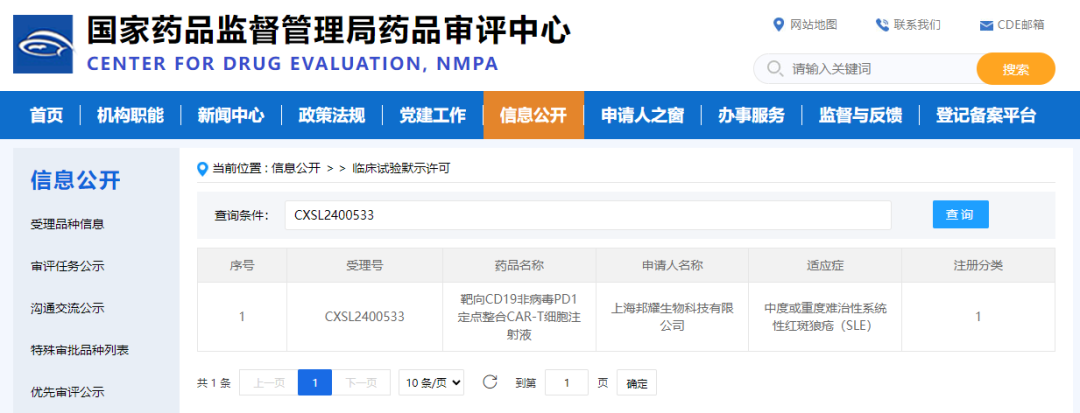
On November 5, 2024, BRL Medicine Inc. (hereinafter referred to as "BRL Medicine") announced that the clinical trial application (IND) for its developed "Targeted CD19 Non-viral PD1 Site-specific Integration CAR-T Cell Injection" (Pipeline code: BRL-203) has officially received approval from the Center for Drug Evaluation (CDE) of the China National Medical Products Administration (NMPA). The indication is "moderate or severe refractory systemic lupus erythematosus (SLE)."This is the world's first non-viral targeted integration PD1-CAR-T product for treating autoimmune diseases to be approved for IND., providing diversified options for the treatment of autoimmune diseases.
Notably, BRL Medicine's non-viral targeted integration PD1-CAR-T therapy (pipeline code: BRL-201) has previously demonstrated excellent clinical safety and efficacy in treating relapsed or refractory B-cell non-Hodgkin lymphoma (r/r NHL). The research findings were published in the prestigious international academic journal Nature and were recognized as one of the "Top Ten Hematology Research Advances in China for 2022" and "Major Medical Advances in China for 2022."
Genscript Provides Core Raw Materials GMP sgRNA and Gene Knock-in Template (dsDNA) for This Approved Non-Viral CAR-T Therapy, contributing to the development of safer, more efficient, and cost-effective cell therapies based on CRISPR technology for the treatment of a wider range of diseases.
Safety Alarm! Insights into New Directions for Cell Therapy Development
Systemic Lupus Erythematosus (SLE) is a serious autoimmune disease. Clinically, immunosuppressants are commonly used for treatment, but there are issues such as long treatment cycles, high risk of relapse, increased risks of infection and tumors, and some patients being unable to tolerate the treatment or experiencing poor efficacy. Targeted B-cell monoclonal antibodies provide new treatment options, but problems like relapse after discontinuation, infections, and suboptimal efficacy in some patients still persist.
Many teams both in China and abroad have attempted to apply CAR-T therapy to autoimmune diseases. Treatments for autoimmune diseases, including systemic lupus erythematosus, idiopathic inflammatory myopathy, systemic sclerosis, and myasthenia gravis, have already demonstrated excellent clinical outcomes. However, whether for oncology or autoimmune disease indications, the marketed or investigational products still focus on...Autologous CAR-T products prepared using viral vectors have potential tumorigenic risks, long production times with low accessibility, and high manufacturing costs.。
At the beginning of 2024, the FDA successively required "black box warnings" for marketed viral vector CAR-T products and mandated that patients receiving these marketed CAR-T treatments and clinical trial participants should be "lifelong" monitored for the potential development of secondary T-cell cancers. Additionally, when approving four CAR-T products for marketing in China, the National Medical Products Administration (NMPA) also required a warning in the "Precautions" section of the product insert, stating the possibility of secondary malignant tumors following treatment with the product.
By contrast, the CD19-targeted non-viral PD1-CAR-T product "BRL-203" developed by BRL Medicine using its proprietary non-viral targeted integration CAR-T platform (Quikin CART) can address the existing pain points of viral CAR-T.Demonstrates significant advantages in being safer, more effective, and more accessible, as follows::
BRL-203 utilizes CRISPR gene editing technology to precisely edit the PD1 site in T lymphocytes and insert a CAR molecule targeting CD19 at a specific location. This approach significantly reduces the high costs associated with using viral vectors. In just one step, it achieves continuous CAR expression and regulation of endogenous genes in T cells, greatly shortening the CAR-T preparation time to as little as 3 days. This advancement significantly improves production capacity, enabling timely application in patient treatment.
Non-viral targeted integration technology enables each CAR sequence to be precisely inserted into a specific site of the genome, avoiding the tumorigenic risks caused by random insertion, and ensuring the safety and efficacy of the CAR-T product. In the earlier clinical trial of BRL-201 for the treatment of relapsed/refractory non-Hodgkin lymphoma using this innovative technology, no CAR-T treatment-related neurotoxicity or cytokine release syndrome above grade 2 was observed in 21 treated patients.
Clinical research results of BRL-201 show that the objective response rate (ORR) of patients is as high as 100%, and the complete response rate (CR) reaches 85.7%. Patients have significantly benefited in the long term compared to similar viral CAR-T products. As of February 10, 2024, the median overall survival (mOS) has reached 39 months, and the median progression-free survival (mPFS) has reached 20 months, making it the best clinical outcome with a high remission rate and low toxic side effects in the global CAR-T cell treatment for refractory and recurrent lymphoma to date. Single-cell sequencing results indicate that there is a high proportion of memory T cells in the BRL-201 cell product with stronger anti-tumor immune function. The infused CAR-T cells have the ability to persist long-term, proving that non-viral targeted integration PD1-CAR-T therapy has excellent and long-lasting clinical efficacy.
Currently, no other non-viral site-specific integrated CAR-T products for autoimmune diseases have been reported or have entered clinical trials in China. In the future, BRL Medicine will accelerate the development of the BRL-203 product, aiming to provide patients with a treatment option that offers advantages in terms of safety, efficacy, and cost.
GenScript GMP sgRNA/Gene Knock-in Template:
Empower the Development of Non-Viral Cell Therapies
As the application of cell therapy continues to expand, while seeing the benefits it brings, both regulatory agencies and developers have begun to pay more attention to its safety issues. Non-viral preparation solutions such as CRISPR provide a safer, more efficient, and cost-effective choice for cell therapy development.
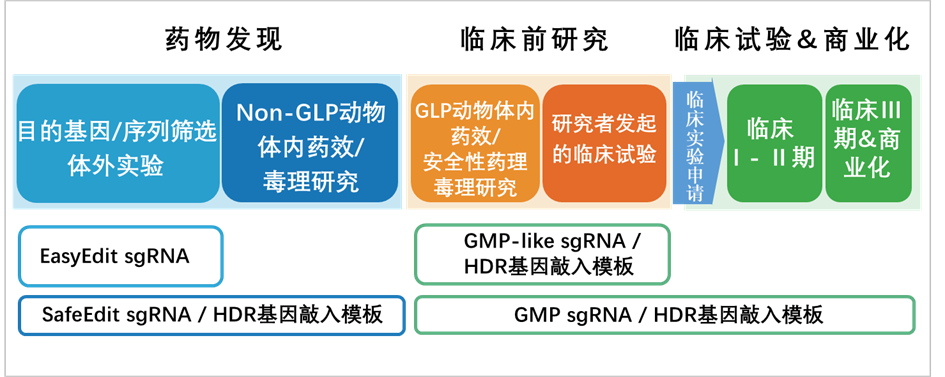
sgRNA and HDR gene knock-in templates are key raw materials for the development of cell therapies based on CRISPR technology. GenScript is at the forefront of advanced technology and can provide products up to140nt GMP sgRNAAndHDR gene knock-in template up to 20kb, supporting the exploration of infinite possibilities in the application field of cell therapy with editing technologies such as Cas9 and Cas12a.
Genscript is honored to provide critical reagent raw materials sgRNA and gene knock-in templates (dsDNA) for BRL Medicine's non-viral CAR-T therapy from the research and development stage to the clinical research stage., as well as customized quality control testing and professional technical support, using high-standard gene editing reagent raw materials to ensure the successful application of downstream high-quality cell therapy products. At the same time, relying on rich experience in supporting submissions and a professional regulatory team, GenScriptSpecializing in drafting submission materials for China and the U.S., providing solutions for supplementary adviceThe dual driving forces of solid product quality and professional regulatory support make Genscript an ideal partner for accelerating cell therapy development.
With 22 years of deep cultivation in nucleic acid synthesis, GenScript has established a comprehensive product line of gene-editing nucleic acid raw materials, featuring high editing efficiency, low toxicity, and low off-target effects, including donorResearch to GMP-grade chemical synthesis of sgRNA, gene knock-in templates (ssDNA single-stranded template/dsDNA double-stranded template/GenCircle dsDNA circular template)As of November 2024, GenScript has successfully deliveredMore than 120 batchesGMP sgRNA and Gene Knock-in Templates, SupportMore than 40 project applications, successfully passedMore than 30 audits, supporting global customers in obtaining12 IND Approvals, proudly leading the way in the GMP gene-editing nucleic acid raw materials industry.
Genscript Zhenjiang GMP Facility Built to Comply with FDA, EMA, PMDA, and NMPA Requirements for GMP Facilities, Equipped with Advanced Environmental Control Systems, Optimized Aseptic Product Manufacturing Equipment, and Standardized Personnel and Material Flow Management.




Swipe left and right to browse GenScript Zhenjiang GMP Facility
Genscript can deliver gram-level sgRNA in a single batch, and 500mg-level HDR gene knock-in template GMP-grade products.Support the development of in vitro gene editing therapies (CAR-T, CAR-NK, etc.) and in vivo gene editing therapies based on various gene editing technologies (Cas9 / Cas12 / Base Editing / Prime Editing, etc.), with sufficient production capacity to support rapid delivery, accelerate the filing and clinical trial process, and assist GCT companies in the efficient advancement of pipeline development and commercialization, contributing to making gene and cell therapy accessible to more patients.
Welcome to consult GenScript GMP sgRNA and HDR gene knock-in template services, professional technical support at your service.
Email: oligo@genscript.com.cn
Tel: 400-025-8686 ext. 5812 or 5815
About BRL Medicine
BRL Medicine Inc. is committed to becoming a globally leading cell and gene therapy company in the new era of commercial civilization. With the mission of "leading innovation with gene editing technology, developing breakthrough therapies, and benefiting all humanity," BRL Medicine relies on its self-developed research center and the "Shanghai Gene Editing and Cell Therapy Research Center" co-built with universities. To date, it has generated more than 100 patent achievements. Currently, 19 projects are undergoing clinical trials in over 20 well-known hospitals, with 4 projects approved for IND and officially entering the registration clinical trial stage, while several other projects are in the IND application phase. Among these, gene editing treatment for β-thalassemia, non-viral PD1 site-specific integration CAR-T, and UCART have shown excellent clinical outcomes with global leadership, and multiple academic papers have been published in renowned journals such as Nature, Cell, Nature Medicine, and Nature Biotechnology. BRL Medicine has established five proprietary technology platforms: the gene editing technology innovation platform, hematopoietic stem cell platform, non-viral site-specific integration CAR-T platform, universal cell platform, and enhanced T-cell platform. It also owns a 7,000-square-meter GMP pilot production base and an operational team of nearly 100 people, strongly ensuring that innovative research results can be quickly transformed and applied. By continuously driving rapid updates and iterations of R&D products based on patient needs and clinical feedback, BRL Medicine upholds an attitude of openness, sharing, and win-win cooperation. Together with global innovative biopharmaceutical ecosystem companies, it accelerates the transformation and implementation of innovative drugs, benefiting patients worldwide suffering from genetic diseases, malignant tumors, and autoimmune disorders!
About GenScript Biotech
GenScript Biotech Corporation (HK.1548) is a leading global provider of life science R&D and manufacturing services. Built on a strong foundation of DNA synthesis technology, GenScript has established four major business units: the Life Science Services and Products Business Unit, the Biologics Contract Development and Manufacturing (CDMO) Business Unit, the Industrial Synthetic Products Business Unit, and the Cell Therapy Business Unit, with the cell therapy segment primarily operated by Legend Biotech, originating from the company's proprietary antibody development platform.
Genscript was founded in 2002 and listed on the Main Board of the Hong Kong Stock Exchange in 2015. Its legal entities span across the United States, China, Japan, Singapore, the Netherlands, Ireland, the United Kingdom, South Korea, Belgium, and Spain. Its business operations cover over 100 countries and regions worldwide, providing high-quality, convenient, and reliable services and products to more than 200,000 customers.
As of June 30, 2024, Genscript has 5,060 employees worldwide, and its services and products have been cited in more than 100,000 peer-reviewed academic journal articles globally. Genscript owns numerous intellectual properties, including over 350 authorized patents, more than 1,000 patent applications, and a large number of technical secrets.
Adhering to the corporate mission of "Using biotechnology to make humans and nature healthier," GenScript is committed to becoming the world's "most trusted biotechnology company."
For more information, please visit the GenScript website at https://www.genscript.com.cn/