Ozda Official AccountmedicaldeviceCROFollow and StarEnsure you receive push notifications on time.
Comprehensive Medical Information
1. China's National Health Commission Supports Foreign Enterprises Rooted in China
Recently, according to the official website of the National Health Commission, the National Health Commission held a pharmaceutical enterprise symposium in Beijing. The meeting supported pharmaceutical enterprises in seizing development opportunities and participating in the construction of the medical and health service system. It promoted early screening, early diagnosis, and early treatment of diseases, as well as the research and development of multivalent vaccines and other pharmaceutical science and technology innovation work. The meeting expressed support for foreign-funded enterprises to take root in China, strengthen R&D innovation, promote the localized production of mid-to-high-end products, and support domestic enterprises to "go global," promoting international exchanges for mutual benefit and win-win outcomes. Pharmaceutical enterprises were encouraged to play a bridging role in Sino-foreign exchanges and take responsibility in building a common destiny for human health. The meeting also supported and guided the standardized development of academic exchange and cooperation, compliance in marketing activities, and jointly creating a clean and upright industry ecosystem. (Daily Economic News)
Recently, KouTech (Shanghai) Medical Technology Co., Ltd. has achieved a new breakthrough in its microsurgical robot technology. Following the successful completion of 0.8mm rat tail vessel anastomosis, two super-microsurgery experts from well-known tertiary hospitals in Shanghai used the robot to further complete more challenging 0.6mm and 0.5mm vessel anastomosis surgeries. The microsurgical robot developed by KouTech is one of the most refined surgical robots globally. Technically, the KouTech microsurgical robot is equipped with 7 degrees of freedom wrist-like joint instruments, designed to mimic the human wrist, allowing doctors to perform operations more flexibly, achieving more precise and stable fine movements within confined spaces, and completing suturing actions. (Vascular Network)
3. Shanghai Municipal Medical Products Administration Issues "Regulations on Affixing Chinese Labels to Imported Medical Devices in the China (Shanghai) Pilot Free Trade Zone (Trial)"
Recently, the Shanghai Municipal Drug Administration issued the "Regulations on Affixing Chinese Labels to Imported Medical Devices in the China (Shanghai) Pilot Free Trade Zone (Trial)." Some contents are as follows: For imported medical devices in the Shanghai FTZ, where the domestic agent designated by the overseas registrant or filer is located within the Shanghai FTZ, the domestic agent’s act of affixing Chinese labels and providing Chinese instructions for imported medical devices within the special customs supervision zone shall be governed by these regulations. The domestic agent assists the overseas registrant or filer in carrying out the activity of affixing Chinese labels and accepts the supervision and management of the overseas registrant or filer. The responsibility for affixing Chinese labels lies with the overseas registrant or filer, who is legally responsible for the safety and effectiveness of the medical device throughout its lifecycle. These measures will take effect on January 1, 2025, with a validity period of two years, ending on December 31, 2026. (Shanghai)
4. Chongqing City Seeks Opinions on the Action Plan for Innovation and Development of Intelligent Medical Equipment Industry
Recently, Chongqing City has solicited public opinions on the "Chongqing Smart Medical Equipment Industry Innovation and Development Action Plan (2024–2027)." The key development areas are as follows: 1. High-end medical equipment. Develop intelligent, remote, precise, and multi-modal fusion high-end medical devices, focusing on advanced medical imaging equipment such as computed tomography systems, superconducting magnetic resonance imaging, and other medical aesthetic devices. 2. High-value medical consumables. Promote the cultivation of implantable products such as artificial joints, artificial skin, artificial hearts, and tumor intervention products. 3. Efficient in vitro diagnostics. Targeting immune system diseases, respiratory system diseases, tumors, infectious diseases, and precision medication guidance, among others. 4. Artificial intelligence medical devices. Develop artificial intelligence medical software for medical image three-dimensional reconstruction, lesion identification, and decision support. Develop surgical navigation systems with artificial intelligence algorithms for surgical navigation and surgical parameters. (Chongqing City)
5. Shanghai Completes Clinical Trial Implant Surgery for Brain-Computer Interface Product
Recently, the brain-computer interface product NEO, co-developed by Boyicro Medical Technology (Shanghai) Co., Ltd. and Professor Hong Bo's team from Tsinghua University's Department of Biomedical Engineering, completed the third clinical trial implantation surgery in China and the first in Shanghai at Huashan Hospital Affiliated with Fudan University. The patient who underwent the surgery is recovering well and was able to get out of bed and sit in a wheelchair on the third day after the operation. This brain-computer interface system not only relies on chips implanted in the human body but also includes an external device. Patients can attach a small magnetic coil to the internal device through the scalp, similar to wirelessly charging a mobile phone. Its functions include power supply, signal transmission, and real-time algorithm updates. This external device also includes a pneumatic glove, which patients can control using EEG signals to perform actions such as grasping. (Jiangnan Metropolis Daily)
6. Simulations Plus and the University of Connecticut Receive New FDA Funding
Recently, Simulations Plus announced that it has received new funding from the FDA. The project aims to use the GastroPlus PBPK platform to study the complex relationship between critical quality attributes (CQA) of LAI formulations and physiological factors at the injection site to accurately predict in vivo drug release and absorption. Dr. Diane Burgess, Board of Trustees Distinguished Professor of Pharmaceutics at the University of Connecticut and Pfizer Distinguished Chair in Pharmaceutical Technology, along with her laboratory, will generate in vitro and in vivo data for commercially available LAI suspension products using a novel discrimination system. The scientific team at Simulations Plus will utilize this data, along with additional input from research collaborators, to develop PBPK models and apply them to validate mechanistic IVIVC. This effort is expected to lay the groundwork for establishing practical alternatives to in vivo studies for demonstrating bioequivalence (BE) for other LAI product technologies. (businesswire)
7. What is the medical device public service platform?
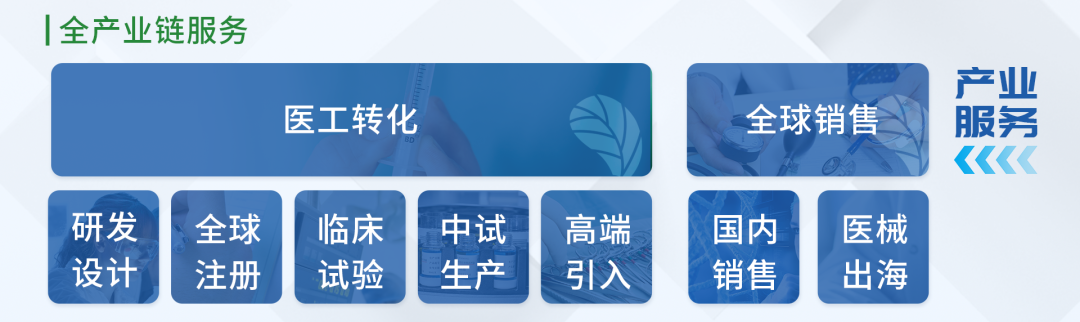
The Medical Device Public Service Platform, jointly developed by the Ozoda Group with local governments, parks, medical institutions, and research universities, focuses on incubating, transforming, and investing in cutting-edge and innovative global medical device technology projects. By establishing scientific research and transfer mechanisms aligned with international standards and implementing an open and shared operational model, the platform attracts top-tier global researchers, doctors, and innovators. It provides comprehensive industrial technical services that integrate R&D transformation, incubation, and investment, fostering significant innovative achievements and applications in medical devices. This initiative strongly supports the development of the medical device industry and technological innovation. (Compiled by Ozoda)
8. BioNTech Acquires Primaris Biotech for $800 Million
Recently, Primus Bio announced an equity acquisition agreement with BioNTech. According to the terms of the agreement, BioNTech will acquire 100% of Primus Bio's issued shares for $800 million (approximately RMB 5.781 billion) in upfront payment (subject to customary adjustments to the acquisition price), primarily through cash and partially in American Depositary Shares (ADS). Additionally, BioNTech will make a milestone payment of $150 million (approximately RMB 1.084 billion) upon Primus Bio achieving mutually agreed milestones. The transaction is expected to close in the first quarter of 2025, subject to customary closing conditions and regulatory approvals. (Yiou Network)