

Next Potential Blockbuster BD Deal: Differentiated Domestic FIC Bispecific Antibodies

Keymed Biosciences
Innovative Biopharmaceutical Developer

EpimAb Biotherapeutics
Developer of Tumor Bispecific Antibodies

Qilu Pharmaceutical
Specialty Formulations and Active Pharmaceutical Ingredients (API) Developer

The much-anticipated bispecific antibody molecules are approaching preliminary data validation.
2024 The annual meeting of ASH (American Society of Hematology) released abstracts, and numerous Biotech molecules in China made appearances, such asKang Nuoya announced the early clinical data of its related pipeline CM336 in the ASH abstract on the second day of the Newco deal. In addition, the data of bispecific antibodies under research by Qilu Pharmaceutical, Zhengda Tianqing, and EpimAb Biotherapeutics were also disclosed in the abstract.
In recent BD deals for bispecific antibodies in hematological tumors, TCE-based bispecifics have been dominant. Amgen's TCE bispecific for hematological tumors has been on the market for nearly a decade, and Johnson & Johnson’s and Roche’s bispecifics targeting hematological tumors are also already commercially available. Amid increasing competition in the TCE bispecific space for hematological tumors, bispecific molecules with differentiated mechanisms or novel targets are clearly rare. If bispecifics targeting the CD47 pathway show preliminary data validation, could this create potential significant BD opportunities?
The answer is obviously highly probable.
01
Comparison of RRMM Pipeline Data
Kang Nuoya's bispecific antibody CM336 is a BCMA×CD3 bispecific antibody, and the disclosed data targets relapsed/refractory multiple myeloma (RRMM). EpimAb Biotherapeutics' EMB-06 and CM336 share the same targets and indications. Qilu Pharmaceutical's bispecific antibody targets GPRC5D×CD3, and the disclosed data also targets RRMM. Weili Zhibo shares the same targets and indications with them. IMM0306 from Yiming Angke is a CD47×CD20 fusion protein targeting CD20+ BHL (B-cell Hodgkin lymphoma).
In terms of data comparison, Kang Nuoya's CM336 is making its data debut. The low-dose group escalation process can be skipped, and we can directly look at the groups with dose increments above 40mg. According to the abstract published on the official website, in terms of patient baseline, the median number of prior treatments received by the subjects was 4 (2-15). With a median follow-up time of 8.0 months, the cORR was 60.9% (14/23). In the 80 mg and 160 mg dose groups (n=8), the ORR was 100%.
Summary data for EpimAb Biotherapeutics has not been retrieved yet. Based on the preliminary data disclosed earlier, it appears to be different from Kang Nuoya Biomedical Technology (Chengdu) Co., Ltd. The efficacy was evaluated in all patients with doses escalating from 0.2mg to 200mg. At baseline, the median number of treatment lines was 3. Among 31 evaluable patients, the ORR was 29% (9/31). In 5 evaluable patients receiving doses ≥120mg, the ORR was 100% (1 CR, 2 VGPR, 2 PR). Confirmation of the updated ORR is currently pending.
Qilu Pharmaceutical's bispecific antibody QLS32015 is also making its data debut. In terms of patient baseline, the median number of treatment lines was 3 (1-8). Currently, the efficacy of 8 patients has been evaluated, with an ORR of 75.0% (6/8) according to the IMWG (International Myeloma Working Group) criteria. Five patients (62.5%) were assessed as having a partial response (PR). The drug is administered at a relatively low dose, ranging from 2-800 μg/kg. For a patient weighing 60 kg, this translates to approximately 0.12 mg to 48 mg. Patients achieving PR received doses of 6 μg/kg and 18 μg/kg, corresponding to total doses of 0.36 mg and 1.08 mg, respectively, which differ significantly from the doses used by Kang Nuoya Biomedical Technology (Chengdu) Co., Ltd. and EpimAb Biotherapeutics.
Moreover, in terms of side effects, all 11 patients (100%) reported treatment-related adverse events (TRAE), all of which were Grade ≥3, with the most common being CRS.
Although V立志博 (V-Libor) has obtained orphan drug designation, the data has not been publicly disclosed yet. According to the ASH data compiled by the Hua Chuang pharmaceutical team, its efficacy CBR (ORR+SD) reached 50%.
In the RRMM indication, the situation is roughly as follows: data shows that bispecific antibodies targeting BCMA remain the most robust development strategy, with already marketed drugs serving as references. Slightly higher doses have led to a very predictable increase in ORR. On the other hand, GPRC5D is still in the relatively early stages; Forimtamig, a bispecific antibody developed by Roche, which has deep expertise in hematological tumors, currently only has Phase I data available.
But what can be foreseen at present is that, in the field of hematological diseases, TCE bispecific antibodies currently show a very obvious "red ocean" trend. In this situation, one direction is to continue vertical in-depth cultivation and move towards tri-specific antibodies. For example, EpimAb Biotherapeutics' tri-specific antibody targeting CD3/CD19/CD20, with the latter two being classic targets for hematological tumors.
Another approach is the second target outside of CD3. In this direction, Immuno-Oncology's CD47-type fusion protein is currently one-of-a-kind.
02
Differentiated Competitors in Hematological Tumors
Immx Bio can be considered an outlier in its efforts in hematological tumors. Its overall strategy is to first test the waters in this field with a single-target CD47, advancing both as a monotherapy and in combination with chemotherapy, and then to further develop bispecific antibodies specifically for hematological tumors. This involves adding structural complexity on top of the single-target CD47 fusion protein, enabling it to target dual targets specific to hematological diseases.
The most critical issue for large-molecule drugs targeting CD47 is, of course, the side effects on red blood cells—whether they will cause hemolysis. Only after resolving this fundamental issue can we discuss their efficacy. KangFang and ImmuOnco have taken different approaches with their respective CD47 drugs. KangFang’s solution is to develop a monoclonal antibody and modify the antibody's angle to minimize its binding with red blood cells. ImmuOnco, on the other hand, retains only the Fc region of the IgG1 antibody and adds a CD47-binding domain to the Fc segment, making it a fusion protein rather than an antibody. Mechanistically speaking, this approach offers a more thorough resolution to the hemolytic effect.
Based on the single-target IMM01, ImmunoMab has evolved a fusion protein targeting CD47×CD20 dual targets—IMM0306. On November 18, IMM0306 updated the efficacy data of the combination with lenalidomide in a Phase Ib/IIa clinical trial for indolent lymphoma (FL and MZL). (FL is follicular lymphoma, MZL is marginal zone lymphoma).
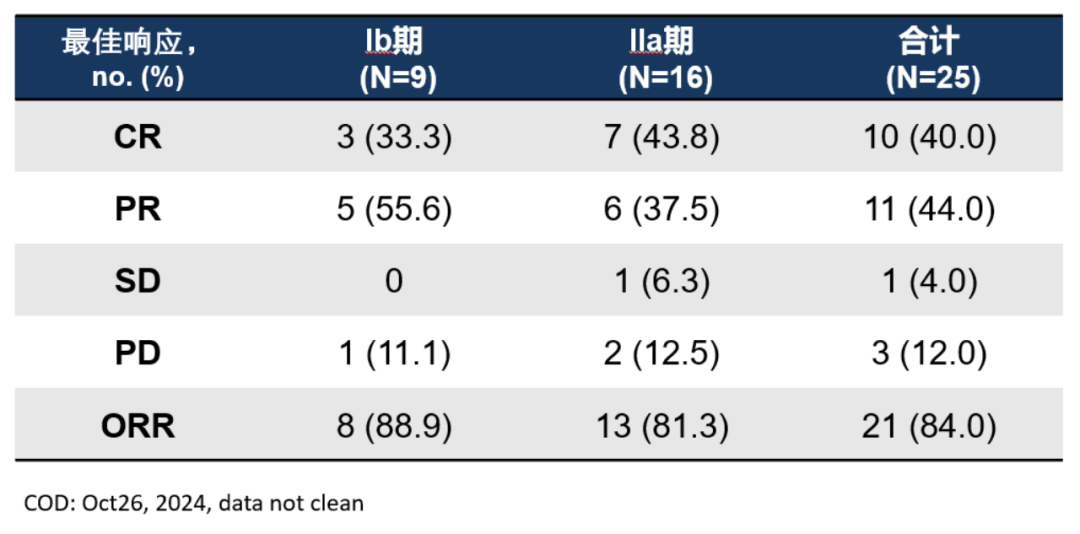 (Image source: ImMunoGene Biotechnology official website)
Among 25 evaluable patients with R/R FL, the ORR and CR (complete response rate) reached 84.0% and 40.0%, respectively; additionally, in 2 evaluable patients with R/R MZL, the ORR was 100%.
Besides, this dual-target fusion protein is also doing what most TCE bispecific antibodies are currently doing: expanding indications into the autoimmune field. Similar to EpimAb Biotherapeutics' EMB-06 expanding into pemphigus, IMM0306 is currently undergoing clinical trials for the SLE indication, developing towards B-cell targeted therapy, which is one of the trends for this SLE indication. Although many TCE bispecific antibodies are making moves in this direction, none of them have produced clinical data so far.
IMM0306 Shows a Leading Trend in This Indication: In October this year, the first patient dosing in the Phase Ib clinical trial for this indication has been completed.
IMM0306 is undoubtedly one of the most promising differentiated bispecific antibodies in the field of hematological diseases (or B-cell related diseases), second only to TCE bispecific antibodies, with tremendous potential spanning across autoimmune diseases and hematological tumors.
03
BD Forecast
Currently, BD remains one of the most reliable "implementation" methods for biotech pipelines. The expectation of recouping costs and achieving profitability is far more stable than commercial sales, and it also rapidly boosts the valuation of the company itself.
Since August, most of the bispecific/trispecific antibodies targeting hematological tumors have completed BD in the form of NewCo.
In terms of BD amount, Kang Nuoya and EpimAb Biotherapeutics have the same bispecific antibody target, and the final total milestone payments are very close, both around 630 million US dollars. EpimAb Biotherapeutics’ upfront payment is 44 million US dollars more, mainly due to the premium for more mature Phase I clinical data. In the case of Wili Biologics, an additional CD19 target was added on top of the bispecific antibody, resulting in a total payment of 614 million US dollars plus equity. The main reason can be speculated that the molecule is still in the early preclinical stage, so the total BD amount might have been discounted. In contrast, the upfront payment for Entviro Biotech’s trispecific antibody reached 300 million US dollars, with another 550 million US dollars in milestone payments later. The highest BD amount is from Tongrun Biopharma’s CD3×CD19 bispecific antibody, with an upfront payment reaching 700 million US dollars and subsequent milestone payments reaching 600 million US dollars. The premium in BD amounts for Entviro and Tongrun is also related to the counterparties involved in the transactions. Entviro’s counterparty is GSK, while Tongrun’s counterparty is Merck, both multinational corporations (MNCs) known for being more generous.
In fact, compared with the BD of TCE bispecific antibodies for hematological tumors, the influencing factors of BD can be relatively clear. First of all, whether there is preliminary data from Phase I clinical trials is crucial for the upfront payment. In addition, the upfront payment is also closely related to the counterparty. If the counterparty is an MNC, there will be a significant "MNC" premium on the upfront payment — mainly because MNCs generally have much larger cash reserves compared to overseas biotech companies. The sum of the milestone payments and the upfront payment may directly reflect the potential total value of the pipeline.
After analyzing the BD trends in the industry, let's talk about the company: Immune-Onc has completed a BD deal for its PD-L1×VEGF bispecific antibody — IMM2510, but the upfront payment was not high, only 50 million US dollars. Today, Immune-Onc announced a placement to raise 234 million Hong Kong dollars.
But considering the current indications being developed by Yimingangke, it is far from enough. Given the potential of its targets and the current R&D foundation, it could definitely have a much higher ceiling.
The CD47 target originally held great promise in the solid tumor field. Kangfang’s combination and monotherapy pipeline totals 16 lines, with applications in solid tumors combined with bispecific antibodies like AK112, already challenging the "king of cancers," pancreatic cancer. Meanwhile, ImmunoOnco's IMM01, used in combination with tislelizumab in the solid tumor field, is still in Phase I clinical trials. Despite having safety profiles comparable to Kangfang’s, its progress has been slower. In this situation, ImmunoOnco has opted for refinancing. This move not only expands IMM01 but also facilitates subsequent overseas BD or acquisition of the bispecific antibody.
Combined with Yimeng Angke's determination for today's placement and accelerated clinical trials, the company has sufficient momentum for large-scale BD. Meanwhile, according to the above BD breakdown analysis, Yimeng AngkeIMM0306The current data suggests that BD is more likely to be given to MNC. Moreover, Yimeng AngkeIMM0306The target has considerable differentiation. If its several bispecific antibody pipelines can be advanced to the next milestone, enhancing the certainty of the pipeline, the total potential BD amount might break through the previous ceiling of TCE bispecific antibodies.
Market Heat: TCE bispecific antibodies have already demonstrated demand from foreign pharmaceutical companies. On the corporate side, ImmunoOnco, despite the current industry downturn, has chosen to pursue additional financing and still gained favor with investors, showcasing its determination to continue advancing clinical trials. The BD of bispecific antibodies for hematological tumors/autoimmunity may reach new heights, and we look forward to ImmunoOnco's further expansion and operation of its pipeline indications.
Conclusion:Market investors' expectations for BD deals can mainly be viewed from two dimensions: one is the popular demands and long-term planning of overseas pharmaceutical companies, and the other is whether domestic Biotech firms have matching, promising, and advanced pipelines. Although CD47 has "hurt" many large pharmaceutical companies in the past, with the emergence of novel dual-targeting mechanisms and I-Mab's CD47 antibody establishing a safety baseline, it is believed that the appearance of efficacy or safety data from larger sample sizes will accelerate the company’s progress.Authorization of IMM0306.

Click "Pharmacology" below to follow more exciting content.
Disclaimer
The push rules of WeChat Official Accounts have changed again. If you don't tap"Under Observation"Or not set to"Star Mark", we might just dissipate in the vast sea of text~ Click here, don't miss out on the latest news from PharmaDJ!