

Shanghai Cellular Therapy Group Files for Hong Kong IPO: China's First Immune Cell Storage Stock with RMB 760 Million Revenue
Shanghai Cell Therapy Group
Cell Health Medical Products and Service Provider
Recently, Shanghai Cell Therapy Group Co., Ltd. ("Shanghai Cell Therapy Group") submitted its application to the Hong Kong Stock Exchange for the second time, planning to list on the Main Board through an IPO. CICC and CCB International are its joint sponsors. The prospectus shows that Shanghai Cell Therapy Group is the first and only company in China to cover the entire value chain of cell healthcare, with businesses spanning cell storage, cancer treatment, cell drugs, and cell recharging. If successfully listed, it will become the "first cell storage stock" on the Hong Kong Stock Exchange.
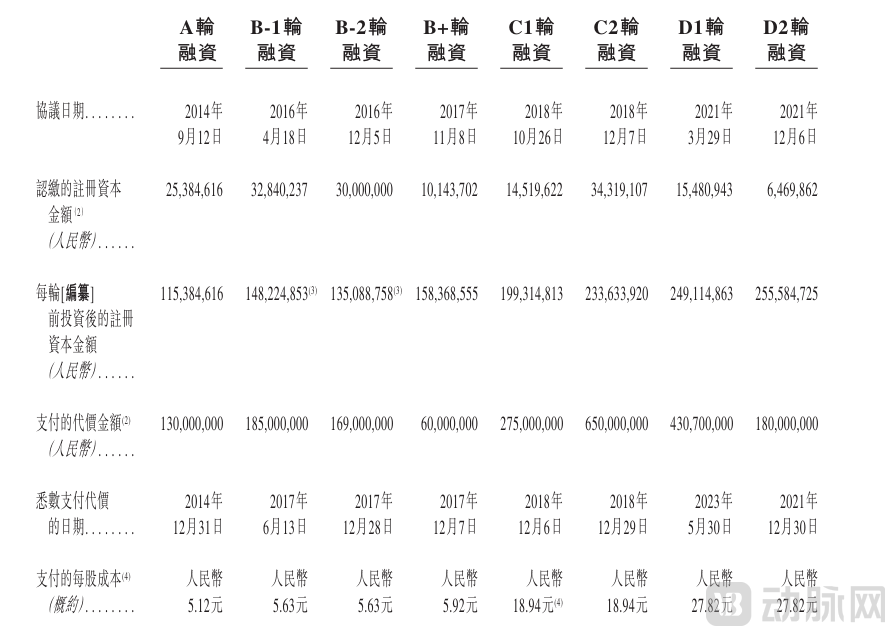
Since its establishment in 2013, Shanghai Cell Therapy Group has completed 8 rounds of financing, with a total fundraising amount exceeding 2 billion yuan. Investors include Xingye Guoxin, Ningbo Yuanhui, Volcanic Stone Capital, Legend Capital, and more. After completing a 180 million yuan D2 round of financing in December 2021, its post-investment valuation increased 11 times in 8 years, reaching 7.11 billion yuan.
 Source: Prospectus
Currently, under the Shanghai Cell Therapy Group, there are important entities such as the Shanghai Cell Therapy Research Institute, Shanghai Cell Therapy Engineering and Technology Research Center, Mengchao Cancer Hospital Affiliated to Shanghai University, and the Shanghai Wu Mengchao Joint Nobel Laureate Medical Science and Technology Innovation Center. The group also has branches in Beijing, Henan, Hainan, Hong Kong, Zhejiang, Shenzhen, and the United States.
Four Major Business Segments, Immune Cell Storage Business Takes the Lead
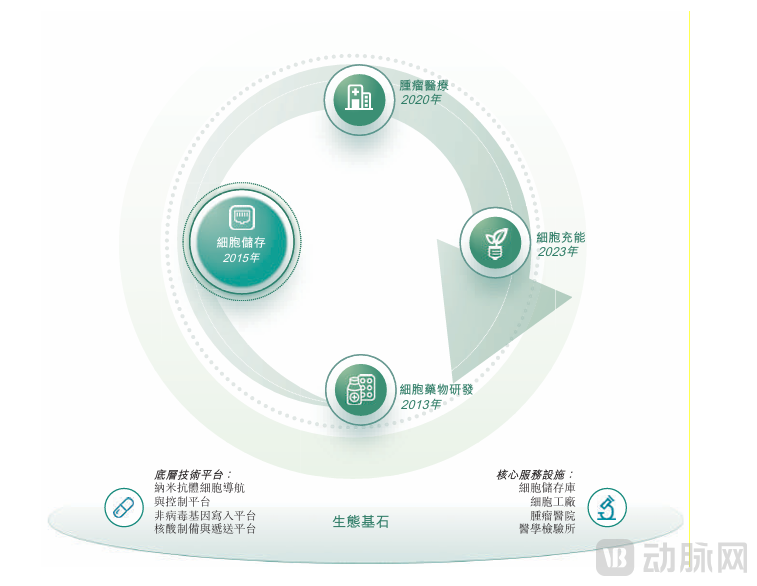
Shanghai Cell Therapy Group's products and services cover four major sectors: cell storage, cell drugs, cancer treatment, and cell recharging, organically forming a closed-loop ecosystem and complementary business model.
Source: Prospectus
Among the four business sectors,Immune Cell Storage BusinessOccupying a core position and ranking among the top in China. According to CIC Consulting, Shanghai Cell Therapy ranked first in China's immune cell storage market in terms of incremental and cumulative storage volumes for 2021, 2022, and 2023, with a market share of 40.7%, while the second-largest player held only approximately 7.1%.
Specifically, Shanghai Cell Therapy Group has independently developed several industry-leading cell storage technologies, including cryopreservation and recovery solutions, and continues to iterate and upgrade key technologies used in its services, such as cell proliferation, cell activation, cell cryopreservation, and recovery. In terms of storage scale, the company has established a cell storage service and sales network covering China, centered at its headquarters in Shanghai. As of June 30, 2024, the total area of Shanghai Cell Therapy Group's cell storage facilities in Shanghai, Beijing, and Henan reaches approximately 6,300 square meters, with a total storage capacity of about 94.7 kiloliters.
In terms of cooperation models, Shanghai Cell Therapy Group mainly collaborates with institutional partners (primarily insurance groups) and channel agents, utilizing integrated marketing strategies to offer cell storage service packages to end customers. Additionally, the company provides related services for cell storage, mainly including testing services that are supplementary or complementary to cell storage, such as high-end precision testing services associated with cancer risk assessment.
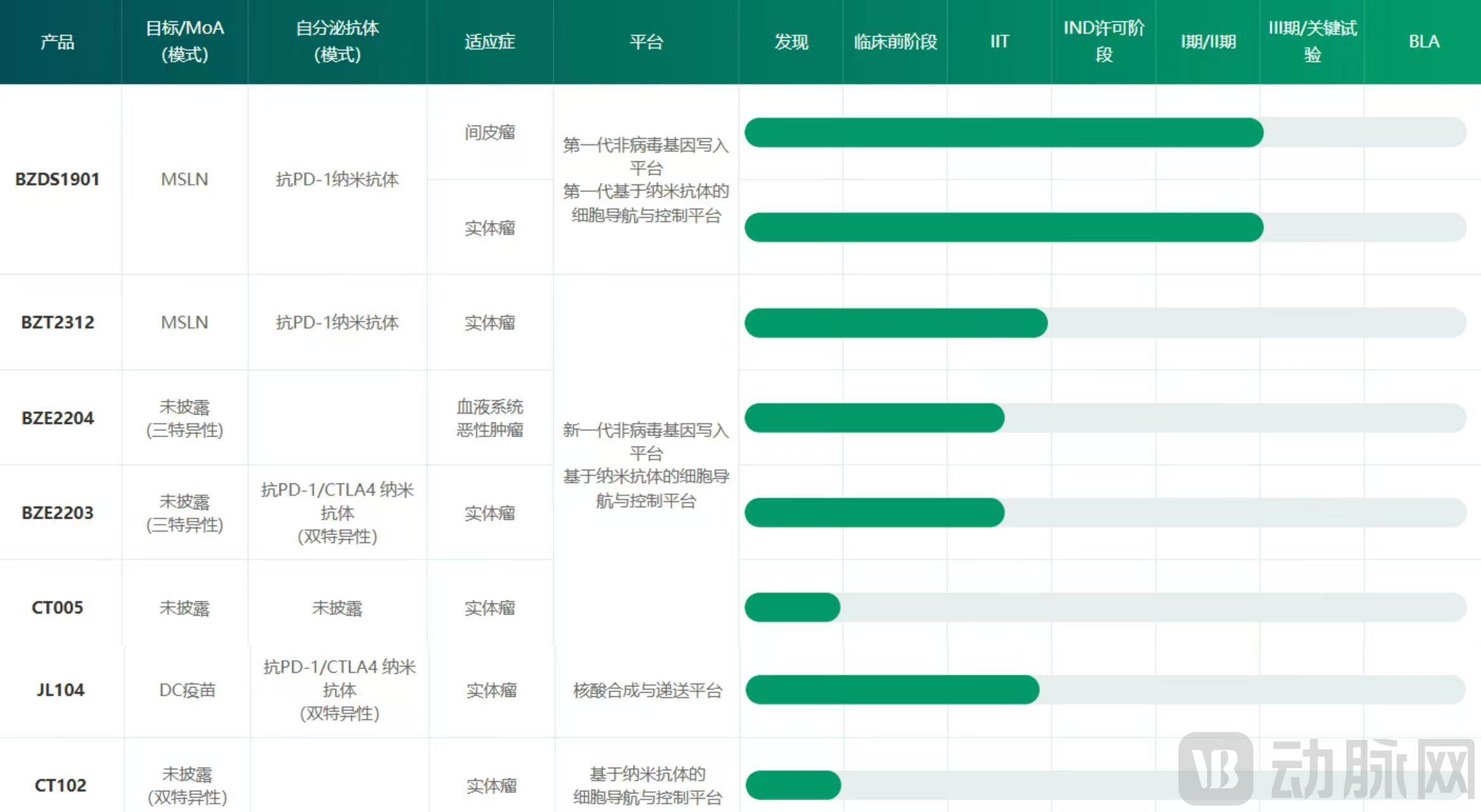
Cell Drug DevelopmentShanghai Cell Therapy Group has established a full-process integrated R&D system consisting of three major platforms: a nanobody-based cell navigation and control platform, a non-viral gene-writing platform, and a nucleic acid synthesis and delivery platform. Currently, the company has seven R&D pipelines in development, including five CAR-T pipelines and two bispecific antibody-related candidate pipelines. Among them, BZDS1901, the most advanced, is the world’s first CAR-T cell therapy armored with anti-PD-1 nanobodies for the treatment of solid tumors. It has already received IND approval from the National Medical Products Administration (NMPA) for Phase I and II clinical trials targeting mesothelin-positive solid tumors and has been granted Orphan Drug Designation by the FDA for malignant mesothelioma.
 Source: Official website of Shanghai Cell Therapy Group
Cancer TreatmentSector: Shanghai Cell Therapy Group has established the Shanghai University-affiliated Mengchao Cancer Hospital, which focuses on cell research, to strengthen cell technology innovation driven by clinical value. According to the prospectus, with the increase in hospital beds, the compound annual growth rate of inpatient visits from 2021 to 2023 was 44.2%.
In July 2023, the company, based on its understanding of cellular metabolism (energy and matter) and aging mechanisms, launched the Cheng Huang series brand.Cell ChargingProducts, further expanding the company's range of products and services.
Annual revenue of 760 million yuan, net loss narrows
The prospectus shows that Shanghai Cell Therapy Group's revenue in 2023 was approximately RMB 760 million, representing a year-on-year increase of 22.84%; the net loss was approximately RMB 488 million, with the loss narrowing by 9.87% year-on-year. In the first half of 2024, revenue was approximately RMB 434 million, and the net loss was approximately RMB 195 million. Revenue in the first half of the year increased by 24.22% year-on-year, and the net loss narrowed by 35.11% year-on-year.
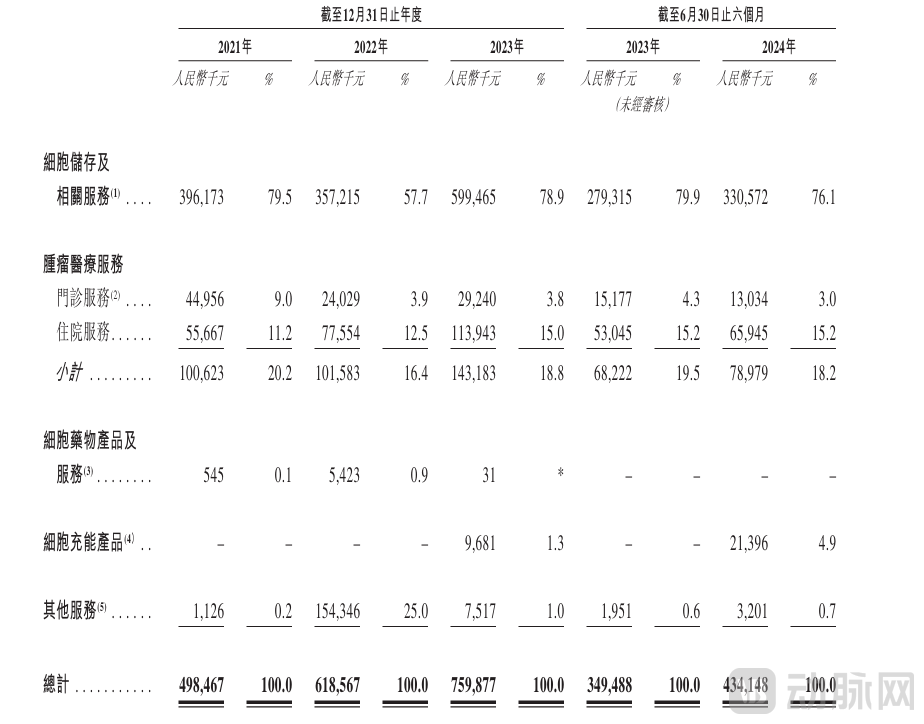
Specifically, in terms of each business segment, the cell storage business not only provides the company with its main revenue but is also the primary source of profit. Meanwhile, the drug research and development segment has yet to have a successfully commercialized product, and the oncology medical services business was in a loss state during the reporting period.
 Source: Prospectus
Cell storage services are expensive. The prospectus lists three representative packages: Baize Cell Human-Taihe Edition, Baize Love Health, and Jiliang Yuan Health. Each package offers a storage duration of 20 years, with price ranges of 108,000-176,000 yuan, 68,000-136,000 yuan, and 60,000 yuan, respectively.
During the reporting period, the incremental storage units of cell storage services provided by Shanghai Cell Therapy Group were approximately 16,600, 24,700, and 32,600, respectively. By the end of 2023, the total number of stored units had reached 100,400. During the same period, revenue generated from cell storage and related services was 396 million yuan, 357 million yuan, and 599 million yuan, accounting for 79.5%, 57.7%, and 78.9% of total revenue, respectively, with gross profit margins of 81.1%, 74.8%, and 79.7%, respectively. In the first six months of 2024, revenue amounted to 331 million yuan, surpassing 279 million yuan (unaudited) in the first six months of 2023.
In contrast, the revenue generated from tumor medical services was 101 million yuan, 102 million yuan, and 143 million yuan, respectively, with gross profits of -42.325 million yuan, -51.897 million yuan, and -46.786 million yuan, respectively. The corresponding gross profit margins were as low as -42.1%, -51.1%, and -32.7%. Tumor medical services include inpatient and outpatient services provided by Shanghai University's affiliated Mengchao Tumor Hospital, which specializes in cell research. During each reporting period, this segment contributed approximately 20% of the company’s revenue.
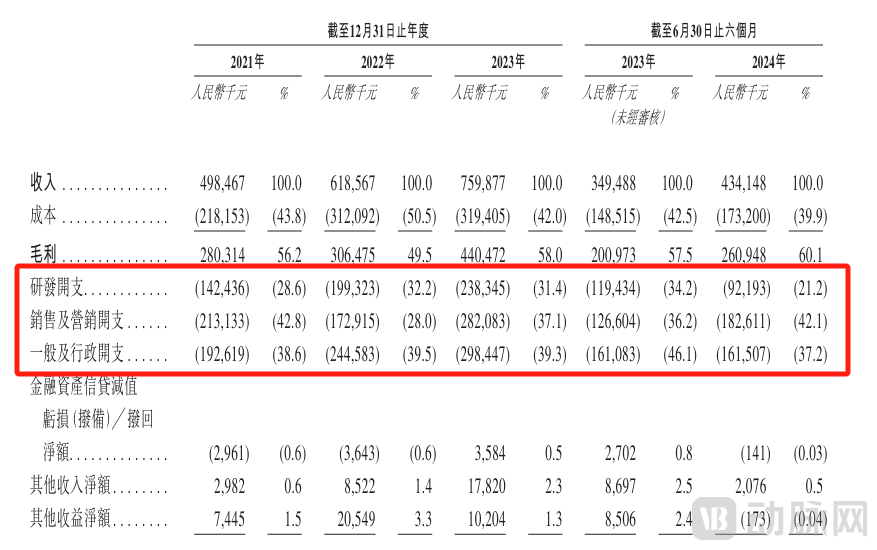
In the prospectus,Shanghai Cell Therapy Group attributes losses to R&D expenditures, high redemption liability interest costs, and insufficient capacity utilization.。
From 2021 to 2023, the company's R&D expenses, sales and marketing expenses, and general and administrative expenses reached 548 million yuan, 617 million yuan, and 818 million yuan respectively, with the expense ratio during this period reaching 110%, 99.7%, and 107.8%. Among these, sales and marketing expenses were 213 million yuan, 173 million yuan, and 282 million yuan respectively, while marketing promotion expenses payable to institutional partners reached 174 million yuan, 130 million yuan, and 226 million yuan respectively. During the same period, the sales expense ratio was 42.8%, 28.0%, and 37.1% respectively, and the R&D expense ratio was 28.6%, 32.2%, and 31.4% respectively. In both 2021 and 2023, sales investment was higher than R&D investment.
 Source: Prospectus
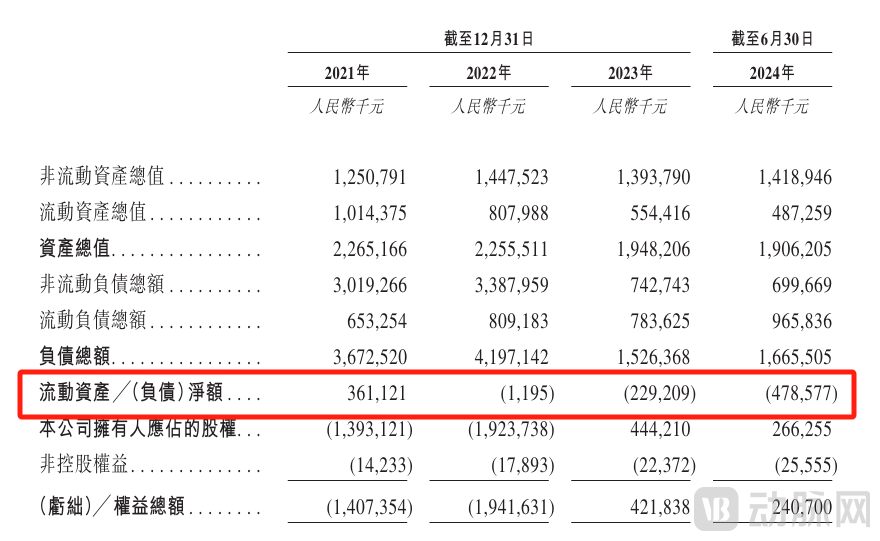
While the four business segments continue to expand, Shanghai Cell Therapy Group's cash flow has been "in the red" for three consecutive years. The prospectus shows that the net cash flow from operating activities of Shanghai Cell Therapy Group in 2021-2023 was -122 million yuan, -143 million yuan, and -28.224 million yuan, respectively, remaining negative for three consecutive years. During the reporting period, the company’s capital liability ratio for each year was 162.13%, 186.08%, and 78.35%, respectively, with net assets turning positive in 2023 after being negative, as the net debt reached 1.942 billion yuan in 2022.
 Source: Prospectus
However, despite the逐年 decline in Shanghai Cell Therapy Group's net current liabilities, as of the end of June 2024, its net current liabilities still amounted to approximately 479 million yuan.
How Much Room for Imagination is Left in the Cell Storage Market?
As the leader in China's immune cell storage business, Shanghai Cell Therapy Group officially launched the Baize Plan in August 2016. The initiative encourages people to cryopreserve their immune cells at a young and healthy age for future disease prevention and treatment. It also set the goal of "within 10 years, enabling 60% of advanced tumors to recede and making it affordable for 60% of ordinary citizens; within 30 years, helping people live healthily and happily until the age of 120."
Subsequently, the company launched the Jiliang Plan and the Chenghuang Plan. The Jiliang Plan focuses on building a foundational platform to enhance the technical capabilities for developing cell-based drugs; the Chenghuang Plan introduces consumer products such as "cell recharging" aimed at rejuvenating skin, organs, and more.
According to CIC, the market size of China's immune cell storage market, calculated by revenue, grew from approximately RMB 200 million in 2016 to RMB 2.1 billion in 2023, with a compound annual growth rate (CAGR) of 44.4% from 2016 to 2023. It is expected to further grow at a CAGR of 21.7% from 2023 to 2032, reaching RMB 12.2 billion by 2032.
However, it is important to further note that China's immune cell storage market is the most mature segment in the cell therapy industry, with numerous manufacturers participating domestically. Leading companies include Shanghai Cell Therapy Group, Zhongyuan Xiehe, Boya Stem Cells, Beike Biotechnology, BGI’s subsidiary BGI Cells, Qilu Cells, Nuwa Biologics, Shanghai Zhangjiang BioBank, and Hansi United, along with thousands of small and medium-sized enterprises.
A report by VCBeat shows that the overall cell storage rate in China is still less than 1%, with regional storage rates also being imbalanced. This is a significant gap compared to the 10-15% storage rates in developed countries. China’s cell storage industry is still in its initial growth stage, with many shortcomings yet to be addressed, holding vast untapped potential and opportunities.
Shanghai Cell Therapy Group has also demonstrated confidence in the cell storage sector. According to the prospectus, the proceeds from this IPO are intended for establishing new cell storage facilities, including site infrastructure construction, building new regional headquarters, and equipping the regional headquarters with deep-cold liquid nitrogen tanks, among other things.
References:
1. "The First Stock of Immune Cell Storage" Mystery: Shanghai Cell Therapy Group Lost Nearly 1.5 Billion Yuan in the Past Three Years, Most Profits Go to Intermediaries. New Financial Headlines
2. Shanghai Cell Therapy IPO Loses 1.5 Billion in Three Years. Real Estate K-Line