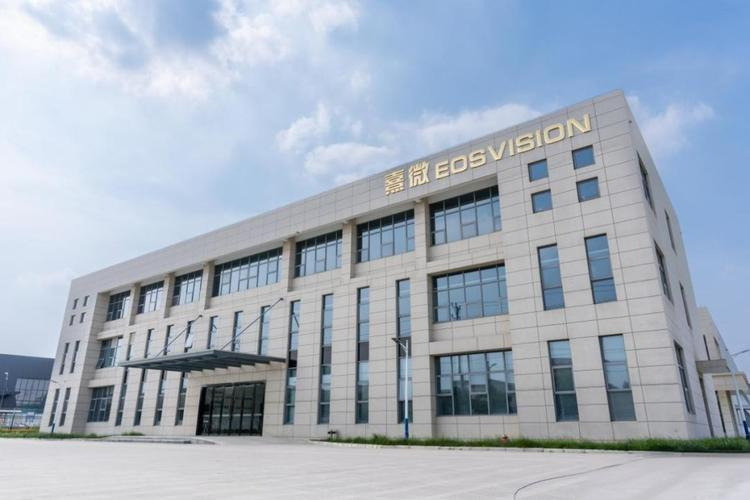
Recently,EOSVISION (Suzhou) Biomedical Technology Co., Ltd.(EOSVISION) has completedNearly 100 Million RMB in Series A Financing, which was led by Daotong Investment. EOSVISION was founded in 2020 and focuses onNew Biomodification Materials inOphthalmic Implant Medical Devices and Regenerative Medicine DevicesDevelopment of Innovative Products。This round of financing will be used to accelerate the advancementArtificial bionic cornea, Implantable contact lens, Artificial corneal endothelial patch, Artificial dermisR&D of ophthalmology and regenerative medicine innovative products in the pipeline, human clinical trial research, and internationalizationDevelopment, registration, and marketing tasks.Corneal disease is the second leading cause of blindness in China. More than 4 million people in China are disabled or blinded by corneal diseases (including those with monocular conditions), and the majority of these patients could regain their vision through corneal transplantation. However, there are very few corneal donors in China, resulting in fewer than 10,000 corneal transplant surgeries being performed annually. Additionally, factors such as corneal refractive surgery and an aging population have further narrowed the selection range for corneal donors, causing a shortage of corneal materials and leaving many patients unable to receive timely treatment.Developed by EOSVISIONArtificial Bionic CorneaHas entered the clinical trial stage, the key technology of cross-linked copolymerization of biomimetic gel raw materials based on the company's patented polymer materials and synthetic self-assembled triple-helix structure gives the product significant advantages such as improved biocompatibility, reduced protein adhesion, decreased calcification deposition, and controllable physicochemical properties.Patients have no rejection and less inflammation after the operation, and they don't need to use anti-rejection and hormone drugs for life.。
Another core product of the companyImplantable Contact LensCurrently in the animal evaluation stageThe test results showed that the optical technical parameters and animal safety of the company's products are comparable to mainstream products already on the international market. Meanwhile, the use of synthetic collagen bionic peptides is expected to address the religious usage limitations associated with animal-derived collagen in currently marketed products, laying a foundation for the company’s products to enter the international market.
# Market Prospects of Products Under EOSVISIONThe cornea is located at the front of the eyeball and is a transparent structure that provides focusing ability and protects the iris and lens from foreign substances. The cornea is the most densely innervated area of the human body, making it highly sensitive to external contaminants, and touching the cornea can trigger an involuntary eyelid-closing reflex (corneal reflex).Moreover, corneal diseases can lead to blindness.Corneal disease is the second leading cause of blindness after cataracts.In China, there are approximately 4 to 5 million patients blinded by corneal diseases, and this number is increasing at a rate of 100,000 per year.Most of these patients with corneal blindness require corneal transplantation to restore their vision, but due to a lack of donor material and other factors,There are only about 8,000 to 10,000 corneal transplant surgeries performed annually in China.。Since January 1, 2015, China has completely stopped using organs from non-voluntary death row prisoners, and voluntary donation has become the only channel for organ transplantation. The number of cornea donations per year is less than 5,000 cases, leaving many patients with corneal diseases to passively wait.Awaiting Donation."Artificial Cornea" products can greatly solve the problem of insufficient corneal donors., restoring vision to tens of thousands of corneal disease patients.According to estimates by relevant institutions,The market space for artificial corneas in China can reach 16 billion to 20 billion US dollars.There are many well-known artificial cornea companies worldwide. The concept of artificial cornea was proposed more than two hundred years ago. With the continuous development of technology, currently...The Boston Type I Keratoprosthesis (BKPro) is widely used.。
The Boston Type I Artificial Cornea has a "collar-button" design and is mainly made of PMMA, a transparent carbon-containing polymer organic compound commonly used in intraocular lens materials. It has a light transmittance of 92%, a refractive index of 1.491, is lightweight, highly malleable, and does not undergo biodegradation.However, due to the high incidence of postoperative complications, Boston Type I keratoprosthesis implantation is generally used in cases of advanced bilateral ocular surface disease.. However, with the improvement of surgical skills and the advancement of postoperative management methods, the incidence of complications has been greatly reduced. The Boston Type I keratoprosthesis is now also used for patients with unilateral visual impairment, achieving good results in the restoration of binocular visual function. In April 2018,China's First Approved Boston Type I Artificial Cornea Transplant Surgery Completed at Boao Super Hospital。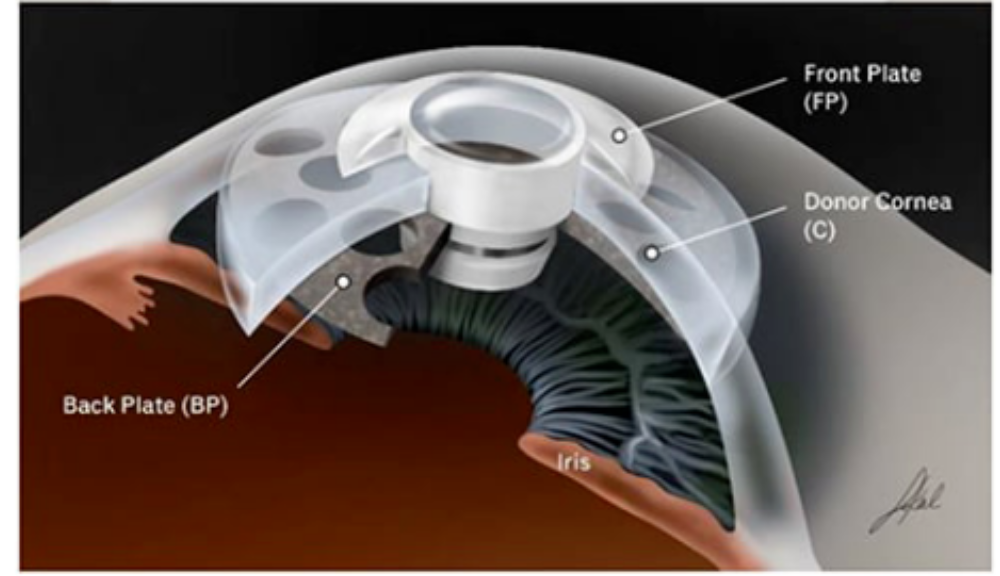
Boston Type I Artificial Cornea
Israel's Corneat Vision, which has developedCorNeat KPro Artificial Cornea is the world's first model that does not requireArtificial corneas donated by official organizations can be directly integrated into the eye wall, replacing damaged or deformed corneas.。CorNeat KPro allows patients blinded by corneal disease to regain normal vision immediately after a relatively simple implantation procedure. It uses a skirt made from the company's core technology platform, EverMatrix, to integrate an artificial optical element into the resident ocular tissue, eliminating the need for donor tissue.Compared with the Boston Type I Keratoprosthesis, which sutures the corneal prosthesis onto the cornea,CorNeat KPro can be reliably integrated under the conjunctiva (i.e., the white part of the eye).The conjunctiva is a site rich in blood vessels and fibroblasts, with higher mechanical strength and faster healing speed.
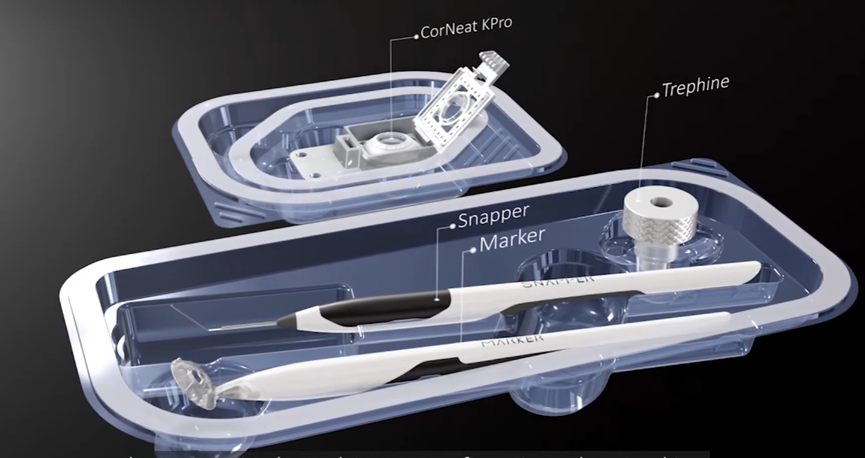
CorNeat KPro Artificial Cornea
In addition, there are Aurolab,Mediphacos、Addition Technology、Cornea BiosciencesPresbia, Eyeyon Medical, Linkocare Life Sciences Ab, Sightlife, and other companies also hold a certain market share and technical strength in the artificial cornea field.In terms of domestic companies,About 300 companies in China are related to artificial corneas, with only 3 approved products on the market., respectivelyShenzhen Ainier Corneal Engineering Co., Ltd."EOSVISION"、EOSVISION (Guangdong) Biotechnology Co., Ltd."Priscon"、Beijing Miherr Medical Device Co., Ltd.MiH Artificial Cornea, soThe market is still in its early stages and has not yet formed a fiercely competitive situation.。Developed by Shenzhen Ainier Corneal Engineering Co., Ltd."EOSVISION Artificial Bio-Cornea" is the world's first artificial biological cornea.Derived from porcine corneas, it is prepared through processes such as viral inactivation and decellularization, representing the extracellular matrix of porcine corneas. It consists of the anterior elastic layer and part of the stromal layer, with collagen as its main component. It retains the three-dimensional structure of natural corneas and reduces immunogenicity.Approved for marketing in April 2015。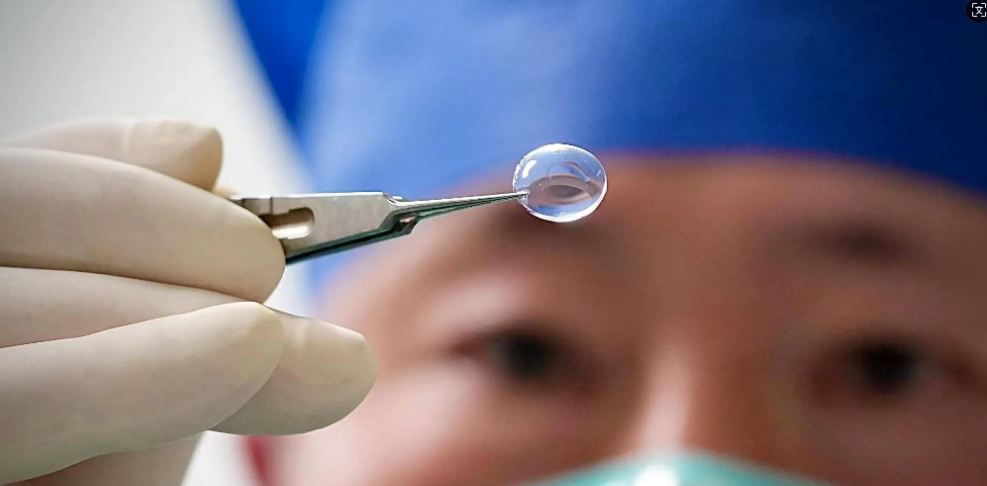
Aixin TongArtificial CorneaDeveloped by Guangdong Jiayuemei Vision Biotechnology Co., Ltd.“PUSHIKANG"The Button-Type Artificial Cornea is the first fully synthetic artificial cornea made from entirely artificial materials to be commercially available in China.", the material of the mirror column is polymethyl methacrylate (PMMA), and the materials of the back plate and retaining ring are surgical implant-grade titanium (TA3G) and titanium alloy (TC4), respectively. The product is based on the Boston Type I artificial cornea, with dimensions and processing tailored to the anatomical structure of the Asian eye and iris color.Approved for Class III Medical Device Registration Certificate in September 2021。Developed by Beijing Miherr Medical Device Co., Ltd.MiH Artificial CorneaIt is also a synthetic artificial cornea made of purely artificial materials. The mirror column is made of polymethyl methacrylate, and the stent consists of titanium stent wings and a polymethyl methacrylate stent base.Approved for marketing in December 2021。In addition, the decellularized corneal graft developed by Uderen based on the biomedical material technology platform of Crown Bioscience was approved for marketing in April 2016, becoming the world's only product with blindness removal and vision restoration as its main efficacy indicators; there is also the HAOER® decellularized corneal graft independently developed by Qingdao Zhonghao Biological Engineering Co., Ltd., which was granted product registration by the National Medical Products Administration in September 2019 after review.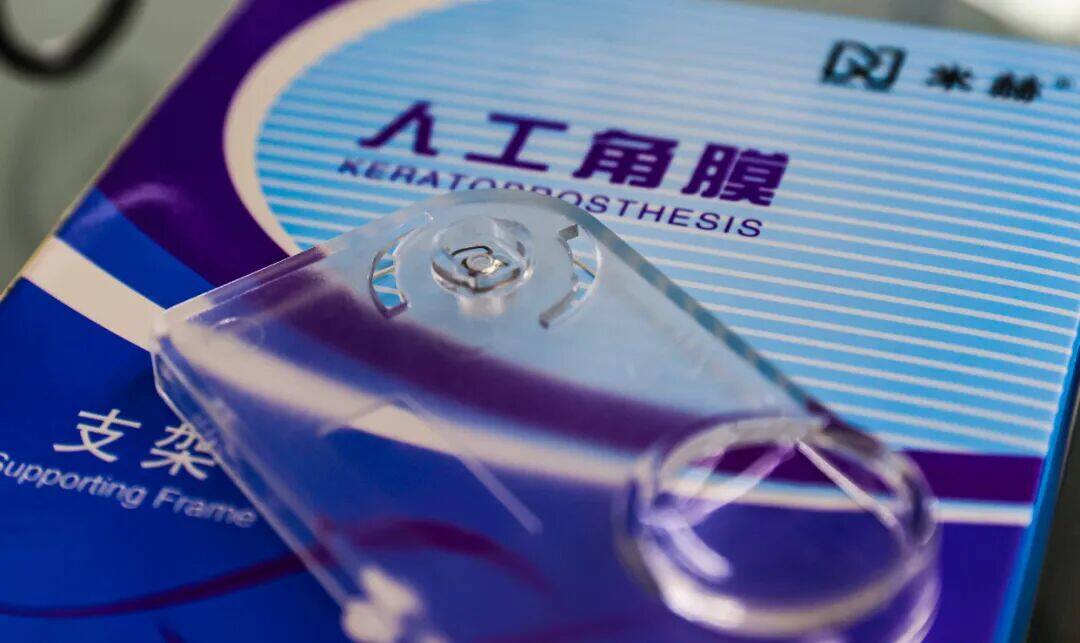
Mihe ArtificialCornea
Currently,EOSVISIONBased on globally leading and proven industry patents,Key Technologies for Crosslinking Copolymerization of High-Polymer Materials and Synthetic Self-Assembled Triple-Helix Structured Biomimetic Hydrogel Raw Materials,The Application of Its Artificial Biomimetic Cornea in Lamellar TransplantationHas entered the clinical trial stage, effectively solving the transparency and biocompatibility issues of implantable products.Implantable Contact Lens (ICL) is a collagen polymer made from soft plastic and natural collagen material. It has excellent biocompatibility and can be implanted into the eye’s refractive system through minimally invasive surgery. It is a specialized material used in refractive intraocular surgery.Particularly suitable for patients with high myopia, insufficient corneal thickness, or other conditions unsuitable for laser corneal refractive surgery.。China performs approximately 3 million refractive surgeries annually, with a growth rate of about 30% for ICL in China.ICL Currently Accounts for 10% of Refractive Surgery, Future Share Expected to Reach 50%, Promising Outlook。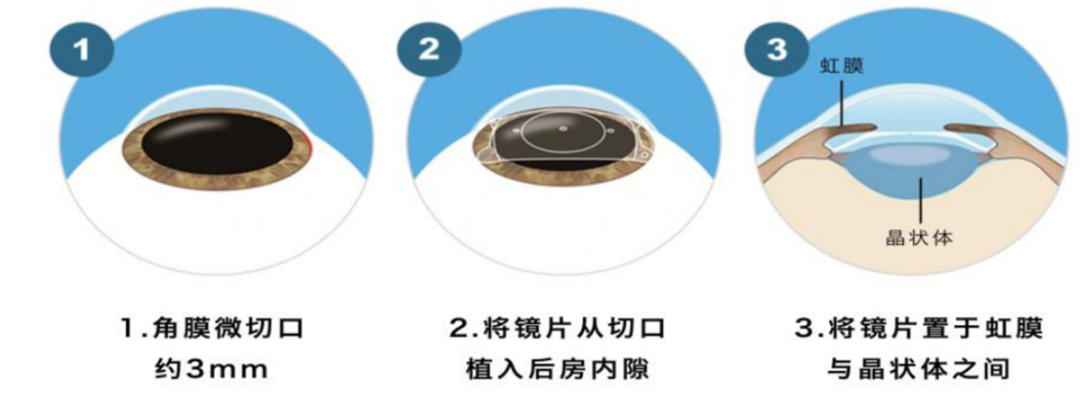
Principle of ICL Surgery
At this stage,ChinaThe global ICL lens market is monopolized by the American company STAAR., with six generations of products currently available. Its exclusive patented COLLAMER refractive lens is the world's only implantable posterior chamber phakic refractive contact lens that has received certification from the U.S. FDA, European CE, and China NMPA.Global Implant Volume Breaks Through 3 Million in 2024。
STAAR has formed a monopolistic position in China's ICL market., The Chinese market contributes more than half of its revenue, with 300,000 cases implanted annually.By 2030, its valuation in China will exceed $5 billion.。In China, apart from STAAR's ICL, the only other posterior chamber implantable lens is the PRL by Hangzhou Aijing Lun. Meanwhile, companies like Aibo Medical and Raymon Visual Healthcare have also developed ICL products.

EOSVISION PRL
Optical Technical Parameters of EOSVISION Microbial ProductsComparable to mainstream products already on the international market, which means that the company's products have reached international standards in optical performance and can provide clear vision correction effects.The product usesSynthetic Collagen Biomimetic Peptide, This materialExpected to solve the religious belief-related usage limitations potentially caused by animal-derived collagen in existing marketed products.Moreover, it may also bring other technical advantages, such as better biocompatibility, lower risk of immune rejection, etc., all of which are important factors in driving the product into the international market.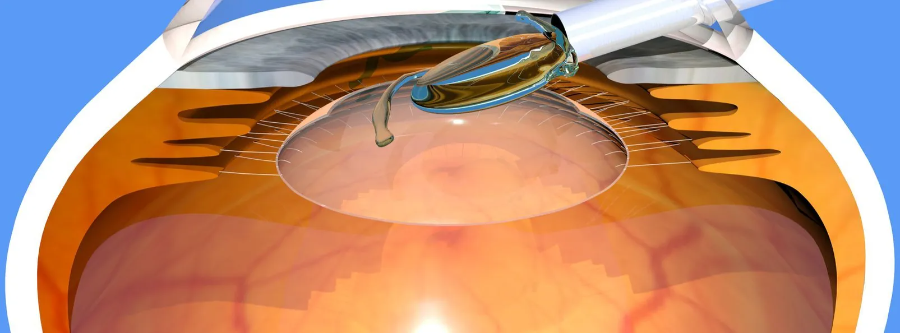
The test results from the animal evaluation phase show that the company's product rivals international mainstream products in terms of safety, which is crucial for ensuring the safety of the product in human applications.Moreover, due to the use of synthetic collagen biomimetic peptides, the product is expected to gain easier acceptance and recognition in the international market, laying a foundation for its internationalization.- Artificial Corneal Endothelial Sheet
Due to the shortage of donor corneas and the complex surgical procedures, many researchers are dedicated to constructing a tissue-engineered corneal endothelial layer to rebuild the barrier.Currently, corneal transplantation technology in China is mainly dominated by penetrating keratoplasty, with endothelial keratoplasty accounting for less than 10%.In regions such as the United States, Germany, and Singapore, endothelial keratoplasty has become the mainstream method of corneal transplantation. In contrast,China's Endothelial Keratoplasty Market Has Broad Development Space。
The development of artificial corneal endothelial membrane is challenging, especially in Israel.Eyeyon Medical is currently the main global supplier., the company's EndoArt artificial corneal endothelial membraneMade from synthetic materials, aiming to replace the need for human donor corneas in traditional corneal transplant surgery.
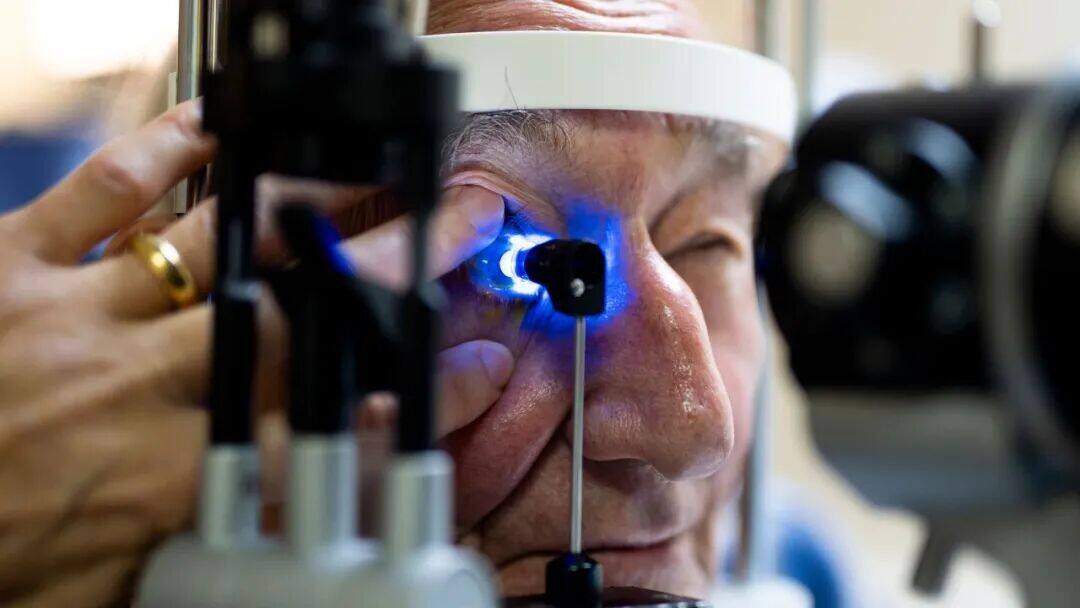
The First Artificial Cornea EndoArt Transplantation in the UK Successfully Completed — Patient Cecil 'John' Farley
EndoArt is a hydrophilic acrylic, dome-shaped permanent implant., with a diameter of 6mm and thickness of 50µm, specifically used to replace the diseased corneal Descemet's membrane and endothelial layer.
The doctor implants the graft into the posterior surface of the cornea, which can replace the diseased endothelial layer and prevent the transfer of fluid to the central stroma.By covering approximately 40% of the posterior corneal surface, blocking fluid inflow and epithelial evaporation, corneal edema is reduced to restore corneal homeostasis.This artificial endothelial layer has received FDA Breakthrough Device Designation, NMPA Innovative Medical Device Recognition, and CE certification.。
EOSVISION is also accelerating the development and human clinical trials of artificial corneal endothelial patches., which is expected to solve the problem of scarce corneal donors in China and achieve a significant breakthrough in the field of corneal transplantation.
The development of artificial dermis products aims to meet the human demand for optical, biological scaffold (filling), and regenerative repair medical products.EOSVISION's artificial dermis product is currently in the research and development stage., the specific clinical trial and product launch schedule has not been announced.
# About EOSVISION
EOSVISION was founded in 2020.Registered capital of 5 million US dollars, mainly engaged in the research, development, production, sales, and transformation of passive implantable medical devices. The company is committed to establishing an international biomedical regeneration and transformation base.Develop a series of bionic regeneration products such as artificial cornea, artificial skin, and implant materials.,If successfully developed and marketed, it is expected to bring new treatment options for patients with corneal diseases.The company owns approximately 5,600 square meters of R&D and production space. It has currently built three static ISO 7 clean production workshops (locally static ISO 5), and established a comprehensive quality system in accordance with ISO13485, FDA QSR820, and China's Good Manufacturing Practice for Medical Devices.IfBooth/White Paper/Speech SharingIf you are interested in the above content, please feel free to contact us.Sign early! Promote early!Extra benefits for signing in December! ~Contact information is as follows:You can also contact the editor-in-chief directly, such as Zhao Qing, Alice, Jacky, Ziana and other staff members of the Siyu team.Ophthalmology Solutions Case
Research on Ophthalmic Instruments Industry