

Simcere Bio Announces Positive Phase I Clinical Results for SNC103, an Allogeneic Anti-CD19 CAR-NK Therapy, with One Patient in Complete Remission for Over 30 Months

Simnova
Innovative Cell Therapy Product Developer
Welcome to follow Asymchem Pharma News

Today, Simnova announced that its self-developedThe universal allogeneic CD19 CAR-NK drug SNC103 has successfully completed dosing in two patients in a Phase I clinical trial.This therapy targets relapsed and/or refractory large B-cell lymphoma.Two patients with relapsed/refractory conditions both achieved good therapeutic effects.。
Latest Data from Phase I Clinical Trials
The first patient was diagnosed with follicular lymphoma five years ago, which progressed to diffuse large B-cell lymphoma more than a year ago despite active treatment. Immunohistochemical testing revealed BCL2 and BCL6 rearrangements, indicating a poor prognosis. Treatments including CD20 monoclonal antibody, combination chemotherapy, BTK inhibitors, and other drugs failed to achieve complete remission, and the patient became refractory to the last line of therapy. In August 2024, the patient received a single infusion at the lowest dose.One month later, the PET-CT examination showed a Deauville score of 3 points, evaluated as complete remission (CR) according to the Lugano criteria, and remained in CR status until 3 months after infusion.。
The second patient was diagnosed with DLBCL non-GCB type three years ago, having previously received four lines of standard treatment, with the best response being only partial remission (PR), and the last two lines of treatment were refractory. The patient's IPI (International Prognostic Index) score upon enrollment was 4. Immunohistochemical testing showed MYC, BCL2, and BCL6 rearrangements, indicating a triple-hit high-risk subtype, all suggesting a poor prognosis. One month after a single infusion in the second dose cohort, the patient was evaluated according to the Lugano criteria.The efficacy evaluation is partial response (PR), and the patient's current general condition is good, with ongoing follow-up.。
Neither of the two patients experienced any adverse reactions such as cytokine release syndrome (CRS), immune effector cell-associated neurotoxicity syndrome (ICANS), or graft-versus-host disease (GvHD).
About SNC103
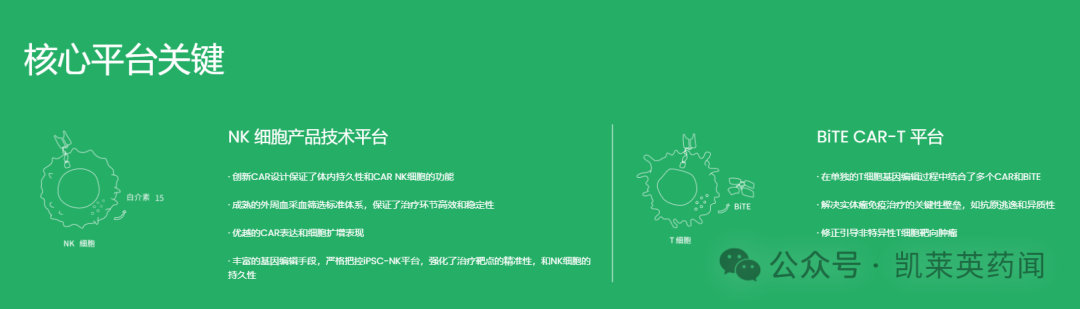
SNC103 adopts an innovative CAR structure with independent intellectual property rights, demonstrating a more effective anti-tumor immune response than similar CAR designs in preclinical studies.
In addition, the company possesses mature and stable CMC capabilities for the production of universal NK cells; currently, the CAR transduction efficiency, expansion levels, and cell viability post-cryopreservation and thawing of NK cells have all reached industry-leading standards.
The IIT study conducted earlier showed that the first patient achieved CR after receiving prior autologous CD19 CAR-T treatment but relapsed several months later. Subsequently, the patient rapidly achieved CR again after a single infusion of Simnova's CD19 CAR-NK cells.And it has been maintained in CR status for more than 30 months.。
The company plans to enroll approximately 20 patients in the Phase I trial.More safety and efficacy data are expected to be released in 2025.
About CAR-NK Drugs
CAR-NK Cell Therapy Utilizes Genetic Engineering Technology to Express Chimeric Antigen Receptors (CAR) on the Surface of NK Cells, Enabling NK Cells to Specifically Recognize and Kill Cancer Cells. Compared with Traditional NK Cells, CAR-NK Cells Exhibit Stronger Anti-Tumor Activity and a Broader Anti-Tumor Spectrum. Compared with CAR-T Therapy, CAR-NK Has Higher Safety Due to Reasons Including:
CAR-NK cells have a short lifespan and remain in the bloodstream for a relatively short period, avoiding long-term safety concerns.
CAR-NK does not produce interleukin-6, thus avoiding cytokine storms;
NK cells do not express MHC class I molecules, making them less likely to cause graft-versus-host disease (GVHD), thereby reducing the risks of infection and GVHD.
In addition, compared with CAR-T cells, CAR-NK cells are simpler to prepare, easier to produce on a large scale, and allogeneic CAR-NK cell therapy can avoid the limitation of patients relying on their own cells. Sources of NK cells used for CAR-NK cell engineering include peripheral blood (PB), umbilical cord blood (UCB), established NK cell lines, and human pluripotent stem cells (hPSC, including induced pluripotent stem cells iPSC). Compared with T cells, these broader potential sources make NK cells more accessible.
However, CAR-NK cell therapy faces three main challenges: insufficient persistence, inadequate tumor-targeting transport capacity, and the tumor microenvironment limiting CAR-NK cell function. Due to the lack of cytokine support, NK cells exhibit limited persistence in vivo. Strategies to address this include exogenous cytokine injection, cytokine gene modification, and inducing a memory-like phenotype. The complex interaction between chemokines secreted by NK cells and those secreted by tumor cells affects NK cell trafficking, which in turn determines the efficacy of CAR-NK cell therapy for cancer treatment. Additionally, immunosuppressive soluble factors, immunosuppressive cells, and an unfavorable environment for immune cell function within the tumor microenvironment can all hinder CAR-NK functionality. These factors include TGFβ, adenosine, IDO, and others.
Comparison of CAR-T Cell Therapy and CAR-NK Cell Therapy
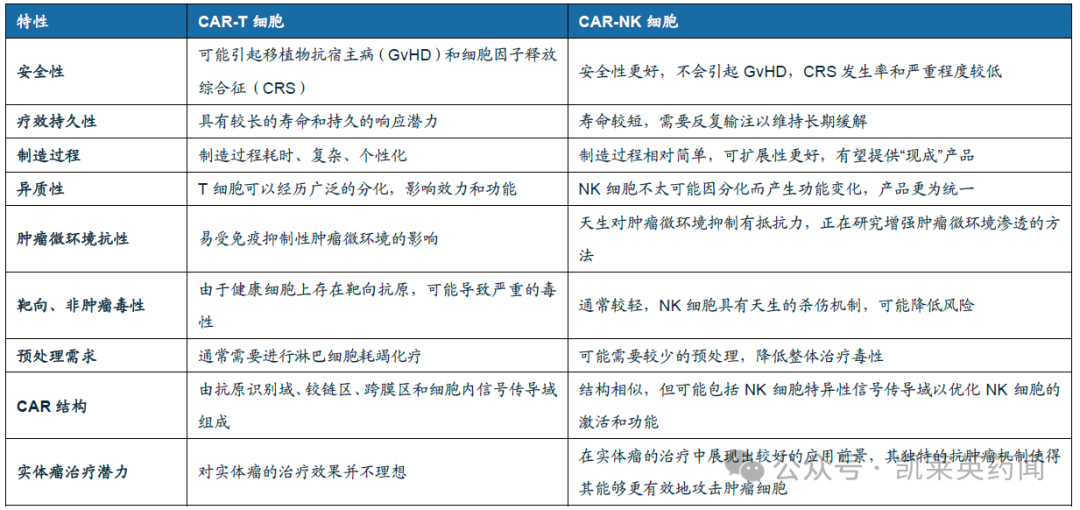
According to incomplete statistics, there are over 300 CAR-NK projects under research and development globally, primarily involving targets such as CD19, BCMA, CD20, CD33, and PD-(L)1.
In the clinical stageCAR-NK Therapy

About Simnova
Simnova was founded in 2019 as a biotechnology company specializing in cell therapy and is currently in the clinical development stage. The company has a robust pipeline, including both clinical and preclinical projects.
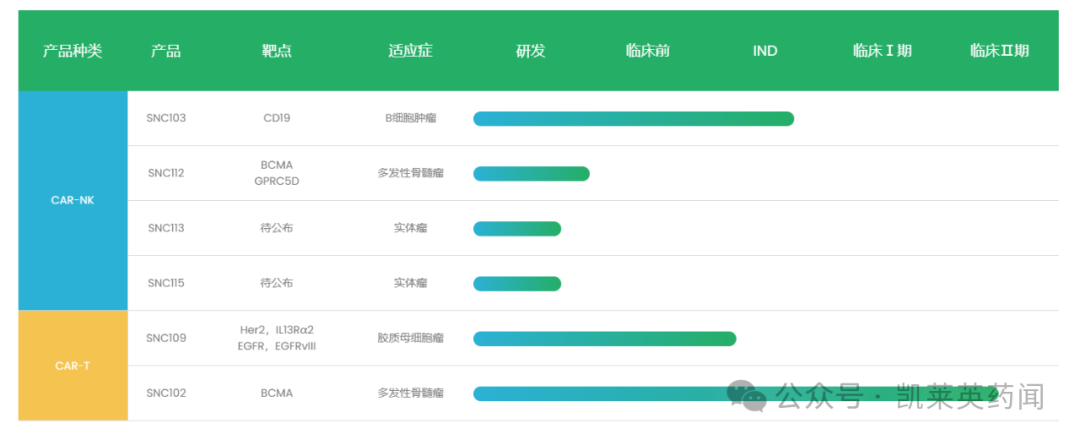
In addition to focusing on the development of globally competitive universal CAR-NK, Simnova is also actively advancing the clinical research and application of its innovative BiTE CAR-T technology platform for solid tumors.
In collaboration, Simnova has partnered with the star biotechnology company ORNA to develop next-generation universal in vivo cell therapy products based on circular mRNA and targeted delivery platforms. This technology is expected to become another disruptive universal cell therapy drug modality beyond CARNK, with potential applications in treating diseases such as cancer and autoimmune disorders.
References
1. Company Official Website
2. Mes Blood New Frontier
3. GF Securities




"Views"Click once