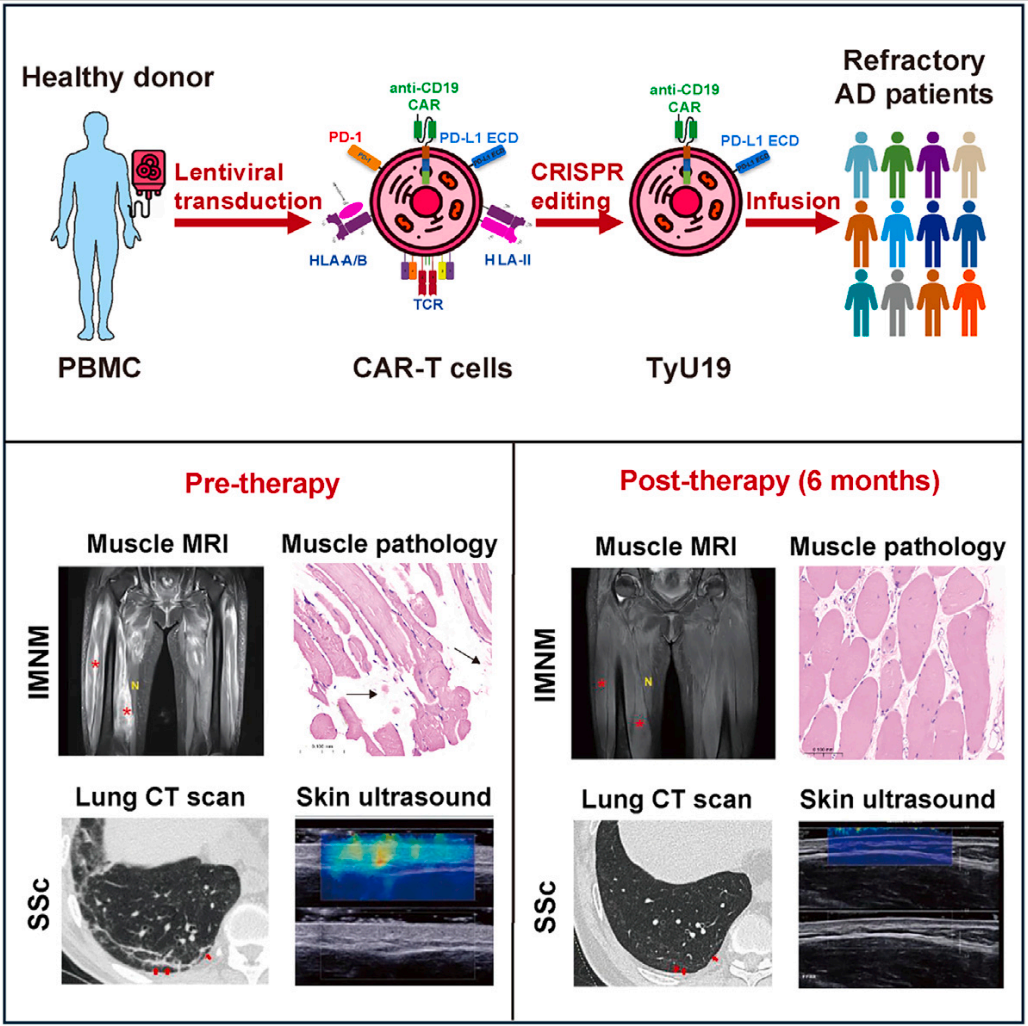
Autoimmune DiseasesAffecting approximately 8% of the population, many of whom cannot be cured and require lifelong management. Despite various interventions(Including biologics and small molecule targeted drugs)Progress has been made, but many patients with autoimmune diseases will eventually relapse, and may even develop life-threatening complications. In addition to the lack of therapeutic potential, most existing treatments also have significant short-term and long-term toxicity. Therefore, there is a large and unmet medical need for patients with refractory autoimmune diseases.July 16, 2024,BRL Medicine Inc.(hereinafter referred to as "BRL Medicine")UnitedResearchers from East China Normal University and Shanghai Changzheng Hospital, in the top international academic journalCellPublished an article titled:Allogeneic CD19-targeted CAR-T therapy in patients with severe myositis and systemic sclerosisResearch Paper.This study used CRISPR-Cas9 gene editing technology to genetically engineer healthy donor-derived, CD19-targeted CAR-T cells to address immune rejection issues, thereby developingNew Generation AllogeneicUniversal CAR-T Therapy(TyU19), and successfullyTreated 1 caseRefractory Immune-Mediated Necrotizing MyopathyPatients, as well as 2 casesDiffuse Cutaneous Systemic SclerosisPatients. During the 6-month follow-up period after treatment, all three patients experienced deep remission of symptoms.Significant improvement in disease clinical response index scores, with inflammation and organ fibrosis also reversed, andNo cytokine release syndrome or other serious adverse events.These clinical results indicate that,Off-the-shelf universal CAR-T cells show high safety and efficacy in treating severe refractory autoimmune diseases.It is worth mentioning that this isFirst Global Report of Allogeneic Universal CAR-T Cell Successfully Treating Autoimmune DiseasesIt is also a top-tier academic journal.CellFirst Publication of CAR-T Cell Therapy for Autoimmune Diseases ResearchThis not only represents a critical breakthrough for BRL Medicine in the field of CAR-T, particularly in allogeneic universal CAR-T therapy for autoimmune diseases, but also signifies a qualitative leap in technological differentiation and innovation in the cell and gene therapy sector.Professor Xu Huji of Shanghai Changzheng Hospital as the first corresponding author, Vice President of Production and CMC of BRL MedicineTan BinghePh.D., Co-first Author of the Paper, Founder & Chairman of BRL MedicineLiu MingyaoProfessor, Co-founder & Vice PresidentDu BingThe professor is the co-corresponding author of the paper.Immune-Mediated Necrotizing Myopathy(IMNM)It is a systemic autoimmune disease characterized by myofiber necrosis and progressive muscle weakness.Signal Recognition Particle(SRP)-IMNM is the mostInvasiveIMNMOne of the subtypes, characterized by anti-SRP autoantibody-driven immune attacks on skeletal muscles. Conventional therapies are often ineffective for SRP-IMNM, and there are no specific treatments available.Therapy for SRP-IMNM, and such patients may experience life-threatening systemic symptoms.Systemic Sclerosis(SSc)It is another autoimmune disease characterized by widespread fibrosis affecting multiple organs. There are two main types of systemic sclerosis: limited cutaneous systemic sclerosis and diffuse cutaneous systemic sclerosis.(dcSSc)The latter, due to the rapid progression of the disease and early damage to visceral organs, has a poor prognosis. Conventional immunosuppressants may help slow disease progression, but extensive fibrosis involving cardiovascular organs is generally considered irreversible.In recent years,CAR-T Cell TherapySignificant breakthroughs have been achieved in B-cell malignancies such as leukemia and lymphoma. Similar to B-cell malignancies, autoimmune diseases associated with autoantibodies also originate from B-cell abnormalities. Therefore, recent studies have explored the use of autologous CD19-targeted CAR-T cell therapy derived from patients to treat autoimmune diseases.(e.g., systemic lupus erythematosus), and achieved promising therapeutic effects.However, autologous CAR-T cell therapy is extremely expensive and prone to failure during the manufacturing process of personalized products. Developing a scalable, off-the-shelf CAR-T cell product derived from healthy donors would greatly improve the accessibility of CAR-T cell therapy, but the risk of allograft rejection has hindered its clinical application.In this study, the research team developed a healthy donor-derived, multi-genome edited allogeneic CD19-targeted CAR-T cell product—TyU19, and used to treat 1 casePatients with refractory SRP-IMNM and 2 casesdcSSc patients.Used in the studyTyU19, isBRL MedicineBased on a Universal Cell Platform with Independent Intellectual Property Rights(TyUCell®)Developed byAllogeneic Universal CAR-T Cell Therapy Targeting CD19 Antigen, This CAR-T cell therapy product has been approved by the Center for Drug Evaluation of the National Medical Products Administration of China in July 2023.(CDE)Approved for the clinical trial to treat "B-cell Acute Lymphoblastic Leukemia," it features high accessibility, low cost, stable quality, and has demonstrated significant efficacy and high safety in clinical trials.The production process of TyU19 is shown in the figure below.Each batch from 1×10⁹Individual(Approximately a single donation1/10)Donated by young and healthy donorsPeripheral Blood Mononuclear Cells(PBMC)Start,After isolating T cells from PBMCs, they were first transduced with a lentivirus encoding the anti-CD19-CAR construct to generate CD19-targeted CAR-T cells, followed by multiplex and selective gene editing.Finally, magnetic-activated cell sorting was performed to purify CD3-negative cells, thereby avoiding graft-versus-host reactions caused by allogeneic T cells. Typically, each batch can produce enough for use in >100 patients.(1×10 infusion each time6/kg CAR-positive cells)。
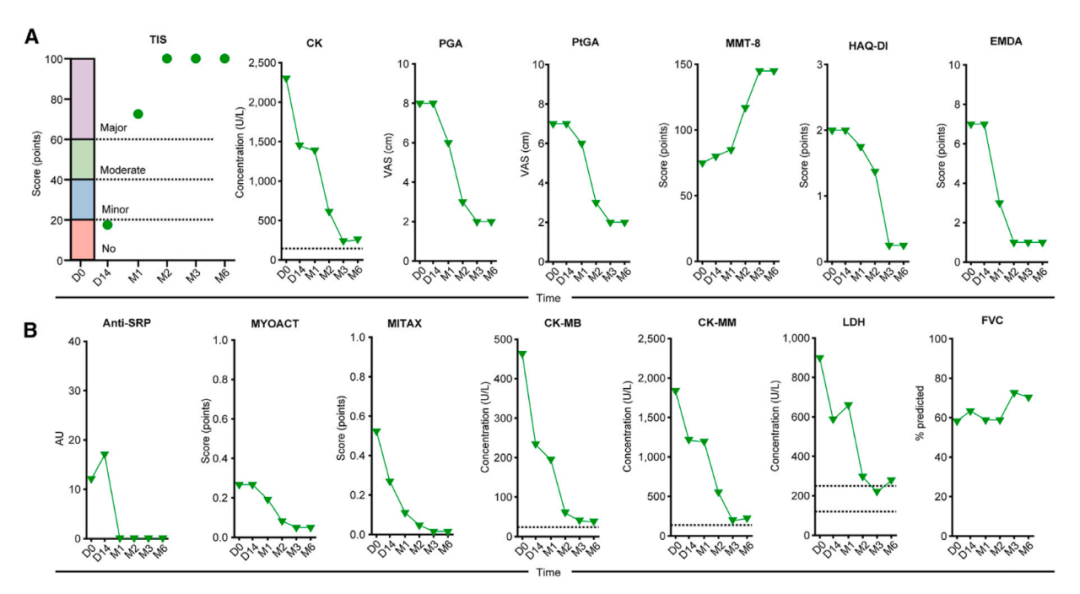
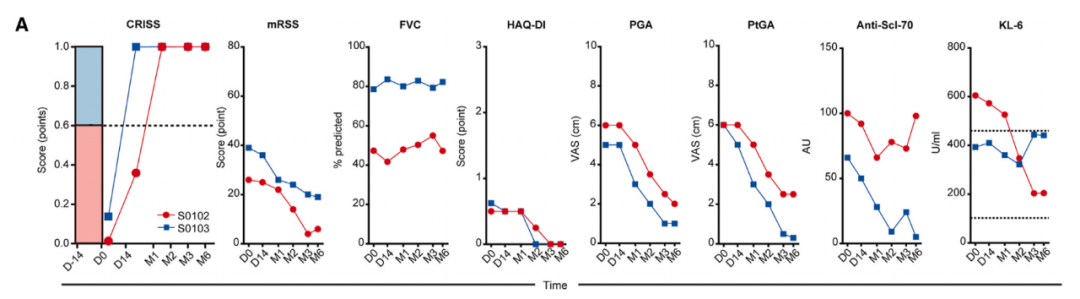
Figure 1,Design and In Vivo Function of BRL Medicine's UCAR-T Product "TyU19"The scientific team at BRL Medicine has utilized this innovative gene-editing strategy to not only effectively avoid the potential risk of graft-versus-host disease in allogeneic cell transplantation but also successfully overcome the most critical technical barrier in the development of universal allogeneic CAR-T products: the rejection of allogeneic cells by the patient's immune system. On the basis of ensuring the safety and efficacy of the cell products, they have truly achieved the universalization of immune cell therapy products.Among the 3 patients with severe autoimmune diseases who received treatment, specifically, the SRP-IMNM patient did not exhibit any symptoms of fever or cytokine storm after receiving TyU19 cell therapy, and the patient's overall improvement score...(TIS)Rapid(2 months)Increased from a baseline of 72.5 to 100 and remained at this level throughout the subsequent follow-up period. Imaging and pathological examinations also showed that the patient's muscle inflammation had significantly improved. In two dcSSc patients who received TyU19 cell therapy, the CRISS score significantly increased within months. Regarding skin fibrosis, the modified Rodnan skin scores of both patients...(mRSS)Significantly decreased.InAll 3 patients, all achieved after treatment with TyU19Deep B Cell Depletion,SRP-IMNM PatientsThe autoantibodies were completely eliminated.(Figure 2); The critical organ fibrosis damage in 2 dcSSc patients was reversed and continued to improve during the 6-month monitoring period.(Figure 3)。Figure 2. Clinical Assessment of IMNM PatientsFigure 3. Clinical Assessment of SSc PatientsThe entire treatment process was well tolerated, with no observed cytokine release syndrome.(CRS), Graft-versus-host disease(GvHD)、Immune Effector Cell-Associated Neurotoxicity Syndrome(ICANS)。
These clinical research results demonstrate the potential of off-the-shelf universal allogeneic CAR-T cell products in treating refractory autoimmune diseases. Compared with similar products at home and abroad, BRL Medicine's new generation of universal CAR-T products have the following clinical advantages:Great patient accessibility, higher clinical safety, and better clinical treatment outcomes.Chairman of BRL Medicine, Co-corresponding Author of the PaperLiu MingyaoThe professor said,First of all, we would like to express our heartfelt gratitude to the researchers and patients for their support and trust in BRL Medicine. The breakthrough progress achieved this time in the field of UCAR-T therapy for autoimmune diseases, as well as the recognition from top international academic journals, is undoubtedly another milestone for BRL Medicine. Currently, most CAR-T products on the market or under development are autologous products, while the UCAR-T product TyU19 developed by BRL Medicine is a typical cross-generational product. Its most prominent advantage lies in being derived from healthy donor cells, which allows it to be manufactured at scale as an off-the-shelf product, with...Ready-to-use, convenient, safe, low-cost, and highly effective.and other features, can comprehensively overcome the many pain points of autologous CAR-T products, such as high personalization, long production cycles, high risk of failure, and extremely high costs. We believe that its future will surely...Leading the Development Direction of CAR-T Field。Changzheng Hospital Affiliated to Naval Medical UniversityXu HujiProfessor, School of Life Sciences, East China Normal University / BRL MedicineDu BingProfessor, Second Affiliated Hospital of Zhejiang Medical UniversityWu HuaxiangProfessor, School of Life Sciences, East China Normal University / BRL MedicineLiu MingyaoProfessor is the co-corresponding author of the paper. Changzheng Hospital, Naval Medical UniversityWang XiaobingAssociate Professor,Wu XinAssociate Professor Tan Binghe from the School of Life Sciences, East China Normal University/BRL Medicine, and Associate Professor Zhu Liang from the Second Affiliated Hospital of Zhejiang University are the co-first authors of the paper.https://www.cell.com/cell/abstract/S0092-8674(24)00701-3
SettingsStarred`, not missing any exciting tweets`Welcome to share on Moments and WeChat groups.To promote the dissemination and exchange of cutting-edge research, we have established severalProfessional Exchange Group, Press and hold the QR code below to add the editor's WeChat and join the group. Due to the large number of applicants, please include a note when adding WeChat:School/Professional/Name, if it isPI/Professor, please also indicate.
PointIn View, Convey Your Taste