Zeiss Invests Over RMB 600 Million to Build Greater China Headquarters in Shanghai

Carl Zeiss
Eyewear Product Developer

Pioneer in Medical Device Media Reports
Share Professional Medical Device Knowledge
On February 6, 2025, at the "Win-Win Pudong, Co-create the Future" Leading Zone 2025 Conference on Investment Promotion, Environment Optimization, and Development Promotion,Leo Xie, Chief Operating Officer of Carl Zeiss Greater China, announced that Carl Zeiss China will purchase land in the Shanghai Free Trade Zone to build its own Greater China headquarters and integrated campus. The project covers an area of approximately 60 mu, with a total infrastructure investment exceeding 600 million RMB.
The purchase of land in the Shanghai Free Trade Zone to build its Greater China headquarters marks Carl Zeiss Group's long-term commitment to the Chinese market and its determination to further deepen its localization strategy.
The integrated campus project of Carl Zeiss Greater China Headquarters covers an area of approximately 60 mu, with a total infrastructure investment exceeding 600 million RMB.This project will create synergies with Carl Zeiss's R&D and manufacturing base in Suzhou, further enhancing Carl Zeiss's operational efficiency in the Chinese market.
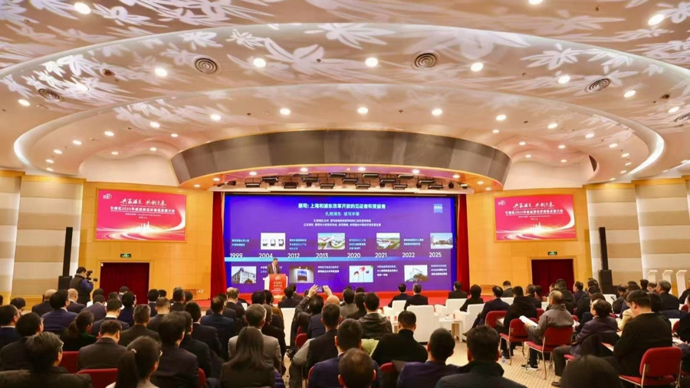
In 2021, China has become the largest single market for Carl Zeiss globally. In the last fiscal year, Carl Zeiss Greater China achieved a record revenue of 15.2 billion RMB, which is six times the amount from ten years ago. The establishment of the headquarters comprehensive park in the Shanghai Free Trade Zone not only demonstrates Carl Zeiss's confidence in the continuous growth of the Chinese market but also represents an important step in deepening its localization strategy.
Carl Zeiss' investment project also reflects a new wave of investment promotion in Shanghai's Pudong New Area in 2025. Xiao Lin, Director of the Development and Reform Commission of Pudong New Area, stated that Pudong will fully accelerate the construction of a modern industrial system and continuously leverage the traction effect of major projects. In 2025, the annual investment scale of major construction projects in Pudong New Area will reach 169.2 billion yuan, with further expansion in the technology industry sector, where the annual investment is 121.2 billion yuan, accounting for 71%.
Carl Zeiss, founded in 1846 and headquartered in Oberkochen, Germany, operates in more than 40 countries worldwide. In China, the company has four major divisions: Microscopy, Medical Technology, Industrial Metrology, and Vision Care.
Since settling in Suzhou Industrial Park in 2006, Carl Zeiss has achieved significant growth in the Chinese market. On July 8, 2024, the Carl Zeiss Group announced the official opening of its research, development, and manufacturing base located in Suzhou.This is the first land-purchasing and self-construction project by Carl Zeiss Group in China, with a total land area of over 13,000 square meters.Marks a further deepening and expansion of Carl Zeiss's localization strategy in China.
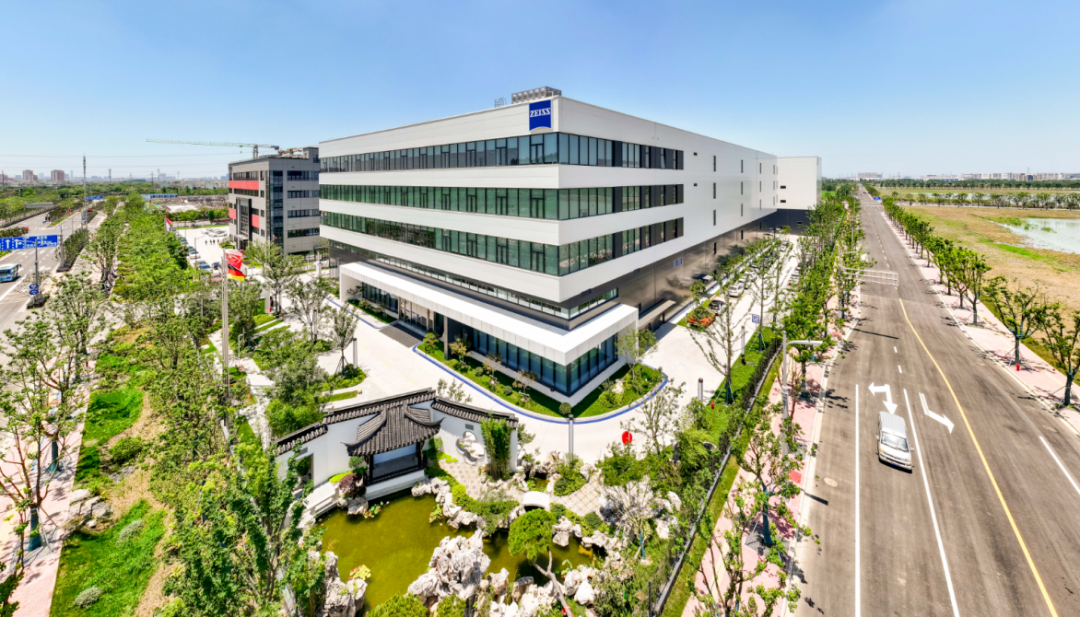
Carl Zeiss Suzhou R&D and Manufacturing Base mainly produces advanced equipment, including industrial microscopes, research microscopes, surgical microscopes, as well as precision online optical and mechanical measuring instruments. The establishment of this base will effectively enhance Carl Zeiss's localized product R&D capabilities in China and expand the variety of its high-end product manufacturing.
The Suzhou R&D and Manufacturing Base, named the "Fengqi" Project, is the first land-purchased self-construction project by Carl Zeiss in China. This base will become an important high-end R&D and manufacturing hub for Carl Zeiss in China, providing localized R&D and production services for its multiple business divisions.
Carl Zeiss Suzhou Plant Establishes a Robust Production Supply Chain, Continuously Enhancing Local Manufacturing Engineering Capabilities. Its medical products, including surgical microscopes and ophthalmic OCT devices, serve not only the Chinese market but also international markets. In the 2022-2023 fiscal year, the annual revenue of the medical unit at the Suzhou plant reached a new high.
In addition, Carl Zeiss has formed a layout of two major production bases in China. Apart from Shanghai and Suzhou in the Yangtze River Delta region, there is also the Guangzhou production base in the Pearl River Delta region.Relying on its headquarters in Shanghai and its high-end manufacturing and R&D center in Suzhou, Carl Zeiss is forming the "Carl Zeiss Yangtze River Delta High-End Equipment Innovation and Development Ecosystem." At the same time, with its manufacturing base in Guangzhou's Knowledge City as the center, Carl Zeiss is driving the construction of the "Optometry Industry Ecosystem" and has completed the largest Carl Zeiss Quality Excellence Center in China in Dongguan.
In addition,Carl Zeiss' domestically produced ophthalmic medical device products have also been established in Wuxi.It is reported that in 2022, Carl Zeiss Medical, a subsidiary of Carl Zeiss Group, signed a strategic cooperation agreement with Wuxi LEOmed Vision Technology Co., Ltd., a company dedicated to breaking through the technical R&D bottlenecks of intraocular lenses in China, for an ophthalmic medical device cooperation project. Together, they established Carl Zeiss LEOmed. The ophthalmic medical products currently under development by Carl Zeiss LEOmed are about to enter the clinical trial stage. The basic production line has been deployed and will be expanded subsequently. Once the products are launched, they will drive greater breakthroughs in the development of the ophthalmic medical industry.
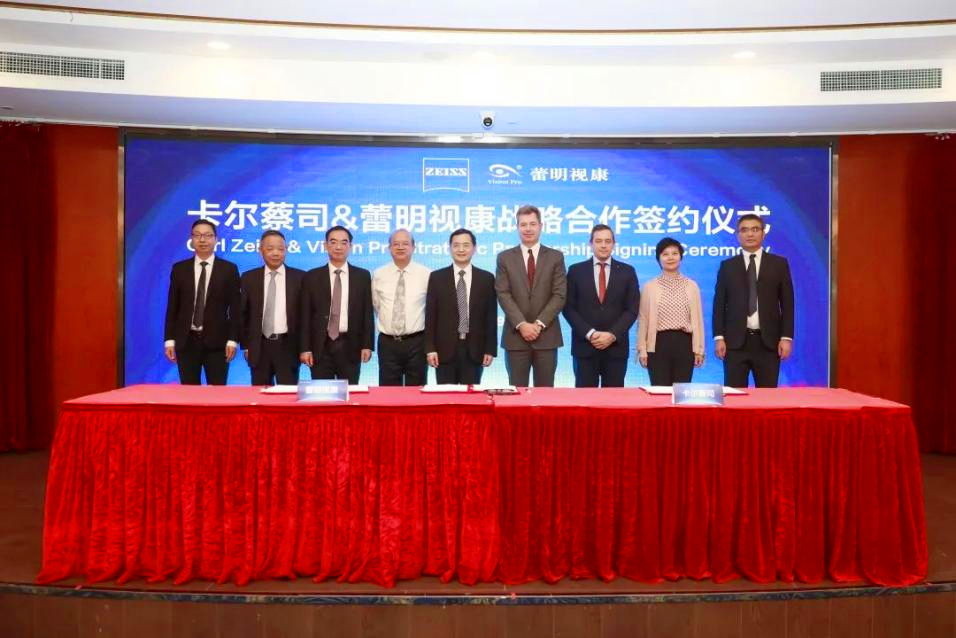
Carl Zeiss AG is a German company with significant influence in the fields of optics and optoelectronics. Established in 1846, its headquarters is located in Oberkochen, Germany. Carl Zeiss was founded in Jena in 1846 by Carl Zeiss, Ernst Abbe, and Otto Schott. In 1901, Carl Zeiss opened its first overseas branch in London, gradually expanding its business worldwide.

In the 2023/24 fiscal year, Carl Zeiss Group continued to increase its R&D investment, with R&D expenditure accounting for 15% of the group's revenue, and the number of employees in the R&D department increased to 6,951. In addition, Carl Zeiss owns approximately 12,500 patents globally and applied for about 740 new invention patents during the reporting period.
The annual report of Carl Zeiss Group for the fiscal year 2023/24 shows,The group's annual revenue reached 10.894 billion euros, increasing by 7.7% over the previous fiscal year.However, the net profit was 1.031 billion euros, a decrease of 18.01% compared to 1.257 billion euros in the previous fiscal year, with a net profit margin of 9.46%. Earnings before interest and taxes (EBIT) amounted to 1.444 billion euros, down from 1.686 billion euros in the previous fiscal year.
However, in multiple sectors, the Semiconductor Manufacturing Technology (SMT) business sector and the medical technology business sector performed well.Semiconductor Manufacturing Technology (SMT) Business Segment: Despite fluctuations in the semiconductor market, this segment achieved strong growth with an 11% increase in new orders. In particular, demand for deep ultraviolet (DUV) and extreme ultraviolet (EUV) lithography equipment continued to grow. Medical Technology Business Segment: Achieved steady revenue growth, with slight growth in the ophthalmic devices business.Carl Zeiss Group's revenue growth in the Asia-Pacific region reached 8%, becoming the main growth driver.
China has become the largest single market for Carl Zeiss globally and one of the fastest-growing markets. In the 2022/23 fiscal year, Carl Zeiss Greater China achieved a revenue exceeding 13.5 billion RMB, representing a year-on-year increase of 22%. In the 2023/24 fiscal year, the revenue reached 15.2 billion RMB. Carl Zeiss's medical technology business in China mainly focuses on ophthalmology and microsurgery, providing comprehensive solutions from diagnosis to treatment. Highlights of Carl Zeiss's medical technology business in China include:
Ophthalmic Equipment: Carl Zeiss provides products and solutions for the diagnosis and treatment of eye diseases, including systems and consumables for cataract, retina, and refractive surgeries.
Innovative Products: Carl Zeiss has launched several innovative products in China, such as China's first 3D digital navigation surgical microscope, the Carl Zeiss corneal refractive surgery solution, and the true color high-definition ultra-widefield fundus camera CLARUS 500.
Carl Zeiss anticipates that the market growth momentum in the medical technology sector will continue, particularly in the field of minimally invasive surgery. In China, Carl Zeiss will further expand its localization strategy, strengthen collaborations with local enterprises, and promote the research, development, and production of innovative products. For more updates on Carl Zeiss's development in China, DeviceHome will continue to follow.
More exciting content
Welcome to follow WeChat Video Channel


Ultrasound Leader, Delisting
Instrument Family: Top 10 Innovative Surgical Robot Products of 2025
53.88 Million, Who Won the Bid for Anzhen Hospital's Ultrasound Equipment Procurement?
A Third-Grade Hospital Suddenly Closes, 1700 Medical Staff May Lose Jobs
Parent Company Reducing Holdings? Siemens Healthineers CEO Responds
Today, Intuitive Fosun Changes Its Leader
A $24 Billion Acquisition Proposal: Whose Opportunity?
Musk Sues Abbott
Medtronic, Another Level 1 Recall
Medical Imaging Giant to Pursue Medium and Large-Scale Acquisitions

BusinessBusiness cooperation email: qxzj@landianyiliao.com