

Qilu Pharmaceutical Gains Approval for Two Generic Drugs, Sinocelltech's Anti-PD-1 Oncology Drug Approved, and Sanofi Submits New Allergy Drug Formulation in China

Qilu Pharmaceutical
Specialty Formulations and Active Pharmaceutical Ingredients (API) Developer

Sinocelltech
Innovative Biopharmaceutical R&D Developer

Sanofi
Pharmaceutical Manufacturer
Qilu PharmaceuticalRitonavir Tablets, Ixazomib Citrate Capsules Generic DrugsApproved on the same day
On February 7, the official website of the National Medical Products Administration showed that the generic drugs Ritonavir Tablets and Ixazomib Citrate Capsules submitted by Qilu Pharmaceutical were approved for production on the same day and deemed to have passed the evaluation. Among them, Ixazomib Citrate Capsules are the first domestically produced generic version in China and the first to pass the evaluation.Ixazomib is an orally administered, highly selective proteasome inhibitor that can be combined with lenalidomide and dexamethasone for the treatment of multiple myeloma in patients who have received at least one prior therapy.
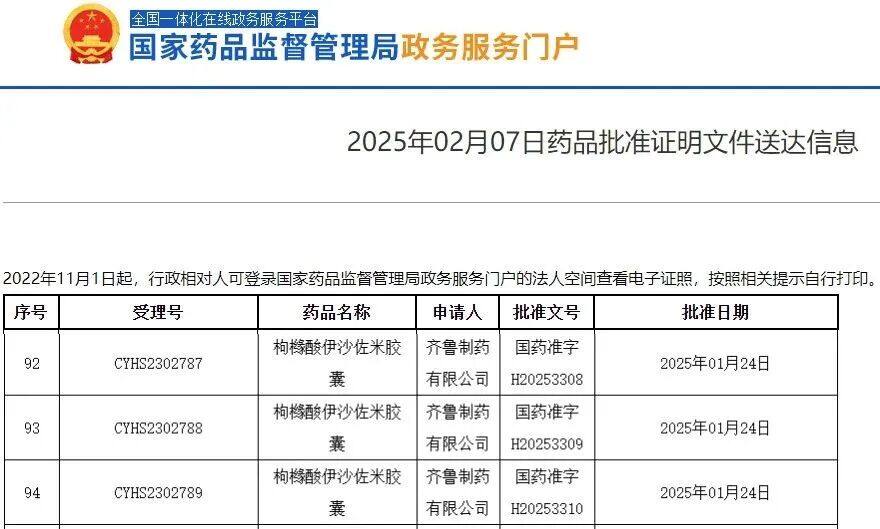
It is reported that in terms of generic drug applications, Qilu Pharmaceutical's Ixazomib Citrate Capsules were submitted for production in October 2023 and have recently been successfully approved for manufacturing, becoming the first domestically produced generic drug to pass the evaluation. In addition, products from companies such as Sinopharm Huadong and Tasly are currently conducting BE trials and have not yet been submitted for production.
Sinocelltech's Anti-PD-1 Monoclonal Antibody Cancer Drug Approved for Marketing
On February 8, the latest announcement on the official website of China's National Medical Products Administration (NMPA) revealed that the marketing application for Sinocelltech’s Class 1 new drug, Finolimab Injection, has been approved. This is a recombinant humanized anti-PD-1 IgG4 monoclonal antibody injection independently developed by Sinocelltech. The approved indication is for first-line treatment in combination with platinum-based chemotherapy for recurrent and/or metastatic squamous cell carcinoma of the head and neck.
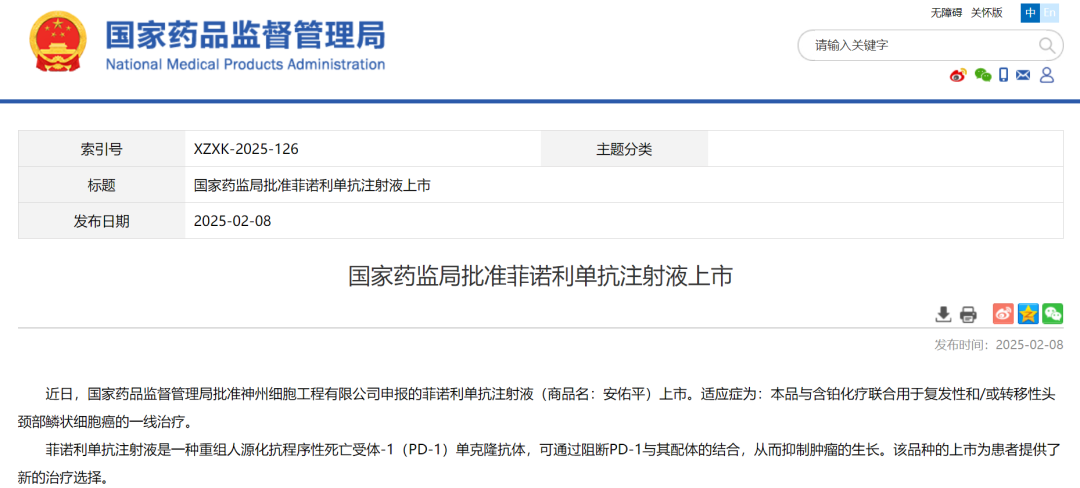
Screenshot source: NMPA official website
Head and Neck Squamous Cell Carcinoma (HNSCC) is a common cancer worldwide, known for its aggressive nature and difficulty in treatment. HNSCC is often associated with high psychological stress and reduced quality of life. Patients with recurrent/refractory HNSCC have a poor prognosis, and the median survival period for current second-line standard treatment is only about 8 months after failure of first-line platinum-based standard therapy, indicating an urgent unmet clinical need.

Finotonlimab (product code: SCT-I10A) is a functional monoclonal antibody against PD-1. It can increase the supply of T cells and inflammatory cytokines in tumor sites and reduce the proportion of regulatory T cells and myeloid-derived suppressor cells in the tumor microenvironment by blocking the binding of PD-1 to its ligands. This changes the tumor microenvironment, restores and enhances the immune-killing function of T cells, thereby inhibiting tumor growth.
Sanofi's New Formulation of Antiallergic Drug Fexofenadine Submitted for Marketing Approval in China
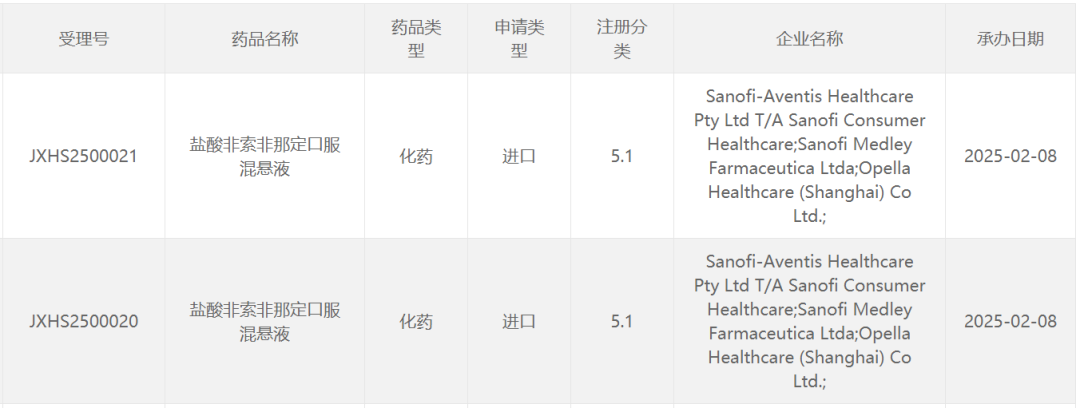 Screenshot source: CDE official website
In the target cells of the human cardiovascular system, skin, smooth muscle, and stomach, there are at least four subtypes of histamine receptors (H1 receptor, H2 receptor, H3 receptor, and H4 receptor). Among them, the histamine H1 receptor is mainly distributed in various cells such as vascular endothelium and airway smooth muscle, and is closely related to allergic reactions. Antihistamines targeting the histamine H1 receptor can downregulate the receptor activated by histamine to an inactive state, reduce allergic inflammation, decrease the expression of pro-inflammatory cytokines and cell adhesion molecules, and weaken the chemotaxis of eosinophils, thereby exerting biological effects.

According to the previous press release from Sanofi,Fexofenadine is a second-generation new type of antihistamine, characterized by rapid onset, 24-hour long duration, no drowsiness, and low brain receptor occupancy.Its high affinity for the H1 receptor indicates its better cardiac safety.
In 2021, the fexofenadine hydrochloride tablet developed by Sanofi was approved for marketing by the NMPA for the treatment of allergic rhinitis and chronic idiopathic urticaria. Currently, Sanofi has developed multiple formulations for this product, including capsules, tablets, and compound preparations. In 2006, the pediatric oral suspension of this product was approved for marketing in the United States. Public data shows that, compared with the tablet formulation, the oral suspension may offer a more convenient treatment option for people with swallowing difficulties.
Editor: Vanilla


www.yyjjb.com.cn
Insight into Industry Trends

China Prescription Drug
Academic Official Account
Focus on Pharmaceutical Academics and Evidence-Based Research

Terminal Official Account