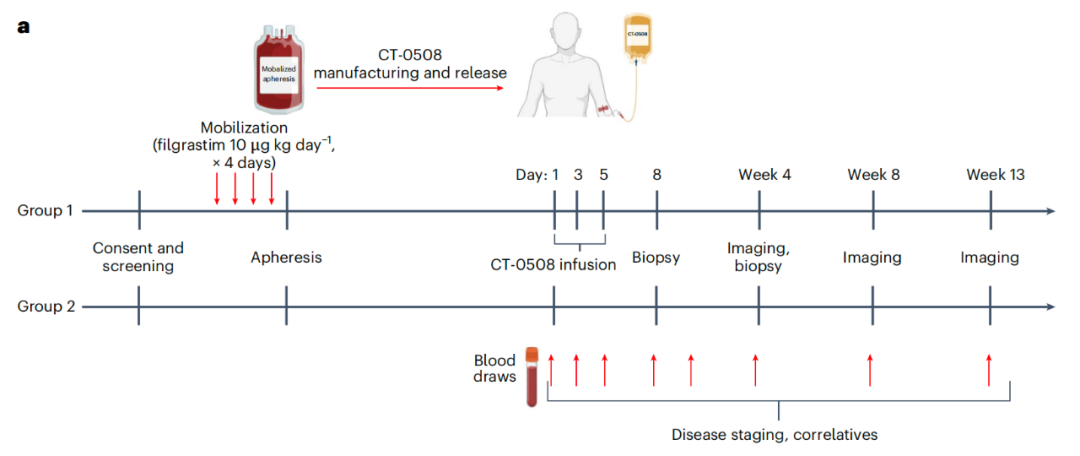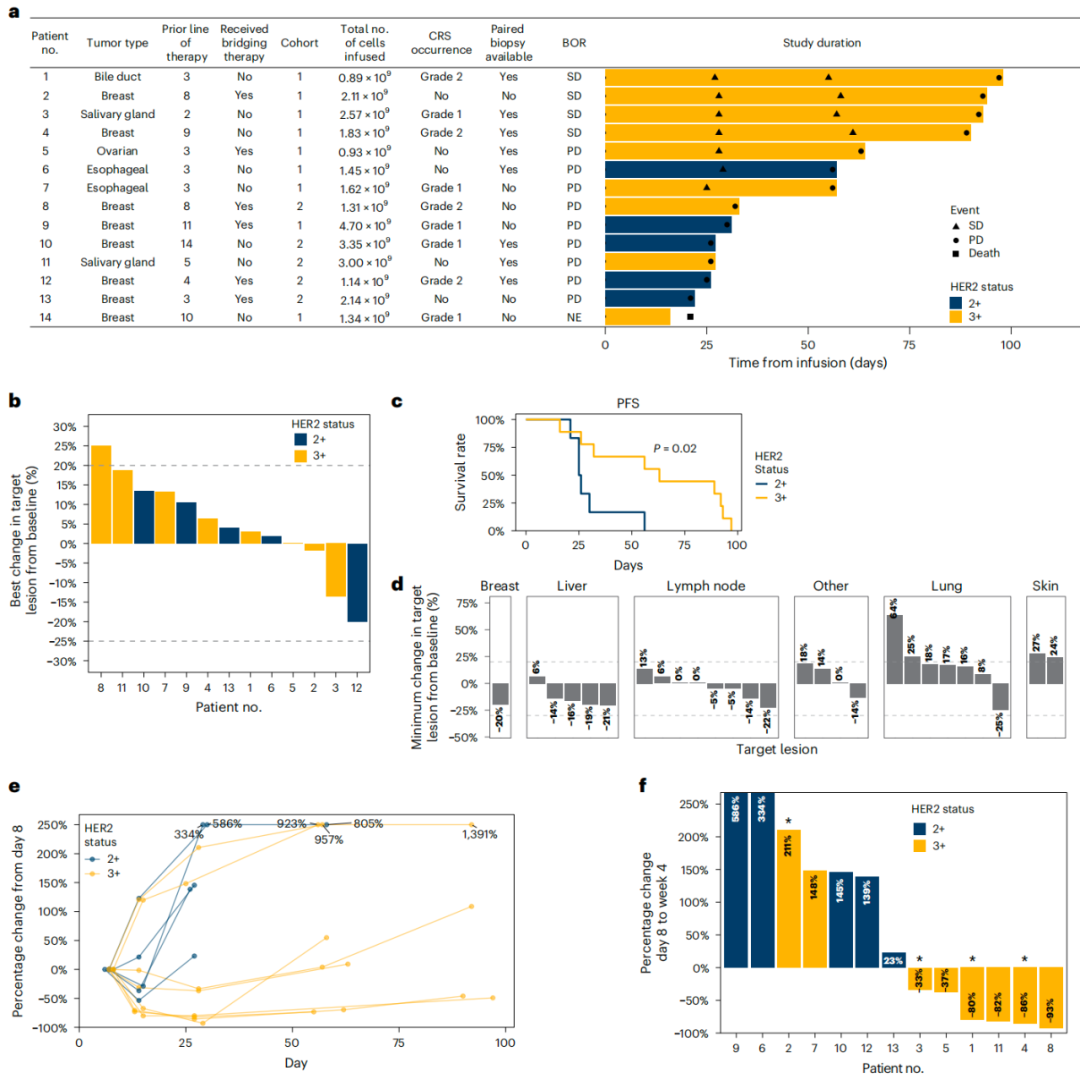
Typesetting │ Shuicheng WenChimeric Antigen Receptor T-Cell Therapy(CAR-T)InHematological Tumorshas achieved remarkable success in China, but in the majority of cancer patientsSolid Tumorin China still faces challenges, mainly due to the tumor microenvironment(TME)Heterogeneity, insufficient immune cell migration, limited proliferation, and immunosuppression.MacrophageIt is an innate immune cell with the ability to phagocytose tumor cells and activateTumor Microenvironment(TME), Recruitment of T cells and natural killer(NK)Cellular capabilities. In recent years, withCompanies represented by Carisma Therapeutics have begun to exploreChimeric Antigen Receptor Macrophage Cell Therapy(CAR-M)Application in Solid Tumors.On February 7, 2025, researchers from Carisma Therapeutics and the University of Pennsylvania collaborated and published in an internationally top-tier medical journal.Nature MedicinePublished an article titled:CAR-macrophage therapy for HER2-overexpressing advanced solid tumors: a phase 1 trialClinical research papers.This is the first time the procedure has been carried out in humansCAR-M Cell TherapyClinical trials demonstrate the potential of CAR-M in solid tumor treatment.The research team developed a targeted HER2-overexpressing advanced solid tumor patientCAR-M Cell Therapy——CT-0508, a therapy designed to reprogram the function of macrophages, enabling them to specifically recognize and engulf HER2-overexpressing tumor cells while activating the tumor microenvironment.(TME)And induce anti-tumor immune response.This is also the first time this has been conducted in humans,A multicenter, open-label phase I clinical trial aimed at evaluating the safety, feasibility, and preliminary efficacy of CT-0508 in patients with advanced solid tumors overexpressing HER2. The research team primarily recruited patients with advanced-stage cancers.Breast CancerAndGastroesophageal CancerPatient(Patient's tumor cells show HER2 overexpression)Patients received intravenous injections of CT-0508 and were divided into multiple dosing groups.(1 set)And Single-Dose Group(2 groups)The patient did not receive lymphocyte-depleting chemotherapy prior to treatment.In terms of safety, no dose-limiting toxicity was observed in 14 treated patients.(DLT), Severe Cytokine Release Syndrome(CRS)Or immune effector cell-associated neurotoxicity syndrome. The most common treatment-related adverse events are grade 1 and grade 2.Cytokine Release Syndrome(CRS)。In terms of treatment efficacy, 44% of patients with HER2 3+ tumors achieved disease stabilization 8 weeks post-treatment, while no significant efficacy was observed in HER2 2+ patients. Through serial biopsy-related analyses, the research team confirmed that CT-0508 could migrate to the tumor microenvironment.(TME)And remodel the TME, leading to CD8+T Cell Expansion.Overall, the results of this clinical trial indicate that CAR-M cell therapy is preliminarily safe and feasible in patients with HER2-overexpressing solid tumors and can induce changes in the tumor microenvironment.(TME)The remodeling and anti-tumor immune response. The research team notes that, although the preliminary results are encouraging, further optimization of CAR-M's persistence and efficacy is needed, possibly through improved design.(e.g., CAR-monocytes)Or combined with immune checkpoint inhibitors to achieve.https://www.nature.com/articles/s41591-025-03495-z


SettingsStar Marker, so as not to miss exciting tweetsWelcome to forward to Moments and WeChat groupsTo promote the dissemination and exchange of cutting-edge research, we have established severalProfessional Exchange Group, Press and hold the QR code below to add the editor's WeChat and join the group. Due to the large number of applicants, please include a note when adding WeChat:School/Professional/Name, ifPI/Professor, please also indicate.
PointIn View, Convey Your Taste