OssDent Official AccountmedicaldeviceCROFollow and StarEnsure you receive push notifications on time.
Comprehensive Medical Information
1. The National Healthcare Security Administration Launches "Medical Insurance Image Cloud Index"Recently, the National Healthcare Security Administration released the "Medical Insurance Imaging Cloud Index," assigning a unique identifier to each patient's imaging examination file. This initiative promotes the sharing of imaging information among medical institutions in China, reducing the burden of repeated examinations for patients and improving the efficiency of medical services. The "Medical Insurance Imaging Cloud Index" consists of five parts, including the National Healthcare Security Information Platform Personnel Management Code, Examination Date and Time Code, Examination Region Code, Medical Insurance Medical Device Code, and Imaging Storage Unit Code. The index ensures the uniqueness and traceability of imaging files, providing technical support for the sharing and mutual recognition of examination results among medical institutions. The National Healthcare Security Administration stated that the introduction of the index will effectively reduce repeated examinations for patients visiting different institutions, alleviating their financial and time burdens. Additionally, through cloud storage and sharing of imaging information, medical institutions can access patients' examination results more efficiently, further enhancing the quality of medical services. (Beijing Daily)
2. Ophthalmology Giant Invests in Building Its Own Park in Shanghai, China
Recently, Carl Zeiss announced that ZEISS China will purchase land in the Shanghai Free Trade Zone to build a Greater China headquarters campus. The project covers an area of 60 mu, with total infrastructure investment exceeding 600 million yuan. In 1999, ZEISS entered the bonded area as a foreign-invested enterprise. In the last fiscal year, ZEISS Greater China achieved a record revenue of 15.2 billion yuan, representing a six-fold increase compared to ten years ago. This investment is an important step in ZEISS's strategy to deepen localization. In October 2024, the Phase III expansion and renovation project of the ZEISS Optical Industry 4.0 Healthy Vision Industrial Ecosystem was announced, with a total project investment of nearly 430 million yuan. It is planned to establish a forward-looking, modern, and representative Industry 4.0 factory within the existing plant area in the Sino-Singapore Knowledge City (Huangpu District, Guangzhou). (Eye Future)
3. Hubei Contributes Health Power to the Rise of Central China
Recently, the 2025 Hubei Provincial Health and Wellness Work Conference proposed to focus on channeling resources toward primary care, prevention, and traditional Chinese medicine (TCM). Efforts should be made to deepen public hospital reforms oriented toward public welfare, improve the population development support and service system, and better coordinate development and security. Key tasks must be implemented to solidify the health foundation as an important strategic pillar for the rise of China's central region. The conference emphasized advancing the improvement and expansion of medical resources. It called for creating high-level medical hubs by accelerating the construction of national regional medical centers; strengthening county-level hospitals as "leaders" through the in-depth implementation of the “Thousand Counties Project” to enhance their comprehensive capabilities; and reinforcing grassroots healthcare as the "safety net." By 2025, all 64 counties and cities will establish close-knit county-level healthcare consortia. Additionally, the reform of the pharmaceutical and healthcare system will be deepened by improving the collaborative mechanism among medical services, medical insurance, and pharmaceuticals. Public hospital reforms will also be advanced, with coordinated progress in reforms related to staffing, pricing, salaries, supervision, and investment. (Health News)
4. DeepSeek has completed localized deployment in two hospitals.
Recently, the First People's Hospital of Kunshan announced that DeepSeek has officially landed at the Kunshan Biomedical Big Data Innovation Application Laboratory of the First People's Hospital of Kunshan and completed localized deployment. According to reports, the DeepSeek inference version base model deployed on the "Kunshan Intelligent Medical Large Model Platform" in this laboratory combines the research needs of the lab, based on the powerful computing power and technical capabilities provided by the participating teams, to provide core support for medical AI incubation and application transformation in the lab, helping it accelerate the development of industry large models and smart healthcare solutions. Previously, the South China Hospital affiliated with Shenzhen University also announced the localized deployment of the Chinese-produced artificial intelligence large model DeepSeek-R1. On the basis of building a technical architecture of "one consultation large model + N triage intelligent small models," the South China Hospital affiliated with Shenzhen University combined DeepSeek's leading advantages in AI large models, deep learning algorithms, and multi-modal technology fields, and has begun exploring innovative applications of AI agents in scenarios such as medical knowledge bases and intelligent Q&A, clinical auxiliary diagnosis, health education, process optimization, and data-driven decision-making. (Healthcare Sector)
5. Trump Cuts $4 Billion in "Indirect" Medical Research Funding
Recently, according to a report by The Guardian in the United States, the U.S. National Institutes of Health (NIH) stated that cutting $4 billion will affect "indirect" funding for buildings, equipment, and personnel. The Trump administration is reducing medical research funding by billions of dollars for universities, hospitals, and other research institutions, cutting related expenses that support such research. The NIH said it is reducing "indirect" medical research funding allocated to institutions, which will result in an annual expenditure reduction of $4 billion. Only 15% of the grants awarded to institutions can be used for related expenses such as construction, equipment, and support staff. This is a significant decrease from the amount previously allowed under the NIH grant system. (Medical Device Innovation Network)
6. ROSA Shoulder System Successfully Completes Robot-Assisted Shoulder Arthroplasty
Recently, the ROSA Shoulder system successfully completed a robot-assisted shoulder arthroplasty. The surgery was performed by John W. Sperling from Mayo Clinic and achieved excellent therapeutic results. Shoulder arthroplasty is not widely prevalent in China, being conducted on a larger scale in only a few centers. In recent years, significant advancements have been made in prosthetic design, fixation techniques, and treatment outcomes for shoulder arthroplasty. For instance, reverse total shoulder arthroplasty is one of the most influential surgical techniques in shoulder reconstruction over the past 40 years. Its feasibility and safety have been confirmed by numerous studies, and the surgical indications have expanded from osteoarthritis combined with rotator cuff deficiency to include proximal humeral fractures and their complications, avascular necrosis of the humeral head, post-traumatic osteoarthritis, and after tumor resection in the proximal humerus, among other conditions. The market for shoulder arthroplasty is continuously evolving both globally and in China. (Gu Jin Zhong Wai)
7. What is the medical device public service platform?
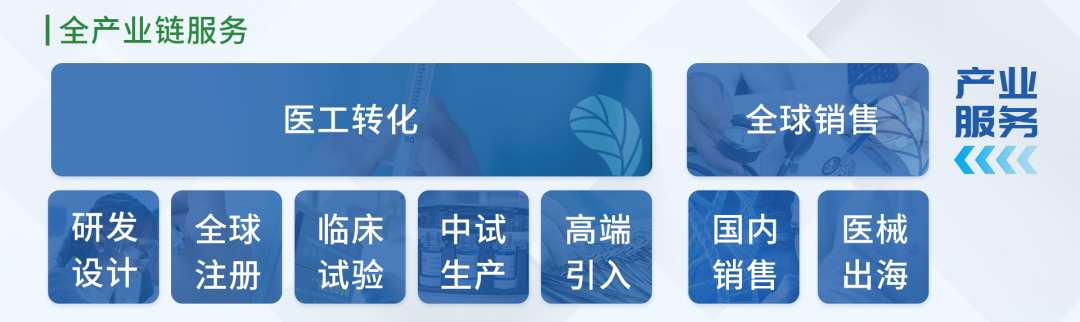
The Medical Device Public Service Platform is jointly developed by the Ossd Group with local governments, parks, medical institutions, and research universities. It focuses on incubating, transforming, and investing in cutting-edge and innovative global medical device technology projects. By establishing scientific research and transfer mechanisms that align with international standards, it implements an open and shared operational model to attract top-tier scientific researchers, doctors, and innovators worldwide. The platform provides comprehensive industrial technical services covering R&D transformation, incubation, and investment, nurturing medical device innovations with significant breakthroughs and application value. This initiative strongly supports the development of the medical device industry and technological innovation. (Compiled by Ossd)
8. Jimeirisheng Secures Tens of Millions in B+ Round Financing
Recently, Regend Therapeutics Group has completed a B+ round of financing worth tens of millions of yuan. The investment was made by Sequoia Ridge Capital, and the funds raised will mainly be used for the clinical research and application of Regend Therapeutics' related stem cell products. Founded in 2015, Regend Therapeutics focuses on the field of regenerative medicine for human organ regeneration using stem cells. By developing innovative cell and gene therapy products, the company aims to repair, regenerate, and enhance human tissues and organs. REGEND001, an innovative pulmonary regenerative medicine product independently developed by Regend Therapeutics, has successively completed two Phase II clinical studies targeting chronic obstructive pulmonary disease (COPD) and idiopathic pulmonary fibrosis (IPF). Among them, the interim analysis for COPD is currently underway, and communication with regulators regarding Phase III clinical trials is expected to commence in the first half of this year. (36Kr)