

Race Heats Up for China's First Generic Fixed-Dose Combination Lipid-Lowering Drug: Kelun, Qilu Among Nearly 20 Firms Reshaping a Billion-Dollar Market
Kelun
Innovative Pharmaceutical R&D Company

Qilu Pharmaceutical
Specialty Formulations and Active Pharmaceutical Ingredients (API) Developer
The race for the first generic version of China's first compound lipid-lowering drug intensifies, potentially reshaping the landscape of the cardiovascular and cerebrovascular medication market.
Recently, Kelun Pharmaceutical and Qilu Pharmaceutical have both submitted marketing applications for the Category 4 generic drug Rosuvastatin Ezetimibe Tablets (I), and both have been accepted.

It is reported that Rosuvastatin Ezetimibe Tablets (I), originally developed by Sanofi, is a new type of compound lipid-lowering drug. With its significant lipid-lowering effects and excellent safety, it shows broad application prospects in the market. Notably, this drug is the first fixed-dose combination (FDC) of Rosuvastatin and Ezetimibe to be approved in the EU. It was introduced into China in 2023 as a Class 5.1 new drug (original imported drug), filling the market gap for compound lipid-lowering formulations in China.
Chinese pharmaceutical companies have also sensed the business opportunity in lipid-lowering combination drugs. In terms of the generic drug application for Rosuvastatin Ezetimibe Tablets (I), in addition to Qilu Pharmaceutical and Kelun, several other companies such as Zhejiang Nuode Pharmaceutical, Shijiazhuang Fourth Pharmaceutical, Beijing Fuyuan Pharmaceutical, Shandong Langnuo Pharmaceutical, Nanjing Chia Tai Tianqing Pharmaceutical, and Hanmi Pharmaceuticals have submitted generic applications for this drug under the new registration classification. These applications are currently undergoing an intensive review and approval process.
Industry insiders pointed out that the combination of lipid-lowering drugs has become the mainstream trend in clinical lipid management strategies, and compound preparations have provided a more superior treatment option in this field. The development of compound preparations is not a simple addition of ingredients, i.e., the intuitive combination of "1+1=2," but rather requires overcoming significant formulation technology barriers, which undoubtedly places higher demands on the technical strength and innovation capabilities of the developing enterprises.
Fill the Gap in Lipid-Lowering Combination Preparations
Steadily Moving Towards Blockbuster Drugs

Cardiovascular disease is the top threat to the health of Chinese citizens, and one of its main culprits is "bad cholesterol" — persistently high levels of low-density lipoprotein cholesterol (LDL-C). In recent years, the prevalence of high LDL-C levels in China has continued to rise, especially among those suffering from atherosclerotic cardiovascular disease (ASCVD), where the rate of achieving target LDL-C levels is as low as 6.8%. Therefore, controlling LDL-C levels within the ideal range as early as possible is crucial for slowing the formation of atherosclerotic plaques in blood vessels and reducing the risk of severe cardiovascular events such as heart attacks and strokes.
"The Chinese Lipid Management Guidelines (2023)" clearly state that patients should achieve corresponding LDL-C target values based on different risk stratifications, and ASCVD patients need to achieve both the target value and a reduction of more than 50%. Among these, an LDL-C reduction of more than 50% is considered the starting point for plaque regression. However, moderate-intensity statin monotherapy struggles to achieve this reduction target. Therefore, multiple guidelines both in China and internationally recommend the combination of statins with ezetimibe for synergistic lipid-lowering.
The rosuvastatin and ezetimibe tablet developed by Sanofi is precisely such a compound preparation composed of rosuvastatin (HMG-CoA reductase inhibitor) and ezetimibe (selective cholesterol absorption inhibitor). By inhibiting the absorption and synthesis of cholesterol, it comprehensively reduces the levels of plasma total cholesterol (T-C), LDL-C, apolipoprotein B (ApoB), triglycerides (TG), and non-high-density lipoprotein cholesterol (non-HDL-C), while increasing the level of high-density lipoprotein cholesterol (HDL-C), providing strong support for blood lipid management.
Clinical studies show that treatment with Rosuvastatin Ezetimibe Tablets for 6 weeks can further reduce LDL-C by 27.02% on the basis of 10mg of Rosuvastatin. Compared with the free combination of statins and ezetimibe (FCT), it can further reduce LDL-C by 14%, and the target achievement rate is also significantly better than the FCT group. In addition, this compound preparation can improve compliance by 2 times compared to free combination and significantly reduce the risk of major adverse cardiovascular events (MACE) by 42%, bringing more benefits to patients.
In July 2014, Sanofi's Rosuvastatin Ezetimibe Tablets were approved for marketing in Europe through the decentralized procedure, under the trade name Zenon. Since its launch, Rosuvastatin Ezetimibe Tablets (I) have gained widespread recognition and acclaim in clinical practice due to their significant lipid-lowering effects and good safety profile. In December 2023, Rosuvastatin Ezetimibe Tablets were introduced to China as a Class 5.1 new drug (original imported), filling the gap in domestically available lipid-lowering combination formulations and providing a new treatment option for numerous patients with dyslipidemia.
Notably, in November 2024, Rosuvastatin Ezetimibe Tablets were officially included in the "2024 National Basic Medical Insurance, Work-related Injury Insurance, and Maternity Insurance Drug Catalog" for the treatment of hypercholesterolemia and homozygous familial hypercholesterolemia (HoFH) patients. As China's first marketed single-tablet combination drug of Rosuvastatin and Ezetimibe, this medication successfully entered the national insurance coverage in less than a year, benefiting more ASCVD patients at "China speed."
Data shows that the sales of ezetimibe tablets and rosuvastatin-related formulations, which are single-agent components in rosuvastatin ezetimibe tablets, reached 1.541 billion yuan and 2.693 billion yuan respectively in Chinese hospitals in 2023. Clinically, single-tablet combination drugs can reduce the frequency and quantity of medication intake. Their advantages in convenience and compliance can deliver higher clinical value in the "long-term battle" of lipid management. Undoubtedly, single-tablet combination drugs represented by rosuvastatin ezetimibe tablets have ushered in a new era of lipid-lowering treatment in China and are paving the way for the next blockbuster lipid-lowering drug.
Nearly 20 pharmaceutical companies reported production
The Result of the First-to-Market Competition is About to be Revealed

Frost & Sullivan's industry research report shows that the prevalence of hypercholesterolemia in China has continued to rise, increasing from 69.8 million people in 2014 to 82.6 million people in 2018, and is expected to reach 110 million people by 2030. With the deepening of population aging and the increasing trend of younger patients, the demand for lipid-lowering drugs continues to expand.
Data from MiNe Network shows that in the lipid-regulating agents market, sales of lipid-regulating agents (chemical drugs + biologics) in China's three major terminals and six key markets have exceeded 20 billion yuan in recent years. Among them, HMG-CoA reductase inhibitors account for over 70%. Specifically, Pfizer's Atorvastatin Calcium Tablets firmly top the list with a market share of approximately 28%, AstraZeneca's Rosuvastatin Calcium Tablets exceed 3 billion yuan in sales, and Amgen's Evolocumab Injection sees a sales growth rate of over 80%. The market competition is fierce.
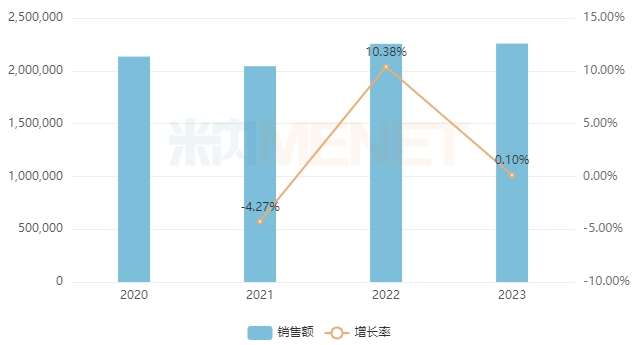
Sales of Lipid Regulators (Chemical Drugs + Biologics) in China's Three Major Terminals and Six Markets in Recent Years (Unit: Ten Thousand Yuan)
Since its approval, rosuvastatin ezetimibe tablets have shown enormous market potential. With their excellent synergistic inhibitory effects and higher patient medication adherence, they have become a highly sought-after product among major pharmaceutical companies in China. In this fiercely competitive market, both Kelun and Qilu Pharmaceutical have demonstrated strong capabilities.
As a leading enterprise in the large infusion sector, Kelun has been continuously intensifying its research and development of complex formulations in recent years. As early as 2021, it completed the BE trial filing for Rosuvastatin Ezetimibe Tablets, with its application progress being three months ahead of Qilu Pharmaceutical. By adopting a "raw material + formulation" full industrial chain layout strategy, Kelun's Rosuvastatin raw material has passed FDA certification, providing a solid guarantee for formulation quality.
Qilu Pharmaceutical, leveraging the group's R&D advantages, adopts a "patent challenge + process innovation" dual-track strategy. Reportedly, it uses micronization technology to increase the dissolution rate of ezetimibe by 15% and has creatively developed a multi-layer controlled-release tablet structure. This technological breakthrough is expected to become a key competitive advantage in the future market.
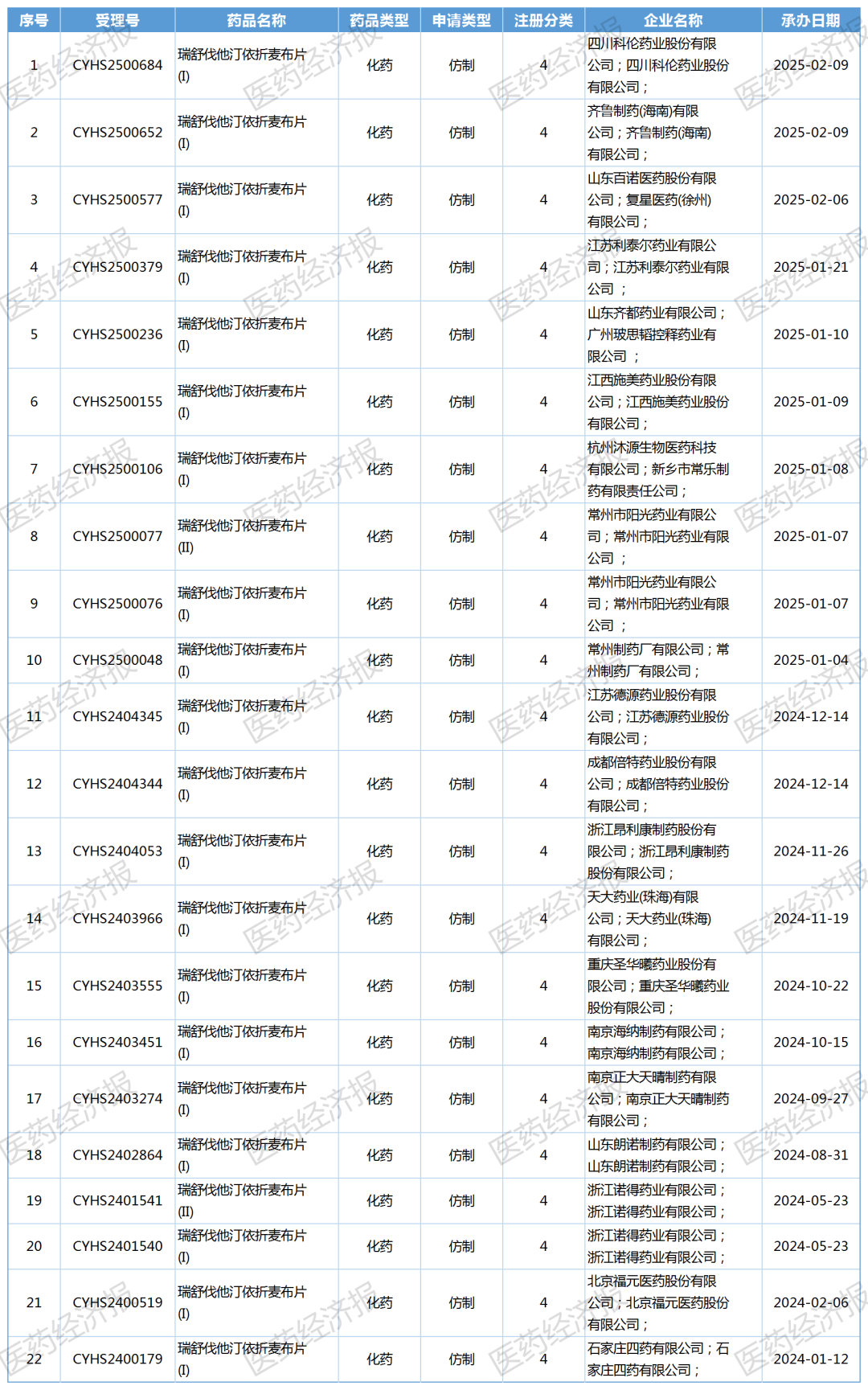
Before Kelun and Qilu Pharmaceutical, according to incomplete statistics, nearly twenty enterprises have reported production with Category 4 registration. Currently, all of them are under review and approval. Among them, the earlier reporting companies include Shijiazhuang Fourth Pharmaceutical, Beijing Fuyuan Pharmaceutical, Zhejiang Nuode Pharmaceutical, and Shandong Langnuo Pharmaceutical. These four companies had already reported production before May 2024. Considering the approval cycle of 6-18 months, the above-mentioned companies may receive results soon. It remains to be seen who will win the race for the first generic drug.
In fact, in the lipid-lowering drug market, there are many drugs with the same indications as Rosuvastatin Ezetimibe Tablets (I), such as Atorvastatin Calcium Tablets, Simvastatin, and Pravastatin. However, compared with Rosuvastatin Ezetimibe Tablets (I), these drugs have certain limitations in lipid-lowering effects. With the increasing awareness of lipid management and the successful development of new lipid-lowering drugs, the market share of traditional lipid-lowering drugs will face greater challenges.
From a global perspective, the market for combination lipid-lowering drugs has enormous potential. Taking the U.S. market as an example, the market share of combination lipid-lowering drugs already accounts for 32% of the entire lipid-lowering drug market, which fully demonstrates the clinical advantages and market demand for these drugs. With the improvement of living standards and changes in dietary habits in China, the incidence of hypercholesterolemia is also increasing annually, and the demand for combination lipid-lowering drugs in the Chinese market will continue to grow.
Industry insiders believe that, with the improvement of people's living standards and the enhancement of health awareness, as well as the continuous advancement and innovative development of medical technology, the lipid-lowering drug market will embrace broader development prospects and market opportunities. The entry of leading pharmaceutical companies such as Kelun and Qilu Pharmaceutical will drive profound changes in the competitive landscape of China’s compound lipid-lowering drug market.
Editor: Wanwan
Reviewed by: Zhang Song, Zhang Lanfei


www.yyjjb.com.cn
Insight into Industry Trends

《China Prescription Drug》
Academic Official Account
Focus on Pharmaceutical Academics and Evidence-Based Research

Terminal Official Account