Developer of Ophthalmic Disease Treatment Products

Ozda Official AccountmedicaldeviceCROFollow and StarEnsure you receive notifications on time.
Comprehensive Medical Information
1. The National Healthcare Security Administration Announced a List of 2025 Efficient Accomplishments
Recently, according to the report by "News and Newspaper Digest" of China National Radio, the National Healthcare Security Administration announced the first batch of key tasks for 2025 under the initiative "Efficiently Accomplishing Tasks in the Healthcare Security Field." The list includes six service items such as "instant settlement between healthcare security and designated medical institutions," "direct cross-provincial settlement of expenses for 10 outpatient chronic and special diseases," and "cross-provincial mutual aid use of individual account funds in the basic medical insurance for employees." The list specifies that by the end of 2025, ninety percent of insured individuals in regions covered by the basic medical insurance for employees will be able to use the 'Healthcare Wallet' to achieve cross-provincial mutual aid of individual account funds. This will allow them to pay for personal medical expenses incurred by close relatives, such as parents, spouses, and children, at designated medical institutions and retail pharmacies, as well as to cover costs related to participation in the basic medical insurance for urban and rural residents. (CNR Network)
2. Hunan Drug Administration Promotes High-Quality Development of the Pharmaceutical Industry
Recently, it was learned from the Hunan Provincial Drug Administration that this year, the bureau will support the high-quality development of the pharmaceutical industry in various aspects, including improving administrative licensing standards, enhancing the quality and efficiency of review and approval, supporting the inheritance and innovation of traditional Chinese medicine, and accelerating the cultivation of new quality productive forces in the pharmaceutical field. In terms of administrative licensing, efforts will be made to further improve procedures and systems related to drug registration, standardize policy documents for medical device registration review and approval, formulate work norms and standards for technical verification inspections and management of registered cosmetic products, and orderly carry out the renewal (issuance) of drug registration permits, drug production permits, and drug operation permits to provide a better development environment for the industry. To enhance the quality and efficiency of review and approval, the Hunan Drug Administration will actively apply for pilot reforms to optimize the supplementary application review and approval process for drugs, proactively follow up on the progress of innovative products, Class III products, and localized substitution products, improve the efficiency and quality of reviews and approvals, and accelerate the market entry of innovative products. (China Pharmaceutical News)
3. NDRC Allocates Billions to Support Hospital Equipment Upgrades
Recently, the State Council Information Office held a series of press conferences on "Achievements of High-Quality Economic Development in China," during which detailed information was disclosed about the national investment and development plan for the healthcare sector by 2025. The National Development and Reform Commission stated: This year, support will be provided for the establishment of 125 national regional medical centers at high-level hospitals, with 10 billion yuan allocated to support the construction of closely-knit county-level medical consortia, updating medical equipment such as CT scanners, ultrasound machines, and hemodialysis devices for county hospitals and township health centers. Additionally, an initiative to upgrade hospital wards will be implemented, renovating and upgrading 30,000 two- and three-bed wards. As the concluding year of China’s "14th Five-Year Plan," 2025 will see concentrated efforts in key medical projects such as the construction of national regional medical centers, the formation of county-level medical consortia, and the enhancement of primary healthcare institutions, unleashing the full potential of the grassroots healthcare market. (IVD Alliance)
Recently, the NMPA announced the review results of the special review application for innovative medical devices (No. 1, 2025). Nine products have entered the innovation channel, including the glaucoma drainage device applied for by Suzhou Purevision Medical Technology Co., LTD. AqueFish®, a self-developed original Chinese glaucoma treatment stent product by Purevision Medical, is one of the few international stent products that can be used for both angle-closure glaucoma and open-angle glaucoma, offering more possibilities for glaucoma treatment. Simply put, the internal drainage principle of the AqueFish® glaucoma stent is similar to the well-known cardiac stent, but it is smaller in size, with characteristic structural dimensions reaching the level of hundreds of micrometers, comparable to a hair strand. AqueFish® works on the physiological circulation channel of the aqueous humor. By "propping open" the originally collapsed channel, it restores the circulation pathway of the aqueous humor, thereby reducing intraocular pressure. (Eye Future)
5. South Korea Announces Trillion-Dollar Investment Projects for 2025
Recently, South Korea's Ministry of Science and ICT announced that it will invest 6.32 trillion won in the new year's R&D budget, marking a 21.2% increase from last year. The Ministry of Science and ICT has confirmed and released a comprehensive implementation plan for R&D projects in the new year. Of the total budget, 5.580 trillion won will be allocated to the science and technology sector, while 1.3156 trillion won will be specifically dedicated to information and communication technology (ICT). In the science and technology field, new projects will be launched to develop technologies based on bio-manufacturing, van der Waals (vdW) materials, and process technologies for ultra-high-density semiconductors, as well as to support top universities within global quantum science and technology partnerships. Each of these projects has been granted a budget of approximately 40 billion won. Additionally, ongoing projects such as the Future Display Research Center and cross-departmental full-cycle medical device R&D initiatives will continue to receive support. The Ministry of Science and ICT has also allocated 60 billion won to support research activities for graduate students in science and engineering, including talent cultivation programs aimed at nurturing young researchers and attracting overseas talent. (Biotech Transfer Network)
6. Johnson & Johnson Sells Neurointervention Business
Recently, the Financial Times reported that Johnson & Johnson plans to sell its stroke treatment business, Cerenovus, valued between $1 billion and $1.5 billion. According to sources, Johnson & Johnson has engaged with potential private equity and strategic buyers through advisors to gauge market interest in Cerenovus. Currently, Johnson & Johnson has not directly responded to these rumors, but from its strategic layout in recent years, this sale aligns closely with the company’s strategic restructuring direction. Cerenovus's product line covers several key aspects of stroke treatment: for ischemic stroke treatment, mechanical thrombectomy devices such as the CereGlide catheter can quickly remove blood clots and restore cerebral blood flow; for hemorrhagic stroke treatment, embolization technologies like the TRUFILL™ Liquid Embolic System effectively block the risk of aneurysm rupture. The core technology lies in minimally invasive intervention, which significantly reduces patient trauma and recovery time compared to traditional craniotomy surgery. (Sina Finance)
7. What is the medical device public service platform?
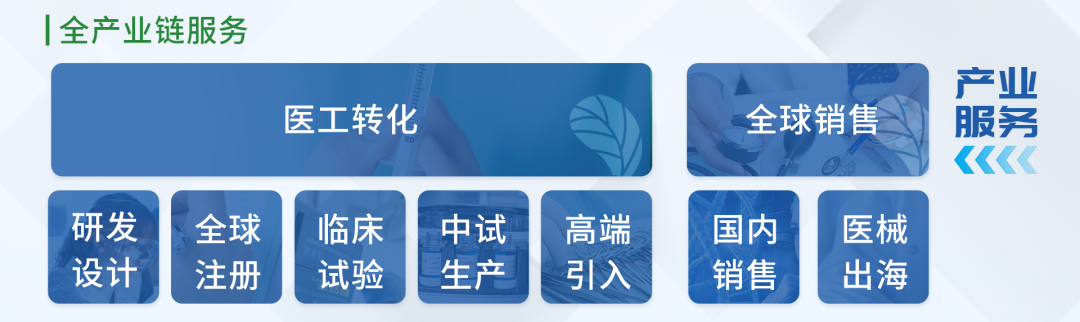
The Medical Device Public Service Platform is jointly developed by the Oshine Group with local governments, parks, medical institutions, and research universities. It focuses on incubating, transforming, and investing in advanced and innovative global medical device projects. By establishing a scientific research and transfer mechanism aligned with international standards, it implements an open and shared operational model to attract top-tier global researchers, doctors, and innovators. The platform provides comprehensive industrial technical services covering R&D transformation, incubation, and investment, nurturing innovative medical device achievements with significant innovation and application value. This initiative strongly supports the development of the medical device industry and technological innovation. (Compiled by Oshine)
8. Nuomei Xinchuang Completes Over 300 Million Yuan in Financing
Recently, Nuomai Xinchuang Medical Technology (Shanghai) Co., Ltd. announced the successful completion of a new round of strategic financing, with a total financing amount exceeding 300 million RMB. This round of financing was led by Qiming Venture Partners, with Sunshine Ronghui Capital as a follow-up investor. StarBridge Capital served as the exclusive financial advisor. This financing will provide significant capital support for Nuomai Xinchuang’s market expansion and product development, further strengthening its leading position in the ENT and craniocervical surgical device sector. The predecessor of Nuomai Xinchuang, "Leno Medical," was founded in 2015. In 2017, Nuomai Xinchuang established a high-value consumables R&D and production base at the Suzhou New District Medical Device Industrial Park. Since then, through four strategic acquisitions, Nuomai Xinchuang has rapidly expanded its product pipeline: in 2019, it merged with Chengdu Meichuang Medical, a medical plasma technology platform; in December 2021, it acquired a controlling stake in Hangzhou Tonglu Sike Medical Device Co., a manufacturer of ENT and craniocervical surgical instruments; in March 2022, it fully acquired Germany’s Endodoctor high-end endoscopic system; and in November 2022, Guizhou Zirui Technology Co., Ltd. officially joined Nuomai Xinchuang. Through these mergers and integrations, Nuomai Xinchuang successfully built China's ENT and craniocervical surgical device platform. (Vcbeat)