

Jieshi Medical Breaks Import Monopoly in Ophthalmic Surgical Gases with China's First Domestic Long-Acting Intraocular Perfluoropropane
On February 18, 2025, Shanghai Jieshi Medical Technology Co., Ltd. (referred to as "Jieshi Medical") independently developed ophthalmic perfluoropropane gas (trade name: Jieshi).®) has obtained the NMPA Class III certificate (Registration No. 20253160327), becoming the first domestically produced disposable long-acting intraocular gas filler to be approved in China. The product is specifically designed for vitreoretinal surgery and used for intraocular tamponade treatment, effectively promoting the reattachment and healing of detached retinas.
Jieshi® Perfluoropropane Gas for Ophthalmic Use Main Ingredient: C3F8, colorless and transparent, chemically stable, and can be used in the vitreous cavity. After injection, it is gradually excreted through the blood and respiratory system, without the need for secondary surgery for removal. With 30mL standalone and binary protective packaging and a disposable design, it directly addresses the pain points of high prices, repeated use, and hospital infection risks associated with imported products; furthermore, its 99% high purity redefines industry standards, completely ending the long-standing dilemma in China where domestically produced long-acting gases for retinal surgery were unavailable, and where treatment for patients was delayed due to shortages of imported ophthalmic gases.
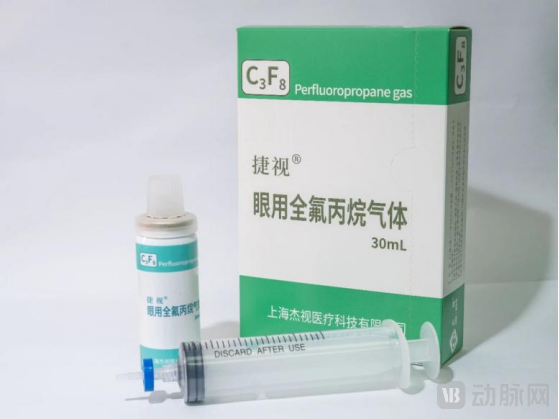
Jieshi®Perfluoropropane Gas for Ophthalmic Use
Ophthalmic long-acting gases refer to inert gases used in ophthalmic surgeries that can remain in the eye for an extended period and take effect. They are important auxiliary materials in retinal surgery, with common examples including perfluoropropane C.3F8、Sulfur Hexafluoride SF6It is mainly used as an intraocular filler, with functions such as stabilizing intraocular pressure, promoting wound healing, closing retinal tears, and repositioning detached retinas.
Perfluoropropane C3F8It is the most commonly used long-acting gas for ophthalmic purposes, with over 40 years of clinical application history in vitreous surgery. Its efficacy and safety have gained consistent international recognition and have become an essential component of vitreoretinal surgery.
However, the development of long-acting gases for ophthalmology in China has long been restricted. On one hand, China's research and development in this field started relatively late, and foreign companies have established patent barriers by leveraging their first-mover advantage, raising the entry threshold for domestic companies. On the other hand, long-acting gases for ophthalmology require extremely high control over purity and impurity content, necessitating high-precision equipment, advanced production processes, and testing methods to ensure product quality. In addition, the serious adverse incident involving domestically produced ocular perfluoropropane gas in 2015 greatly undermined the confidence of both doctors and patients. For several years thereafter, a "cloud" hung over domestically produced long-acting gases for ophthalmology until the recent breakthrough by Shanghai Jieshi Medical Technology Co., Ltd.®Perfluoropropane Gas for Ophthalmic Use Approved for Marketing in China.
Local companies are better at capturing subtle needs in domestic clinical application scenarios.
Before the approval of JetVision® Perfluoropropane Gas for ophthalmic use, only two imported long-acting gases for ophthalmic use from Alcon and Arkema had been approved in China, and neither was for single-use. Previously, similar products on the market were mostly packaged in liquefied gas cylinders or large-volume multi-use packaging, classified as hazardous chemicals with high transportation and storage requirements. Repeated use also increased the risk of secondary contamination and nosocomial infections. The high cost and infection risks associated with repeated use significantly limited the application of long-acting gases for ophthalmic use.
Shanghai Jieshi Medical Technology Co., Ltd. explored and based on the application habits of domestic ophthalmology clinical experts, comprehensively upgraded the product content and packaging, and designed a 30mL independent binary small package for one-time use, which better meets the needs of clinical experts.
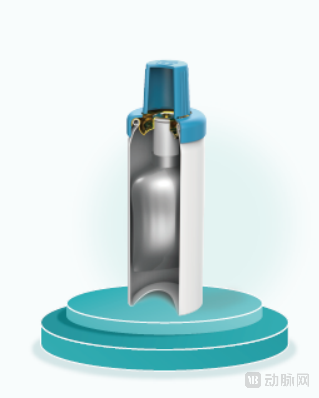
Figure: Jieshi®Schematic Diagram of Binary Packaging for Ophthalmic Perfluoropropane Gas
The disposable design largely addresses the risk of nosocomial infections associated with large-volume, multiple-use packaging, while also making it more convenient for doctors to operate. The uniquely designed dual-chamber packaging effectively prevents contamination caused by environmental factors during transportation and storage. Specifically, the product features an outer aluminum canister and an inner bag-valve system made of medical-grade polymer materials. Compressed gas is filled between the bag-valve and the aluminum canister to squeeze the perfluoropropane gas inside the bag-valve.This design ensures that even if the bag valve malfunctions, gas will only leak in the forward direction and will not contaminate the product gas due to the infiltration of external environmental gases, fully and maximally safeguarding clinical use safety.
"The impurity control of the perfluoropropane gas for ophthalmic use is a matter of life and death," said Zhao Hongbing, founder of Shanghai Jieshi Medical Technology Co., Ltd. The team has overcome three major technical challenges: first, the purification process, where they collaborated with well-known scientific research institutes in China's specialty gas industry to develop a multi-stage molecular sieve adsorption technology, achieving impurity content at <ppb level; second, the filling system, which controls micron-level particulates (≤0.2μm) in an ultra-clean filling environment; third, the testing standards. As there are no relevant industry standards for such products in China yet, and a lack of experience in identifying, characterizing, and quantitatively analyzing impurities, Shanghai Jieshi Medical Technology Co., Ltd. built a full-process quality control system from scratch.
Ophthalmic heavy water is a common intraoperative consumable in ophthalmic surgery, mainly used for temporary tamponade, helping to stabilize the retina, and facilitating surgical operations. It is regarded as a "soft instrument" in ophthalmic surgery and also known as the "doctor's third hand" in ophthalmic surgery.
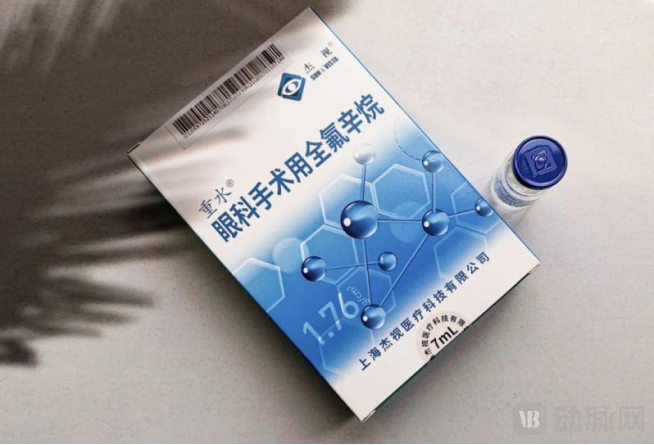
Shanghai Jieshi Medical Technology Co., Ltd.'s Heavy Water®Perfluorooctane for ophthalmic surgery is temporarily used during surgical procedures for rhegmatogenous retinal detachment with severe PVR, diabetic retinopathy, giant retinal tear detachment, ocular trauma, intraocular foreign body removal, and other vitreoretinal diseases with consistent mechanisms.
Shanghai Jieshi Medical Technology Co., Ltd.'s Heavy Water®Perfluorooctane for ophthalmic surgery, is one of only two domestically approved and the only commercially available second-generation heavy water in China. Compared with first-generation heavy water (mainly composed of perfluorodecalin, purity ≥95%), Jieshi Heavy Water®, produced by Shanghai Jieshi Medical Technology Co., Ltd., primarily consists of perfluorooctane. It has stable chemical properties, exhibits high inertness, and is unlikely to induce biological or enzymatic reactions within the body. It boasts higher purity (purity ≥99.98%), a smaller relative density, resulting in less mechanical pressure on the retina under the same volume, thus offering enhanced safety. With a higher vapor pressure (35°C, 6.0-8.0 kPa), it is easier to volatilize post-surgery and less likely to leave residues. Its refractive index (1.26) is close to that of water (1.33), providing good color reproduction of the fundus, making it not only easier to identify but also maintaining excellent refractive media during surgery. Additionally, with a high boiling point (102-106°C), it is less prone to vaporization during intraocular photocoagulation or electrocoagulation.
In short, Jieshi Second-Generation Heavy Water not only features high safety and minimal residue, but also possesses various unique characteristics suitable for safe vitreoretinal surgery operations, such as high purity, high interfacial tension, high vapor pressure, and low viscosity.
In addition, Shanghai Jieshi Medical Technology Co., Ltd. pioneered the second-generation perfluorooctane reduction self-coupling clean production technology for heavy water ophthalmic surgery, innovatively integrating various efficient separation and purification technologies. The company also participated in the formulation and revision of the industry standard "Ophthalmic Optics – Intraocular Filling Materials" (YY/T 0862 - 2023) and conducted clinical translational research using standardized clinical evaluation methods to promote the standardized development of the industry.
Shanghai Jieshi Medical Technology Co., Ltd. focuses on the domestic production of ophthalmic medical device products in China, providing comprehensive solutions for ophthalmic implantable consumables based on proprietary material technology. In addition to long-acting ocular gases, it has also developedIntraocular Filler(Heavy water, gases, silicone oil, silicone oil cleaning agents, etc.),Ophthalmic Vitrectomy Surgery Consumables(Vitreous cutter, gas-liquid tubing system, puncture system, irrigation/aspiration device, silicone implants, illumination/laser fiber, etc.),Corneal Function Reconstruction(Three product pipelines, including artificial corneal endothelium, etc.) cover the entire process of fundus/corneal surgery, and multiple products have the advantages of performance iteration and being first-to-market in China.
Among them, several products have been approved for marketing, including the second-generation ophthalmic heavy water (perfluorooctane), disposable ophthalmic puncture system, ophthalmic perfluoropropane gas, and silicone oil injection and aspiration kits.Other products, such as ophthalmic silicone oil, ophthalmic silicone oil cleaner, and innovative artificial corneal endothelium, are all in the clinical trial verification stage of development.It is worth mentioning that most of the products in the research and development stage by Shanghai Jieshi Medical Technology Co., Ltd. fill a domestic void, especially the artificial corneal endothelium product. Globally, there are still no safe and effective products widely used in clinical practice, leaving a large number of corneal blind patients unable to receive timely treatment due to a lack of donors. This situation is particularly evident in China. The company’s artificial corneal endothelium product is expected to be the first to launch in China, addressing this clinical pain point.
In terms of market strategy, Jieshi Medical adopts a "dual-drive" approach to break the deadlock. In the Chinese market, it uses the Jieshi® Perfluoropropane Gas for ophthalmic use as a sales driver, seizes the market with the first-mover advantage of its core products, and forms a synergistic advantage with a comprehensive product portfolio. Meanwhile, the company has also initiated the CEMDR certification and plans to use Vietnam and even Southeast Asia as a springboard to explore the international market.
Aging and other factors are driving the rapid expansion of China's ophthalmology market, while most areas of ophthalmic devices are still monopolized by imported products. This provides vast import substitution space for the localization of Chinese production, which can be described as having a long growth trajectory and significant potential. Shanghai Jieshi Medical Technology Co., Ltd. focuses on solving clinical ophthalmology challenges as its core mission and is committed to becoming a key innovator in China’s ophthalmic device sector. Zhao Hongbing emphasized that the confidence of Jieshi Medical stems from its superior performance and first-mover advantage in domestically produced products, a diversified and complementary product portfolio, and deep technological expertise combined with innovative product reserves tailored to clinical needs.
Finally, Zhao Hongbing remarked: "We don't want to 'get caught up in fierce competition,' but we're not afraid of it either. Expanding overseas business is an inevitable trend. Looking back at the 1990s, Japanese and Western companies also gradually moved abroad and secured their positions when domestic market competition became intense. Today, overseas markets are likewise opportunities and challenges that we must face. But I believe, 'The road ahead will be long and arduous, as if crossing an iron pass.' As long as we stay true to our original aspirations and aren't afraid of 'getting caught up in fierce competition,' we will surely achieve steady and long-term progress."