In March 2025, Capstan Therapeutics, Inc. announced its independently developedRobot-Assisted Transcatheter Mitral Valve Replacement System, at Clínico University Católica Hospital in Santiago, ChileCompletion of the World's First Human Clinical Trial。
This groundbreaking surgery was performed jointly by Dr. Gonzalo Martinez and Dr. Santiago Garcia, experts in the cardiovascular field, to carry out minimally invasive valve replacement for two patients with mitral regurgitation.
Intraoperative real-time monitoring showed that the patient's left ventricular outflow tract remained fully patent after surgery, with stable vital signs.Recovery time is shortened by over 40% compared to traditional surgery.。
The system enables doctors to perform complex surgeries at an operating console away from the radiation area through sub-millimeter precision control of robotic arms combined with 3D image navigation technology. For high-risk patients who cannot tolerate open-chest surgery, this innovative "remote operation" model provides a safer treatment option.
This success not only verifies the technical breakthroughs of the robotic system in core indicators such as catheter stability and implant positioning accuracy (error < 0.3mm), but also marks the official entry of structural heart disease treatment into the intelligent era.
X-ray Vision + 3D Navigation
Capstan Therapeutics Medical Robotics Platform breaks through the limitations of traditional single devices, creating a complete solution that integrates mechanical control, intelligent algorithms, and innovative consumables. Its technological innovation is mainly reflected in three dimensions:
- Modular Flexible Control System
The robot adopts a replaceable interface design, supporting rapid adaptation of various catheter instruments. Doctors can achieve millimeter-level precision control through a game controller-style operating console.
The robotic arm is equipped with a built-in force feedback system that can sense vascular resistance in real time and dynamically adjust the force, effectively reducing the risk of vascular injury that may be caused by traditional manual operations.
The system combines digital subtraction angiography (DSA) with artificial intelligence image reconstruction technology to generate dynamic 3D models of heart valves, assisting doctors in precisely planning surgical pathways.
During the operation, the virtual valve image can be superimposed in real time onto the patient's actual anatomical structure, ensuring that the implantation position error is controlled within 0.5 millimeters, significantly improving the success rate of the surgery.
Doctors can operate the console outside the sterile area, completely avoiding X-ray radiation.
At the same time, the system supports 5G remote surgery, which is expected to solve the problem of uneven distribution of medical resources at the grassroots level through expert remote guidance in the future.
Capital Boost:
Capstan Therapeutics' Financing and Technology Layout
Capstan Therapeutics, Inc., founded in 2020, quickly became a favorite among investors with its disruptive technology.
December 2024,Company Completes $110 Million Series C FinancingLed by Intuitive Ventures, the investment arm of global surgical robotics giant Intuitive Surgical, with participation from several top medical technology funds. The funds will be used to advance key clinical trials, expand the R&D team, and accelerate the development of tricuspid valve replacement technology.
 ▲ Figure:Shutterstock
Notably, Capstan has recently hired a former senior engineer from Intuitive Surgical to lead R&D, further strengthening its robotic control algorithms and innovation in consumables.
The company also plans to launch a multicenter clinical trial in 2026, with the goal of submitting an application for market approval to the FDA by 2028.Its strategic path is clear:
- Breakthrough in Mitral Valve Replacement: Building a Sub-Millimeter Precision Control Technology Barrier
- Gradually expanding to complex valve areas such as the tricuspid valve and pulmonary valve
- Ultimately forming a robotic surgery solution covering all heart valves
This "single-point breakthrough - lateral expansion - ecosystem construction" development model not only aligns with the urgency of clinical needs but also reserves technical interfaces for subsequent product line extensions, demonstrating the deep synergistic effect between the capital market and medical innovation.
The Trillion-Dollar Opportunity in Cardiac Interventional Robotics
Global Patients with Heart Valve Disease Exceed 350 Million, with Mitral Valve Disease Accounting for Over 60%.
Traditional surgery can only cover 20% of patients, while transcatheter technology, due to its high operational difficulty and reliance on physician experience, has an adoption rate of less than 5%.
Capstan Therapeutics' breakthrough signals the arrival of an industry turning point:Robotic surgery can reduce TMVR operation time by 40% and lower the complication rate by 30%.It is estimated that by 2030, the global market size for cardiac interventional robotics will exceed USD 30 billion, with an annual compound growth rate of over 25%.

Many countries' medical insurance has included robot-assisted surgery in the reimbursement scope, and China's National Healthcare Security Administration explicitly supported the charging for AI-assisted diagnosis and treatment in 2024.
In the future, the pay-per-use model (such as the Da Vinci surgical robot's service fee of 30,000 yuan per case) may become mainstream, further stimulating market demand.
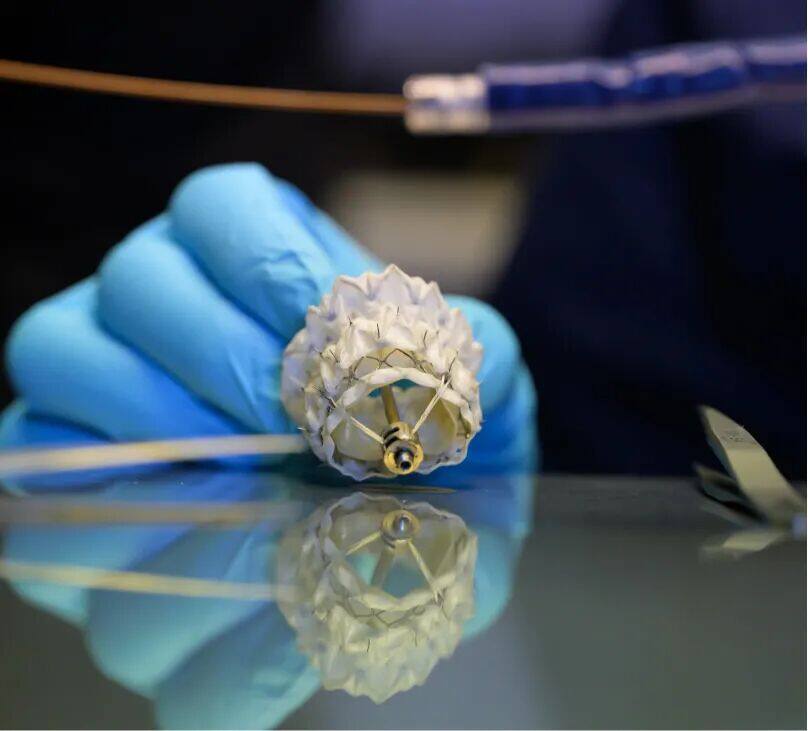
The robotic platform is compatible with various interventional medical devices, promoting the iterative upgrade of products such as valves and stents. For example, Capstan Therapeutics' nitinol valve adopts a self-expanding design, combined with the precise deployment technology of the robot, improving the valve's conformity by 50%, and showing significantly better long-term efficacy compared to traditional products.
Contending for Dominance:
Competitive Landscape of Interventional Robots
Capstan Therapeutics' technological breakthrough has indeed attracted significant attention in the industry, but it is not an isolated case. Currently, multiple companies worldwide are strategically positioning themselves in the interventional robotics field, each with distinct technical approaches and market strategies.
International Enterprises:
- Intuitive Surgical accelerates its overall layout in the interventional field by strategically investing in Capstan Therapeutics and simultaneously advancing its in-house projects.
- After Siemens Healthineers exited the coronary intervention market, it shifted its focus to the development of neurointerventional robots.
- Medtronic Launches Magellan System, Highlighting Magnetic Navigation Catheter Technology, After Acquiring Hansen Medical.
Chinese companies are also making rapid progress:- Minimally Invasive Medical Robotics and France's Robocath Jointly Establish Zhi Mai Robotics; Its R-ONE Coronary Intervention Robot Has Achieved Commercialization;
- Capstan Therapeutics' Self-Developed AI Vascular Intervention Robot Enters Clinical Stage;
- West China Medical Robotics Research Institute collaborates with universities to achieve breakthroughs in multi-modal navigation and flexible robotic arm technology.
In terms of differentiated competition strategy:- Some companies focus on magnetic navigation technology, some delve into force feedback systems, while Capstan has chosen a comprehensive solution of "modular + remote collaboration."
- There are obvious differences in market positioning: international giants focus on the high-end medical market, while domestic companies pay more attention to the popularization of grassroots hospitals, promoting technology penetration through cost optimization.
The milestone of Capstan Therapeutics is not only a technological breakthrough but also the beginning of a revolution in the medical paradigm. When robots become the "digital avatars" of doctors, and complex surgeries can be performed through a screen, the fairness and accessibility of healthcare will achieve a qualitative leap. In the next decade, cardiac interventional robots may become standard equipment in hospitals, just like CT and MRI machines, and the core driving force behind this transformation is humanity's relentless pursuit of quality of life.
▲ Source of the article: Medical Device Innovation Network▲Please indicate the above source for reprinting.Disclaimer: This article is intended solely for the purpose of information transmission and is for reference only. It does not constitute any advice on investment or treatment; please exercise caution. If it involves issues related to the content, copyright, or other aspects of the work, to ensure the rights and interests of both parties, please contact us, and we will handle it immediately. If any platform reprints this article, it must take responsibility for the content itself; the Medical Device Innovation Network is not responsible for any secondary dissemination caused by the reprint.