

Future Ophthalmology, Today's Technology: Xianwei Medical Pioneers a New Era in Ophthalmic Surgical Robotics
Legding Micros
Ophthalmic Surgical Robot Developer

Studies show that this type of surgery has extremely high requirements for motion resolution.Need to achieve20Micrometers (approximately the diameter of a hair1/5), far exceeding the limits of manual operation.
From the perspective of China's ophthalmic medical development, ophthalmic surgical robots seem to have been mastered."The opportune time, favorable location, and harmonious people" development opportunities.
In2025Year4Month17Held onThe First Global Ophthalmology ConferenceAbove, Eye on the Future interviewedPioneer of China-Made Ophthalmic Surgical Robots: Legding MicrosCTOLin ChuangPh.D., and discuss with readers how to lead a new chapter in ophthalmic surgical robots and dry eye treatment through intelligent innovation.
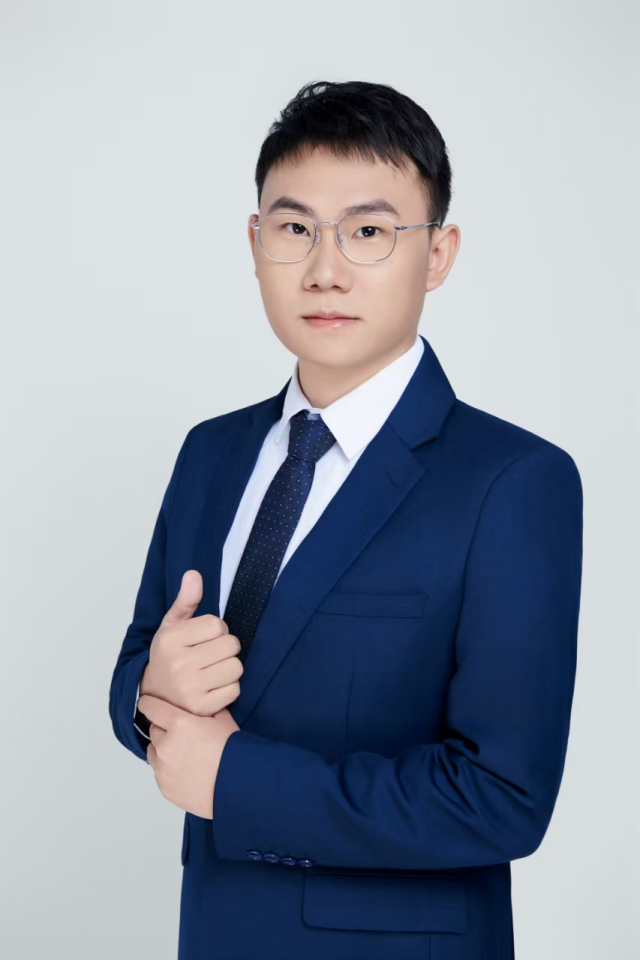
Legding Micros CTO Dr. Lin Chuang
Chief Technology Officer of Legding Micros. Graduated from Beihang University, with extensive experience in the research and development of ophthalmic surgical robots. Led the development of a dual-arm modular ophthalmic surgical robot known for its high precision and stability. In addition to surgical robots, Lin Chuang...Dr. also promoted the research and development of products such as handheld intelligent surgical instruments and meibomian gland massagers, enriching the product line of ophthalmic intelligent devices.
# Clinically Oriented, Precise Needs in Retinal Disease Treatment
In traditional ophthalmic surgery, doctors operate through a microscope and manual instruments, limited by hand tremors (typically within100Above micron level) and the lack of perceptual accuracy make it difficult to achieve such high-precision control.
Especially in intravitreal injections, the target vessel diameter is often only50-100Micrometer,Need to maintain for a long timeStable Injection,The difficulty of the surgery is further amplified, and any slight deviation may lead to vascular rupture or incorrect drug delivery, affecting the efficacy and even endangering the patient's safety.
In contrast,Ophthalmic surgical robots with their ultra-high precision and stability, which can effectively overcome these limitations and become an ideal solution to meet clinical needs.
However, Lin ChuangPh.D.Point out,High precision and high stability are just the basic thresholds for ophthalmic surgical robots. Legding Micros believes that more attention should be paid to intelligent sensing capabilities.。
How to Utilize Intelligent Sensing TechnologyReal-time capture of micro-force feedback during the surgical process (such as micronewton-level force changes when instruments contact tissues), and optimization of the operational experience through algorithmic enhancements, assisting doctors in achieving greater precision during surgery.Complex tasks?
This has become the most pressing issue for Legding Micros.
Currently, Legding Micros has established a leading technological advantage in the field of ophthalmic surgical robotics. Its robotic system not only achieves breakthroughs in hardware design but also forms a core competitive edge in intelligent sensing and algorithm optimization.
According to Lin ChuangPh.D.Introduction: The core highlights of the company's surgical robot products under development mainly lie in the precise control of the master-slave dual arms and the micron-level accuracy at the end.Positioning accuracy,0To200Dual-action Scaling Algorithm Technology, Millinewton-level Micro-force Feedback TechnologyAnd Multi-Indication Applications。
'%20fill='%23FFFFFF'%3E%3Crect%20x='249'%20y='126'%20width='1'%20height='1'%3E%3C/rect%3E%3C/g%3E%3C/g%3E%3C/svg%3E)
Master-Slave Control Algorithm: Through motion scaling (such as doctor operation100Millimeter Mapping for Robots1mm), achieving ultra-precise control.
Filtering Algorithm: Real-time elimination of hand tremors (100Micron-level) interference with surgical precision.
Dynamic Compensation Technology: Automatically adjust the robot's positioning in response to micro-movements of the eyeball or physiological tremors in patients.
High-Precision End Structure: The robotic arm is equipped with9Degree of Freedom (6+3), flexibly adapting to complex surgical scenarios and aligning with doctors' operational habits.
Microforce Sensing Technology: Real-time capture of subtle force feedback, enhancing surgical safety and control experience.
The integration of these technologies gives Legding Micros' robotic system a significant advantage in complex surgical scenarios.
Lin ChuangPh.D.Revealed,Legding Micros' dual-arm integrated robot is a first in China. Compared to the common single-arm systems on the market, the dual-arm design better aligns with doctors' habits of using both hands, avoiding the issue of inconsistent movement ranges between a single arm and manual instruments.
For example, a single-arm system may result in one hand operating the robot (zoom motion) while the other hand directly manipulates the instrument (1:1Movement), causing coordination difficulties, while the dual-arm system ensures synchronized scaling, guaranteeing consistency in hand operations, significantly improving surgical efficiency and comfort.
It is reported that Legding MicrosClass III Innovative Medical Device Registered in ChinaGreen Channel for Medical Devices, Accelerating Product Launch.
# Research Foundation:20Years of Deep Cultivation in the Field of Ophthalmic Surgical Robotics
Despite its strong technical capabilities, Legding Micros is an undeniably young company.
The birth of Legding Micros stems from the long-term exploration by Professor Yang's research team in the field of ophthalmic surgical robots.
Yang Yang
PhD supervisor, senior member of the Chinese Mechanical Engineering Society, senior member of the Chinese Medical Device Association, member of the Ministry of Education's Educational Equipment Standards Committee, member of the China Reducer Standards Committee,Peer Review Expert of the National Natural Science Foundation, Peer Review Expert of the Aviation Fund.
Long-term engagement in research on microscope-assisted ophthalmic robotics, undertaking multiple national-level projects such as the National Natural Science Foundation of China and key R&D programs from the Ministry of Science and Technology.
Publish papers in academic journals and conferences at home and abroad70More than...SCI、EISearch50Chapter. Obtained National Invention Patent30Multiple. Published a monograph titled "Fundamentals of Robot Control Theory" and translated works such as "Robot Technology Handbook" published by Science Press.5Department. Awarded one Third Prize for Science and Technology Progress, one Second Prize, and one Third Prize for National Defense Technology Invention.
As early as20At the beginning of the century, Professor Yang began to focus on the precision challenges of minimally invasive ophthalmic surgery, leading a team to tackle high-precision robotic arms, intelligent sensor technology, and master-slave control algorithms, accumulating a wealth of academic achievements and technical patents.
This20The research journey over the years has not been smooth sailing.
As a field with high technological barriers, ophthalmic surgical robots involve interdisciplinary integration, long research and development cycles, and substantial investment.
Professor Yang's team realized at the laboratory stage that technological breakthroughs needed to be closely integrated with clinical needs.
To this end, they collaborate with top-tier medical institutions in China to validate the feasibility of applying the technology in scenarios such as subretinal injections, gradually building a technical system that spans from theory to practice.
2022Year6In the month, Legding Micros was officially established, marking20A New Starting Point for Industrialization after Years of Scientific Research.
Its rapid rise in the fields of ophthalmic surgical robots and dry eye treatment equipment is, on one hand,The team's precise grasp of the industrialization path is fundamentally due to the confidence and assurance bestowed by a deep technical foundation.
# Commercialization Proceeding Smoothly! China's First Thermal Pulsation Device for Meibomian Gland Treatment
With the popularity of electronic devices, the aggravation of environmental pollution, and the aging population, the incidence of dry eye syndrome continues to rise. This disease, primarily caused by meibomian gland dysfunction, leads to clogged oil secretions from the glands, decreased tear film stability, and symptoms such as dry eyes, foreign body sensation, and eye fatigue. In severe cases, it affects the quality of life.
Traditional treatment methods include artificial tears, hot compresses, anti-inflammatory drugs, etc., but their efficacy is limited, especially forMGDRadical treatment.The existing light pulses on the market (such as intense pulsed lightIPL) and thermal pulsation devices, which soften blocked oils by externally heating the meibomian glands. However, the heat needs to penetrate the skin and multiple tissue layers, resulting in low heat conduction efficiency. The treatment depth and precision are limited, and the effects vary depending on individual differences.
In response to this pain point, Legding Micros has strategically entered the dry eye disease sector by launching the first thermopulsation-based meibomian gland treatment device in China, filling a market gap and providing patients with a more direct and efficient treatment option.
Legding Micros' Meibomian Gland Thermal Pulsation Treatment Device innovatively adopts direct inner eyelid heating technology, completely颠覆传统外部加热的局限.
Its core principle is to use a dedicated probe to directly contact the inner eyelid surface, precisely transferring heat to the meibomian glands to quickly melt blocked lipid secretions.The equipment is equipped with a high-precision temperature control system, which can stably maintain the temperature at42.5℃ (close to the melting point of fat and safe for tissues), ensuring therapeutic efficacy while avoiding the risk of burns.
Compared with optical pulse devices, the advantages of thermal pulsation technology are significant:
Direct and Efficient:Heating the inner eyelid only requires penetrating a thin layer of tissue, with high heat conduction efficiency, acting more directly on the glands, and achieving more significant treatment effects.
Precision Temperature Control:42.5A constant temperature of ℃ can effectively melt fat while avoiding damage to the eyelid tissue caused by overheating.
Easy to operate: The device is designed to be lightweight, with a low operational threshold for doctors, comfortable patient experience, and short single-treatment duration (typically10-15Minutes).
Clinical Validation: The principle of thermal pulsation is supported by a large amount of clinical literature. Studies have shown that direct heating can significantly improve the secretory function of the meibomian glands compared to external heating, and the duration of dry eye symptom relief is longer.
Lin ChuangPh.D.Introduction: The development of the thermal pulsation device stems from the company's laboratory long-term accumulation of ophthalmic technology, combined with clinical needs for optimized design, aiming to provideMGDPatients are provided with a solution that addresses both the symptoms and root causes. Compared with other devices on the market, this device not only stands out in terms of technical principles but also reduces production costs through modular design, laying the foundation for subsequent large-scale promotion.
The device has been2024Year11Obtained the registration certificate in the month, becomingChina's First Thermal Pulsation-Based Meibomian Gland Treatment Device, and is currently collaborating with institutions such as Aier Hospital to complete trials, with the commercialization process proceeding smoothly.
Lin ChuangPh.D.The long R&D cycle and high investment in ophthalmic surgical robots are offset by the rapid market entry of the thermopulsation device, which serves as a cash-flow product providing the company with stable financial support. This diversified strategy is key to the company’s response to early uncertainties in the ophthalmic medical device market.
Looking ahead, ophthalmic surgical robots are expected to reshape the treatment landscape for fundus diseases.
Standing at the intersection of technological breakthroughs and market expansion, Lin ChuangPh.D.Point out,Whether it's ophthalmic surgical robots or dry eye treatment devices、AndUsed forLVA SurgicalSupermicrosurgeryRobot,Legding Micros always takes clinical needs as the guide and intelligent technology as the starting point, committing to bring patients more precise and efficient treatment solutions.
How will this enterprise, with its strong technical capabilities, deliver innovation to clinical practice? We will continue to keep an eye on the future.