

Baiyi Medical's World-First Automated Ocular Sign Measurement Device Receives NMPA Approval, Filling Global Gap in Thyroid Eye Disease Management
On March 13, 2025, Shanghai Baiyi Medical Technology Co., Ltd. ("Baiyi Medical" for short), independently developed the Thyroid Eye Disease (TED) intelligent detection device "Automatic Ophthalmic Measurement Instrument" (Model: BY-O1A), which obtained the NMPA Class II medical device registration certificate (Shanghai Medical Device Registration Approval 20252160092).
As the world's first diagnostic evaluation device for Thyroid Eye Disease (TED), this product is centered on submillimeter-level quantitative detection technology. It can assist doctors in completing four core TED measurements: proptosis, palpebral fissure width, ocular motility, and percentage of conjunctival hyperemia. It addresses current issues in thyroid eye disease detection such as strong subjectivity, poor repeatability, low accuracy, non-traceability, and low standardization. The product fills an international gap in the full-course management of thyroid eye disease and is expected to become the "gold standard" for clinical assessment in this field.
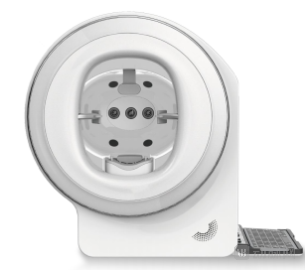
Shanghai Baiyi Medical Technology Co., Ltd.'s Self-developed Automatic Ocular Measurement Instrument
Thyroid Eye Disease (TED), also known as Graves' Ophthalmopathy (GO), is an organ-specific autoimmune disease closely associated with thyroid disorders, ranking first in the incidence of adult orbital diseases. The clinical manifestations of TED are complex and may cause eyelid retraction, proptosis, diplopia, restrictive strabismus, exposure keratopathy, and optic neuropathy in one or both eyes. It is an organ-specific autoimmune disease that threatens vision and damages appearance.
However, it should be noted that not all cases of proptosis or thickening of the extraocular muscles are necessarily TED. The diagnosis of TED requires a comprehensive analysis combining clinical manifestations, laboratory tests, and imaging examinations, while also paying attention to endocrine metabolic disorders and organic eye lesions.
The current TED diagnostic system has core pain points such as difficulty in early detection, ambiguous assessment of disease activity, and delayed evaluation of treatment efficacy, which to some extent affect the diagnosis and treatment outcomes of TED. International authoritative guidelines (such as EUGOGO) have repeatedly pointed out that the lack of standardized quantitative tools is a key obstacle limiting TED diagnosis and treatment.
The reason for such diagnostic challenges lies in the fact that current TED diagnosis and treatment methods mostly rely on doctors' subjective visual scoring or fragmented imaging examinations, which can easily lead to "treating the head for headaches and the foot for foot pain" – endocrinology focuses on hormone regulation, while ophthalmology emphasizes symptom relief. The data from these two fields are fragmented, and there is insufficient collaboration, which can result in misdiagnosis or missed diagnosis. Additionally, it is difficult to achieve full-course disease management.
Shanghai Baiyi Medical Technology Co., Ltd. has collaborated with the team of Professor Wang Weiqing from Ruijin Hospital, Shanghai Jiao Tong University School of Medicine, and the Shanghai Institute of Endocrinology and Metabolism. After five years of research, they have broken through the limitations of traditional static measurements and developed the world's first dedicated dynamic detection device for Thyroid Eye Disease (TED) — the Automatic Ocular Feature Measuring Instrument.

Automatic Eye Sign Measuring Instrument Based on Clinical Feedback Iterations
Its core patent, the "Dynamic Eye Movement Tracking System," can capture eye parameter data in real time under natural conditions. It can completely solve the clinical challenge of "significant differences in evaluations between doctors," providing an objective, repeatable, precise, and traceable standardized measurement method and evaluation system for TED diagnosis and treatment.
Shanghai Baiyi Medical Technology Co., Ltd. Addresses Three Major Pain Points in Clinical Diagnosis and Treatment:
Complexity of Etiology: The onset of TED is intertwined with multiple factors such as thyroid hormone levels and autoimmune responses, making it difficult to comprehensively trace its origin from a single-discipline perspective.
Fragmented Assessment: In traditional diagnosis and treatment, endocrine indicators (such as TSH receptor antibodies) and ocular parameters (such as proptosis) are tested in different departments, leading to low data integration efficiency.
Treatment Disconnection: Lack of Dynamic Linkage Between Hormone Therapy and Surgical Intervention May Lead to Over- or Under-Treatment.
Shanghai Baiyi Medical Technology Co., Ltd.'s "Automatic Ocular Sign Measuring Instrument" Achieves Two Major Breakthroughs:
Data Interconnection: Devices synchronously collect four dynamic parameters of ocular signs, including exophthalmos, palpebral fissure width, ocular motility, and percentage of conjunctival hyperemia, to build a specialized diagnosis and treatment database for Thyroid Eye Disease (TED).
Decision Synergy: AI algorithms generate the "Thyroid Eye Disease Diagnosis Atlas" based on multi-dimensional data, providing doctors with objective data for hormone adjustment, medication treatment, and surgical timing, significantly improving comprehensive treatment efficiency.
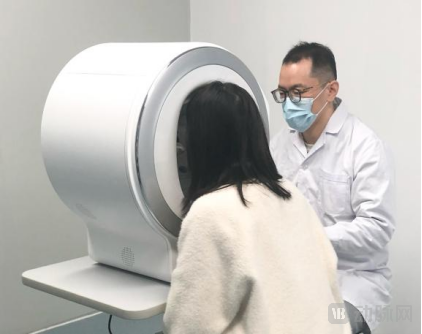
In addition, the device is compact in size and does not take up much space in the department. It does not require a darkroom or other special environments and can be used in a normal medical treatment environment. The user interface is friendly and easy to operate—doctors only need to guide patients to sit in front of the device, and the detection program can be started through voice prompts. The device will automatically guide users to complete subsequent steps and process data to generate reports.
According to a third-party testing report, there were no similar products available either in China or internationally before the approval of their self-developed automatic ocular symptom measurement device. This means that the design, technology research and development, as well as the manufacturing process of the automatic ocular symptom measurement device had to start from scratch, with independent exploration and establishment of standards. It is truly an original medical device innovation from China.
To address the above challenges, Shanghai Baiyi Medical Technology Co., Ltd. adopted the following strategies: First, clinical-driven R&D—the company originated from the technology transfer of the Endocrinology Department at Shanghai Ruijin Hospital and maintains close collaboration with clinical teams, continuously refining iterations through clinical validation and feedback. Second, the company actively applied for innovative medical device designation, receiving strong support and guidance from relevant departments. Lastly, a full-process self-developed system was implemented—Shanghai Baiyi Medical Technology Co., Ltd. has achieved independent intellectual property rights layout from optical structure design to AI algorithm development, forming a closed-loop innovation model of "technological breakthrough → clinical feedback → standard formulation."
As a revolutionary tool for TED diagnosis and treatment, the automatic eye sign measurement instrument is reshaping the clinical decision-making pathway for thyroid eye disease (TED).
In the endocrinology department, this device can be applied to the whole-process monitoring of the treatment cycle for hyperthyroidism patients. By dynamically tracking changes in ocular symptom parameters during the treatment cycle, it provides a quantitative basis for evaluating treatment efficacy; in the ophthalmology field, pre- and post-operative comparative data become the core evidence for objectively verifying the outcomes of surgeries such as orbital decompression and strabismus correction.
It is worth noting that, with innovative breakthroughs in the treatment of thyroid eye disease, two targeted drugs have been approved for marketing internationally: Tepezza from Amgen in the United States and Cibimin® from Innovent Biologics. However, there remains an issue within the existing diagnostic and therapeutic systems: insufficient means to evaluate drug efficacy, making it difficult to precisely quantify treatment responses, which could lead to delays in adjusting treatment plans — the innovative value of the automatic eye sign measurement instrument lies in filling this gap.
This drug-device collaborative monitoring model, through objective and quantifiable data collection, not only provides a scientific basis for the formulation of individualized treatment plans but also establishes a complete closed loop of "drug intervention-imaging monitoring-data feedback" via a timely feedback mechanism. This further enhances the timeliness of adjusting individualized medication regimens, officially ushering thyroid eye disease management into the digital precision era.
The innovation of technical products must rely on a team with an innovative gene.
Shanghai Baiyi Medical Technology Co., Ltd. has deeply engaged in the field of thyroid disease diagnosis and treatment. By establishing a deeply integrated interdisciplinary collaboration with the Shanghai Institute of Endocrinology and Metabolic Diseases, it accurately identifies the key clinical needs of thyroid diseases, breaks through the translational barriers between basic medical research and clinical practice, and achieves innovative breakthroughs in translational medicine within the field of thyroid disease solutions.
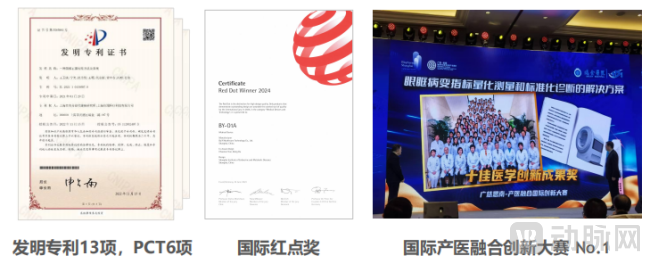
Honors Received by Shanghai Baiyi Medical Technology Co., Ltd.
With the approval and market launch of the automatic eye movement measuring instrument this time, Shanghai Baiyi Medical Technology Co., Ltd. will build a three-dimensional market network of "direct sales + agency" to accelerate the commercialization process. At the same time, the company has laid out a product matrix related to thyroid around the whole cycle of thyroid disease diagnosis and treatment, forming an integrated ecological solution from precise diagnosis to postoperative management.