

Biotech Rush to Hong Kong IPOs: Decoding the Breakthrough Strategies of Nearly 20 Companies

Ab&B Bio-Tech
Innovative Vaccine Developer for Human Use

Hengrui Pharma
Innovative and High-Quality Pharmaceutical Developer

GenFleet Therapeutics
Innovative Drug Developer

Mabwell
Innovative Biopharmaceutical Company
Genuine Biotech
Innovative Drug Developer

Axbio
Gene Sequencing and Diagnostic Equipment Developer

InSilico Medicine
Intelligent Drug Development Platform and New Drug Research and Development Provider

Cloudbreak Pharma
Ophthalmic New Drug Developer

BAO PHARMA
Biopharmaceutical R&D and Manufacturer
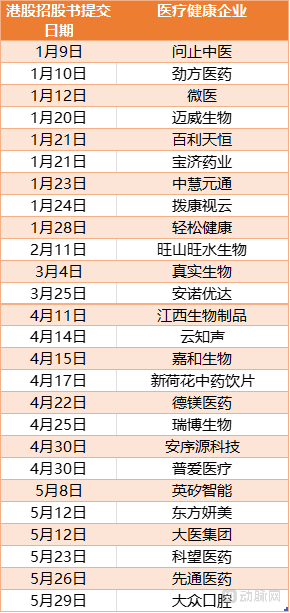
From the beginning of 2025 to date, 26 healthcare companies, including nearly 20 biotech firms, have rushed to file for IPOs on the Hong Kong Stock Exchange. Companies such as Hengrui Pharma, GenFleet Therapeutics, Mabwell, and Henan Zhenzhen Biotechnology Co., Ltd. have all submitted their prospectuses. The filing timeline clearly outlines three strategic paths: 14 cutting-edge technology companies, including Eastenova and Axbio, seized the policy window by submitting their initial applications; five firms, including Insilico Medicine, Cloudbreak Pharma, and Henan Zhenzhen Biotechnology Co., Ltd., demonstrated their commitment through multiple revisions of their prospectuses; and Ab&B Bio-Tech and BAO PHARMA swiftly pivoted to Hong Kong (with an average turnaround of less than three months) after withdrawing from the STAR Market, becoming a microcosm of unprofitable enterprises "changing course to break through." The landmark event was Hengrui Pharma's successful listing on the Hong Kong Stock Exchange on May 23, achieving dual listings on both A-share and H-share markets. This wave of Hong Kong IPOs represents not only a deep resonance between policy and market but also a strategic breakthrough for Biotech firms amidst a capital winter.
Since the Hong Kong Stock Exchange introduced innovative listing rules such as "Chapter 18A" and "Chapter 18C" in 2018, allowing biotech companies that are not yet profitable or have no revenue to go public, the release of these rules has been like a boulder thrown into a calm lake, creating ripples far and wide, bringing new opportunities to the biopharmaceuticals industry. The emergence of these rules has given many research-driven Biotechs a glimpse of hope.
Taking Ab&B Bio-Tech, which filed its prospectus in January 2025, as an example, its core product is still in the clinical trial stage. According to traditional listing rules, it would have almost no chance of going public for financing. However, under the "18A" rule, it successfully attracted the attention of international investors and raised funds smoothly, injecting strong momentum into subsequent R&D. Similarly, Cloudbreak Pharma, a company focusing on ophthalmic biotechnology R&D, has drawn the attention of international capital with its unique AI drug discovery technology and is steadily advancing in the process of listing on the Hong Kong Stock Exchange.
In-depth Analysis of These Companies Riding the Tailwind of Hong Kong Stock System Shows Significant Common Features. In terms of research areas, most of them focus on cutting-edge fields such as gene therapy and AI drug discovery, which represent the future direction of biopharmaceuticals. Despite high technical difficulty and significant R&D risks, success will bring enormous social and economic benefits. In terms of R&D investment, these companies are extremely generous, with R&D expenditure generally exceeding 70% of their total budgets. For instance, Insilico Medicine, which focuses on AI-driven drug discovery, has been continuously investing substantial funds in technology development and talent cultivation to enhance its AI algorithm capabilities and drug discovery efficiency. Its core advantage lies in having the fastest-progressing project among similar companies globally — an asset that has entered Phase II clinical trials, an oral small-molecule inhibitor targeting idiopathic pulmonary fibrosis. The company invests approximately $100 million annually in R&D, and by 2024, its revenue loss has significantly narrowed to $17.1 million.
Hong Kong stocks, leveraging the advantages of the "18A/18C" rules, have attracted a large number of early-stage Biotech companies. These enterprises, like brave "trailblazers," have embarked on their dream-chasing journey in the Hong Kong stock market with the help of favorable policies, injecting continuous vitality into the development of the biopharmaceuticals industry.
In 2024, the A-share pharmaceutical market in China experienced a chilling trend, with the number of IPOs hitting a decade-low. Only five pharmaceutical companies successfully went public throughout the year, a stark contrast to previous years. The once bustling capital market has now significantly raised its barriers, causing numerous pharmaceutical enterprises to face substantial obstacles on their path to going public.
STAR Market, as an important sector carrying the listing dreams of science and technology innovation enterprises, its changes in review standards have a profound impact on biopharmaceutical companies. Over time, the STAR Market's tolerance for unprofitable companies has gradually decreased, with increased uncertainty in the review cycle, which has deterred many unprofitable Biotech enterprises.
Ab&B Bio-Tech is a typical representative. In June 2023, Ab&B Bio-Tech confidently submitted its listing application to the STAR Market of the Shanghai Stock Exchange (SSE), harboring dreams of making significant achievements in the capital market. However, just three months later, it had no choice but to withdraw its application. The official explanation cited active fundraising activities in the Hong Kong Stock Exchange's biotech sector and considerations for an internationalization strategy. However, the market widely believes that the STAR Market’s increasingly stringent review of unprofitable companies, particularly its rigid requirements for technological innovation attributes, became the key factor driving Ab&B Bio-Tech to shift to the Hong Kong stock market. Despite certain breakthroughs in vaccine research and development, Ab&B Bio-Tech's core product, the quadrivalent influenza vaccine, has only recently been commercialized, and its market performance has yet to be fully validated. Under the STAR Market’s rigorous scrutiny of "hardcore technology" credentials and commercialization capabilities, the company fell short. Following the setback at the STAR Market, Ab&B Bio-Tech swiftly completed a strategic "pivot" within just three months—moving from withdrawing its application to filing with the Hong Kong Stock Exchange in one seamless motion. In early 2025, its Hong Kong Stock Exchange prospectus was published, restarting its capital market journey as an "unprofitable contender."
BAO PHARMA's experience is no different. This innovative enterprise, which leverages synthetic biotechnology to develop recombinant biologics, was founded in 2019. In just a few years, it has made significant progress in research and development, with multiple drugs in clinical stages. Originally planning to make its mark in the A-share market, BAO PHARMA had to withdraw its application due to slower-than-expected commercialization progress. However, it quickly adjusted its strategy and submitted an IPO application to the Hong Kong Stock Exchange on January 21, 2025, aiming to be listed on the main board of the Hong Kong Stock Exchange.
By observing these enterprises that have transitioned from the A-share market to the Hong Kong stock market, a notable common characteristic can be identified: their R&D pipelines predominantly focus on areas with high technical barriers and significant market potential, such as cancer immunotherapy and novel vaccine development. In the field of cancer immunotherapy, numerous companies are investing substantial resources in the research and development of innovative drugs, hoping to address the challenge of cancer. However, the R&D process is fraught with uncertainties, requiring continuous massive capital investment before successful market entry. These companies urgently need funding to advance Phase III clinical trials, a critical stage before new drug approval that determines whether the product can successfully enter the market, involving enormous financial input. From a financial perspective, these enterprises rely more on equity financing to alleviate cash flow pressures, given their heavy R&D expenditures and limited revenue during the initial commercialization phase of their products. Equity financing thus becomes crucial for sustaining operations and driving growth.
In the wave of economic globalization, biopharmaceutical companies are also actively seeking international development paths. The Hong Kong stock market, with its unique advantages, has become a key "springboard" for many Biotech companies to go global. Nearly half of the funds in the Hong Kong stock market are dominated by overseas institutions, gathering capital power from Europe, America, Southeast Asia, and other regions. It not only provides abundant liquidity but also introduces cutting-edge technology insights and cross-regional industry linkage opportunities, becoming the core engine for Biotech to connect the international commercialization chain.
Hengrui Pharma, as a leading innovative pharmaceutical company in China, has a highly representative strategic layout for its listing in Hong Kong. In 2025, Hengrui Pharma successfully passed the hearing of the Hong Kong Stock Exchange and was listed on May 23. In the prospectus, Hengrui Pharma clearly stated that the funds raised from the Hong Kong stock will be used in several key areas, among which the construction of a clinical trial base in North America is an important part. By establishing a clinical trial base in North America, Hengrui Pharma can integrate more deeply into the global pharmaceutical R&D system, access the most cutting-edge scientific research resources and clinical data, accelerate the development process of innovative drugs, and enhance the competitiveness of its products in the international market.
Ab&B Bio-Tech also regards the Hong Kong IPO as an important opportunity for its internationalization strategy. Ab&B Bio-Tech, which submitted its prospectus to the Hong Kong Stock Exchange in January 2025, is actively planning its international market expansion after commercializing China's first quadrivalent influenza virus subunit vaccine. The company plans to leverage the endorsement of a Hong Kong listing to promote product registration in Southeast Asia, a region with a large population, strong public health needs, and significant potential in the influenza vaccine market. With its product technology advantages and enhanced brand influence from the IPO, Ab&B Bio-Tech is well-positioned to secure a foothold in the Southeast Asian market, marking the first step in its international development.
These enterprises that have achieved international expansion through the Hong Kong stock market mostly possess the development characteristics of "dual circulation" between domestic and international markets. In China, they actively establish production bases and build a complete industrial chain system to ensure stable product manufacturing and supply. Overseas, they focus on clinical collaborations and the license-out model. Regarding clinical collaborations, many companies partner with internationally renowned pharmaceutical firms and research institutions to jointly advance clinical trials and enhance international recognition of their products. Under the license-out model, companies authorize their self-developed products to overseas pharmaceutical enterprises, gaining financial and technical support while leveraging the commercial channels of these foreign firms to quickly access international markets.
For Biotech companies, listing on the Hong Kong stock market is not only a means to secure financial support but also a "passport" to the international market. Through the Hong Kong stock platform, companies can deeply integrate with international capital, markets, and technology, enhance their global brand influence, accelerate the process of international development, and showcase China's innovative strength on the global biopharmaceutical stage.
The development of the biopharmaceutical industry is like a marathon full of challenges and opportunities. Biotech companies are striving to run on this track, while capital serves as an indispensable driving force and referee in this race. The inherent characteristics of Biotech companies—“high investment, long cycle, high failure rate”—are deeply aligned with the flexible valuation logic of the Hong Kong stock market. The two are a match made in heaven, jointly propelling the biopharmaceutical industry forward.
The development journey of Zai Lab serves as a vivid example. As a Biotech company focused on innovative drug research and development, Zai Lab has been committed to building a strong product pipeline through internal R&D and external collaborations since its establishment, addressing significant unmet medical needs in China. In 2017, Zai Lab was listed on Nasdaq, and in 2020, it was secondarily listed on the Hong Kong Stock Exchange, successfully leveraging the Hong Kong platform to initiate global multicenter trials. In January 2025, Zai Lab announced that the National Medical Products Administration (NMPA) had accepted the Biologics License Application (BLA) for Veltisotamab, intended for the treatment of patients with recurrent or metastatic cervical cancer whose conditions have progressed during or after systemic therapy. Behind this achievement lies the strong support of Hong Kong financing, which provided sufficient funds for its clinical trials, ensuring their smooth progress.
Kolon Pharma Similarly Stands Out in the Capital Market with Unique Technological Advantages. This Biotech company, established in 2017, primarily focuses on antibody-based large molecule drugs, with research and development mainly centered on bispecific antibody drugs and novel target discovery. Currently, Kolon Pharma has 15 R&D pipelines, covering popular targets such as VEGF, PD-L1, and 4-1BB, as well as novel targets like LAG-3, LILRB2, and CLDN18.2. In December 2023, Astellas Pharma reached a collaboration agreement with Kolon Pharma, securing the cooperation rights for Kolon's bispecific antibody drug E019 and another project with an upfront payment of $37 million and milestone payments exceeding $1.7 billion. This collaboration fully demonstrates the capital market’s high recognition of Kolon Pharma’s bispecific antibody platform technology.
These Biotech companies favored by capital generally emphasize the thickness of their pipelines, with an average of five R&D pipelines each. A rich pipeline implies more research directions and greater chances of success. In terms of competitive strategy, they focus on differentiated competition to avoid resource wastage and market pressure caused by homogeneous competition. Axbio is a typical example. This company, which focuses on gene therapy for rare diseases, has carved out a niche in the细分 market by precisely targeting the rare disease sector and leveraging gene-editing technology to develop innovative therapies.
Hong Kong's capital market provides Biotech companies with a variety of financing tools, helping them maintain their R&D "war chests." In terms of secondary offerings, many companies, after going public, conduct secondary offerings in a timely manner based on their R&D needs and market conditions to raise more funds for R&D and business expansion. Convertible bonds are also a commonly used financing tool for Biotech companies. When companies issue convertible bonds, investors can convert the bonds into stocks under certain conditions, providing the company with capital while offering investors the opportunity to share in the company’s future growth dividends.
In this "two-way rush" between capital and the industry, Biotech companies attract capital attention and investment with their innovative strength and development potential; while capital, with its keen market insight and flexible investment strategies, provides financial support and development advice to Biotech companies. The two are interdependent and mutually reinforcing, jointly promoting the continuous innovation and development of the biopharmaceuticals industry.
Biotech Companies Flocking to Hong Kong for IPOs: A Result of Policy and Market Resonance, and an Inevitable Choice for Industry Survival. From "Breakthrough Without Profit" to "Global Leap," the Hong Kong stock market not only provides a capital pool but also becomes an important battleground for Biotech companies to reshape their value. In the future, with the expansion of Stock Connect and the deepening of Rule 18C, this track is expected to witness more global stories of "Chinese innovation."