

Breaking the 'Follower' Curse: How BioVision Conquers the Global Ophthalmic Market with First-in-Class Innovation

Robotrak Technologies
Ophthalmic Medical Device R&D Developer
In recent years, against the backdrop of deep integration and value restructuring in the global healthcare industry, China's medical innovation enterprises are emerging as one of the key variables reshaping the global healthcare landscape, leveraging profound clinical insights and cutting-edge innovative technologies.
At the 2025 Annual Meeting of the Association for Research in Vision and Ophthalmology (ARVO 2025) held in May, an ophthalmic device from China became the center of attention.Robotrak Technologies' independently developed world's first commercial adaptive optics retinal imaging system "StellarView"®"Secured an $8 million order in one go, with procurement intentions from top hospitals and research institutions in Europe and America pouring in.This phenomenal cross-boundary performance not only demonstrates the strong capabilities of China's medical innovation but also marks a historic leap for China's high-end medical equipment, transitioning from being "followers" to "leaders."
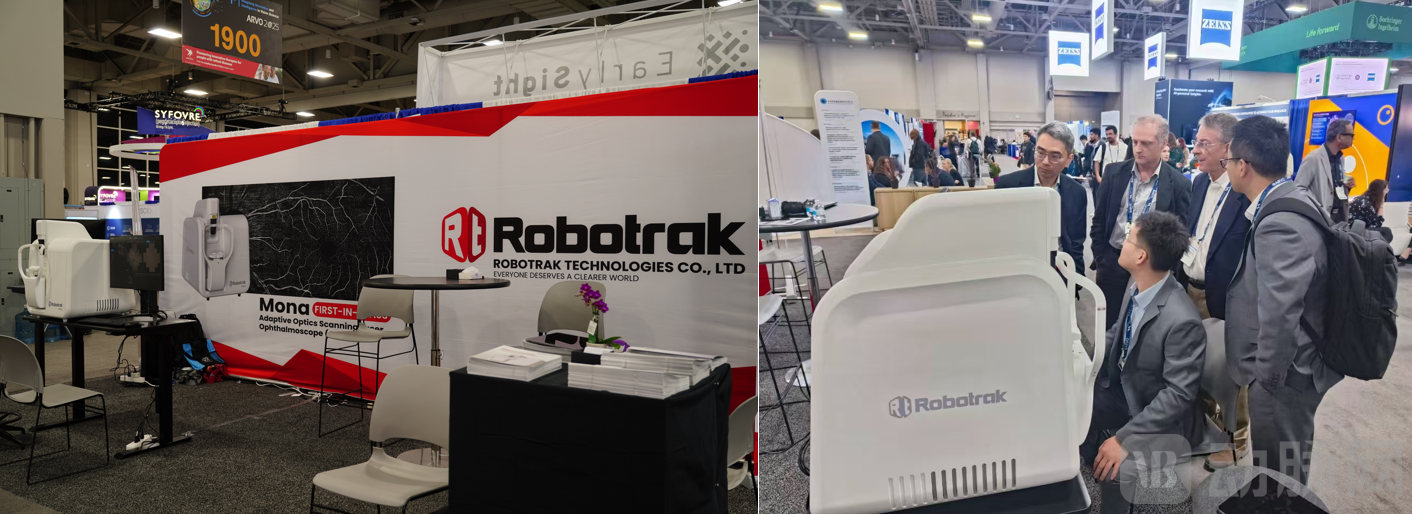
ARVO 2025 Robotrak Technologies Booth
StarLens®The origin of the technology can be traced back to the field of astronomy in the mid-20th century. At that time, astronomers pioneered the development ofAdaptive Optics (AO)Technology. This technology enables astronomical telescopes to obtain clearer images by real-time detection and correction of wavefront distortions.

AO Used in Astronomical Observations to Adjust Atmospheric Turbulence (1950s)
In the 1990s, Professor David R. Williams, an academician of the National Academy of Sciences, pioneered the introduction of AO technology into the field of ophthalmology.He found in his research that the optical aberrations of the human eye bear a striking resemblance to the atmospheric turbulence faced in astronomical observation. Based on this, Professor Williams' team successfully developed a laboratory-grade AO retinal imaging system, which for the first time enabled the observation of living retinal cells.
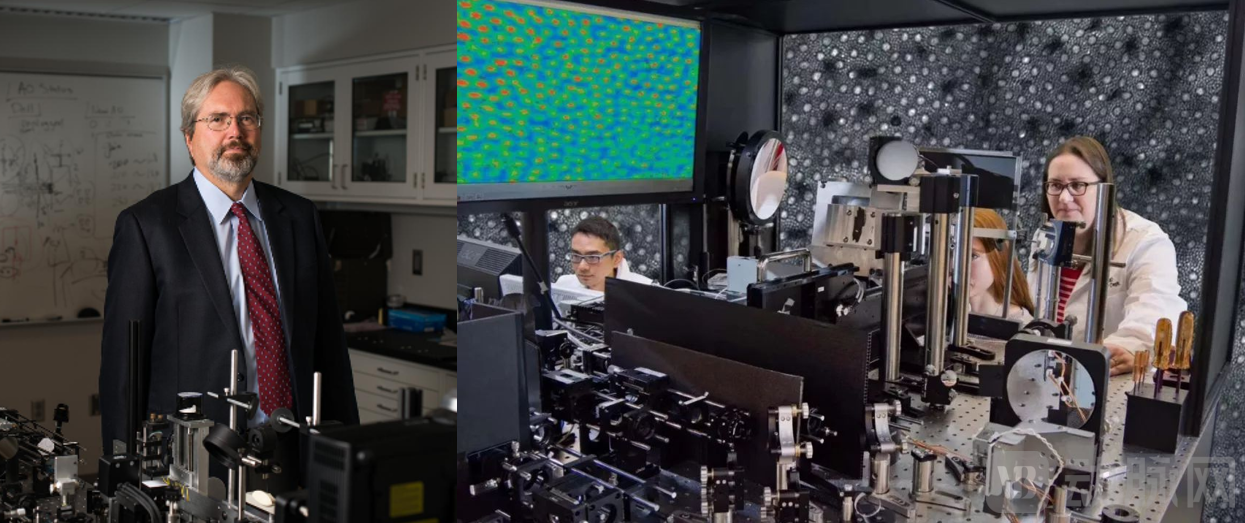
The lab-grade AO system developed by Professor David R. Williams' team (Right Three: Dr. Zhang Jie)
Dr. Zhang Jie, founder of Robotrak Technologies, recalled."The experience of conducting postdoctoral research in Professor Williams' laboratory made me deeply realize the enormous potential of AO technology in the medical field."However, the AO system at that time was bulky, often occupying an entire laboratory space. Moreover, the equipment was complex to operate and cost millions of dollars, making it completely unsuitable for clinical needs. How to transform this laboratory technology into a clinically usable medical device became a key focus after he returned to China to start his business.
Traditional ophthalmic imaging equipment has long been limited by ocular aberrations, making it impossible to achieve in vivo cellular-level imaging. This technical bottleneck directly affects the early diagnosis of various ophthalmic diseases and the evaluation of treatment outcomes. Dr. Zhang Jie keenly identified this clinical pain point and led the Robotrak Technologies team in a seven-year technical research effort.
"The biggest challenge lies in how to transform complex laboratory equipment that occupies an entire room into clinical instruments usable in a doctor's office," introduced Dr. Zhang Jie.To address this challenge, the Robotrak Technologies team, through independent research and development, successively overcame key technical bottlenecks in optical system design, real-time eye-tracking, and image algorithms. Ultimately, they reduced the device's size to 1/50 of its original volume and cut costs to 1/20., making it possible to move from the laboratory to clinical application, and providing key technical support for precise ophthalmic diagnosis and treatment.
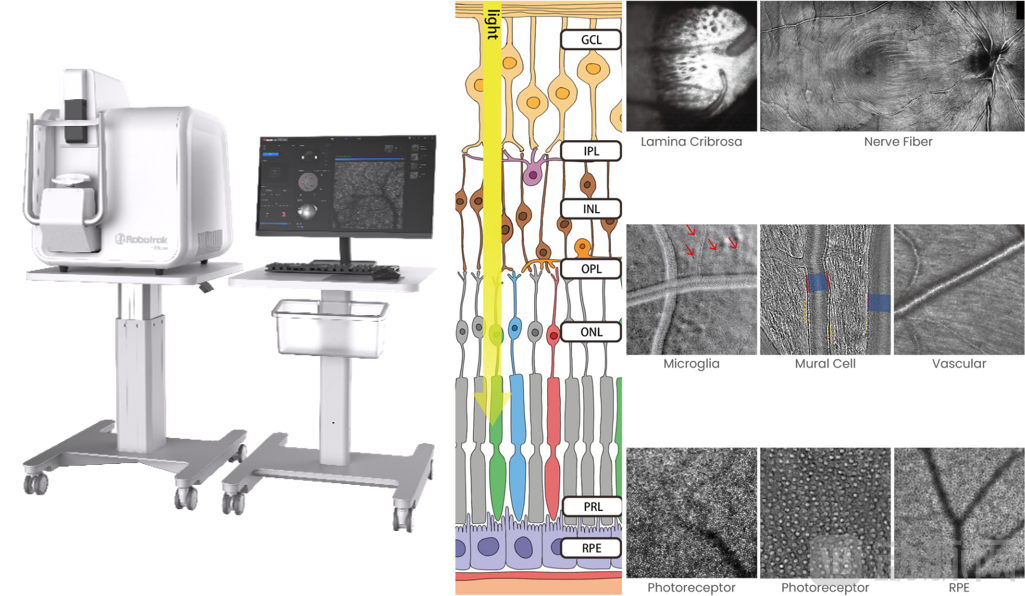
Stellar Lens®Adaptive Optics Fundus Imaging System and Its Imaging Schematic Diagram
StarLens®The breakthrough innovation allows doctors to observe individual cone cells, nerve fibers, and capillaries in the retina in a living state for the first time. The image resolution reaches 0.7μm, which is 10 times that of traditional equipment, providing a new perspective for ultra-early diagnosis and research of fundus diseases.
Taking inherited retinal diseases (IRDs), the most common genetic condition in humans that may lead to blindness, as an example, these diseases represent a group of blinding eye disorders with high genetic heterogeneity. The progression speed varies, and the disease burden is severe, with a global prevalence as high as 1/3000–1/4000. Therefore, achieving early detection, early diagnosis, and early treatment for inherited retinal diseases is of great significance in slowing disease progression, reducing the risk of blindness for patients, and alleviating the overall healthcare burden on society.
InBeijing Tongren Hospital, Capital Medical UniversityIn clinical applications, Star Mirror®Has successfully helped doctors in patients with hereditary retinal diseases — Stargardt disease (fundus flavimaculatus) where vision has occurred.ObviousBefore the decline, progressive loss of photoreceptor cells was detected, securing a valuable time window for early intervention. InUniversity of WashingtonIn the clinical study, StarMirror®Used for the detection of hereditary retinal diseases represented by Retinitis Pigmentosa, it provides a reliable method for evaluating the photoreceptor structure in the retinal transition zone, forms a cross-validation basis with other clinical gold standards, and lays the foundation for subsequent functional diagnosis of visual cells.
In addition, as a non-invasive and rapid device for examining cone cell density, StarVision®In the follow-up monitoring of red light treatment for myopic children, it also has irreplaceable application value.More exciting is that, StarLens®For the first time, the dynamic observation of retinal hemodynamics has been achieved. "We can clearly see the flow state of blood cells in capillaries, and at the same time, obtain imaging of vascular wall cells, vessel wall thickness, blood flow velocity, and other quantitative indicators. This is revolutionary for the early diagnosis of vascular diseases such as diabetic retinopathy," introduced Dr. Zhang Jie.
In the current situation where "involution" in the medical device industry is intensifying, Robotrak Technologies has chosen a distinctive development path."Producing homogeneous 'me too' products will ultimately lead to a price war, with the real breakthrough lying in original innovation."Dr. Zhang Jie admitted this frankly.
The formation of this innovative concept is closely related to Dr. Zhang Jie's academic background. During his time at the Center for Visual Science, University of Rochester, his experience studying under Professor David R. Williams, a pioneer in adaptive optics, made him deeply realize the importance of independent innovation in core technologies. After returning to China to start his business, he has remained true to his original aspiration, committing himself to leading his team in transforming cutting-edge laboratory technologies into clinically valuable products.
"Stellar Lens"®"The R&D process was full of challenges, but we never wavered." Dr. Zhang Jie recalled the R&D journey, saying, "When we saw the Star Lens..."®"Truly playing a valuable role in clinical settings and hearing domestic and international experts praise the product without reservation, we know we are on the right path."With its卓越的成像能力, Starmirror®Since its launch in 2024, the adaptive optics fundus imaging system has been introduced into dozens of top-tier tertiary hospitals, including the Zhongshan Ophthalmic Center of Sun Yat-sen University, the Eye, Ear, Nose and Throat Hospital of Fudan University, Beijing Tongren Hospital affiliated with Capital Medical University, and Shenzhen Eye Hospital. It has completed precise diagnoses for over 5,000 patients cumulatively. Relevant research findings have also been successively published in top international journals, advancing the diagnosis and research of ophthalmic diseases towards higher precision and earlier intervention.
Currently, StarMirror®Not only is it installed and used in top-tier hospitals in China, but it will also enter international leading institutions such as the Bascom Palmer Eye Institute (BPEI) and the New York Eye and Ear Infirmary (NYEE), assisting international pharmaceutical companies like Roche in conducting gene therapy evaluations, showcasing the global benchmark status of China's ophthalmic innovative technology.
StarLens®The clinical application value goes far beyond the traditional ophthalmology field.
With its excellent imaging capabilities, this device is alsoMetabolic diseases, neuroscience and other fieldsOpen up entirely new application scenarios. By conducting interdisciplinary research, researchers are able to explore potential connections between systemic diseases such as diabetes and hypertension, neurodegenerative diseases like Alzheimer's and Parkinson's, and ophthalmic conditions, thereby providing new approaches and methods for diagnosis and treatment.
In recent years, the prevalence and mortality of diabetes worldwide have continued to rise. In particular, China now has over 140 million diabetes patients, ranking second globally, with an increasingly severe epidemic situation. Early screening for diabetes in high-risk populations is of great significance for primary prevention, reducing the burden of disease treatment, and improving national health levels.®High-resolution imaging provides a new tool for early screening of diabetes and early warning of complications. The ophthalmology team at Guangdong Provincial People's Hospital utilized StarMirror.®The research conducted shows that AOSLO provides clinical practice with a more sensitive detection method and biomarker, which can serve as an exploratory endpoint or biomarker for the early screening of diabetic retinopathy (DR) or monitoring its progression and treatment response.
At the same time, the disease burden of Alzheimer's disease (AD) cannot be ignored.。Through early screening, we are able to identify susceptible or high-risk populations earlier, thereby implementing early prevention, early diagnosis, and early intervention for those who have not yet developed the disease, which can delay disease progression and reduce socioeconomic burdens.In Alzheimer's disease research, researchers from West China Hospital of Sichuan University used StarMirror®Early degenerative changes in photoreceptors (such as cone cell loss or structural disorder) observed in the retinas of AD patients can provide biomarkers for the early diagnosis of AD, especially when cognitive symptoms are not yet apparent.
"The human eye is a unique window to observe overall health," Dr. Zhang Jie further explained. "The retina is an extension of the central nervous system, and its microvascular network can reflect the health status of the entire vascular system. In the future, ultra-early disease screening through fundus imaging may become a routine health check item, which will be a huge market opportunity."
China's high-end medical equipment has always faced numerous challenges in going global, but Robotrak Technologies has achieved leapfrog development through breakthrough innovations."Technological leadership is the best pass." Dr. Zhang Jie said, "When your product is one-of-a-kind globally, the market will naturally open its doors to you."
Notably, in 2024, StarLens®Making its debut overseas at the ARVO exhibition, it garnered significant attention and recognition from industry experts and, in May of the same year,The Visual Research Center of the University of Washington in the United States successfully completed the first overseasInstallation. This not only marks that high-end ophthalmic equipment of "Made in China" has gained recognition from top international scientific research institutions, but also becomes an important milestone for carrying out internationally synchronized cooperative research in the field of adaptive optics.Professor Ramkumar Sabesan from the University of Washington gave high praise: "Robotrak Mona (Robotrak Technologies Star Mirror®) will change the entire adaptive optics world."
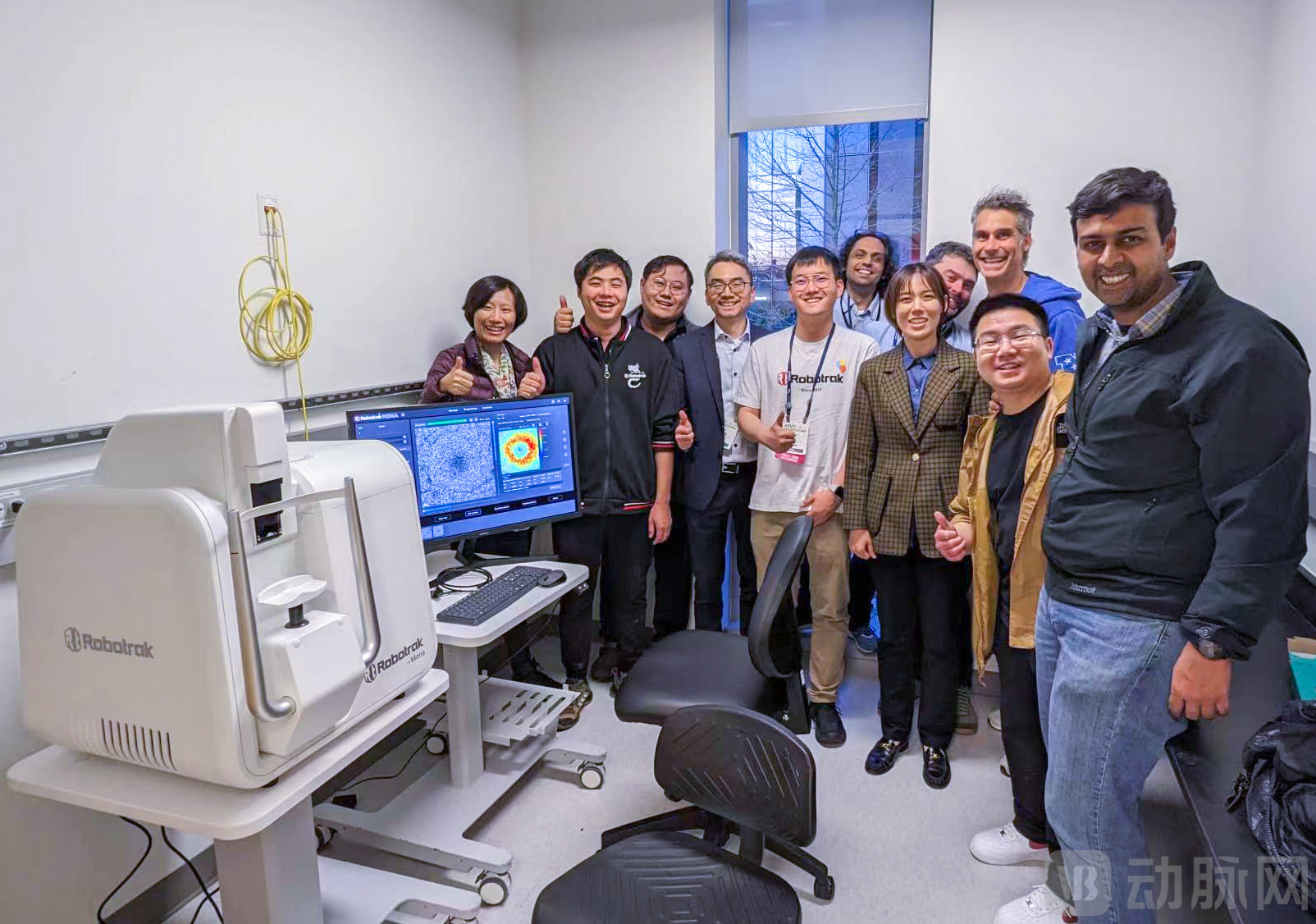
"StarMirror: The First Unit Overseas"®Settled at the Visual Research Center of the University of Washington, USA
In terms of commercialization, Robotrak Technologies has adopted a "Research Edition + Clinical Edition" dual-track model.Scientific Research Edition Star Mirror®For top research institutions, emphasizing the scalability and openness of functions; Clinical Version StarMirror®Then, according to the hospital's needs, emphasize the operational process.OptimizationAnd system stability. This differentiated market strategy precisely and efficiently covers different niche markets, meeting the professional needs of various users.
At the same time, to further accelerate the globalization process, Robotrak Technologies innovatively adopted a "research-first" market strategy. The company has successively established research collaborations with top universities such as the University of Washington and the University of Houston. This not only quickly built a professional reputation for Robotrak Technologies on the global stage but also provided valuable first-hand data for the continuous iteration of its products.
In the Star Mirror®Building on its success, Robotrak Technologies is creating a comprehensive full-eye health ecosystem, striving to become "a global leader in precision ophthalmic diagnosis and treatment."
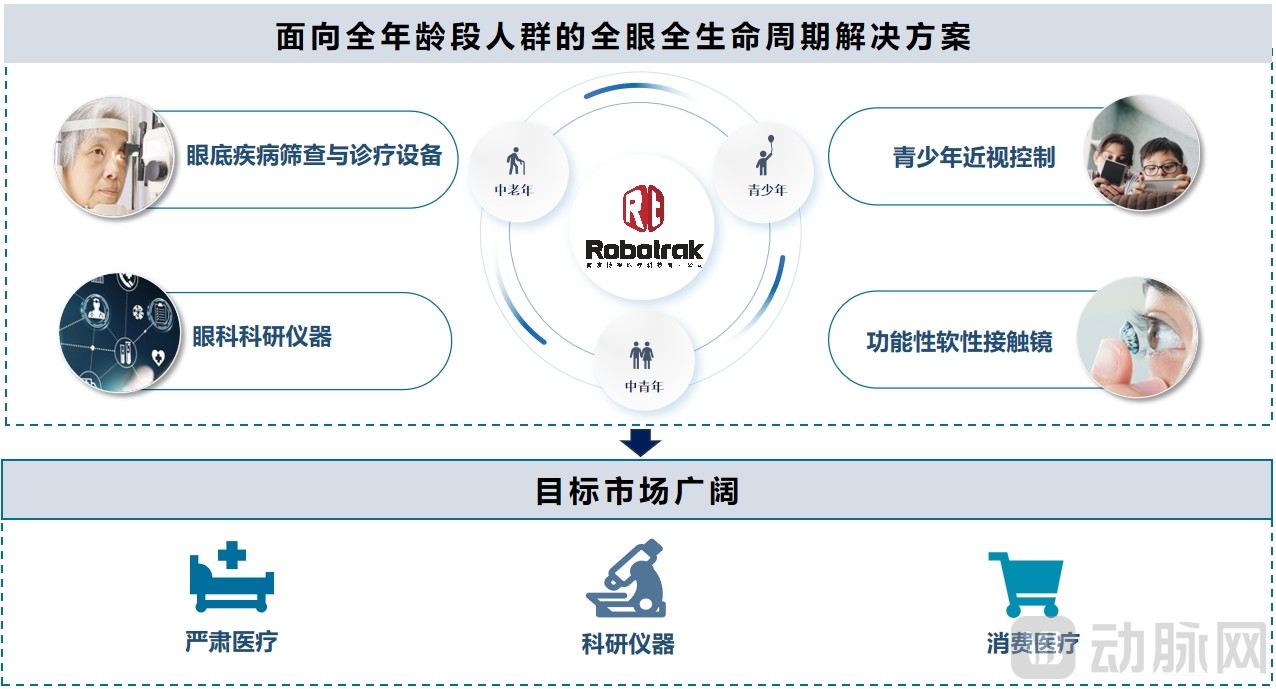
Robotrak Technologies Product Pipeline Layout
Currently, the company's product pipeline has formed three major matrices:
Diagnostic Equipment Matrix:
Robotrak Technologies, with the strategic layout of the globally leading "StellarVision" series and other imaging diagnostic equipment, has achieved full age-range coverage from teenagers to the elderly population.Multimodal Precision Imaging Technology and Quantitative Analysis ToolsIt can meet the needs of ultra-early screening for fundus diseases, precise diagnosis of various fundus diseases, and eye health monitoring for myopia prevention and control in adolescents, establishing a more comprehensive support system for ophthalmic health diagnosis throughout the entire life cycle.
Treatment Equipment Matrix:
Robotrak Technologies' flagship product "Ranklight"®"Intelligent Navigation Laser Robot for Fundus, integrating innovative functions such as real-time high-definition fundus imaging and automatic targeted laser therapy, is driving the development of fundus lasers into a new era of intelligence and digitization with its remarkable features of being intelligent, fast, and precise."
Vision Health Matrix:
The company's brand "Lude Tonne" mainly focuses on the consumer healthcare sector, including products with high-frequency repurchase characteristics such as functional silicone hydrogel soft contact lenses and colored contact lenses. These products not only provide vision correction but also integrate various innovative functions. The company has independently designed a new series of silicone hydrogel soft contact lenses for myopia control in teenagers based on a database of Chinese adolescents' eyes. Other products include presbyopia multifocal soft lenses, astigmatism soft lenses, and digital anti-eye-fatigue soft lenses. These products will have broad market potential in the future.
As of now, Robotrak Technologies, as a First-in-Class full-age ophthalmic innovation platform company, has targeted the three end markets of "healthcare, research, and consumer," establishing two major business segments in ophthalmic equipment and soft contact lenses, and has obtained six medical device product registration certificates.
Recently, Robotrak Technologies has achieved another significant breakthrough in the field of ophthalmic innovation. Its vision care brand "Ludetong" monthly and daily disposablesTwo types of colored contact lenses, successfully approved by the National Medical Products Administration for a Class III medical device registration certificate and launched.Among them, the water content of "Ludetong" daily disposable lenses is as high as 58%, which is currently the highest among certified products.Hydrogel Color Lens with the Highest Water ContentOne of the products. Professional test results show that after wearing the lenses for 8 hours, there was no significant change in the user's tear secretion volume or tear film break-up time, demonstrating a notable advantage in wearing comfort.
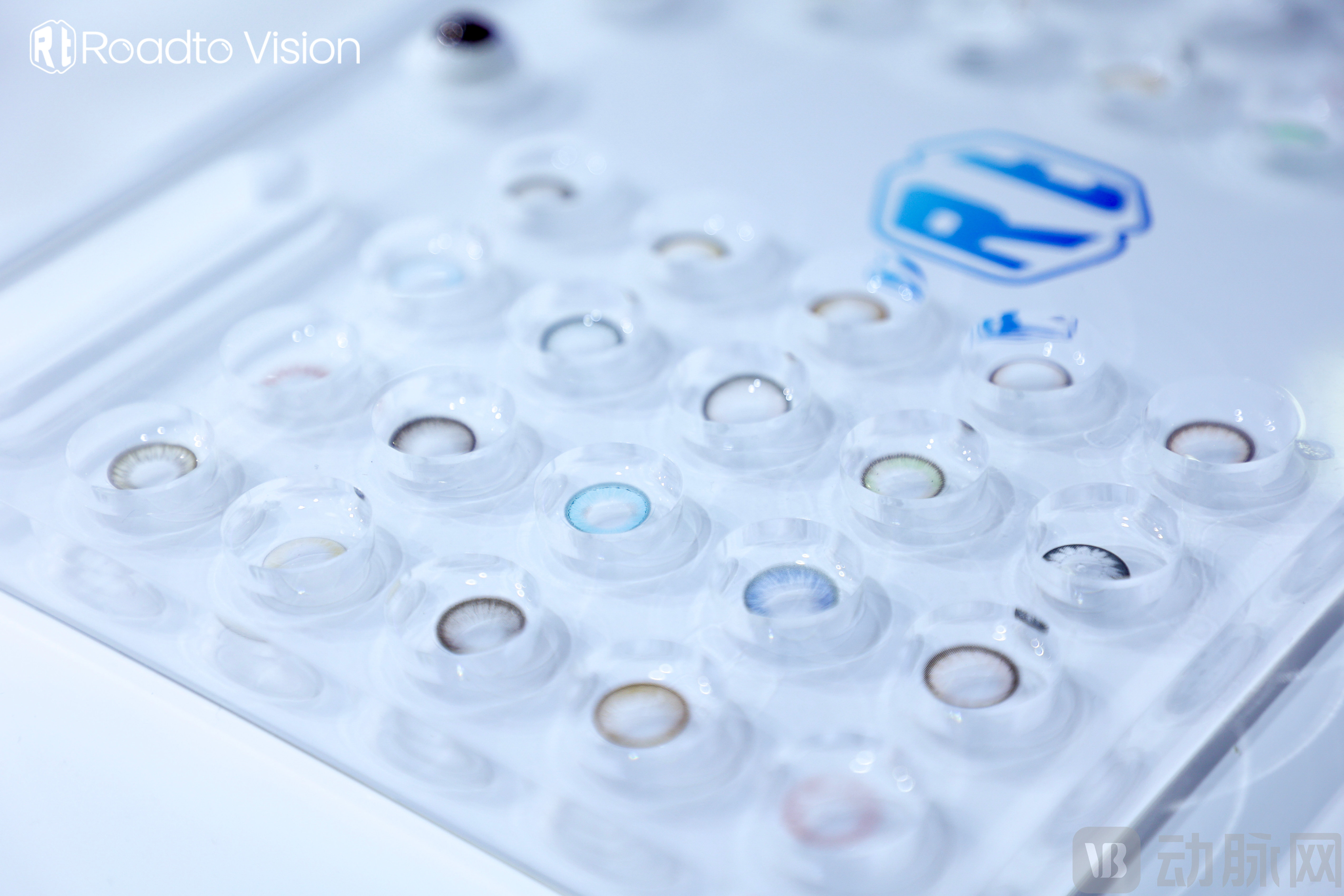
"Ruth Pupil" Color Contact Lenses
The approval and market launch of these two hydrogel color lenses not only further enriches Robotrak Technologies' ophthalmic precision diagnosis and treatment solutions but also marks a key breakthrough in the company's strategic layout in the consumer healthcare field. Additionally, it was revealed that,"Ruth Pupil" Silicone Hydrogel White Lens Expected to Complete Registration and Launch in the First Half of 2026,which will provide consumers with more high-quality choices.
At the end of the interview, Dr. Zhang Jie used the word "innovation" to precisely summarize the core competitiveness of Robotrak Technologies. "Innovation has always been the soul of Robotrak Technologies. Through technological innovation, we improve production efficiency, optimize treatment methods, and maintain industry competitiveness. Meanwhile, 'Everyone deserves a clearer world' is not just a slogan but a guide for our actions. Chinese medical companies already possess global competitiveness; what we need now is more confidence and patience." Dr. Zhang Jie concluded by emphasizing, "Robotrak Technologies has a clear goal — if we are going to do it, we aim to be 'Robotrak of the world.'"