

Ace Vision Secures Over $56M Funding to Advance LSM Therapy for Presbyopia with 5-Minute Minimally Invasive Procedure
AceVision
Ophthalmic Medical Device Developer
In April 2025, the U.S. medical device company Ace Vision (hereinafter referred to as "Ace") completed a $29.4 million (approximately RMB 212 million) Series B expansion financing, bringing the total financing amount to $56.8 million (approximately RMB 409 million). This round of funding will accelerate the global commercialization process of the company's core product, LSM (Laser Scleral Microporation) therapy.
LSM is a treatment method for restoring vision in people with presbyopia (commonly known as "old sight"). Against the backdrop of accelerating global aging, the problem of presbyopia is becoming increasingly severe. The "World Report on Vision" published by IAPB (International Agency for the Prevention of Blindness) and cited on the WHO website shows that in 2020, there were approximately 1.28 billion people worldwide with presbyopia (aged 35 and above). By 2050, the number of patients will rise to about 1.8 billion (an increase of approximately 40%).
Facing this continuously expanding medical demand, Ace has chosen to break through with biomechanical repair technology. Ace's core product, LSM, targets the root mechanism of scleral aging, restoring the eye's natural regulatory function through laser micropore technology. Bringing presbyopia back to a youthful state.
1The Dual Limitations of Traditional Therapies: Tool Dependence and Poor Safety
Presbyopia is a physiological vision degradation phenomenon, and its formation is closely related to the biomechanical changes of the eyeball. The sclera, the outer layer of the eyeball, is composed of collagen fibers, which act as an elastic network supporting the shape of the eyeball and assisting in focal adjustment.
At a young age, the collagen fibers in the sclera are arranged in an orderly and elastic manner. When the ciliary muscle contracts or relaxes, the sclera can flexibly deform, driving changes in the thickness of the lens to allow the eye to quickly focus on distant and near objects.
But as age grows, excessive cross-linking of scleral collagen fibers will gradually occur. This leads to a decline in scleral elasticity. Cross-linking and hardening reduce the efficiency of ciliary muscle traction force transmission and weaken the lens deformation ability. Like an aged rubber band losing elasticity and becoming stiff and hardened. The essence of presbyopia is that the excessive cross-linking and hardening of scleral (white part of the eye) collagen fibers with age causes the eyeball to lose its deformation ability.
Presbyopia is a problem that cannot be ignored, but there are two major bottlenecks in existing therapies.
On one hand, glasses and intraocular lenses can only correct vision but cannot reverse the biomechanical failure caused by non-enzymatic glycation of scleral collagen. Patients need to rely on assistive devices for near reading throughout their lives, while the root cause remains unaddressed. According to data from the AceVision official website, approximately 80% of presbyopia patients require corrective devices for life.
On the other hand, traditional invasive surgery requires direct contact with the patient's cornea and visual axis, which can easily damage corneal tissue. Moreover, mainstream laser surgery is more effective for myopia patients but has limited efficacy for presbyopia. This dilemma is even more pronounced among people over 40.
2Focus on Scleral Aging Pathology, Three Steps to Reshape Visual Biomechanics
Targeting the causes of presbyopia and the shortcomings of existing therapies, AceVision utilizes laser scleral microporation technology (LSM) as its core, implementing precise treatment through the "micropore generation-dynamic focusing-stimulation of scleral cell activity" trilogy.
First, the 1064nm near-infrared laser creates precise micropores with a diameter of 50-200nm in the scleral stromal layer, physically loosening the fiber cross-linking network. This process simulates the elastic state of a young sclera, allowing the eyeball to regain its natural deformation ability.
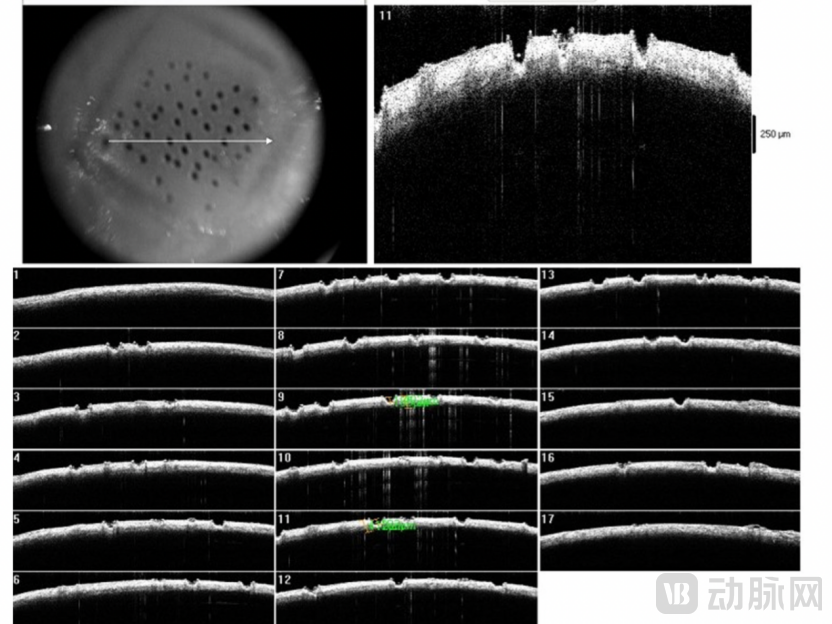
LSM Microhole Characteristic Pattern Diagram (Source: PubMed Central)
After the formation of micropores, the sclera can freely expand and contract during adjustment. When the eye switches between viewing distances, the ciliary muscle pulls the elastic sclera, causing real-time changes in the thickness of the lens, reconstructing the "Dynamic Range of Focus" – the ability to clearly focus on objects at far, intermediate, and near distances without conscious effort. Laser-created micropores can effectively stimulate the activity of scleral fibroblasts, promoting the orderly arrangement of newly formed collagen, resulting in a more elastic scleral structure.
35 Minutes to Complete the Entire Treatment, 24 Hours to Restore Mobile Reading Ability
LSM therapy surgery is mainly divided into two parts: preoperative personalized micro-hole layout planning and intraoperative non-contact laser operation.
Before surgery, ophthalmologists will conduct comprehensive examinations for each patient and develop personalized surgical plans. A "digital twin" of the patient's eyeball will be constructed through the Virtual Eye Simulation Analyzer (VESA). This step mainly involves detecting the state of the patient’s eyeball, combining scleral thickness ultrasound data, and using AI algorithms to generate a customized micropore layout plan.
Then, the ophthalmologist performs non-contact laser procedures on the patient's eye. The patient, under topical anesthesia, fixates on a stable light source while the ophthalmologist administers laser treatment via a non-contact laser system. Near-infrared laser (wavelength 1064nm) precisely targets the scleral area through the conjunctiva, with a single pulse duration ≤0.1 seconds and laser energy strictly controlled at 5-10 mJ/pulse. The laser creates micrometer-sized holes in the sclera, loosening aged and stiffened collagen fiber cross-links. It is important to note that this procedure must fully avoid the cornea and visual axis.
Laser Operation (Source: Official Website Press Release)
Finally, the ophthalmologist performs real-time calibration based on the condition of the eyeball. Using eye-tracking technology, the ophthalmologist dynamically compensates for microtremors of the eye, with the entire process requiring an error margin controlled within 10 micrometers. The micropores help restore elasticity to the sclera, allowing patients to naturally adjust their vision across far, intermediate, and near focal ranges. The entire treatment takes approximately 5 minutes, after which patients can leave the hospital.
Ace Mid-term Report Clinical Data Shows Patients Can Resume Mobile Reading Within 24 Hours, Micro-holes Close Within 2-4 Weeks, and Scleral Elasticity Significantly Improves. The Improvement Rate of Patients' Far/Near Vision Exceeds 90%.
4Meet the three major treatment standards: safety, radical cure, and compatibility.
The "Guidelines for Innovative Therapies in Presbyopia" released by the European Society of Ophthalmology (SOE) in 2025 pointed out that LSM can simultaneously meet the three major criteria for presbyopia treatment.
One is safety: Since the doctor does not need to touch the cornea and visual axis during the surgery, it will not cause damage to the patient's cornea. Meanwhile, the surgery adopts minimally invasive procedures with only surface anesthesia applied to the patient, and serious discomfort symptoms are rarely seen after the surgery.
The second is radicalness: LSM directly reverses scleral biomechanical aging (not symptom masking), returning the aging eyeball to a youthful state and fundamentally improving the patient's blurred vision symptoms.
The third is physiological compatibility: The complexity of presbyopia lies in the difficulty of reconciling near vision with distance vision. However, LSM can preserve native visual function, allowing patients to see nearby objects clearly without compromising their distance vision, and naturally switch between far, intermediate, and near vision.
5"Medical-Industry-Business" Triangle Team Structure: Cross-Border Forces Drive Commercial Transformation
The technical implementation of LSM is inseparable from Ace's unique "medical-industrial-commercial" complementary talent team.
Company founder and CEO Dr. AnnMarie Hipsley has a strong medical background, having trained over a hundred ophthalmologists. The VisioLite laser system she invented is the world's first Er:Yag micro-hole treatment device, establishing a leading position in the field of minimally invasive ophthalmology.
Chief Scientific Officer Val Kolesnitchenko, M.D., Ph.D., has over three decades of clinical practice and industry experience, with a strong focus on medical strategy development and clinical affairs management. His interdisciplinary perspective provides critical support for the company's technology translation.
Member of the Board and Executive Advisory Committee, Joseph Carroll, has 26 years of cross-industry management experience (covering fields such as hospitality, construction, and project management). He holds a Bachelor of Engineering from the University of Michigan. The combination of his engineering background and business acumen plays a crucial role in core areas such as strategic planning and budget management.
In 2024, AceVision brought in former Abbott executive Frank Chen as COO to further strengthen the operational system and drive the construction of a complete system from technology development, clinical validation to commercial implementation.
This composite talent team has brought significant gains to the company. According to Crunchbase data, as of April 2025, AceVision has gone through three rounds of financing, accumulating a total of $56.8 million in funding. The specific details are shown in the table below.
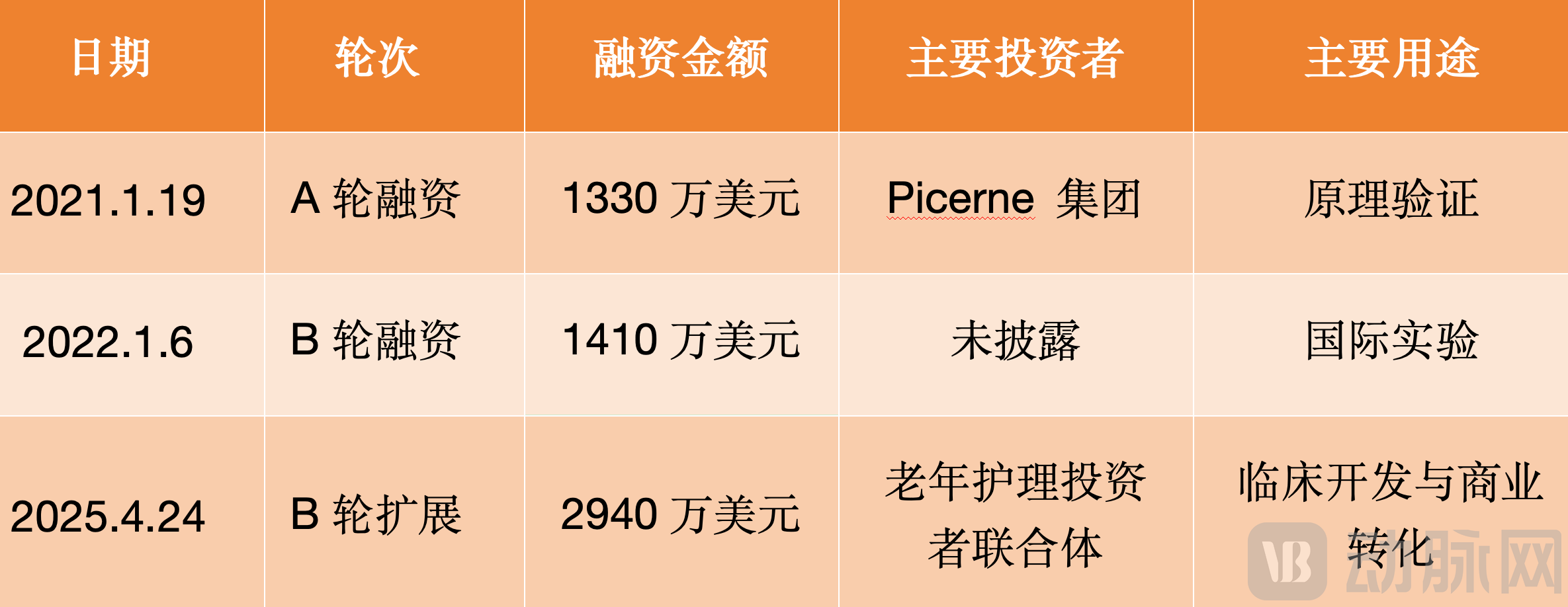
(Source: Crunchbase)
6A Long and Obstructed Road: Yet to Receive FDA Approval
Currently, the efficacy and safety of LSM have not been fully officially recognized. According to the official website information, LSM therapy has passed the preliminary safety assessment of the EU Medical Device Directive (MDD) and entered the substantive stage of CE certification. However, the FDA classifies LSM as a Class III high-risk device (PMA pathway). For LSM to be successfully approved, it needs to undergo dual tests of efficacy and safety.
In terms of biomechanical endpoint validation, LSM needs to demonstrate the direct relationship between improved scleral elasticity and enhanced vision. Regarding long-term safety data, the FDA requires a 5-year follow-up to confirm that the therapy has no delayed complications. For Ace Vision Group, Inc., this could further extend the time required for successful approval.
AceVision Meets the Demands of an Aging Era through LSM Therapy. Its Innovation Drives a Shift in Treatment Philosophy from "Alleviating Symptoms" to "Restoring the Ability to Live." If Successfully Approved, This Technology Could Allow Humanity to Clearly See the Warmth of the World, Even as Wrinkles Grow.