

Qilu Pharmaceutical Secures First Domestic Generic Approval for Amisulpride Injection, Stirring Up a 210-Billion-Yuan Market

Qilu Pharmaceutical
Specialty Formulations and Active Pharmaceutical Ingredients (API) Developer
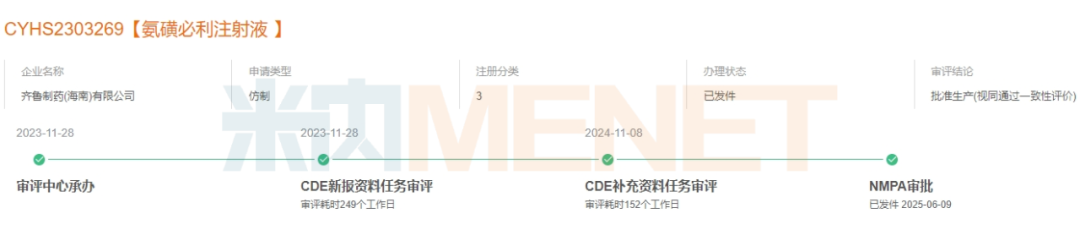
Recently, the official website of the National Medical Products Administration showed that the 3-class generic drug Amisulpride Injection applied by Qilu Pharmaceutical Co., Ltd. has been approved for production, as the first domestic imitation and the first to pass the evaluation in China. This medicine is used to prevent postoperative nausea and vomiting in adults. Data from Menet shows that in 2024, the sales revenue of digestive system and metabolic drugs (excluding traditional Chinese medicine) in China's three major terminals and six major markets (the statistical scope is detailed at the end of this article) exceeded 210 billion yuan.
Source: MiNei Network One-Click Search
Amisulpride is a selective dopamine D2 and D3 receptor antagonist. Currently, the approved formulations of amisulpride available in China include tablets, solution, and injection. Among these, oral formulations of amisulpride are used for the treatment of schizophrenia, while the injectable form is used to prevent postoperative nausea and vomiting in adults. Notably, the first generic versions (including the first formulation generics) of both amisulpride tablets and amisulpride injection were developed by Qilu Pharmaceutical.
Amisulpride preparations approved for marketing in China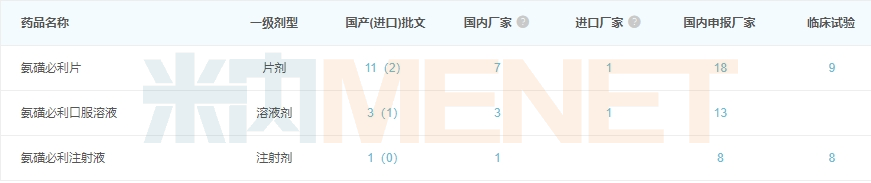
Source: Menei Network One-Click Search
Qilu Pharmaceutical's Amisulpride Injection was submitted for production in November 2023 and has recently been successfully approved for manufacturing, becoming the first generic product in China to receive approval. In addition, products from seven companies—Enhua Pharmaceutical, Nanjing Zhengke Pharmaceutical, Nanjing Entai Pharmaceutical, Shanxi Yanghe Pharmaceutical, and Hubei Duorui Pharmaceutical—have been submitted under the new registration classification and are currently either under review or undergoing clinical trials.
Data from MiNe Network shows that since the beginning of this year, Qilu Pharmaceutical has received approval for production and been considered as passing the quality evaluation for 12 varieties, covering therapeutic areas such as digestive system and metabolic drugs, systemic anti-infective drugs, antineoplastic and immunomodulatory agents. Several of these varieties are among the first batch to be approved in China, including Ibrutinib Tablets, Ixazomib Citrate Capsules, and Amisulpride Injection, which are the first generics in China to receive approval and pass the quality evaluation. Additionally, Isavuconazole Sulfate for Injection has been approved as the second product manufactured in China.
Varieties Approved for Marketing by Qilu Pharmaceutical Since 2025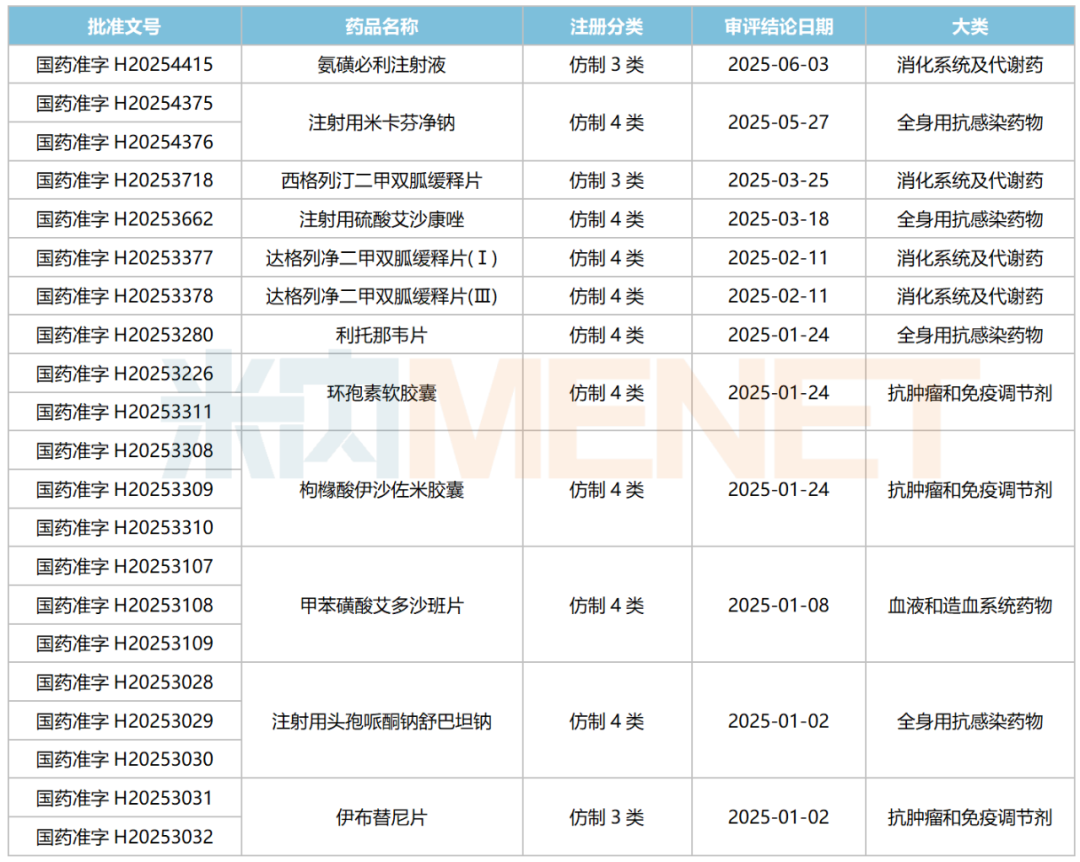
Source: MiNeiNet China Application Progress (MED) Database
Nausea and vomiting fall within the scope of the digestive system and metabolism. Data from MiNeiNet shows that in recent years, the sales of digestive system and metabolic drugs (excluding traditional Chinese medicine) in China's three major terminals and six major markets have continued to decline, but have consistently remained above 210 billion yuan.
Sales of Digestive System and Metabolic Drugs (excluding Traditional Chinese Medicine) in China's Three Major Terminals and Six Markets in Recent Years (Unit: Ten Thousand Yuan)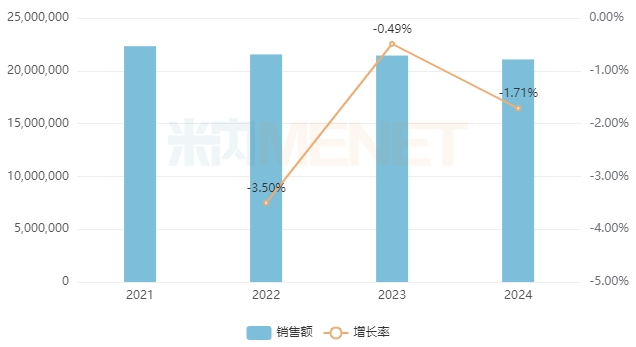
Source: MiNei Network Pattern Database
In the field of digestive system and metabolism, Qilu Pharmaceutical has production licenses for more than 30 drugs, including several antiemetic medicines such as Tropisetron Hydrochloride Injection, Aprepitant Injection, Fosaprepitant dimeglumine for injection, Aprepitant Capsules, and Palonosetron Hydrochloride Injection.
Source: MiNeiNet database, official website of the National Medical Products Administration, etc.
Note: The drug competition pattern in the three major terminals and six markets in China by Menet, the statistical scope includes: urban public hospitals and county public hospitals, urban community centers and township health centers, urban physical pharmacies and online pharmacies. It excludes private hospitals, private clinics, village clinics, and does not include pharmacies in counties, villages, and towns. The sales mentioned above are calculated based on the average retail price of products at the terminal. Data statistics are as of June 13th. If there are any omissions, your corrections are welcome!