

AbbVie to Acquire Capstan Therapeutics for Up to $2.1 Billion to Advance In Vivo CAR-T Therapies

Capstan Therapeutics
Biotechnology Developer
On June 30, 2025, global pharmaceutical giant AbbVie announced a cash acquisition of up to $2.1 billion for cell therapy company Capstan Therapeutics.
CAR-T Therapy in Cancer Treatment Is No Longer a Novelty — By extracting a patient's own T cells, introducing chimeric antigen receptors (CAR) targeting cancer cells in the lab, and then reinfusing them into the body, this "customized" treatment has brought new hope to countless patients with hematologic tumors. However, the limitations of traditional CAR-T are quite significant: complex cell extraction, an ex vivo modification process (taking several weeks), high manufacturing costs (single-dose cost exceeding one million yuan), and the risk of potentially severe cytokine storms.
Capstan Therapeutics' technology is attempting to break this bottleneck. The core idea is "in vivo generation of CAR-T": using optimized lipid nanoparticles (LNPs) to encapsulate messenger RNA (mRNA), delivering the genetic instructions encoding anti-CD19 CAR directly to CD8+ cytotoxic T cells on the surface within the patient’s body. This process eliminates the need for ex vivo cell extraction and modification, allowing T cells to "autonomously" express CAR in vivo, completing the recognition and elimination of target cells.
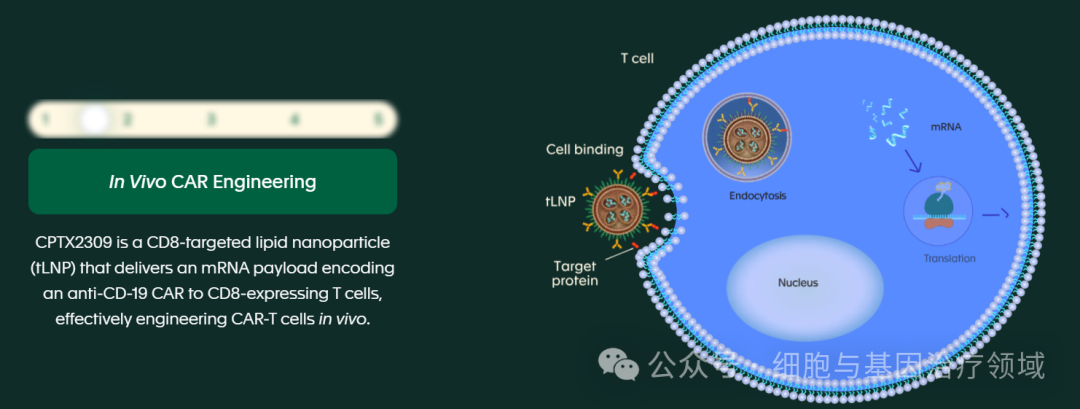
"This is like sending an 'instruction letter' to T cells, enabling them to directly 'learn' to attack cancer cells or abnormal B cells in the body," explained industry experts. The transient expression characteristic of mRNA (remaining in the body for only a few days) makes the function of CAR-T controllable, not only reducing the risk of cytokine storms but also avoiding the complex lymphodepletion pretreatment steps required by traditional CAR-T, significantly simplifying the treatment process.
In vivo CAR-T cell technology initially targeted cancer treatment, but its greater potential lies in autoimmune diseases — one of the core objectives of AbbVie's acquisition this time.
The essence of autoimmune diseases is a "misjudgment" of the immune system: B cells, which originally protect the body, mistakenly attack its own tissues. Traditional therapies often rely on immunosuppressive drugs, but they cannot cure the disease. CPTX2309, a candidate drug from Capstan Therapeutics, precisely targets pathogenic B cells using in vivo CAR-T technology: the delivered CAR-T cells identify and eliminate pathogenic B cells expressing the CD19 protein, after which the body regenerates "naïve" healthy B cells, effectively "resetting" the immune system and halting disease progression.
'%20fill='%23FFFFFF'%3E%3Crect%20x='249'%20y='126'%20width='1'%20height='1'%3E%3C/rect%3E%3C/g%3E%3C/g%3E%3C/svg%3E)
△CapstanProduct Pipeline Under Development
In addition, Capstan's proprietary platform "CellSeeker™ Targeted Lipid Nanoparticles (tLNP)" is more ""延展性": This platform can be adapted to various RNA payloads (such as anti-tumor, antiviral, or therapies targeting fibrotic diseases), and may expand to more indications in the future.
In fact, this is not AbbVie's first foray into the cutting-edge therapy track of in vivo cell treatment. In recent years, it has collaborated with Umoja Biopharma to explore the application of in vivo CAR-T in the field of oncology, and this acquisition of Capstan Therapeutics will further strengthen its capabilities in "in vivo programming" technology.
The popularity of Capstan Therapeutics is not an isolated case. In recent years, global pharmaceutical companies have been betting on in vivo cell therapy and RNA technology. Earlier this year, AstraZeneca acquired EsoBiotech (also focused on in vivo cell therapy) for a down payment of $425 million. Novartis, Johnson & Johnson, Pfizer, Bayer, Eli Lilly, and others have also invested in or independently developed similar technologies. Goldman Sachs predicts that the in vivo CAR-T market could reach $190 billion by 2034.
Behind this trend lies the resonance of technological breakthroughs and clinical needs. Traditional therapies in fields such as cancer and autoimmune diseases have already hit a ceiling, while in vivo CAR-T, with its characteristics of being "simpler, safer, and more accessible," is regarded as "Cell Therapy 2.0."
E.N.D
Previous article recommendations:(Click on the article title below to open the original text)
New Technology Breakthrough Increases Gene Editing Efficiency to 100%
A Chinese company focused on gene therapy and exosome therapy goes public in Hong Kong
Official Announcement: Capstan Therapeutics, Inc. Officially Changes Its Name