

Alcon Bets Big on Light Therapy: Acquires LumiThera’s Valeda System for Dry AMD

LumiThera
Developer of LED and Laser Treatment Medical Devices for Acute and Chronic Eye Diseases

Investment Invitation Notice
After years of stagnation with "no drugs available," the treatment for dry age-related macular degeneration (AMD) finally saw the successive launches of complement inhibitors Syfovre and Izervay in 2023, filling a long-standing gap in the treatment of geographic atrophy (GA) caused by AMD. However, both drugs are targeted at the mid-to-late stages of the disease, focusing on slowing lesion expansion, and still face significant challenges in terms of intervention window, treatment frequency, and payment pathways.
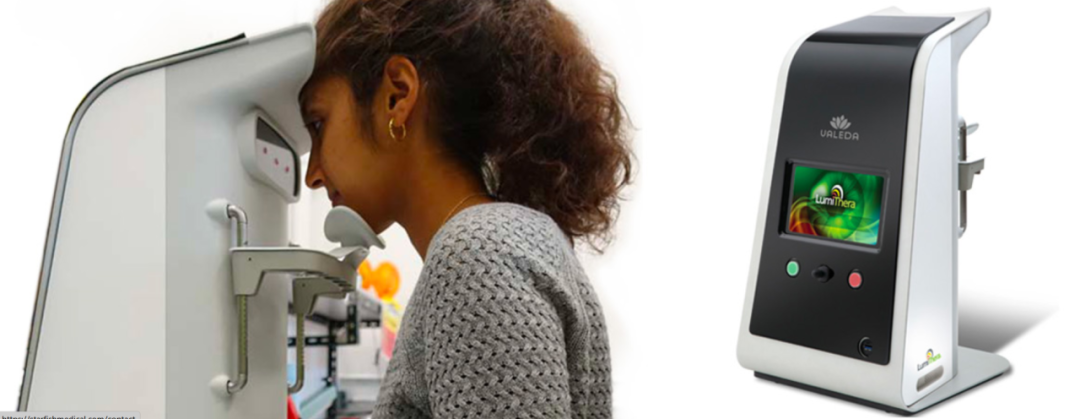
Recently,ElconAnnounced the acquisition of Seattle-basedLumiTheraAnd its core product——Valeda Light Delivery System. Unlike the gene therapy, stem cell implantation, or AI-assisted imaging that have been hot topics in the industry in recent years, Valeda represents a "hardware-oriented" approach:Photobiomodulation (PBM)As a mechanism, attempting to delay functional degeneration in early to mid-stage dry AMD patients.
The key point of this deal is not about "buying a company," but ratherElcon Only Chooses to Acquire Its Phototherapy Device Business, while spinning off diagnostic imaging assets (AdaptDx, Nova/Diopsys)。
As disclosedFrom the details, this timeScope of TransactionsOnly includes LumiThera's Valeda light delivery system and related technical assets., without involving the diagnostic device businesses such as AdaptDx and Nova/Diopsys. These devices will be divested to LumiThera shareholders before the completion of the transaction and operate independently.The financial terms of the transaction have not been disclosed.But is expected to be completed in the third quarter of 2025.。
Elcon is already firmly positioned at the forefront of the global ophthalmic medical field, holding leading market shares in multiple areas such as cataract surgery equipment, refractive surgery, intraocular lenses, and contact lenses.However, in the field of dry AMD treatment, Elcon had no core product line layout previously. This acquisition of LumiThera precisely fills this gap.。
# Current Status of the Dry AMD Market
Dry AMD has long been an unresolved challenge in the global ophthalmology field. According to data from *The Lancet Global Health*, there were approximately 196 million AMD patients globally in 2020.Among them, dry AMD accounts for about 85%-90%.By 2040, the global number of AMD patients is expected to increase to 288 million. Although significant treatment advances have been made in wet AMD through anti-VEGF drugs,Dry AMD, especially in the early and intermediate stages, still lacks effective treatment options.
'%20fill='%23FFFFFF'%3E%3Crect%20x='249'%20y='126'%20width='1'%20height='1'%3E%3C/rect%3E%3C/g%3E%3C/g%3E%3C/svg%3E)
In 2023, the U.S. FDA successively approved Syfovre and Izervay, two drugs for geographic atrophy treatment, providing an intervention solution for dry AMD at the drug level for the first time. However, both drugs are administered via intravitreal injection.Only applicable to advanced patients, with the main effect being the delay of disease progression.For patients with dry AMD whose condition is still in the early or intermediate stage and who desire active intervention, there remains a lack of truly non-invasive treatment options specifically targeting the early stages of the disease.
Because of this,The emergence of PBM technology is regarded as a potential breakthrough in the treatment of dry AMD.. This decision by Alcon to acquire LumiThera reflects the high level of attention global giants are paying to this blue ocean market, and also suggests that the competitive landscape of the dry AMD treatment market may see new changes.
# Valeda Light Delivery System
This therapyBy using light of a specific wavelength to stimulate retinal cells,Activation of Mitochondrial Respiratory Chain Components, promoting cell proliferation and protection, thereby improving vision. PBM throughTargeted photoreceptors in tissues absorb photons to function., The secondary cellular effects includeIncreased energy production and altered signaling patterns, such as reactive oxygen species (ROS), nitric oxide (NO), and changes in intracellular calcium, thereby promoting cell proliferation and cell protection. PBM activates mitochondrial respiratory chain components, especiallyCytochrome C Oxidase (Cox)To play a role. Cox is the terminal enzyme of the mitochondrial electron transport chain and is crucial for ATP production. When exposed to infrared or near-infrared light, Cox can be activated in either oxidized or reduced forms, thereby increasing mitochondrial membrane potential and promoting ATP synthesis.
# Clinical Trial Progress
InLIGHTSITE 3In the trial,ValedaReached the primary endpoint, and has been proven to be safe and effective. Studies show that in24Within months,ValedaCan achieve the best corrected vision(BCVA)Improve Beyond5One letter is equivalent to an increase of one line on the vision chart.
LIGHTSITE 3BResults of the Extended TrialThe pivotal trial2Annual Vision Benefits Extended to4.5Years, and demonstrated good safety。
Data Show
UndergoingPBM TherapyAmong the patients, more than 60% completed the two-phase trial.Best Corrected Visual AcuityIncreased from baselineMore than 5 letters, which is approximately equivalent to improving one line on the vision chart.;
Geographic Atrophy (GA)Proportion of new cases inPBM GroupFor1.1%, Control group is10%, with statistical significance (p=0.025);
The treatment was well tolerated, with no serious adverse events observed, and patients showed high compliance.
The researchers pointed out that after the initial treatment ended20 monthsDuring the non-intervention period, some visual improvement was still maintained, and after restarting treatment, patientsBCVARise Again, PromptPBM TherapyWith a certain degree of repeatability and continuity。
# The Industrialization Potential of Valeda
Although photobiomodulation (PBM) technology is not a new concept in ophthalmology, Valeda is one of the few devices for dry AMD treatment that has successfully established an initial commercial model. Compared to drug therapies that rely on targeting the complement pathway, are expensive, and require frequent use, the "device-based treatment approach" represented by Valeda offers several industrial advantages, especially showing high synergy for established ophthalmic companies.
Regulatory Foundation Established: EU CE Certification Obtained, U.S. FDA Clinical Stage Progressing Steadily
Valeda has obtained EU CE certification for the treatment of retinal dysfunction in the early to intermediate stages of dry AMD.In the United States, a prospective, multi-center, randomized controlled trial (LIGHTSITE III study) is being conducted to support its De Novo submission to the FDA, targeting the regulatory classification of "a novel non-pharmacological therapeutic device."
This regulatory pathway is different from drug approval, typically not involving large-scale Phase III clinical trials and long-term toxicity evaluations, making it more suitable for small and medium-sized companies to "launch first," while also establishing a reference path for future registration in emerging markets such as China.
Standardization of Treatment Processes: Facilitating Centralized Replication and Doctor Operation Training
Valeda's treatment consists of a combination of three LED light sources with different wavelengths, achieving cellular metabolic regulation and inflammation relief under photostimulation through fixed irradiation dosage and time control.The equipment has a high degree of standardization, does not rely on individualized algorithms or drug dose adjustments, and has a low threshold for doctors to operate., which can be quickly deployed in chain ophthalmology centers.
This means that its industrialization path is more similar to that of cataract phacoemulsification surgical equipment or refractive laser systems.Once clinical recognition is obtained, it can be quickly replicated through the method of "equipment + training," possessing the commercial scaling potential of "equipment driving procedures."
Market Gap Period: Differentiated complementarity with complement drugs, non-direct competition
Currently marketed dry AMD treatments (such as Syfovre, Izervay) mostly target patients in the "geographic atrophy" stage, characterized by irreversible retinal damage, with the treatment goal being to slow lesion progression rather than improve visual function.Valeda focuses on early to mid-stage intervention, aiming to restore metabolic status while cell function remains, stabilizing or slowing the decline of visual function.。
This makesValeda does not directly compete with complement drugs but forms a complementary combination in terms of time window and disease stage.In the future diagnostic and treatment pathways, Valeda is expected to be included in the "early treatment toolkit" for dry AMD, expanding market opportunities and reducing the conversion threshold for patients from monitoring to treatment.
Prospect of Medical Insurance Coverage: Controllable Frequency, Lower Cost, Easy to Be Included in the Payment System
In European countries, Valeda adopts an outpatient multiple-treatment approach (e.g., 3 times/week for a total of 9 sessions per course), with a treatment frequency lower than the monthly injections required for complement drugs. Additionally, the one-time cost of device-based treatments can be amortized by hospitals. The subsequent costs mainly consist of consumables and irradiation service fees, making it more suitable for negotiating reimbursement pathways with health insurance systems. Particularly in countries like Germany and France, payment implementation has been achieved in some regions.
This representsValeda is more easily incorporated into "standard disease management pathways" or the DRG payment system., its pricing model is similar to existing ophthalmic devices (such as IPL for dry eye, myopia laser, etc.),Expected to form a dual closed loop of "Medicare replicable + commercially scalable" in the global market.
SIYU Annual Activity Review:The First Global Ophthalmology Conference | The First Global Orthopedics Conference | First Global Cardiovascular Conference| The First Global Medical Aesthetics Technology Conference
Coming Soon:
July 17, 2025, The Second Global Medical Technology Conference
September 3-5, 2025, The 3rd Global Surgical Robotics Conference
GOC2025
Ophthalmology Solutions Case
Ophthalmic Instruments Industry Research