

Diakonos Oncology Advances DOC1021 Dendritic Cell Vaccine with 88% One-Year Survival in Glioblastoma and Files S-1 Registration Statement

Diakonos Oncology
Biotechnology Researcher
In June 2025, the U.S. biotechnology company Diakonos Oncology announced the completion of a $2 million SAFE (Simple Agreements for Future Equity) private placement. This round of funding will be used to advance the Phase II clinical trial of its star cancer vaccine, DOC1021, in glioblastoma (GBM). This progress brings new hope for GBM patients, whose five-year survival rate is only 8%.[1]。
Glioblastoma (GBM), known as the "king of cancers," is one of the most challenging solid tumors in the field of immunotherapy. Its "cold tumor" characteristics (such as severe immune suppression in the microenvironment and insufficient T-cell infiltration) lead to poor effectiveness of immunotherapies like PD-1/PD-L1 inhibitors, with an efficacy rate of less than 10%.[2]. AndDiakonos Oncology's Dendritic Cell Vaccine (DCV) strategy offers a completely new approach.
From Texas Lab to GMP Factory, Diakonos Oncology Builds the Translation Path for Cold Tumor Vaccines
Diakonos Oncology was founded in 2016, originating from the research achievements of Professor Will Decker's team at Baylor College of Medicine. Professor Decker has long been engaged in dendritic cell immunology research, particularly achieving breakthroughs in central immune tolerance.
Diakonos Oncology's core team has a stable structure and complementary strengths, forming a closed-loop path from basic research to industrial transformation.Chief Scientist Professor Will Decker provides continuous input for technological innovation; CEO Mike Wicks is a serial entrepreneur who has led multiple life science companies through product clinical translation and exit; COO Jay Hartenbach has extensive industry operation experience, focusing on advancing the establishment of GMP manufacturing systems and the implementation of clinical trials.
 Figure 1: Overview of the Diakonos Team Portrait
Diakonos, headquartered in Houston, has long-term cooperative relationships with Baylor College of Medicine and Texas Medical Center. It not only integrates cutting-edge scientific research resources but also possesses localized advantages in clinical resource alignment and industrial transformation.
In terms of capital path, Diakonos also demonstrates a rhythmically stable and goal-clear financing strategy.In August 2024, the company completed a $11.4 million seed funding round led by Restem Group, with participation from Baylor College of Medicine Ventures and Life Science Angels, among other institutions. The funds were used to build a GMP-grade cell vaccine production facility. Ten months later, Diakonos Oncology secured an additional $20 million in SAFE financing, with continued investment from existing shareholders such as Baylor College of Medicine and BTIF, ensuring sufficient funding for Phase II clinical trials of its core candidate product, DOC1021.
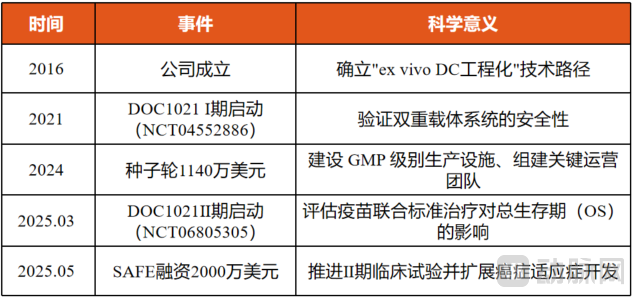
Table 1: Overview of Diakonos Growth Path
Starting from a single laboratory, to securing thirty million dollars in financing and establishing a complete production system, Diakonos is transforming the traditional academic subject of "engineered vaccines" into a practical solution for patient clinical applications.
Customized Vaccines Outside the Body: Awakening Dormant T Cells with "Dual Loading"
For most solid tumors, especially "cold tumors" like glioblastoma (GBM), the effectiveness of immunotherapy has been disappointing. It’s as if, in a battle, the enemy is hiding behind a well-camouflaged fortress, making it impossible for the immune system to "recognize" or "attack."
Dendritic Cells (DC) are the key "sentinels" in the human immune system, with the primary responsibility of capturing the characteristic information (antigens) of foreign invaders at the earliest time and presenting them to T cells to initiate subsequent immune attacks. In the process of combating viral infections or eliminating cancer cells, DCs play a bridging role connecting innate immunity with adaptive immunity.
Traditional DCV (Dendritic Cell Vaccine) attempts to address the issue of immune recognition but is limited by "only transmitting intelligence, not activating combat capability," often failing to elicit a sufficiently strong T-cell response.: On the one hand, they mostly only load tumor antigens and lack an effective "co-stimulatory signal" to activate the maturation of dendritic cells (DC); on the other hand, traditional delivery methods are often inefficient and struggle to penetrate the complex tumor microenvironment.
Diakonos' DOC1021 vaccine is specifically designed to address the dual challenge of "recognition + activation." This is a personalized vaccine "customized" based on the patient's own immune cells, with a straightforward core concept: first, extract the immune system's "intelligence officers" (dendritic cells), train and arm them systematically in vitro (ex vivo modification), and then reintroduce them into the body to direct T cells for precise combat.
Diakonos Oncology's DOC1021 Adopts "Double-Loading" Strategy——Loading the mRNA from the patient's tumor tissue together with the tumor lysate into dendritic cells simulates the body's natural response to a viral infection. This combination aims to induce a potent Th1-type immune response, activate cytotoxic T cells, and establish immunological memory, thereby enhancing the sustained clearance of cancer cells.
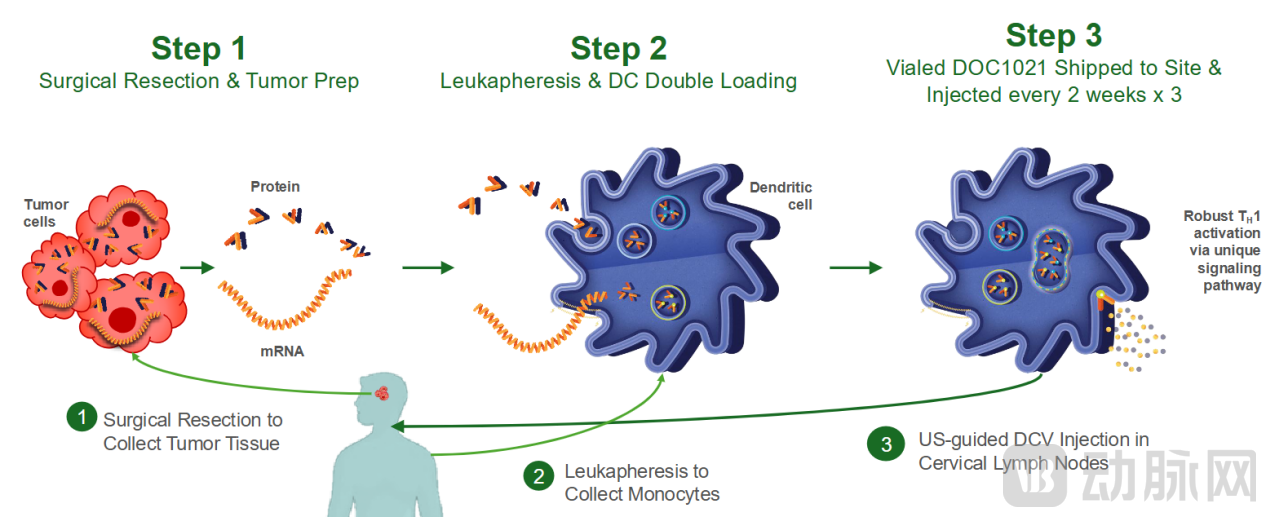
Figure 2: Schematic diagram of the "Dual Loading" mechanism of DOC1021
Not only that, DOC1021 is directly injected into the deep cervical lymph nodes. This area serves as the "transportation hub" of the brain's lymphatic system, helping to bypass the blood-brain barrier and allowing the vaccine "information" to reach the central nervous system more quickly and accurately.
More notably, the product was evaluated in a Phase I clinical trial (NCT04552886) conducted in 2021 on patients with recurrent glioblastoma (GBM). The trial enrolled 16 participants and preliminarily demonstrated its safety and immune activation capabilities.
In Phase I clinical trials, DOC1021 demonstrated good safety and significant immune activation effects.:The one-year survival rate of patients reached 88%, much higher than the approximately 60% level of traditional treatments. Notably, the first participant remained alive for over two years after vaccination.
Based on positive results, Diakonos officially launched a Phase II randomized, multi-center clinical trial (NCT06805305) in March 2025 to further evaluate the impact of DOC1021 on overall survival (OS) in first-line treatment.
Exploration of Multiple Cancer Types Follows the "Single-Cancer Breakthrough + Platform Expansion" Dual Pathway
Diakonos Oncology's core candidate vaccine, DOC1021, is steadily advancing along its clinical development pathway, gradually showcasing the multi-indication potential of a platform-type product. Moreover, against the backdrop where immunotherapy struggles to make breakthroughs in cold tumors, DOC1021’s strategy has also opened new possibilities for other cold tumors such as pancreatic cancer and colorectal cancer.
Currently,Diakonos Oncology is actively promoting the expansion of indications for DOC1021.In 2025, the company, in collaboration with Baylor College of Medicine, initiated a Phase I clinical study on pancreatic cancer (NCT04157127), primarily evaluating whether the vaccine demonstrates good safety and operational feasibility as an adjuvant therapy following standard chemotherapy. This trial is also regarded as a crucial window for mechanism validation and production optimization, and it is expected to provide early data support for combination treatment strategies involving DOC1021 and immune checkpoint inhibitors (such as PD-1 inhibitors) in the future.
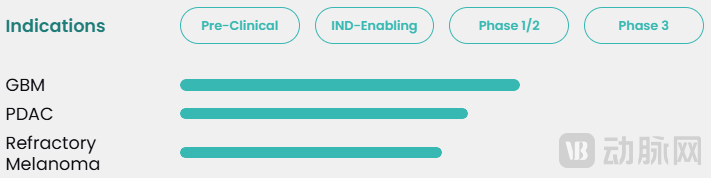 Figure 3: Overview of Diakonos Oncology Pipeline Progress
From a strategic perspective, Diakonos is advancing simultaneously along two paths: "single-disease breakthrough + platform expansion." The GBM trial has entered the critical efficacy clinical validation stage, aiming to solidify the product’s foundation; meanwhile, early explorations into indications such as pancreatic cancer have already demonstrated the potential of its platform to be applicable to other immunologically cold tumors.
It is worth noting that,DOC1021 has successively received Fast Track designations from the FDA for GBM and pancreatic cancer indications.(In October 2023 and May 2024, respectively), andObtained Orphan Drug Designation for GBM Indication in January 2024These regulatory approvals not only accelerate product development but also reflect industry recognition of their mechanistic and clinical potential.
Exploring the Activation Mechanism of Cold Tumors, China's Cancer Vaccines Have Entered the Clinical Acceleration Phase
Diakonos Oncology's exploration has injected new ideas into the frontier track of tumor vaccines and also brought three insights to Chinese companies:
First, cold tumors have become a new focus in immunotherapy.Glioblastoma, pancreatic cancer, and other immunologically "cold tumors" need to move beyond the PD-1 pathway to explore new mechanisms with greater targeting and immune activation. Diakonos, through dendritic cell activation combined with ex vivo approaches, offers a novel perspective for activating silent immunity.
Secondly, the transformation of scientific research drives the innovation loop.Diakonos Oncology, relying on academic laboratories and medical center ventures, has created an integrated model of "research-incubation-clinical" that provides a reference for Chinese companies to build an efficient innovation pathway from basic research to clinical validation.
Third, the platform strategy promotes the layout of multiple cancer types.DOC1021 has demonstrated broad potential for expanding indications, extending from GBM to cold tumors such as pancreatic cancer. This reflects a platform-oriented approach centered on "mechanism as the core, indications as the scenario," broadening the growth path of diversified immunotherapy companies. This approach is also gradually gaining attention among China's immuno-oncology companies.
Currently, the research and development field of dendritic cell vaccines (DC vaccines) in China is also witnessing significant breakthroughs in the clinical stage: LK101, a tumor neoantigen mRNA-DC vaccine developed by Beijing Likang Life Technology, received FDA clinical trial approval in February this year, with Phase I clinical trials nearing completion; KSD-101, a vaccine based on “Eco-DCVax” technology from Hengsai Biotech, obtained FDA IND approval, advancing dual filings in China and the US as well as the construction of an international-standard industrial base.
These significant advances mark that China has shifted from technology follower to independent innovator in the field of cancer immunotherapy. Domestic companies are accelerating the transformation from lab to clinic through differentiated technical pathways, pushing the industrialization process of DC vaccines into a new stage.
Conclusion
Diakonos Oncology, with its solid scientific research, clear clinical strategy, and unique mechanism innovation, is making steady breakthroughs in the cancer vaccine field, paving a feasible path for the immunotherapy of "cold tumors." As Phase II clinical results are released and indications expand, whether DOC1021 can create new opportunities in solid tumors where immunotherapy has "hit a dead end" remains worth continued attention.
Facing pancreatic cancer, the "king of cancers," and the long-neglected treatment "blind spot" of immune "cold tumors," the ex vivo programming immune strategy represented by Diakonos is not only a technical approach but also a response to the future — the breakthrough in cancer treatment may lie within the immune system of each patient.
References:
[1] AACR Cancer Disparities Progress Report 2024 Steering Committee.and AACR Cancer Progress Report 2024 Steering Committee.“Cancerin 2024.” Cancerdiscovery vol.14,12(2024):2324-2331.
[2] Lim,Michaeletal.“Current state of immuno therapy for glioblastoma.”Nature reviews.Clinical oncology vol.15,7(2018):422-442.