

Zuckerberg Bets $3.5 Billion on AI Glasses: Meta Acquires Stake in EssilorLuxottica to Accelerate Smart Eyewear Ambitions

EssilorLuxottica
Eyewear Products Sales, Manufacturer

Investment Invitation Notice
Recently,Founder of MetaZuckerbergAnnouncementInRMB 25.2 billion($3.5 billion)Acquisition of EssilorLuxottica, the world's largest eyewear manufacturerEssilorLuxotticaApproximately 3% of the shares, and consider eventually increasing the stake to 5%. This move not only signifies Meta's significant deployment in the AI hardware sector but also represents a strategic step by Zuckerberg to surpass the traditional mobile ecosystem and seize the commanding heights of the future technology industry.
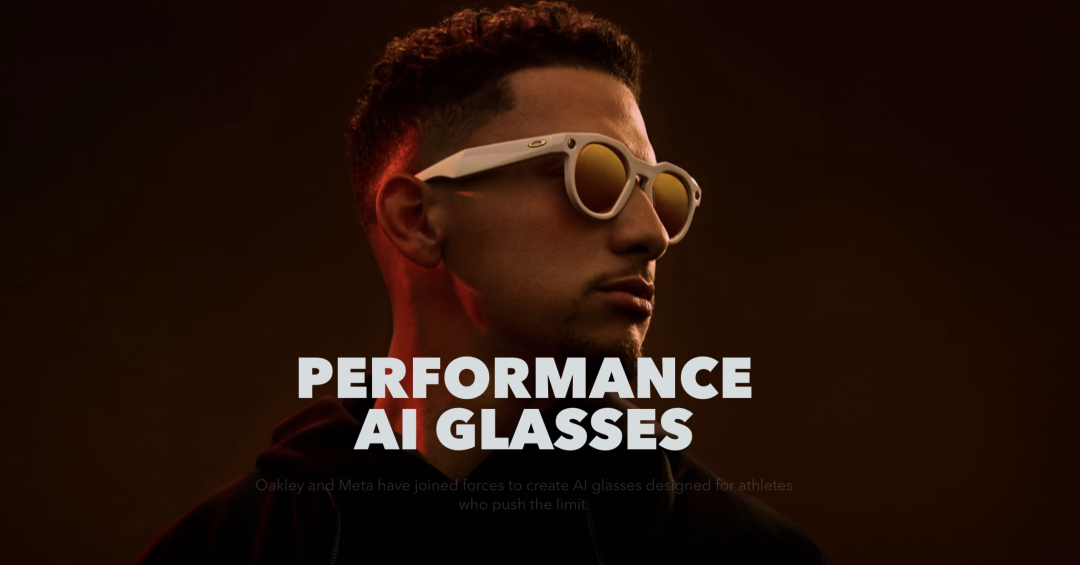
The Future of AI Glasses, as Zuckerberg said: "Glasses Will Be the Best Carrier for Achieving AI". Against the backdrop of a global market with over 1 billion eyeglass wearers, smart glasses not only break through the limitations of traditional smartphones,"More potential to become the core device of future human-computer interactionThe collaboration between Meta and EssilorLuxottica builds a bridge between fashion design and AI hardware, not only bringing technological innovation but also accelerating the popularity of smart glasses with the support of a global retail and distribution network.
Meta is not the only player; the global ophthalmology industry is experiencing a transformative wave driven by AI glasses. Xiaomi's recently launched AI glasses have become a hot topic in the market due to their consumer-friendly price of 1999 yuan. In the same month, Rokid, in collaboration with Lens Technology, released the Rokid Glasses, which quickly entered the market, jointly opening up this new blue ocean.
However, with all the buzz around hardware innovations in eyewear, why is the market's true breakthrough still yet to come?The Difference Between AI Glasses and AR Glasses,How to Build a Long-lasting Industrial Ecosystem, becoming the biggest mystery behind the technologyMeanwhile, can Chinese manufacturers like Rokid and XREAL stabilize their positions in this rapidly changing competition, and can they lead AI glasses to true popularization?
2025,Global smart glasses shipments are expected to exceed 14 million units, with China's market shipments expected to surpass 2.9 million units.。Meta's This AmountInvestment, not just a simple capital injection, but also a story aboutFuture Consumption, Technology Integration and Industrial RestructuringProfound signals.Has the "iPhone Moment" for Smart Glasses Already Arrived?
# The Dual Game of Technology and Market
The prospects of the ophthalmology industry are undergoing subtle changes due to the rise of AI glasses. You could say this is an all-around competition between tech giants and startups, or view it as a game between hardware innovation and market acceptance. For traditional ophthalmic equipment manufacturers, AI glasses are no easy feat. It's not just about integrating AI with vision technology.It is more about how to break the long-term dependence of the ophthalmic industry on traditional equipment and how to create a smart experience that seamlessly integrates with consumers' daily lives.。
In this competition,Technology is the foundation, but the market is the key to success or failure.Meta obviously understands this, so its cooperation with EssilorLuxottica is destined to be more than just a simple investment deal. Essilor is not only a leader in the eyewear industry but also boasts strong channel advantages and brand influence.Meta is undoubtedly leveraging Essilor's global distribution network to lay the groundwork for the popularization of its AI glasses.. The consumer base behind brands like Ray-Ban and Oakley is precisely the core market that Meta and other tech giants are vying for.
However, market acceptance does not happen overnight.Although AI glasses have exciting technological potential, consumers are not entirely convinced.In the Chinese market, Xiaomi's AI glasses have garnered significant attention due to their affordable price. However, the frame needs to house sensors, chips, and other components, resulting in a noticeable angular feel, with only three color options available. Electrochromic technology and prescription lens compatibility are not supported. Moreover, the actual demand for smart features like voice control and real-time translation in AI glasses is not an indispensable part of everyone’s daily life. Therefore, even with Xiaomi's strong distribution channels and brand influence, it cannot overshadow the fact that the eyewear product itself is still not fully mature.
As forRokidAndXREALThese AR glasses enterprises in China,Although there have been technical innovations, the marketization process faces greater pressure. Especially after the "metaverse" concept faded, the demand for AR glasses did not surge as expected. Consumer interest in virtual reality and augmented reality is mainly concentrated in short-term entertainment or specialized fields, and has not rapidly transformed into a daily necessity. While Rokid's glasses have achieved some success in industrial, governmental, and enterprise sectors, turning them into popular consumer products in the mass market remains a significant challenge they must address.
Moreover, consumers' purchasing decisions for glasses highly depend on appearance and comfort, which is also a tough challenge that tech giants must overcome.If AI glasses cannot break through the limitations of "aesthetic appearance" and wearing comfort, they will struggle to truly integrate into daily life.. For many manufacturers, how to break the traditional attribute of glasses as a tool and transform them into smart devices with more fashion sense and practicality is clearly the top priority in future competition.
# Who Can Seize the Next "iPhone Moment"?
In the wave of the AI eyewear industry, market competition will undoubtedly intensify further. The capital and technological advantages of the giants will place them in a leading position, but the true winners will be those enterprises that can foresee and create future demand. And future demand will be neither a mere piling up of technology nor a breakthrough in price alone, but rather...Redefinition of Comprehensive User Experience, andLong-term Industrial Layout。
AI GlassesThe success is not just a simple叠加 of "glasses + intelligence," but a comprehensive革新 based on living scenarios and consumer demands. For ordinary consumers,Glasses are no longer just "vision correction" tools, but "intelligent assistants" and "personalized accessories.". This shift in demand highlights the potential of AI glasses as "the next generation of smart terminals."
Zuckerberg has repeatedly stated in public that glasses will be an important carrier for the future implementation of AI, and in the next decade, almost everyone will wear smart glasses. This view is not only Meta's business vision but also reflectsThe Inevitable Trend of the AI Large Model Era. Just as smartphones have gradually transformed from personal communication tools into the core terminals of mobile internet,AI glasses also have the potential to become the next "smart terminal", connecting the real world with the virtual world and breaking the limitations of traditional devices.
But to achieve this goal, the AI glasses industry must cross several key thresholds. First,The Combination of Personalized Design and Technology, which is not only related to consumers' aesthetic needs but also involves factors such as health and comfort. Whether it’s the collaboration between Meta and Ray-Ban or Xiaomi's AI glasses, what ultimately decides their fate in the market is whether they canAchieve the compatibility and balance between appearance and function——that is, how to find the optimal balance between user acceptance and high performance.
Secondly,Construction of an Ecological Closed Loop, will be a key point in future competition. Just like Apple, from hardware to software, from App Store to iCloud, it has built a complete ecosystem,The future of AI glasses also depends on an open and stable ecosystem.The cooperation between Meta and Essilor is not only a capital acquisition but also the beginning of an ecosystem collaboration. From hardware manufacturing to content supply, and further to backend AI algorithms and big data analysis, the interconnection of all these links is essential to drive the widespread adoption of AI glasses.
Finally,Market Education and User Habit Cultivation, which is the most challenging part,How to Make Consumers Understand and Accept This New Type of Product,is the key to determining market success or failure. At one point, smartphones also faced questions like, "Where are the pain points for users?" and "Do people really need them?" But now, smartphones have become deeply embedded in people's lives. Whether AI glasses can achieve a similar breakthrough depends on a mature process of market education. Companies need to continuously strengthen consumers' awareness and demand for "smart glasses."
# Conclusion
The Deep Integration of Technology and Human Life, is the ultimate goal of AI glasses, and the realization of this goal will inevitably require cross-industry collaboration and innovation. This is not only a competition among pure technology products but also a comprehensive innovation concerning lifestyle, consumption habits, and technological boundaries. From Meta to Xiaomi, to China's AR/VR unicorns, these players may all gain an edge in certain aspects.But those who truly stand on the stage of future technology will be the ones who know how toTechnology Leads the Change in LifeEnterprise。
At present, despite the challenges and uncertainties in the industry, the market potential of AI glasses remains significant.The next revolutionary product of "smart terminals" may be waiting for a "black swan event" of a certain company.
Whether leveraging capital or relying on their own innovation, the stage of this industry now belongs to entrepreneurs and business leaders who dare to "step out of their comfort zones." Just as the past internet wave transformed the global economy and lifestyle, AI glasses may become the next key technology to profoundly change consumers' lifestyles and work patterns.
SIYU Annual Activity Review:The First Global Ophthalmology Conference | The First Global Orthopedics Conference | The First Global Cardiovascular Conference| The First Global Medical Aesthetics Technology Conference
Coming Soon:
July 17, 2025, The Second Global Medical Technology Conference
September 3-5, 2025, The 3rd Global Surgical Robotics Conference
'%20fill='%23FFFFFF'%3E%3Crect%20x='249'%20y='126'%20width='1'%20height='1'%3E%3C/rect%3E%3C/g%3E%3C/g%3E%3C/svg%3E)
GOC2025
Ophthalmology Solutions Case
Ophthalmic Instruments Industry Research