

ForSight Robotics Secures $125M Series B to Advance ORYOM, the World’s First Micron-Precision Ophthalmic Surgical Robot
ForSight Robotics
Ophthalmic Surgical Robot Manufacturer
In June 2025, Israeli startup ForSight Robotics (hereinafter referred to as "ForSight") announced the completion of a $125 million Series B financing round led by Eclipse. To date, the company's total financing has reached $195 million.
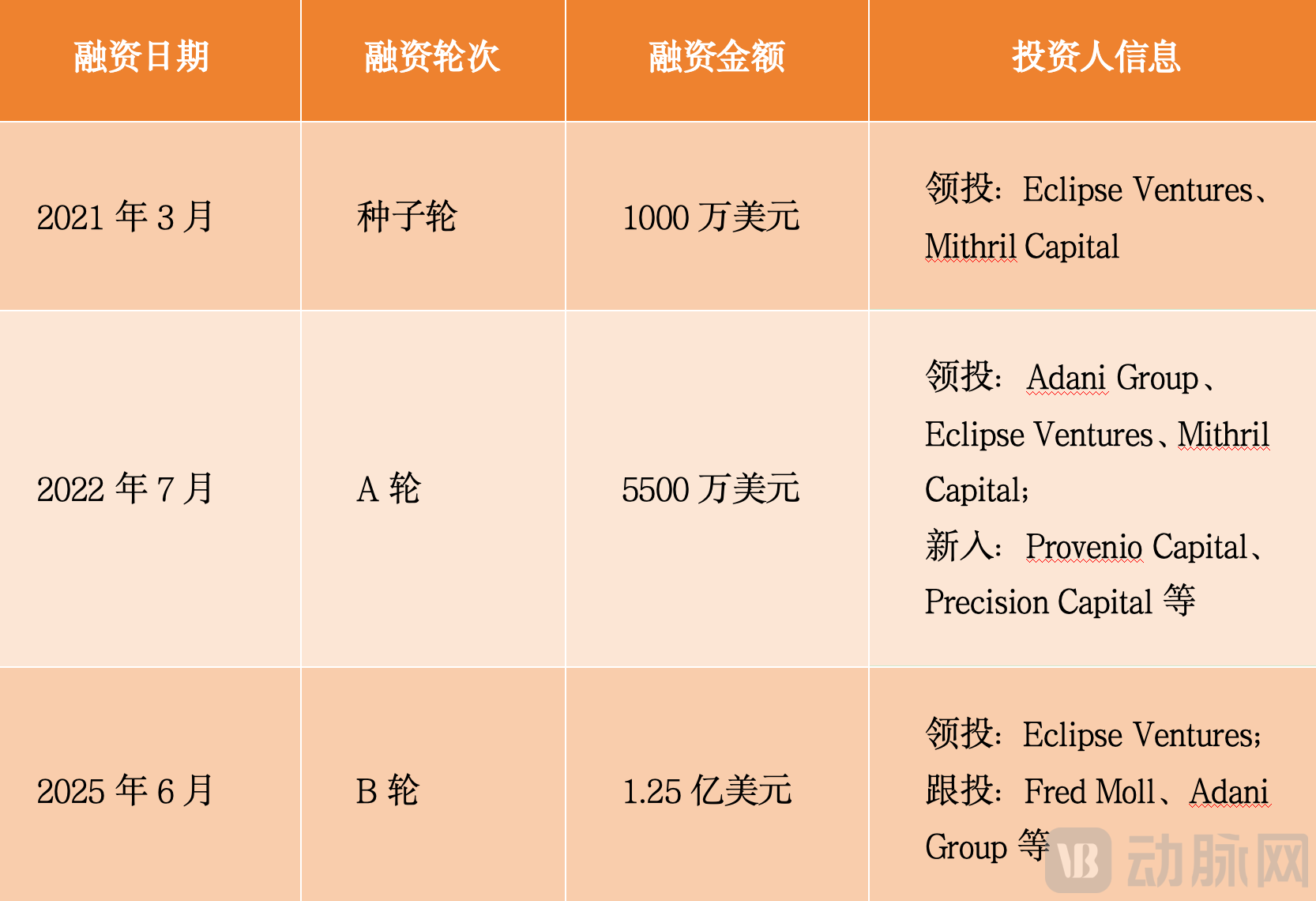
ForSight Historical Financing Information
ForSight Robotics, with its core product ORYOM surgical robot, is addressing technical limitations in the global ophthalmic surgery field. This robot has also been hailed as the "Da Vinci of the ophthalmic surgery world."
Traditional Ophthalmic Surgery Faces Clinical Dilemmas, Ophthalmic Robotics Market Still Shows Gaps
The clinical pain points of traditional ophthalmic surgery are very obvious. They mainly include high thresholds for surgical operations, significant operational differences among doctors (making standardization difficult), lack of intelligent device assistance, heavy reliance on doctors' experience for judgment, and a high incidence of postoperative complications.
First, ophthalmic surgery has stringent requirements for micrometer-level control. However, the physiological tremor of the human hand, which is approximately 100 micrometers, makes it difficult to meet the high precision demands of surgical operations.
Secondly, consistency is difficult to maintain steadily. Whether it is the operational differences between different doctors or the performance fluctuations of the same doctor in different scenarios (such as variations in the shape and size of capsulorhexis in cataract surgery), these factors directly lead to uncertainty in surgical outcomes.
Moreover, it takes 8 to 10 years of extensive training to cultivate a qualified ophthalmologist. However, small hospitals and grassroots clinics often have low patient volumes, resulting in insufficient clinical experience for the doctors. This leads to the concentration of high-quality medical resources in a few top-tier tertiary hospitals, making it difficult for grassroots institutions to even standardize the implementation of complex surgical procedures.
In addition, traditional surgery also has shortcomings in platform scalability and technical intelligence. During the operation, there is no real-time image navigation to assist in lesion assessment, nor are there data models to support path planning; the entire procedure relies solely on the surgeon's subjective judgment, which limits precision.
Finally, problems such as dry eye syndrome after myopia surgery, vision regression, and infections or bleeding caused by outdated surgical methods due to rudimentary equipment continue to expose the safety shortcomings of traditional models.
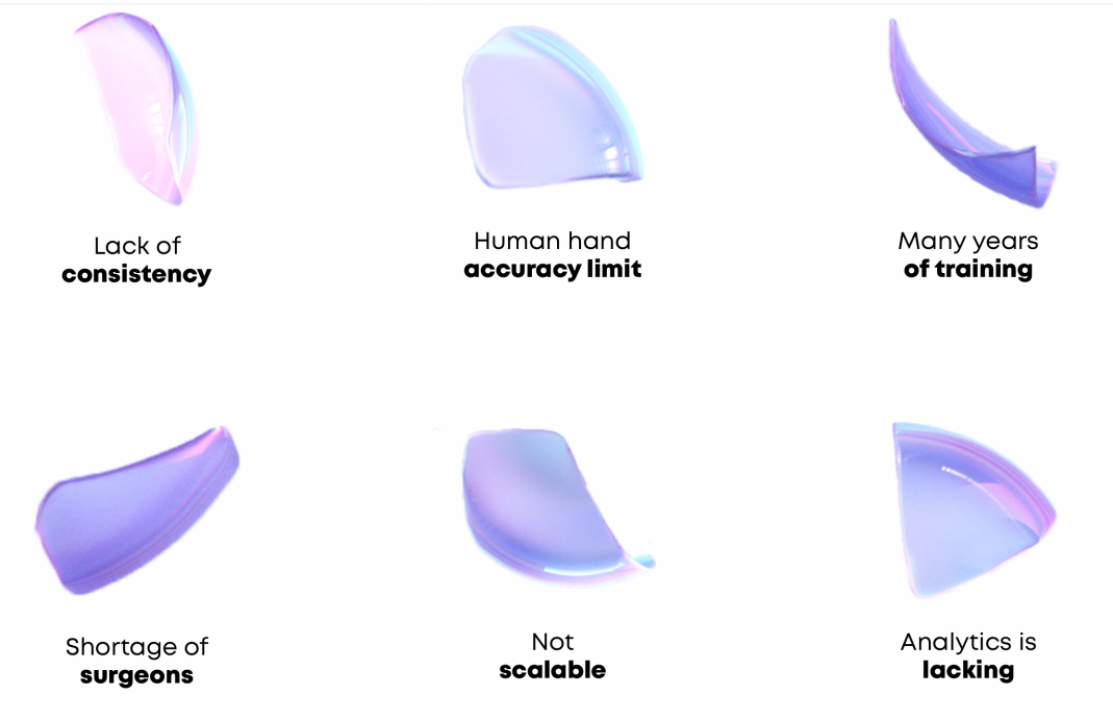
Clinical Pain Points of Traditional Surgery
Ophthalmic surgical robots can undoubtedly address these issues well. However, in the gradually expanding surgical robot market, the proportion of the ophthalmic sector in the surgical robot market scale is not high.
According to Frost & Sullivan data, the global market size of surgical robots increased from US$4.44 billion in 2017 to US$10.91 billion in 2021, with a compound annual growth rate (CAGR) of 25.2%. It is expected to reach US$28.51 billion by 2025 and further increase to US$61.9 billion by 2030.
In this track, orthopedic surgical robots account for the largest share, with the global market size reaching $2.424 billion in 2024 and a compound annual growth rate of 52.3%. Industry giants such as Johnson & Johnson, Medtronic, and Stryker are also heavily focused on areas like orthopedics and cardiovascular.
Ophthalmic surgical robots are niche players in a popular track. According to a report by Hengce Consulting (March 2025), the global market size for intelligent microscopic ophthalmic surgical robots was $576 million in 2024 and is expected to increase to $812 million by 2031, with a compound annual growth rate (CAGR) of 5.1% from 2025 to 2031.
This phenomenon is related to the high precision requirements of ophthalmic surgeries. Performing surgeries within an extremely small space imposes stricter technical standards on robots, compelling companies to develop products that must surpass mechanical design limits, which leads to persistently high research and development costs. High investment and significant risks are prominent characteristics of the ophthalmic surgical robot field, further resulting in a scarcity of high-quality products in the ophthalmic surgical robot market.
But the demand for ophthalmic surgery has always existed. According to WHO data, cataracts are the leading cause of blindness worldwide, accounting for more than 50% of the total blind population, and most cases can be treated with surgery to restore vision. However, due to limitations such as surgical precision, many patients struggle to receive effective treatment.
ForSight and its surgical robot products are targeting precisely this unmet need.
Bionic Mechanical Hand + Ultra-Clear Visual Presentation, an Intelligent Assistant that Becomes More Accurate with Use
What Makes the Highly Anticipated ForSight Ophthalmic Surgical Robot Break the Industry Stalemate?
Breaking down its core technology, the company's product ORYOM leverages three key elements—bionic robotic hands, computer vision technology, and artificial intelligence algorithms—to create a unique advantage that is difficult to replicate.
First is the bionic mechanical hand system. ORYOM is equipped with a miniature robotic arm with 14 degrees of freedom, far surpassing the flexibility of traditional surgical robots. The 14 degrees of freedom refer to the device's mechanical structure having 14 independently controllable motion axes, each capable of rotation or translation, equivalent to the coordinated ability of "joints + muscles" in human fingers.
This design targets the three-dimensional complex space of ocular anatomy (anterior-posterior diameter 24mm, transverse diameter 23mm), overcoming the limitations of degrees of freedom in traditional surgical robots (e.g., endoscopic robots typically have 6-7 degrees of freedom, orthopedic robots 8-10 degrees of freedom). This "human-finger-like" design, combined with a hybrid kinematic structure, enables precise access to any point within the human eye.
Whether it is the capsulorhexis operation for the lens capsule or the delicate repair of the retina, submillimeter-level control can be achieved. Compared with the traditional surgery where doctors rely on microscopes and the stability of their hands, the "zero fatigue" and "no tremor" characteristics of robotic arms can ensure intraoperative stability.
Next is advanced computer vision technology. Through cutting-edge stereoscopic imaging technology, ORYOM can construct three-dimensional anatomical structures inside the eye in real time, not only supporting precise preoperative planning but also providing "透视级" navigation during surgery.
During the surgery, the doctor wears 3D visual equipment, presenting magnified intraocular details. Every movement of the robotic arm is seamlessly synchronized with real-time imaging. This "human-machine collaboration" model effectively improves the traditional ophthalmic surgery's reliance on "experience-based exploration."
Finally, there is the "evolutionary capability" of artificial intelligence algorithms. ORYOM continuously optimizes surgical motion paths through AI algorithms, providing a better operational experience for the next surgery.
In cataract surgery, artificial intelligence algorithms can automatically adjust the energy output of phacoemulsification by analyzing large-scale data, avoiding damage to corneal endothelial cells. This "increasingly precise with use" characteristic makes robots not only tools but also doctors' "intelligent assistants."
Even the most experienced human doctors are not immune to hand tremors that can affect surgical precision, whereas the mechanical accuracy of robots not only compensates for this shortcoming but also ensures standardized procedures for every surgery, minimizing errors to the greatest extent. It can be said that the advent of ORYOM allows more patients to benefit from consistent, standardized, and meticulous surgical experiences.
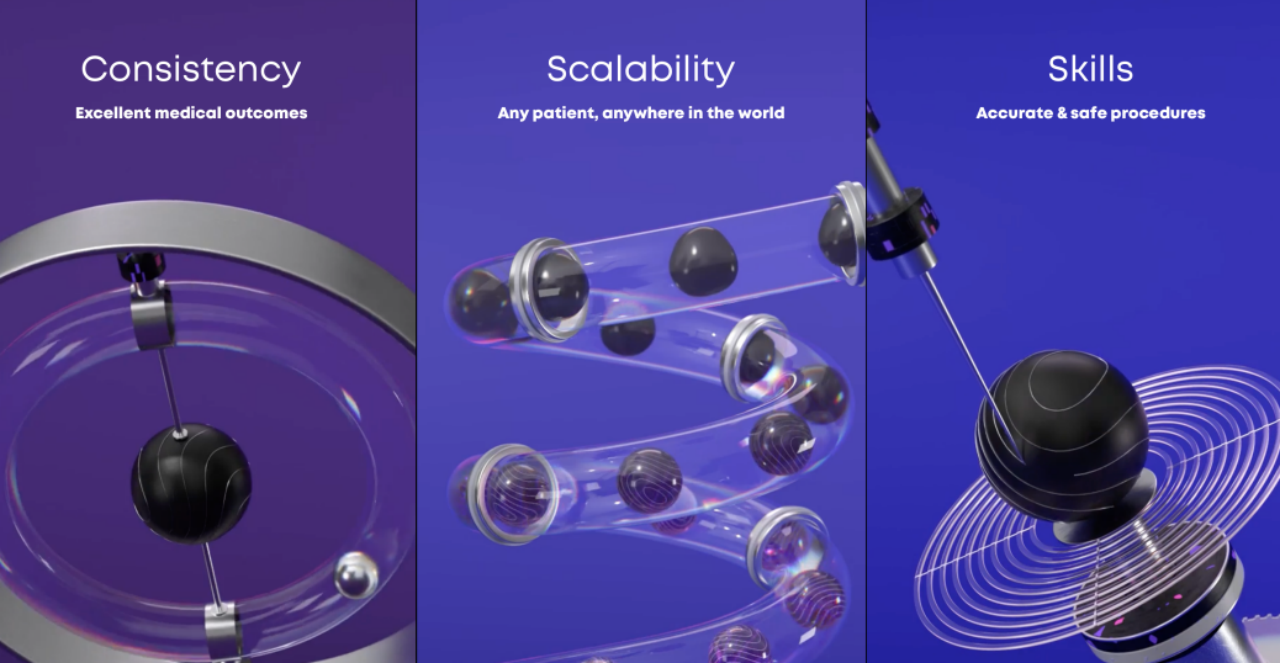
Advantages of the ORYOM System (Source: Official Website)
The Father of Surgical Robots Joins to Create a More Advanced Cataract Robot
The trust bestowed upon a newly established startup is inseparable from its diverse team configuration.
The founding team of the company has been deeply engaged in the medical robotics field for many years, with rich experience in both scientific research and commercial transformation. CEO Dr. Daniel Glozman has over 20 years of R&D experience in the medical robotics field. He has led core technology development at industry giants such as Medtronic and Magenta Medical and personally founded Guide-X (XACT Robotics).
Dr. Joseph Nathan is the company's CBO (Chief Business Officer). He has a dual background as both an "ophthalmologist and business strategist." Not only did he complete a three-year residency in ophthalmic surgery, but he also served as the head of "New Ventures" at the Alfred Mann Institute of the Technion-Israel Institute of Technology, leading medical cooperation projects exceeding $1 billion.
In addition to the founding team, the company's advisory board is also very strong.
Fred Moll initially provided guidance to ForSight Robotics as a strategic advisor. In 2025, he officially joined the board of directors. Fred Moll is hailed as the "Father of Surgical Robotics." In 1995, he co-founded Intuitive Surgical and led the development of the da Vinci Surgical System.
This landmark product has revolutionized the landscape of minimally invasive surgery with its high flexibility and precision, becoming a core device in thousands of hospitals worldwide and setting the industry standard for robot-assisted surgery. Intuitive Surgical is currently valued at $189 billion. His addition not only brings more advanced technical expertise to the company but also further enhances the commercial value of ForSight Robotics.
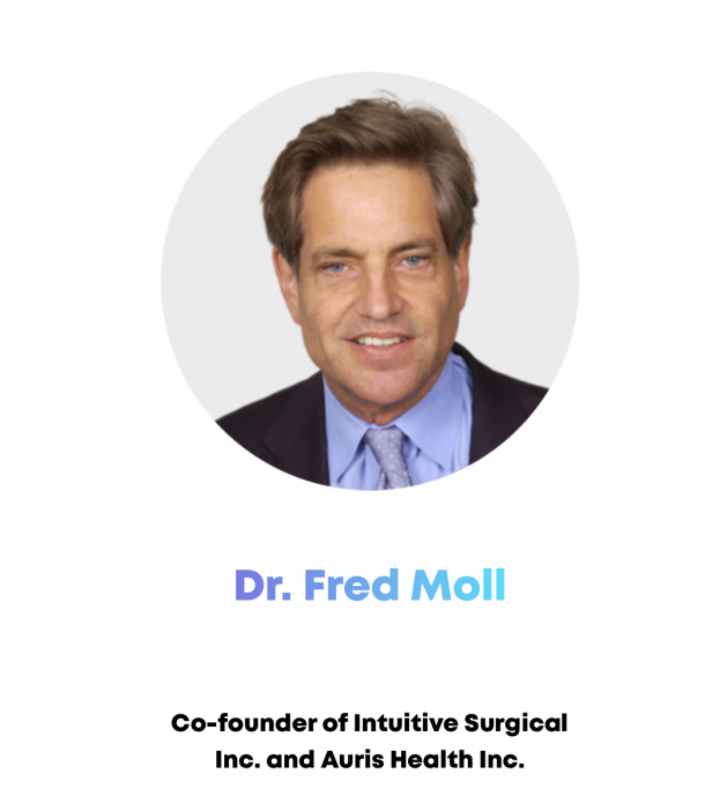
Fred Moll (Source: Official Website)
In addition, the company has also invited global top ophthalmology experts such as David Chang and Boris Malyugin to form a clinical advisory team, ensuring that technological innovation always targets real clinical needs.
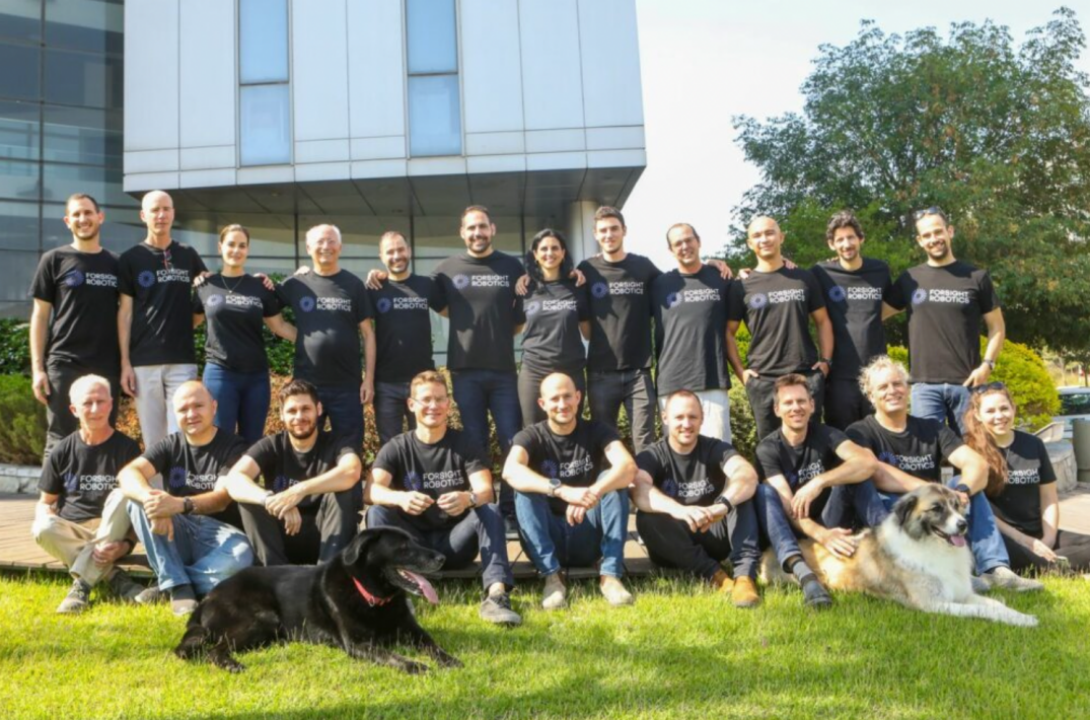
Company Team Members (Source: Official Website)
Co-founder Joseph Nathan once stated, "Ophthalmology will be the next frontier in the robotic surgery revolution." The ForSight team has validated this cutting-edge direction, but this is only the beginning—ForSight's ambitions extend far beyond this.
Starting with cataracts, build a comprehensive commercial ecosystem for ophthalmic surgery.
ForSight's commercialization path is very clear. ORYOM first targeted cataract surgery because it is the ophthalmic surgery with the largest global demand. Cataract surgeries account for 60% of the total number of global ophthalmic surgeries annually. According to data from the World Health Organization (WHO), the global volume of cataract surgeries is expected to exceed 28 million cases by 2025 and increase to 35 million cases by 2030.
After completing the verification of cataract surgery, the company plans to expand into glaucoma and retinal surgery, gradually covering all ophthalmic diseases. This "from easy to difficult" strategy not only reduces the difficulty of initial clinical validation but also quickly establishes market awareness.
More importantly, ophthalmic surgical instruments have "reusability," meaning that the same robot can be adapted to different types of surgeries by replacing consumables and upgrading software.
This also means that once ORYOM gains a foothold in the cataract field, the marginal cost of expanding to other disease areas will be significantly reduced, forming an ecological barrier of "one device, full ophthalmic coverage."
Conclusion
The rise of ForSight provides a mirror for China's medical innovation enterprises. In the current situation where surgical robot tracks are heavily homogenized, instead of competing with giants in red ocean fields such as orthopedics and endoscopy, it is better to follow ForSight's lead and seek out niche markets where "technological breakthroughs are possible and real demand exists."
From a global perspective, the revolution in ophthalmic surgical robots is just beginning. As ORYOM enters the clinical trial stage, future cataract surgeries may become safer and more efficient with the assistance of robots, similar to today's laparoscopic surgeries.
The story of ForSight will also become a reference direction for "achieving great results with small resources" in the field of medical innovation. Beyond ophthalmology, fields with extremely high precision requirements, such as otolaryngology and neurosurgery, may hold the next "ORYOM opportunity."