Optomed Launches Next-Gen Portable Non-Mydriatic Handheld Fundus Camera Lumo for Primary Care and Telehealth

Optomed
Innovative Fundus Camera and Software Solutions Provider
Unlike traditional fundus cameras that focus on specialized scenarios such as ophthalmology and optometry clinics, Optomed Lumo anchors its product design philosophy in broader grassroots and systemic health needs. Designed with the premise of being "usable by non-specialists," the device targets general practitioners, community nurses, diabetes health managers, and other non-ophthalmic professionals, providing them with a directly deployable, quickly learnable, and real-time imaging tool for fundus examination.
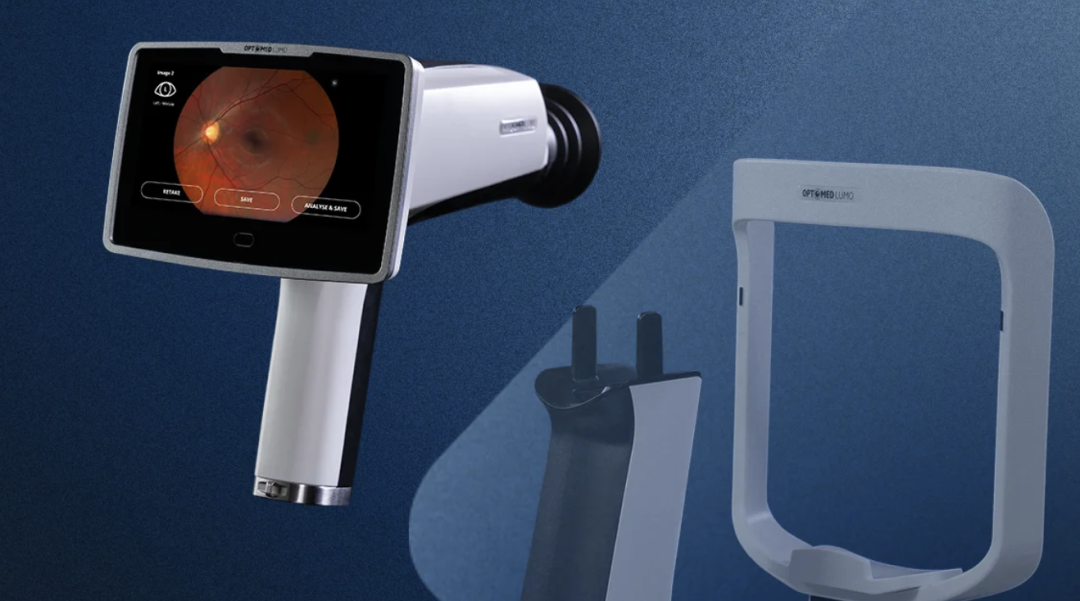
As David Frasch, Managing Director of Optomed USA, said: "Lumo embodies our core mission of 'accessibility' in retinal imaging. Whether the patient is in a primary care facility, community health center, or on a mobile screening vehicle, Lumo can capture images on-site."
Behind Optomed's move is the industry's renewed recognition of "the retina as a window to systemic health." Clues to diabetic retinopathy, hypertension-related retinal changes, and even early manifestations of neurodegenerative diseases can be found in the fundus, transforming fundus imaging from a "specialized diagnostic tool" into a "primary risk screening gateway."
Triple Product Capabilities: The Balance of Portability, Integration, and Usability
The design of the Lumo system emphasizes three core capabilities:
High-Quality Imaging Without Pupil Dilation:Sufficiently clear retinal images can be obtained without the use of mydriatic drugs, improving patient acceptance and clinical efficiency.
Dual-mode Deployment:The device supports both handheld and desktop use, adapting to the different needs of grassroots clinics and mobile screening sites. Whether entering nursing homes or stationed at diabetes outpatient clinics, Lumo can handle them with ease.
Wireless DICOM Integration and Programmed Workflow:Support seamless integration with hospital electronic medical record systems, standardizing the processes of remote image viewing, image archiving, and screening, making "capture-store-transmit-interpretation" a closed-loop integration.
This combination of capabilities makes Lumo suitable for "operable, interoperable, and replicable" grassroots implementation, providing a practical approach for non-ophthalmic medical institutions to carry out retinal imaging screening.
The design of Optomed Lumo also fully considers the needs of modern telemedicine and chronic disease management. Its high-resolution image sensor not only supportsEarly Screening for Fundus Diseases (e.g., Glaucoma, Macular Degeneration, Diabetic Retinopathy), and can also serve asMonitoring Methods for the Management of Systemic Diseases such as Hypertension and DiabetesOne of.
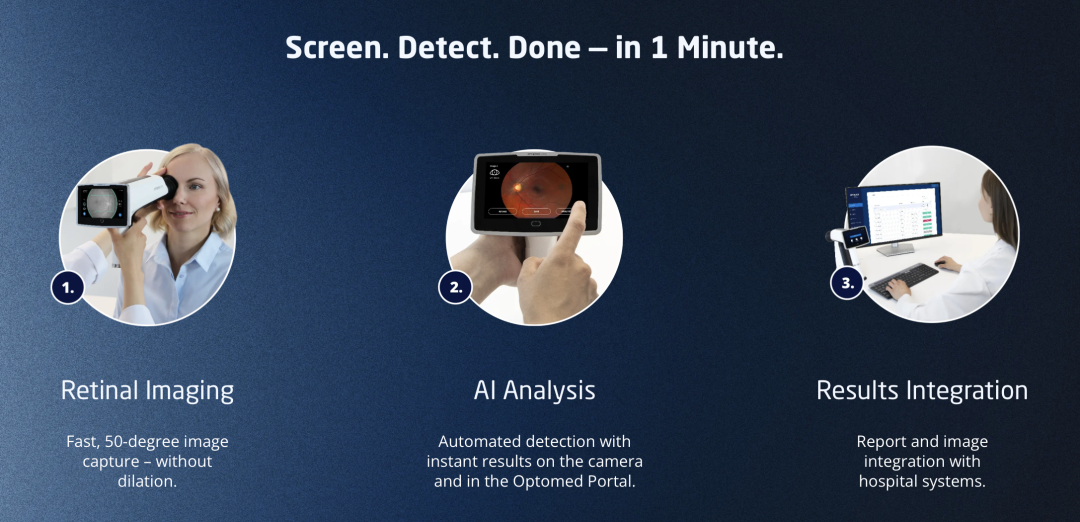
More crucially, the device is cloud-connected with a remote diagnostic interface, allowing frontline grassroots nurses to complete image capture and upload, while remote ophthalmology experts handle interpretation and feedback. This "separation of operation and interpretation" dual-end model transforms fundus examination from a professional closed loop into multi-role collaboration, significantly enhancing diagnostic density and information quality in telemedicine scenarios.
Laura Piila, Vice President of Devices at Optomed, pointed out: "The design of Lumo is inseparable from an in-depth understanding of real-world usage scenarios. Its user-guidance interface and highly integrated hardware-software design enable it to be quickly adopted during initial deployment, truly addressing the learning curve issues faced in frontline use."
In the U.S. market, driven by an aging population, the high incidence of chronic diseases, and the continuous advancement of telemedicine policies, the importance of retinal imaging as a tool for early screening and chronic disease management is becoming increasingly prominent. Data shows that by 2025, the number of diabetes patients in the U.S. has exceeded 37 million, with more than one-third facing varying degrees of risk for diabetic retinopathy. However, due to issues such as uneven distribution of ophthalmic resources and high operational thresholds for equipment, the penetration rate of fundus screening in primary healthcare systems remains significantly lower than other vital sign indicators.
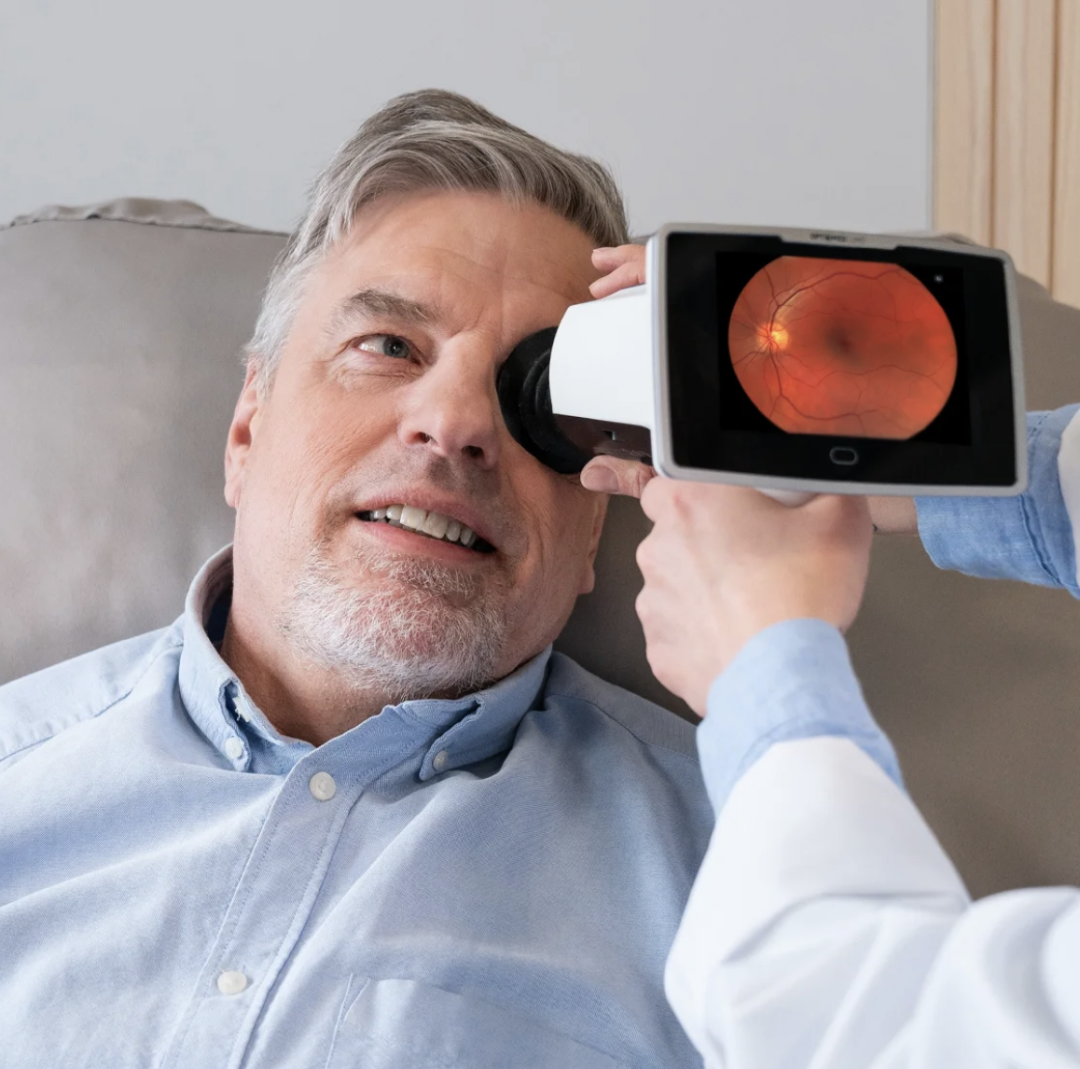
The launch of Optomed Lumo is a response to this technological gap. It represents a phase transition for fundus imaging devices, moving from "accessible" to "deployable," and from "diagnostic tools" to "monitoring nodes." Along with this shift comes the unlocking of retinal image value in emerging fields such as grassroots public health, mobile screening, and AI-assisted diagnosis.
OptomedOptomed, headquartered in Oulu, Finland, is a medical technology company dedicated to the research, manufacturing, and global promotion of portable fundus imaging solutions. The company is committed to expanding eye screening beyond traditional specialty departments into diverse settings such as grassroots healthcare, chronic disease management, and telemedicine through technological advancement.
Optomed's product line coversHandheld Fundus Camera, AI-Assisted Diagnosis Platform, and Integrated Retinal Imaging Workstation, its solutions have covered more than 60 countries worldwide and have been widely used in areas such as diabetic retinopathy screening, remote ophthalmology consultation, and grassroots public health projects. The company adheres to the concept of "empowering non-ophthalmologists" and emphasizes portability, operational intuitiveness, and data system compatibility in equipment design, striving to make fundus imaging a tool that every clinician can use, dares to use, and is willing to use.
Source of the article:
1.https://ophthalmologybreakingnews.com/optomed-launches-lumo-handheld-fundus-camera