

ForSight Robotics Secures $125M Series B to Advance ORYOM™, the World’s First Robotic Platform for Cataract and Ophthalmic Surgery
ForSight Robotics
Ophthalmic Surgical Robot Manufacturer

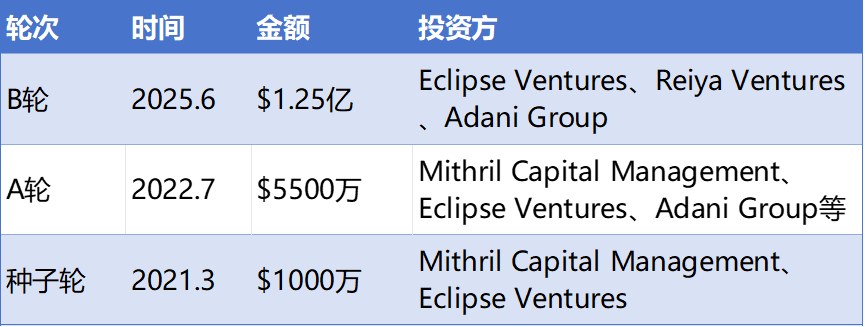
On June 24, ForSight Robotics, a manufacturer of ophthalmic surgical robots, secured $125 million in Series B funding, led by Eclipse with participation from Adani Group, Reiya Ventures, and others. The funds will be used to accelerate the next growth phase of the ORYOM™ platform, the world’s first robotic surgery platform for cataracts and other eye conditions. The company is preparing to launch its first human clinical trials this year.

ForSight Robotics, founded in 2020 and headquartered in Haifa, Israel, is a high-tech company specializing in the development of ophthalmic surgical robots. ForSight is committed to providing precise, efficient, and reliable solutions for global ophthalmic surgeries through innovative robotic technology. The company focuses on developing ORYOM™, the world’s first robotic platform for cataract and other ocular disease surgeries, integrating artificial intelligence, computer vision, and micro-mechanical technology to advance the intelligence and accessibility of ophthalmic surgeries.
So far, the company has received three rounds of financing totaling $190 million:
Globally, the prevention and treatment of ophthalmic diseases face a severe situation. According to data from the World Health Organization, over 1 billion people suffer from preventable vision impairment or avoidable blindness. At the same time, there is an extreme shortage of ophthalmologists, with only 31.7 ophthalmologists and 14.1 cataract surgeons per million people. It is projected that by 2035, the number of ophthalmologists will decrease by 12%, while demand will rise by 24%. There are more than 600 million cataract patients alone, yet fewer than 30 million receive surgical treatment each year. The scarcity of medical resources leaves many patients unable to receive timely care.
Cataract surgery is one of the most common medical procedures worldwide, with over 4 million cases performed annually in the United States alone. The surgery involves replacing the cloudy lens with an artificial intraocular lens. Although the procedure is very short (typically less than 15 minutes), it is...The operating space is extremely small, requiring extremely high flexibility and precision from the doctor.(Reaching the micron level), while the physiological tremor of the human hand is about 100 microns, any slight tremor may affect the surgical outcome.
Moreover, differences in techniques and experience among different doctors, as well as performance fluctuations of the same doctor under different conditions, may lead to inconsistent surgical outcomes. Furthermore, it takes 8-10 years to train a mature ophthalmologist, and the supply of ophthalmic medical resources is difficult to meet the rapidly growing demand.High-quality medical resources are often overly concentrated in a few tertiary hospitals, and grassroots medical institutions struggle to perform complex ophthalmic surgeries due to insufficient clinical experience of doctors.。
Traditional surgery also has shortcomings in terms of platform expandability and technical intelligence.The lack of real-time imaging navigation assistance for lesion evaluation during surgery, as well as the absence of data models to support path planning, leaves the entire operation dependent on the surgeon's subjective judgment, limiting precision.. At the same time, postoperative complications are also relatively prominent, such as dry eye syndrome and vision regression after myopia surgery. Older procedures, due to rudimentary equipment, may also lead to issues like infection and bleeding.
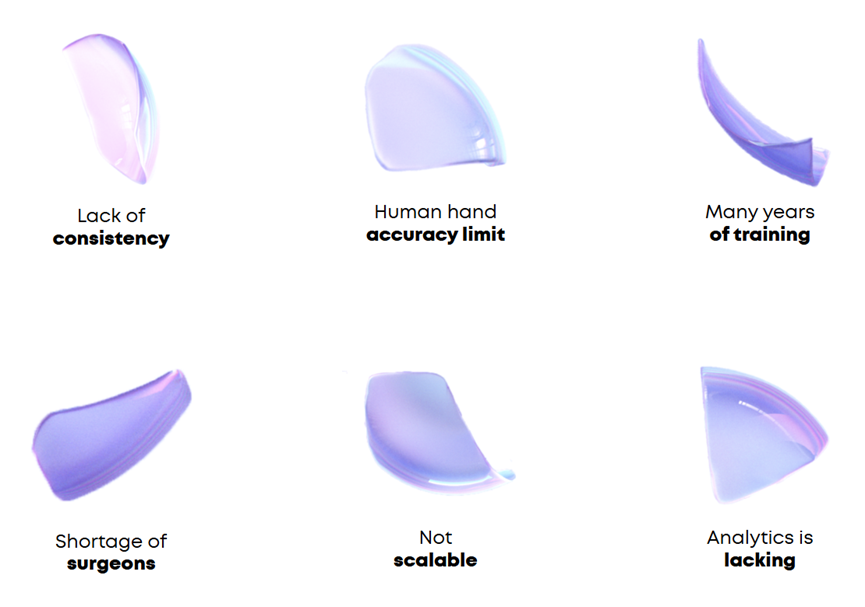
Current Issues in Ophthalmic Surgery
The development of surgical robotics technology brings hope to solving the dilemma in ophthalmic healthcare.Since Intuitive Surgical's da Vinci Surgical System received FDA approval in 1995, surgical robots have gradually become prevalent in the field of surgery. Compared with traditional surgery, surgical robots offer higher precision, stability, and repeatability, which can reduce surgical trauma and complications while improving surgical outcomes. According to Frost & Sullivan data, the global market size of surgical robots increased from $4.44 billion in 2017 to $10.91 billion in 2021, with an annual compound growth rate of 25.2%. It is expected to reach $28.51 billion by 2025 and further grow to $61.9 billion by 2030.
However,In the surgical robot sector, the market size share of ophthalmic surgical robots is not very high.In 2024, the global market size for intelligent robotic ophthalmic microsurgery is only USD 576 million, and it is expected to increase to USD 812 million by 2031, with a compound annual growth rate (CAGR) of 5.1% from 2025 to 2031. In comparison, orthopedic surgical robots hold the largest share; in 2024, the global market size reached USD 2.424 billion, with an annual compound growth rate of 52.3%, far exceeding that of surgical robots. Industry giants such as Johnson & Johnson, Medtronic, and Stryker are also mainly focusing their efforts on orthopedics and cardiovascular fields.
The core reason for the low proportion of ophthalmic surgical robots lies in the extremely high precision required for ophthalmic surgery. Performing surgery in an extremely small space imposes stricter technical standards on robots. Companies must push the limits of mechanical design when developing products, leading to persistently high research and development costs. The characteristics of high investment and high risk have resulted in a scarcity of high-quality products in the ophthalmic surgical robot market.
In 2020, a lunch conversation on the campus between Professor Moshe Shoham, former director of the robotics lab at Technion – Israel Institute of Technology, and Dr. Nathan sparked the idea of an "ophthalmic surgical robot." Shoham’s previous company, Mazor, a spinal surgery robot firm, was acquired by Medtronic for $1.6 billion in 2018; Nathan had long been responsible for the commercialization of medical technologies within the university; and another co-founder, Dr. Daniel Glozman, was previously the R&D head at Medtronic Ventor. The trio realized that cataract surgeries, with their highly standardized procedures, bloodless surgical fields, and extremely narrow operational spaces, were the perfect scenarios for robots to "replicate flawless techniques."
02 Core Product: ORYOM Surgical Robot
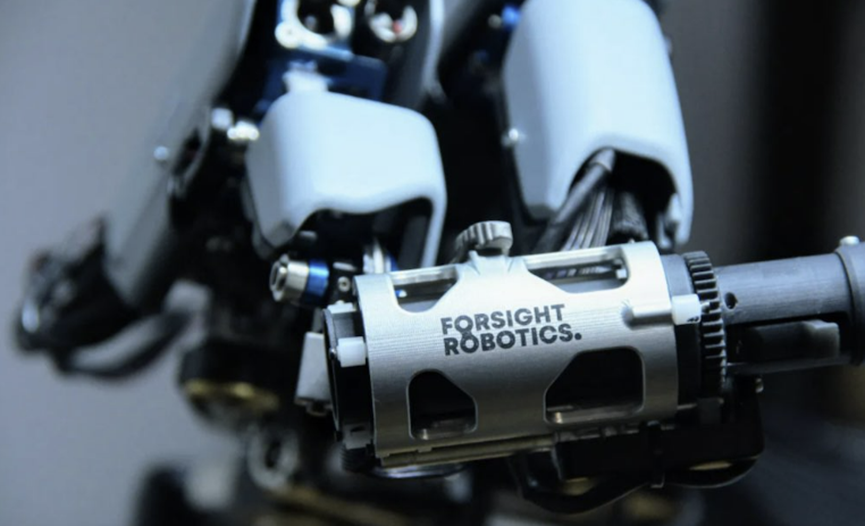
ForSight Robotics' core product, ORYOM™ (meaning "daylight" in Hebrew), is the world's first robotic system for cataract surgery and the first AI-based ophthalmic surgical robot. Comprised of micro-robotics, AI algorithms, computer vision, and intraoperative imaging systems, it has been hailed as the "Da Vinci of the ophthalmic surgery field."
Since 2022, ForSight has completed approximately 300 multi-stage surgical validations on pig eye models (pig eyes are very similar to human eyes).Currently, ISO 13485:2016 certification for the medical device quality management system has been obtained, and the first complete robotic surgery on human patients is planned for the second half of 2025.。
(1) Bionic Robotic Hand System
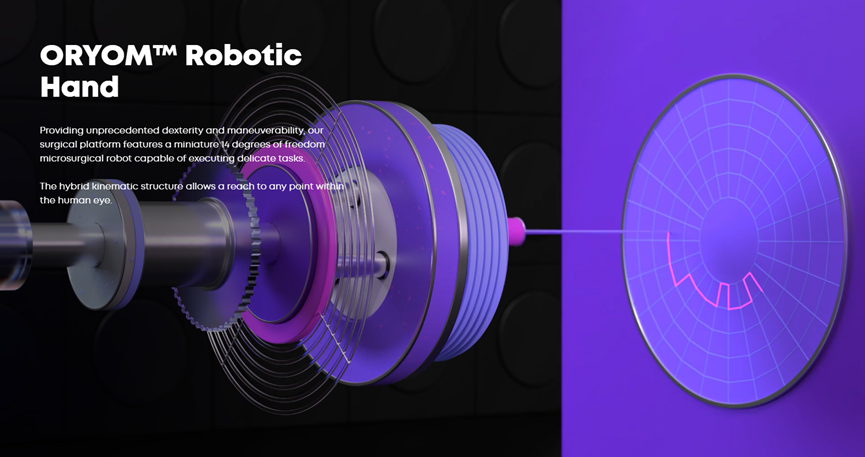
The 14-DOF miniature robotic arm equipped on ORYOM is the key to achieving high-precision operations. 14 degrees of freedom meansThe mechanical structure of the device features 14 independently controllable motion axes., each axis can achieve rotation or translation, akin to the coordinated operation of "joints + muscles" in human fingers.
This design specifically targets the three-dimensional complex space of ocular anatomy (with an anterior-posterior diameter of 24mm and a transverse diameter of 23mm), completely breaking through the limitations of degrees of freedom in traditional surgical robots (e.g., endoscopic robots typically have 6-7 degrees of freedom, while orthopedic robots have 8-10). Its "human-like finger" design, combined with a hybrid kinematic structure, can precisely reach any point within the human eye. Whether it is the delicate operation of capsulorhexis on the lens capsule or the intricate repair of the retina, submillimeter precision control can be achieved.
Compared with the traditional surgical mode where doctors rely on microscopes and the stability of their hands,The robotic arm has the characteristics of "zero fatigue" and "no jitter"., which can ensure a high level of stability throughout the entire surgical process, greatly improving the precision and safety of the surgery.
(2) Advanced Computer Vision Technology
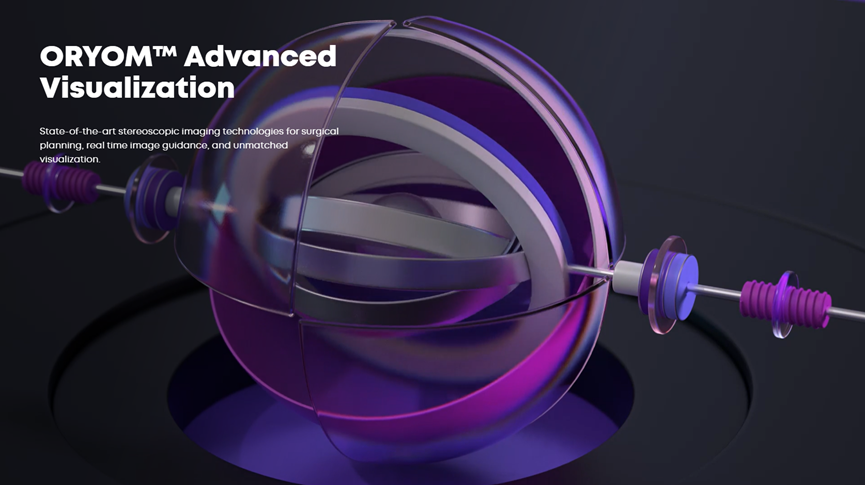
Equipped with cutting-edge stereoscopic imaging technology, ORYOM can construct three-dimensional anatomical structures within the eye in real time. This technology not only provides strong support for precise preoperative surgical planning but also offers "透视级" navigation for surgeons during the procedure.
During the surgery, the doctor wears 3D visual equipment, which clearly presents the magnified details inside the eye. Every movement of the robotic arm is seamlessly synchronized with the real-time imaging. This "human-machine collaboration" model effectively changes the traditional situation in ophthalmic surgeries where doctors relied on "experience-based exploration." It makes the operation more precise and intuitive, allowing the doctor to adjust the surgical strategy in time according to the real-time imaging, reducing the surgical risk.
(3) Artificial Intelligence Algorithms
ORYOM's artificial intelligence algorithm has a powerful "evolutionary capability," which allows it to continuously optimize surgical motion paths by learning and analyzing vast amounts of surgical data. In cataract surgery, the AI algorithm can automatically adjust the phacoemulsification energy output based on the specific conditions of the patient’s eye, precisely controlling the procedure to avoid damage to corneal endothelial cells.
As surgical data continues to accumulate, the robot's operation will become increasingly precise, providing a better operational experience for each surgery. This "more precise with use" characteristic makes ORYOM not just a simple surgical tool, but a smart assistant for doctors, capable of helping them make more scientific and accurate surgical decisions.

03 Future Outlook: Pioneering a New Field in Ophthalmic Surgical Robotics
ForSight Robotics has a clear strategic plan for commercialization, first targeting the procedure with the highest demand in global ophthalmic surgeries — cataract surgery, which accounts for 60% of the total number of ophthalmic surgeries worldwide annually. The enormous market demand provides a vast market space for the ORYOM surgical robot. Through its successful application in the field of cataract surgery, ForSight can quickly accumulate clinical experience and market reputation.
After achieving certain successes in the cataract surgery market, ForSight plans to gradually expand into other ophthalmic fields such as glaucoma and retinal surgery. Due to the "reusability" of ophthalmic surgical instruments,The same robot can be adapted to different types of ophthalmic surgeries by replacing consumables and upgrading software.This "easy-to-difficult" market expansion strategy not only reduces the difficulty of initial clinical validation but also quickly establishes market awareness, with the potential to form an ecological barrier of "one device, full ophthalmology coverage."

From left to right: Cataract, Glaucoma, Subretinal Delivery, and Retinal Diseases
The rise of ForSight also provides a mirror for China's medical innovation enterprises. In the current situation where surgical robot tracks are severely homogenized, instead of fighting with giants in red ocean fields such as orthopedics and endoscopy, it is better to follow the example of ForSight,Seeking "Technologically Breakthrough, Genuine Demand" Niche Markets。
As the supply and demand gap in ophthalmic healthcare continues to widen, ForSight Robotics is leveraging a "robotics + AI" combination to transform a surgery that traditionally requires a decade of experience into a standardized, replicable "digital process." ORYOM is not only the world’s first cataract surgery robot but also the first domino in ForSight's ambition to reshape the global eye health ecosystem. At the intersection of capital, regulation, and market forces, this Israeli unicorn is turning science fiction into clinical reality, igniting new hope for millions of patients awaiting restored vision.
 Author: Huang Changjian

Share

Like

Tap to view