RA Capital Chronicles the AbbVie Acquisition of Capstan Therapeutics: A Pioneering In Vivo CAR-T Journey

Capstan Therapeutics
Biotechnology Developer
On June 30 this year, when Capstan Therapeutics agreed to be acquired by AbbVie for a record-breaking $2.1 billion, it had just begun Phase 1 clinical trials in healthy volunteers, was well-funded, and committed to achieving deep remission—and potentially even curing—a range of autoimmune diseases. Some may wonder about the significance of this deal, asAnd what lessons it may hold for their own enterprises. RA Capital'sNandita Shangari, Andrew Levin, and Peter KolchinskyThey shared their insights. They have been on the Capstan Therapeutics journey from the very beginning and are immensely proud of the team and its work. This is a story worth listening to.Story.($2.1 Billion! AbbVie Acquires Capstan Therapeutics)

Prologue (Prologue)
Imagine if you could temporarily reprogram a patient's own T cells within their body to reset the immune system, thereby suppressing or even curing autoimmune diseases, or unleashing these T cells to fight cancer. This is not just a scientific thought experiment; it’s also Capstan Therapeutics.The founding vision of tics. (New Force! $165 Million Financing Officially Launched, Backed by Five Major Pharmaceutical Companies)
CapstanBorn out of the rich scientific ecosystem at the University of Pennsylvania, Capstan Therapeutics set out to turn this ambitious idea into reality. The company is built on the discoveries of pioneering scientists whose collective work has reshaped the landscape of modern medicine. Among them are Haig Aghajanian, John Epstein, Carl June, Bruce Levine, Drew Weissman, Hamideh Parhiz, Ellen Puré, and Steve Albelda, who have helped bring about advancements such as CAR-T therapy, mRNA technology, and lipid nanoparticle (LNP) delivery systems.
Haig Aghajanian's vision helped foster collaboration among the most distinguished scientific leaders at the University of Pennsylvania, laying a multidisciplinary foundation for what promises to be groundbreaking therapeutic approaches.
One OpenStart… (In the beginning…)
Before Capstan, there was TeeLib, founded in 2020 to develop in vivo CAR-T therapies for cardiac fibrosis. Christian Homsy became the first CEO of TeeLib (previously worked at Celyad), recruiting Adrian Bot from Gilead/Kite as TeeLib's Chief Strategy Officer, and Haig left academia to join the company.
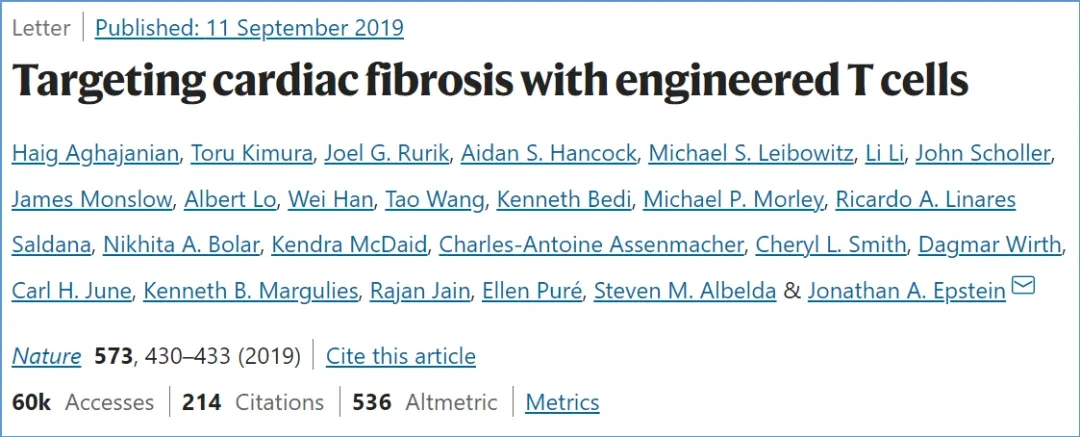
They initially struggled to raise funds, largely due to the choice of indications. To this day, we still don't know whether CAR-T can help with fibrosis; this sign is...CapstanThe further advancement in the pipeline is not the primary driver of investor confidence in the company at present.
After six months of diligent fundraising efforts, Christian reached out to Novartis Venture Fund (NVF), recognizing Novartis' extensive expertise in cell therapy through its work on Kymriah, the first CAR-T therapy approved by the U.S. FDA. This connection proved to be crucial. Nandita Shangari (then at NVF, now Managing Director at RA Capital) and Michal Silverberg (Managing Director at NVF))Nandita once worked in the global Kymriah project team and collaborated with Carl June and Bruce Levine, witnessing firsthand the significant manufacturing and supply chain challenges that plagued ex vivo cell therapy.
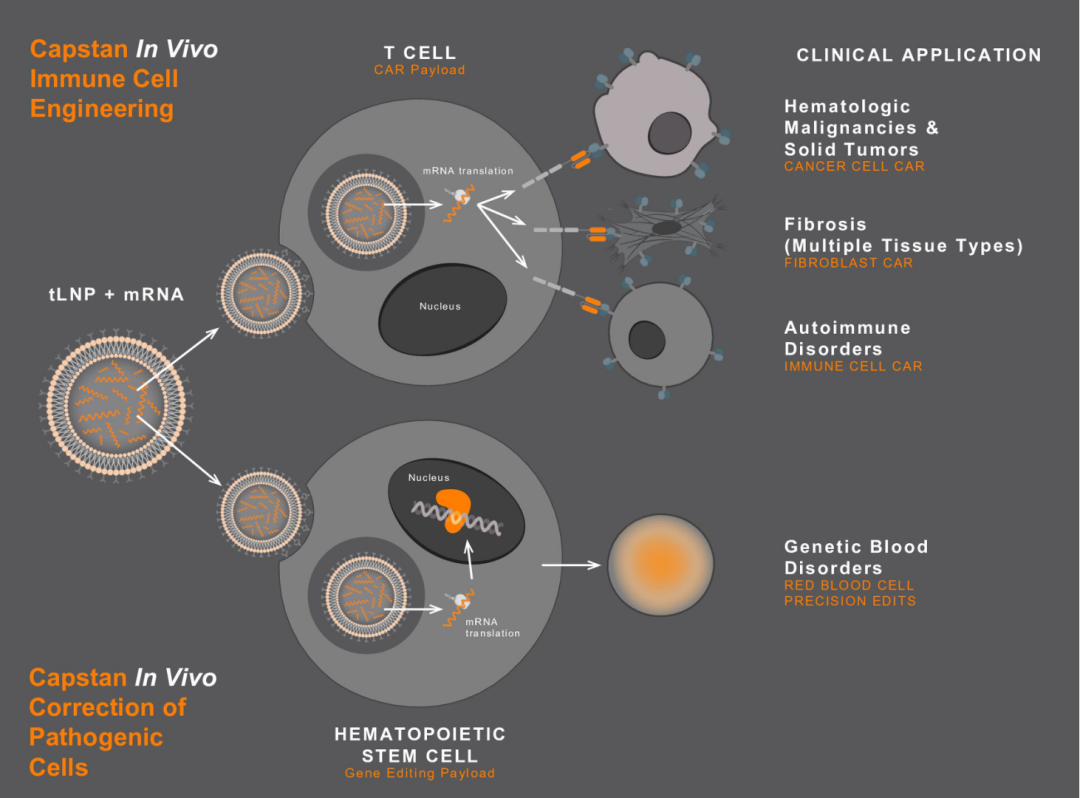
TeeFib proposes a targeted in vivo approach using LNP/mRNA delivery to transiently modify immune cells within the body, which is indeed different. It is essentially an off-the-shelf autologous CAR-T with no turnaround time (i.e., ready-to-use!), and low product cost. While the suggested indication is fibrosis, Nandita views this as a variable that needs stress testing rather than a reason to say "no."
They, along with Erez Chimovits and Roy Amariglio (a partner and principal at OrbiMed, respectively), worked with the founders and management to reimagine the company. They decided that the company should pivot from fibrosis to oncology — where clinical development pathways are better understood — and refocus the company on CD19, a validated target in B-cell malignancies (TeeFib had been focused on Fibroblast Activation Protein [FAP]). NVF/OrbiMed offered TeeFib a term sheet for a seed financing round.
Around that time, RA Capital partner Andrew Levin and Michael Rosenzweig, an executive-in-residence at Raven (RA Capital’s incubator), were also exploring the frontier of in vivo immune cell reprogramming. Their recent success with Tidal Therapeutics further fueled their interest; Tidal Therapeutics is also a company specializing in targeted mRNA delivery. In a deal led by RA Capital partner Josh Resnick, Sanofi acquired the company for its potential to transform cell therapy from ex vivo to in vivo processes.
When Andrew learned about TeeLib's financing from Michal and Nandita, he suggested that RA Capital not only invest but also integrate its relevant operational expertise into the company. Michael Rosenzweig, with an excellent track record in immuno-oncology drug development and a deep understanding of the scientific field, is highly suited to serve as the company’s Chief Development Officer to guide its early-stage projects forward.
As the post-financing company continued to take shape, CSO Adrian Bot brought Vida Ventures to the negotiating table; he had previously worked with Arie Belldegrun, Helen Kim, and Rajul Jain on CAR-T at Kite Pharma. At the time, Vida was actively seeking strategic investments in the emerging field of in vivo cell reprogramming, and Capstan Therapeutics' approach was perfectly aligned with their vision.
In November 2021, Vida joined the seed round led by NVF, OrbiMed, RA Capital, and Polaris Partners, laying the foundation for the official establishment of the company. At this very moment, the company officially changed its name from TeeFib to Capstan Therapeutics. TeeFib no longer held meaning as the company was not focused on fibrosis, whereas Capstan suggested a peak, a supreme achievement. This marked the true launch of the company after so many people poured their passion and ideas into its creation throughout 2021.
The company’s first major hire was Priya Karmali as Chief Technology Officer. This is no ordinary hire — Priya has deep expertise in CMC (that’s manufacturing), which is critical to Capstan’s ambitious goals. All companies developing complex therapies, take note: CMC matters, and not just to you! If you rush to prove a mechanism with some skunky brew that barely meets GMP, you’ll end up facing significant delays transitioning to commercial-scale manufacturing, so that proof-of-concept data isn’t worth as much (especially to acquirers).
Around this time, Nandita joined RA Capital. Since Nandita played a key role in the formation of Capstan Therapeutics, it made sense for her to remain on the board. Therefore, Andrew transferred his board seat at RA Capital to her, allowing her to informally participate as part of RA Capital's Capstan support team (note: all our companies have entire teams dedicated to their success – in the case of Capstan Therapeutics, we’d like to acknowledge Jonathan Pritz, Craig Randall, Laura Stoppel, Derek DiRocco, and Breana O'Reilly).
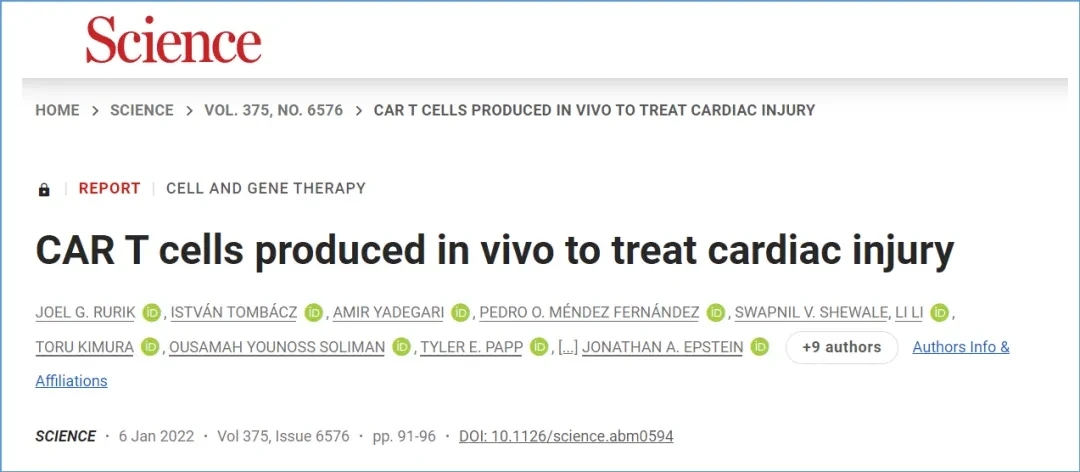
Throughout the process of TeeLib being rebranded as Capstan, Haig's paper on his tLNP work was undergoing peer review. Shortly after the completion of the seed funding round, the paper was finally published in *Science* magazine. Michael Baran (a partner at Pfizer Ventures) saw the paper and reached out to the consortium to explore whether Pfizer could invest in the company.
So far, the biotech market has been in decline, and it is clear that developing Capstan Therapeutics technology requires substantial funding.
CapstanInitiated Series A financing in 2022, just six months after raising seed funding, with Pfizer Ventures leading the round and proposing the initial term sheet. This has sparked significant interest from numerous strategic and financial investors.Interest.Leaps by Bayer, Eli Lilly, Bristol-Myers Squibb andAlexandria Venture InvestmentsAll addedJoined the consortium, recognizing the scientific strength of the technology and its potential to unlock high-value clinical applications.
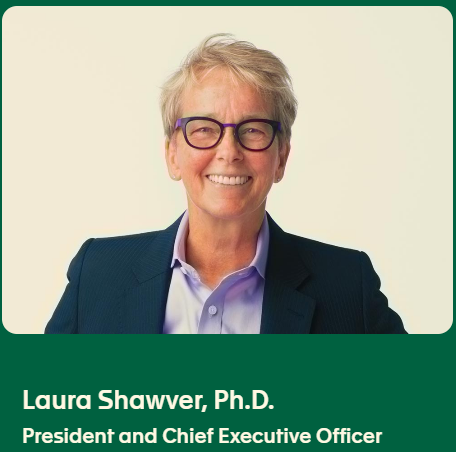
In the seed round and Series ACapstanRaised $165 million and is now ready to shift focus to serious execution. At this critical juncture, industry veteran Laura Shawver has been appointed as CEO. As an experienced operator, Laura previously led biotech companies such as SynthorX and Silverback Therapeutics, both of which are focused on highly innovative technologies that RA Capital and OrbiMed are very familiar with.
Although her previous company had always been focused on oncology,LauraIt will not take long to find oneself leading the company through the final pivotal turning point for autoimmune diseases. This shift was triggered by Georg Schett’s groundbreaking proof published in November 2022, demonstrating that anti-CD19 autologous CAR-T therapy in lupus patients can lead to deep and durable remission.
Without this insight, Capstan Therapeutics would likely have continued to focus on oncology as its primary program.
Economists apply a technical insight to another "scientific spillover." The Apollo program not only left footprints on the moon but also, arguably more useful things like microwave ovens and Velcro shoes: this is scientific spillover.Georg SchettThe impact on Capstan is an example of the spillover effects in biomedical sciences.
But this turning point is not predetermined. For such an impact to occur, the data needs to land on fertile, open minds. InCapstan, every day is an opportunity to do better based on new information, andGeorg SchettIf the data is not entirely new information, it doesn't amount to much. The joy of working with open-minded people cannot be overstated.
ForkIntersection (A Fork in the Road)
By the fourth quarter of 2023, more than a year after its Series A financing, concerns about inflation had driven biotech indices back to their 2022 lows.CapstanFacing a challenging financing environment. The broader biotech industry is mired in what many describe as a "nuclear winter," with later-stage companies trading at steep discounts and early-stage companies particularly out of favor. At this point, Capstan Therapeutics does not need to raise additional funds, but it remains unclear whether it will ultimately be able to secure financing.
However, even in this large environment,CapstanIt also stands out due to its strategic choices.
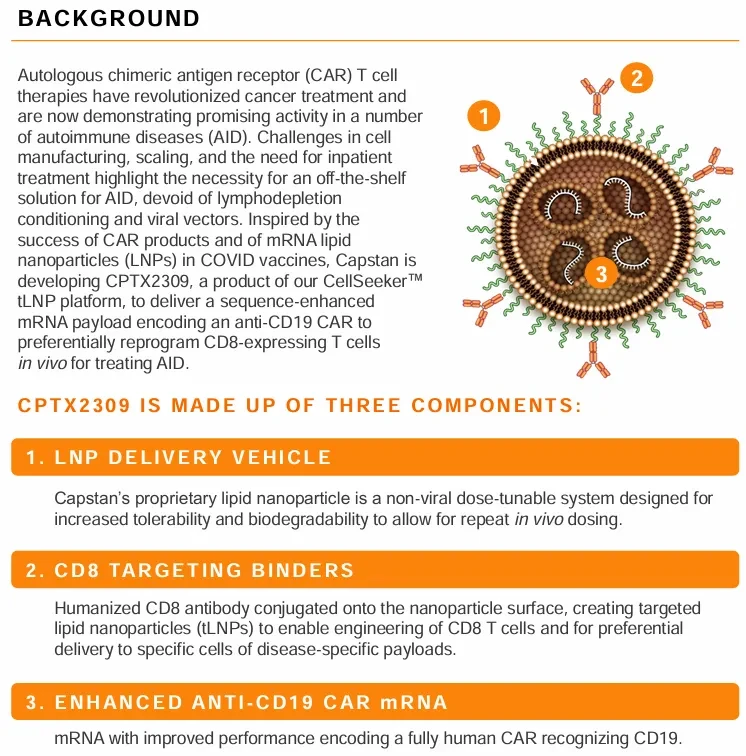
Pharmaceutical companies are closely tracking the progress of Capstan Therapeutics, particularly the NHP data obtained from their lead project CPTX2309, a targeted CD19 CAR-T therapy delivered via mRNA LNP. The preclinical study results have been compelling, sparking strategic interest. Capstan Therapeutics has received multiple term sheets from major pharmaceutical companies seeking collaboration or licensing agreements for CPTX2309. Some of these offers include upfront and milestone-based payments, which would set a precedent for preclinical projects.
This strategy focuses onCapstanInternal Debate: Accepting the deal might reduce the company's risk, but it could also mean giving up upside potential too early. We haven't reached the point of partnering our leading position, yet funds are tight. Unless the company can rely on investors to continue advancing its work, forming a partnership would be a prudent move.
RA Capital has great confidence in both the team and the platform, taking a bold stance (considering market conditions, we feel it is truly bold). When Capstan Therapeutics was choosing partnerships, we did not stand idly by. Instead, we presented a term sheet, proposing to lead a $125 million Series B financing with a commitment of $50 million. It certainly didn’t hurt that we had just received a significant amount of cash from the acquisition of several portfolio companies. With this new capital, we aim to keep Capstan independent and allow it to create value at least through early clinical data. Through the Series B financing, Capstan will have the resources to execute Phase I studies in healthy volunteers, initiate early Phase II testing, and continue strengthening its CMC capabilities. We believe that merely demonstrating CPTX2309 can safely deplete B cells in healthy volunteers, will be an important milestone, and also a "hero-zero"Inflection Point."
The strategy resonated with financial investors and new investors Forbion, Mubadala Capital, Sofinnova Investments, JJDC, and Perceptive Advisors. Despite the overall weak market,CapstanThe $175 million Series B financing, which was oversubscribed, became one of the most notable financings of the year and enabledLaura was able to refuseAbsoluteCapstanSignificant collaborative interest in the projects it leads.
While securing funding (Series B financing was announced in March 2024),CapstanA clinical team has also been established. The company recruited two key members from RA Capital's Raven Healthcare Incubator team: In January 2024, Dr. Ramin Farzaneh Far joined as Chief Medical Officer to help position Capstan Therapeutics' clinical strategy for investors and potential pharmaceutical partners; in April 2025, Angela Pontius joined the company as Vice President of Clinical Operations, overseeing Phase 1 and Phase 2 clinical operations and supply chain management, while serving as the liaison between the company and autoimmune patients as well as advocacy organizations. Both are founding members of the Raven Blackbird team (where everything in Raven is humorously named after birds), which focuses on accelerating clinical trials and provides the expertise that Capstan Therapeutics requires. With so many competing programs causing significant traffic jams in autoimmune trials,CapstanUnable to merge onto the same highway like others.
Ramin and Angela jointly designed and launched a clinical development strategy targeting the novelty of the Capstan platform. Their leadership has proven crucial in transforming Capstan's preclinical promise into human proof-of-concept, laying the groundwork for a potential new class of immune cell-modifying therapies.
In May 2025, the company began a Phase I trial in Australia, becoming a clinical-stage company. We could tell another story about the deliberations on where to conduct the research, but suffice it to say, the U.S. FDA does not have a reassuring track record when it comes to conveniently authorizing first-in-human trials of new technologies.
On the day the first patient was dosed, we held our breath—scientific proof that this could help drug development. This was a much-anticipated moment for the company—years of planning. In NHPs, the effect on B cells was rapid. What would happen in humans?!!!
We may disappoint you as we are unable to provide more information about the clinical programs or the M&A process at this time. More information will be disclosed eventually.
The Ultimate Goal
We hope you learn from this story that Capstan is not "Capstan": it was shaped by the early ideas of many people, entrepreneurs, and investors, and built on the learnings from many parts of the biotech ecosystem. It could have stuck to its own way as being the right one, but smart people remained open-minded, invited others to the negotiation table, and engaged in candid debates on every variable.
We who have participated in "Capstan"The Journey" will continue to embark on "Capstan"This is not the end for any of us. This acquisition is a financial event, but it's also a strategic transfer to AbbVie of a technology that will continue to grow and advance. Our goal is to see it treat, and possibly even cure, patients suffering from a range of autoimmune diseases, and potentially other types of conditions that Capstan Therapeutics is developing. It sees drugs actually making an impact on patients — meaning all of us and those we care about — which drives our careers and gives meaning to our work."
For this reason, we don’t need to sell.Capstan; The company has a clear vision, an outstanding team, and is well-capitalized, making progress over a considerable period of time. Even in a challenging market, we believe that if the data warranted further development, it could have raised additional funds.
The decision to sell was bittersweet for us, but ultimately it felt right from every angle. The key to our decision wasAbbVieIt is a highly capable drug development organization. They are one of the best companies in the world in the development and commercialization of autoimmune drugs. Rejecting their proposal does not seem to be in the best interest of patients.
Private Early-Stage Biopharmaceutical Acquisitions Since 2022
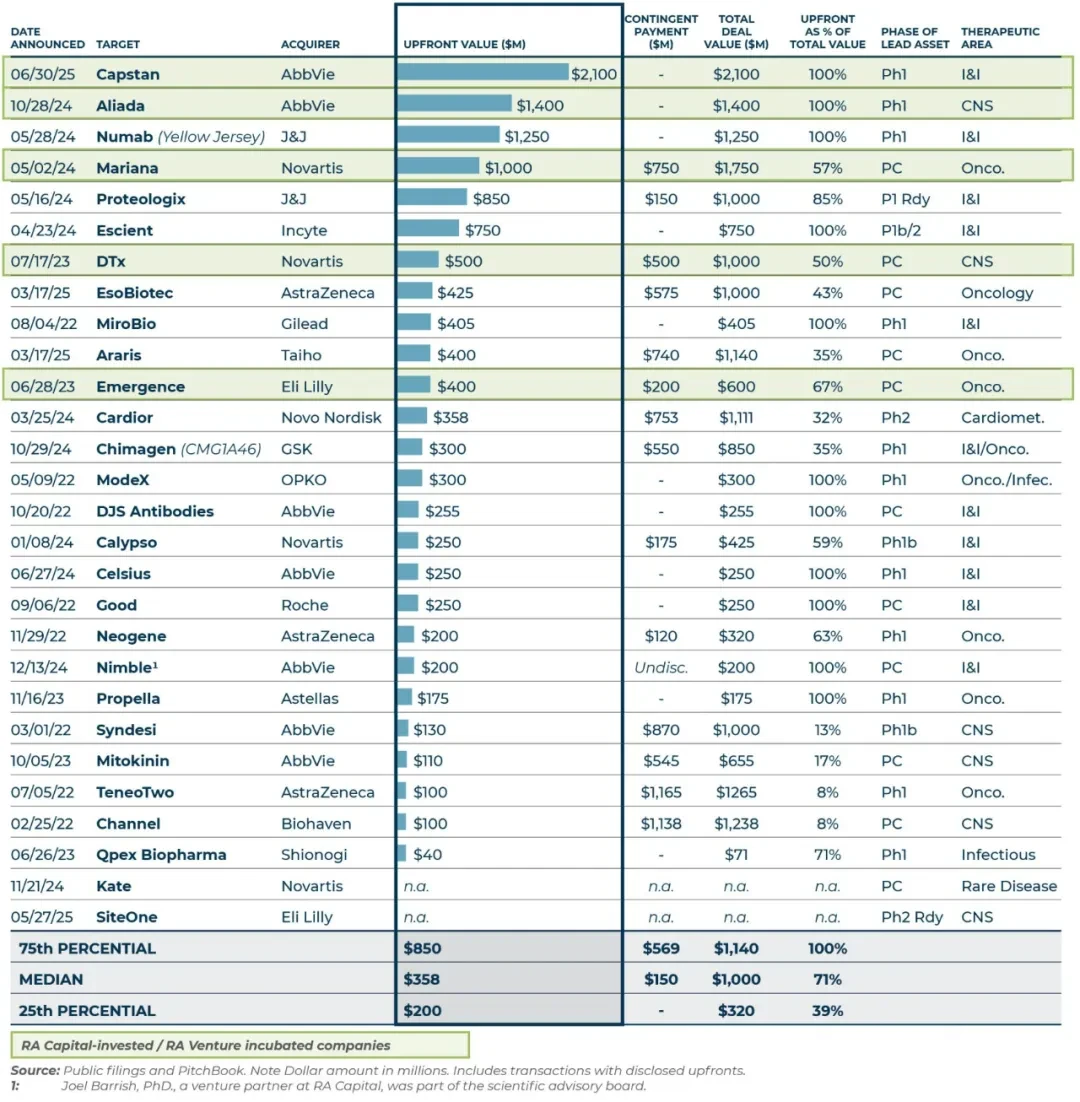
This is a list of private early-stage companies that have been acquired since 2022, ranked by the size of upfront payments. Companies participated in by RA Capital are marked in green. These do not represent all private M&A cases but are limited to those Centerview considers as occurring before proof-of-concept (POC) data. POC can be subjective. Sometimes administering a drug to a few subjects can yield meaningful data. Generally speaking, these are companies that have not yet completed Phase II clinical trials, so they can at least be referred to as being in the early stage. Source: Centerview
The acquisition price of Capstan Therapeutics may break records, but for us, it’s not a one-off. Over the past two years, when engaging in early M&A through upfront payments, RA Capital has been one of the top four shareholders and has helped create and shape three of them—Aliada, Mariana, and Capstan—not only injecting seed funding but also providing venture partners for the operational teams and serving on the board.
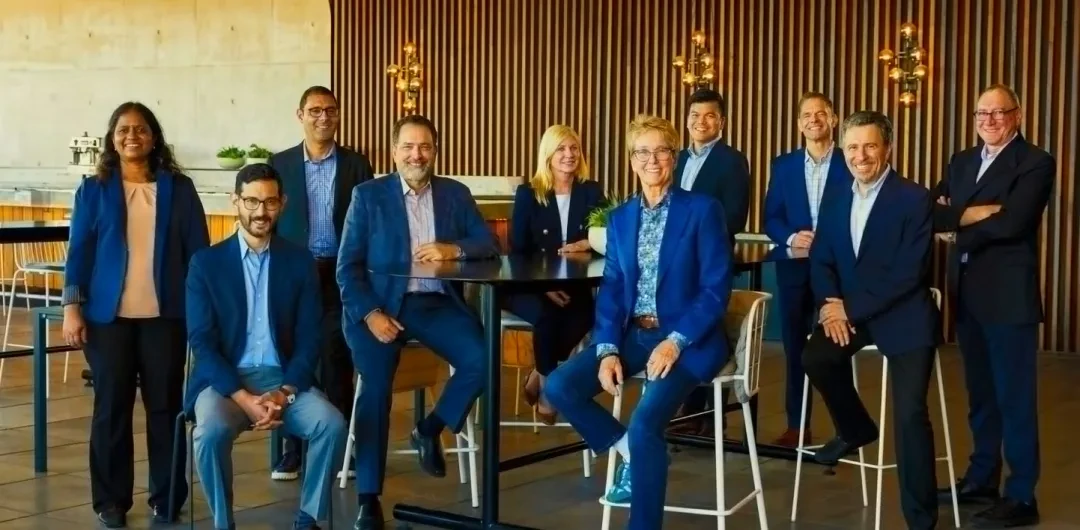
Some people think that mergers and acquisitions are an exit, but it's also a beginning because capital flows through the ecosystem like carbon. As we transferred the cash acquired in Q4 2023CapstanThe B-round financing, to help them avoid premature partnerships, and we are delighted toCapstanThe proceeds from the sale were redeployed into other companies whose technologies also have the potential to revolutionize medicine. Hopefully, one day we will have the chance to tell you all about it.
If you want to develop a new technology and are looking for open-minded partners to dive in with you and start a company, let's talk.