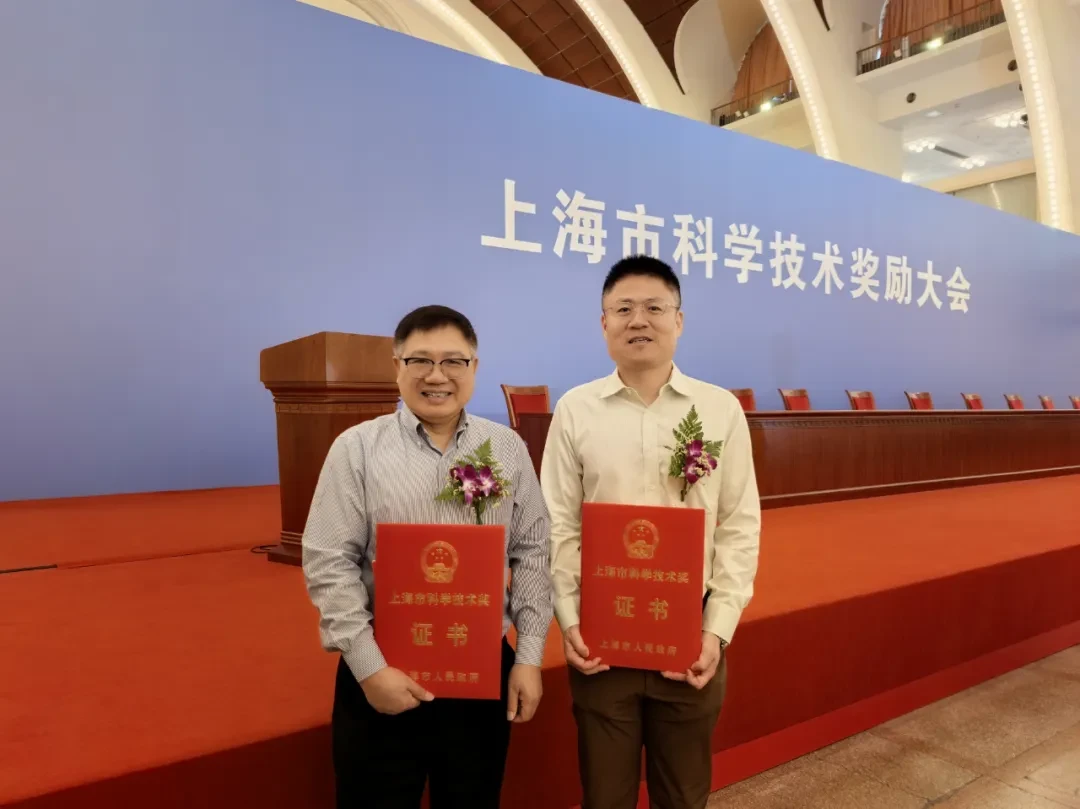
On August 26, 2025, the "2024 Shanghai Science and Technology Awards Conference" was grandly held in Shanghai. The project "Development and Translational Application of Key Technologies in Gene Editing and Cell Therapy”Awarded the First Prize of Shanghai Municipal Science and Technology Progress Award。Figure: Professor Liu Mingyao (1st from the left) and Professor Du Bing (2nd from the left) receiving the honor on behalf of the team"Shanghai Science and Technology Progress Award"It is one of the highest honors in Shanghai's technology field, aimed at recognizing individuals and organizations that have achieved significant breakthroughs or made outstanding contributions in scientific and technological research, technology development and innovation, achievement transformation, and high-tech industrialization. The selection criteria for this award are strict, emphasizing not only the advancement and innovation of the technology but also its practical application value, industry-driving capability, and actual contribution to economic and social development. Projects awarded the first prize represent achievements that have reached international advanced or domestically leading levels in their respective fields, signifying major scientific and technological results with notable social or economic benefits, and their significance is highly recognized.This award marks that BRL Medicine's innovation capabilities and transformation achievements in the field of cutting-edge biopharmaceutical technologies have received dual recognition from both the government and academia.As the core completing unit of the award-winning project, BRL Medicine, with its deep accumulation in gene editing technology and cell therapy product development, closely collaborated with the team led by Professors Liu Mingyao, Du Bing, and Li Dali from East China Normal University. After years of dedicated efforts, they successfully overcame multiple technical bottlenecks.Achieved original breakthroughs and clinical translation in three core technologies。Gene Therapy for Thalassemia: "One Treatment, Lifetime Cure"
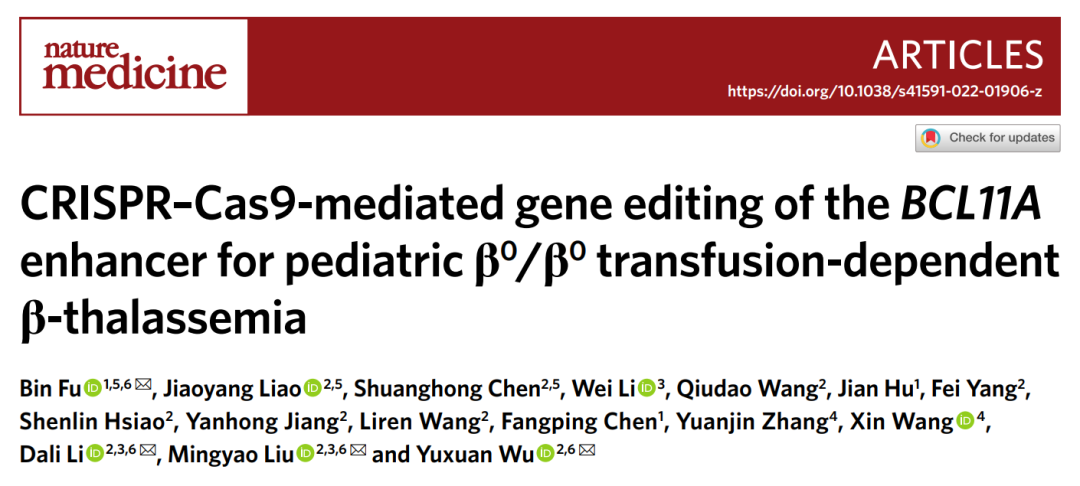
BRL Medicine's project team, as one of the earliest research teams in China to develop CRISPR/Cas9 gene editing technology, started as early as 2013.Nature BiotechnologyThe journal published an article reporting the world's first successful application of CRISPR/Cas9 in mammalian gene editing. Over the years, relying on core gene editing technology and focusing on monogenic blood hereditary diseases such as β-thalassemia, the project team has developed the first gene therapy for thalassemia.Figure: 2022,Nature MedicineIssuanceIn 2020, this therapy completed the world's first gene editing treatment for a patient with severe β0/β0 type thalassemia.。To date, this gene therapy has helped 15 patients with thalassemia completely摆脱输血依赖,Achieve "one treatment, lifelong cure".The relevant research results were successively published inPublished in 2019 and 2022 inNature MedicineJournal, and was included in reports such as the *China Thalassemia Prevention and Anemia Blue Paper* (2020) and *Rare Disease Drug Payment in China under Common Prosperity* (2022), becoming a benchmark solution in the field of international thalassemia treatment.Non-viral targeted integration PD1-CAR-T: A safe, efficient, and accessible new option for cancer treatment
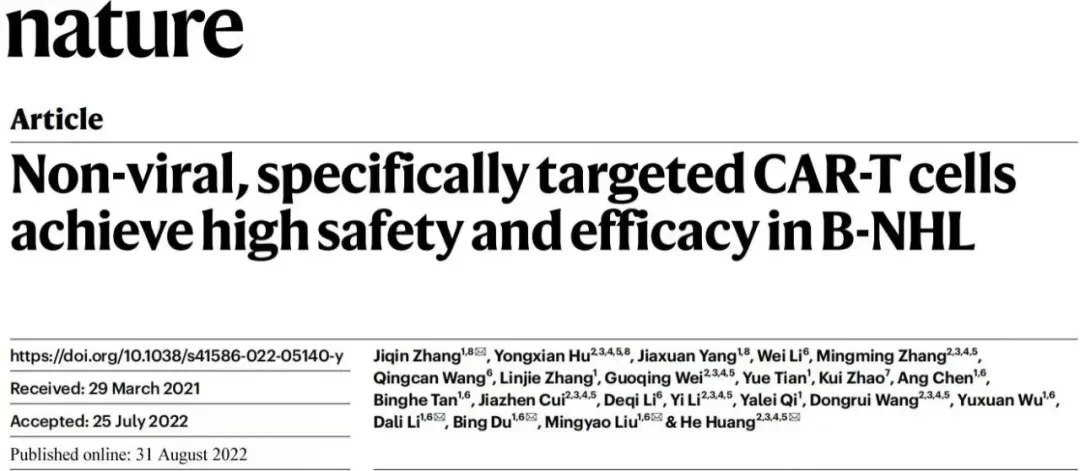
Traditional CAR-T mainly relies on viral vectors, with a price exceeding one million yuan, and carries the risk of insertional oncogenesis, which limits clinical accessibility. The project team utilized the CRISPR/Cas9 gene editing technology, which won the Nobel Prize in 2020.The world's first non-viral targeted integration PD1-CAR-T technology has been applied in tumor clinical treatment, completely eliminating the reliance on viral vectors and significantly reducing production costs and carcinogenic risks.Clinical studies have shown that this CAR-T product is effective in the treatment of relapsed/refractory B-cell non-Hodgkin lymphoma (R/R B-NHL) patients.The objective response rate (ORR) reached 100%, the complete response rate (CR) was 85.7%, the median progression-free survival (mPFS) exceeded 20 months, with excellent safety and efficacy, demonstrating significantly greater long-term benefits for patients compared to currently marketed CAR-T products.Relevant research achievements have been successively published in top journals.Nature(2022) andeClinicalMedicine(2023), and has successively been awarded"Top Ten Research Advances in Hematology in China 2022", "Important Medical Advances in China 2022"Such prestigious honors.Figure: 2022,NatureIssuanceCurrently, BRL Medicine is conducting two registrational clinical studies based on this non-viral targeted integration PD1-CAR-T technology, focusing on relapsed/refractory B-cell non-Hodgkin lymphoma (R/R B-NHL) and moderate to severe refractory systemic lupus erythematosus (SLE), aiming to bring patients a next-generation PD1-CAR-T drug with advantages in safety, efficacy, and cost.Allogeneic Universal CAR-T: Pioneering a New "Cell Bank" Treatment Model
To address the issues of long personalized treatment cycles and high costs associated with existing autologous CAR-T therapies, as well as the persistent problem of excessive immune suppression in traditional allogeneic CAR-T treatments that poses significant infection risks to patients.After 8 years of technical research, the project team has developed the world's first allogeneic universal CAR-T cell (TyU19) targeting CD19.It completely eliminates the risk of host rejection and graft-versus-host disease (GVHD) through multiple gene-editing strategies, achieving an "off-the-shelf" solution where a single batch can meet the treatment needs of over 200 patients. This allogeneic CAR-T not only significantly reduces production costs but also greatly shortens patient waiting time, making clinical treatment more accessible.In 2024, BRL Medicine, in collaboration with Professor Xu Huji's team from Shanghai Changzheng Hospital and Professor Liu Mingyao's team from East China Normal University, published the world's first successful treatment of three refractory autoimmune disease patients using allogeneic UCAR-T in the prestigious international journal Cell.The research achievement has successively been rated as"News of the Top Ten Scientific and Technological Advances in China in 2024 Selected by the Two Academies of China", "Top Ten Advances in China's Pharmaceutical and Biotechnology in 2024", "Top Ten Scientific Advances in China in 2024"And other important honors, and"CAR-T之父" Carl June教授在顶级期刊Cell发文高度点评:“有望改写自免疾病的治疗格局”。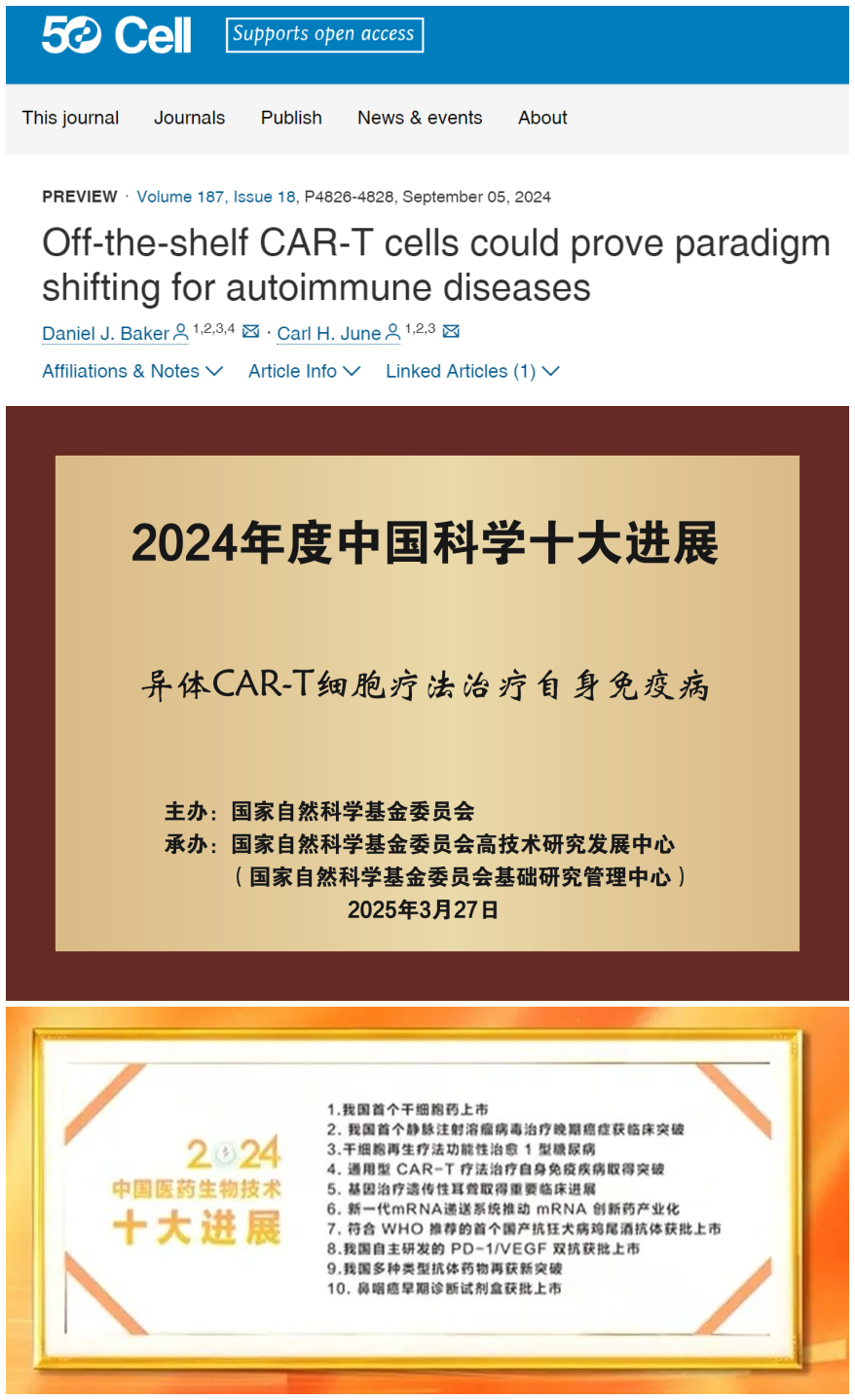
Figure: Partial Honors of BRL Medicine's Allogeneic UCAR-T
Currently, BRL Medicine, based on this allogeneic UCAR-T technology, is focusing on the field of hematological tumors. It is conducting two registrational clinical studies targeting relapsed/refractory B-cell acute lymphoblastic leukemia (R/R B-ALL) and relapsed/refractory B-cell non-Hodgkin lymphoma (R/R B-NHL) with dual indications. Furthermore, the company is expanding the application of this therapy to solid tumors as well as to autoimmune diseases such as systemic lupus erythematosus, systemic sclerosis, and dermatomyositis, aiming to allow a broad range of patients to fully benefit from the high-tech advantages of CAR-T treatment.From Following to Leading, from Lab to Clinical Translation, and Future Commercialization: The Achievements of This Project Not Only Enable China to "Overtake on a Curve" in the Gene and Cell Therapy Field, but Also Hold the Promise of Making "Incurable" Diseases a Thing of the Past, Allowing "Astronomically Priced Drugs" to Become Accessible to Ordinary Households. Where Science Meets Humanity, Every Precise Movement in Gene Editing Resonates with the Strong Melody of an Era that Prioritizes Life Above All. In the Future, BRL Medicine Will Continue to Focus on the Gene and Cell Therapy Sector, Striving to Become a Globally Leading Innovative Pharmaceutical Enterprise and Contributing Technological Strength Toward the Realization of the "Healthy China" Strategy.
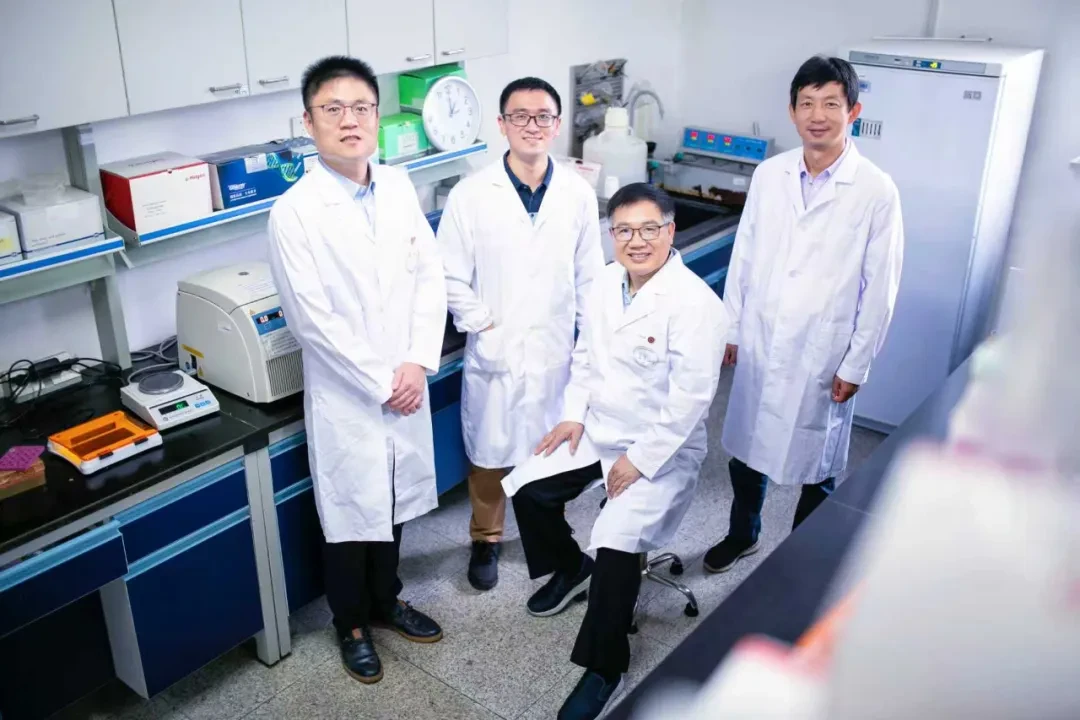
Award-Winning Team Members and UnitsLiu Mingyao, Du Bing, Wu Yuxuan, Li Dali, Zhang Jiqin, Tan Binghe, Zhang Na, Liao Jiaoyang, Wang Liren, Qin JuliangFigure: Professor Liu Mingyao (3rd from the left), Professor Du Bing (1st from the left), Professor Li Dali (4th from the left), Dr. Zhang Jiqin (2nd from the left)Award-winning Completion Unit:East China Normal UniversityYaotang (Shanghai) Biotechnology Co., Ltd.