Could In Vivo CAR-T Cell Therapy Disrupt Cancer Treatment and Slash Sky-High Prices?

Umoja Biopharma
Cancer Treatment Drug Developer
Orna
Novel Full-Process Circular RNA (Orna) Therapy Developer

《NatureIn-depth Report: No Need for External Modification, Making Anti-cancer Immune Cells More Affordable and Accessible to the Public Faster
1. TraditionCAR-TThe Dilemma of Therapy
CAR-TCell Therapy (Chimeric Antigen ReceptorTCell therapy) has become one of the most effective means of treating blood cancer, with a market valuation expected2034The year will reach1900Billion dollars. But there are three major pain points with the existing technology: (1) Complex preparation: Requires extraction from patientsTCell→Ex vivo gene engineering modification (additionCARProtein)→Amplification Culture→Returned to the body, the entire process takes several weeks. (2) High cost: Approximately50Million USD. (3) Low accessibility: Only about200Mortality rate exceeds during patient waiting period at home medical centers50%(University of Kansas Case). ImmunologistBruce LevineFrankly:1990In the early days of development,“The academic community generally questioned that our report was scheduled on the last day of the conference in the most deserted venue.”。
2. Disruptive Solution: In Vivo PreparationCAR-T
Emerging biotech companies are developing direct in vivo modificationsTCell Technology, Core Advantages: (1) Cost Plummets: Estimated Price Only a Fraction of Traditional Therapies1/10;(2) Accelerated treatment: No need for ex vivo preparation, patients can receive treatment immediately; (3) Extended Applicable Population: Elimination of Chemotherapy Pre-treatment, Benefiting Critically Ill Patients.
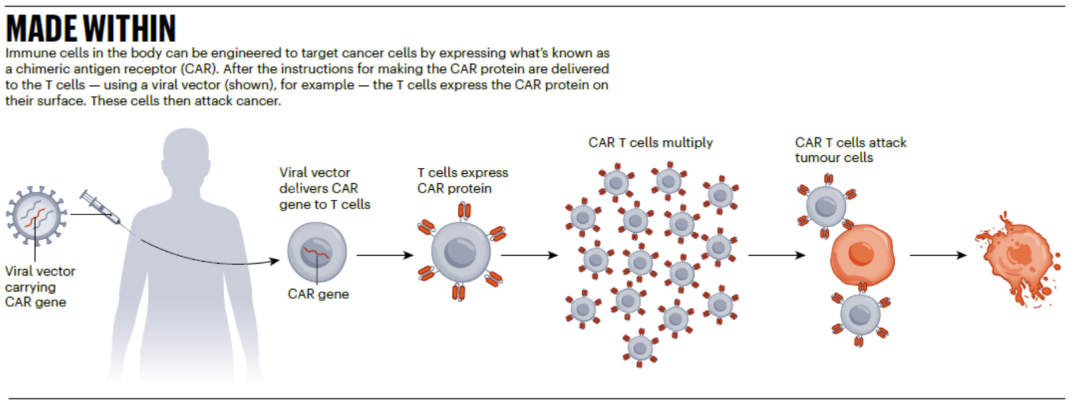
Technical Principle: Through viral vectors or nanoparticles,CARDirect delivery of genes into the bodyTCells, enabling them to express anti-cancer proteins, CAR T cells proliferate extensively and attack cancer cells.
3. The Race of Three Major Technical Routes
Company/Institution | Technical Pathway | Breakthrough Point | Clinical Progress |
Capstan Therapeutics | Lentiviral Vector+Targeted Delivery | Nobel Prize WinnerWeissman、CAR-TPioneerJuneParticipated in the establishment | In the treatment of autoimmune diseases |
Umoja Biopharma | Multi-receptor Synchronous Targeting | Single Vector Simultaneous BindingTCell3A receptor, mimicking natural activation | China and the U.S. Simultaneously Launch Lymphoma Clinical Trials |
Orna Therapeutics | RNANanoparticles (Non-Viral Vectors) | CARTransient Protein Expression, Higher Safety | 2025Clinical trials launched in the year |
Columbia UniversityMichel SadelainWarning: Targeted delivery remains the biggest challenge,“How to precisely target the right cells, the right location, and the right timing?”
4. Clinical Breakthrough Progress
5. Safety and Future Prospects
University of WisconsinChristian CapitiniPointed out: In vivo therapy represents the future direction, but ex vivo preparation remains the most mature solution at present, especially for patients themselves.TWhen cell quality is poor.
Conclusion: The Democratization of Cancer Treatment Accelerates
From Lab to Clinic30During the year,CAR-TTherapy is experiencing a second revolution:
- Technical Iteration: Viral Vector→RNANanoparticles→In vivo targeted delivery
- Cost Transformation:50Million USD→5Million-dollar level
- Application Expansion: Hematologic Cancer→Solid Tumor→Autoimmune Disease
《Nature》Prediction:2025-2026Will become in vivo in the yearCAR-TThe Year of Therapeutic Explosion: Cancer Treatment“On-Demand Medication”The vision is becoming a reality.
Source of the article:PhDsNetwork