

China's First Off-the-Shelf Allogeneic iNKT Cell Injection Receives IND Approval from NMPA for Advanced Solid Tumors

Gene Key
Developer of Immune Cell Product Technologies and Provider of Clinical Application Services
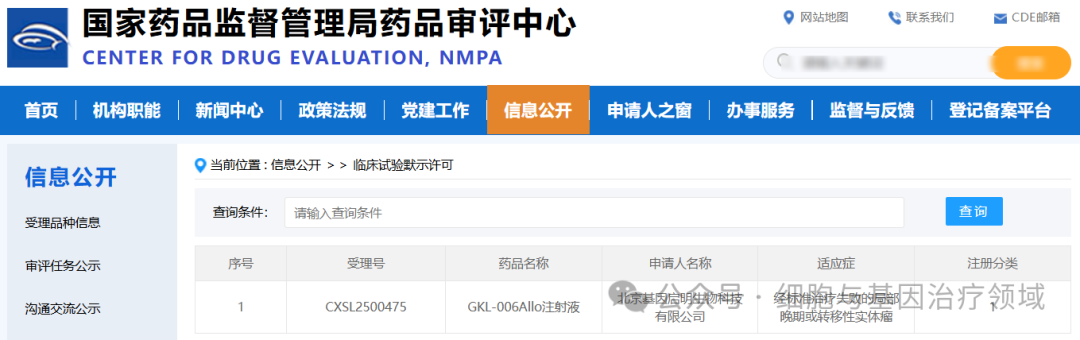
In recent years, CAR-T cell therapy has achieved remarkable success in the treatment of hematologic malignancies. However, CAR-T cell therapy has shown relatively poor performance in the treatment of solid tumors. The immunosuppressive properties of the tumor microenvironment (TME) severely hinder the effectiveness of CAR-T cell therapy. Therefore, to overcome these limitations, many researchers are hoping to break through with new strategies or therapies.A new generation of cell immunotherapy based on iNKT cells has demonstrated promising anti-tumor potential and is expected to make significant progress in the field of solid tumors.
Currently, globally, iNKT cell therapy has gained increasing attention and investment from more and more research teams and international biopharmaceutical companies. Relatively speaking, there are more iNKT cell therapy developers outside China, such as Mink Therapeutics, Arovella Therapeutics, Kite & Appia Bio, etc. Among them, Mink Therapeutics has one iNKT cell therapy product in Phase I/II clinical trials and four CAR-iNKT cell therapy products in the preclinical research stage; Arovella Therapeutics has four CAR-iNKT products in the preclinical development stage; Kite & Appia Bio has two CAR-iNKT therapies in the preclinical development stage.
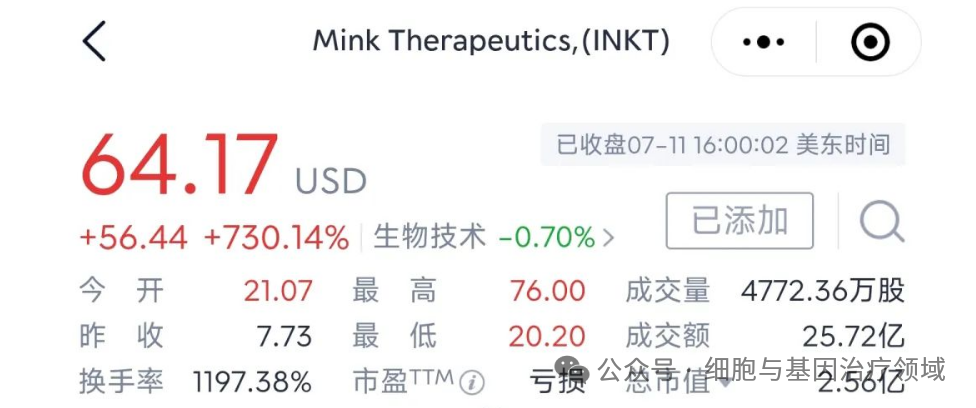
Not long ago, MiNK Therapeutics (hereinafter referred to as "MiNK") announced significant progress in its allogeneic iNKT cell therapy, agenT-797, for the treatment of metastatic testicular and gastric cancers, with related research findings published in the journal *Oncogene*.This breakthrough advancement has drivenThe company's stock price surged 730% at the close of trading that day., closing at $64.17 per share. The significant rise in stock price reflects the market's strong optimism towards MiNK's prospects in the field of allogeneic iNKT cell therapy, particularly in demonstrating great potential for addressing immunotherapy-resistant solid tumors.
MiNK CompanyThis clinical study reported a case of a patient with metastatic, refractory testicular cancer who achieved complete and sustained remission after receiving agenT-797 treatment. The patient had previously undergone multiple treatments, including platinum-based chemotherapy, autologous stem cell transplantation, and various immune checkpoint inhibitors (such as anti-PD-1, anti-CTLA-4, and anti-TIGIT), but the condition continued to worsen. After a single infusion of agenT-797 combined with nivolumab, the patient's clinical symptoms, imaging findings, and biochemical markers all returned to normal, and no signs of disease recurrence were observed during more than two years of follow-up. In addition, donor-derived iNKT cells were still detectable six months after the infusion, indicating their persistence in vivo. No cytokine release syndrome (CRS) or graft-versus-host disease (GVHD) occurred throughout the treatment process, demonstrating the favorable safety and tolerability of this therapy.
Another patient with metastatic gastric cancer experienced a 42% reduction in tumor volume and a progression-free survival (PFS) of over 9 months after receiving a single dose of agenT-797 in combination with nivolumab.
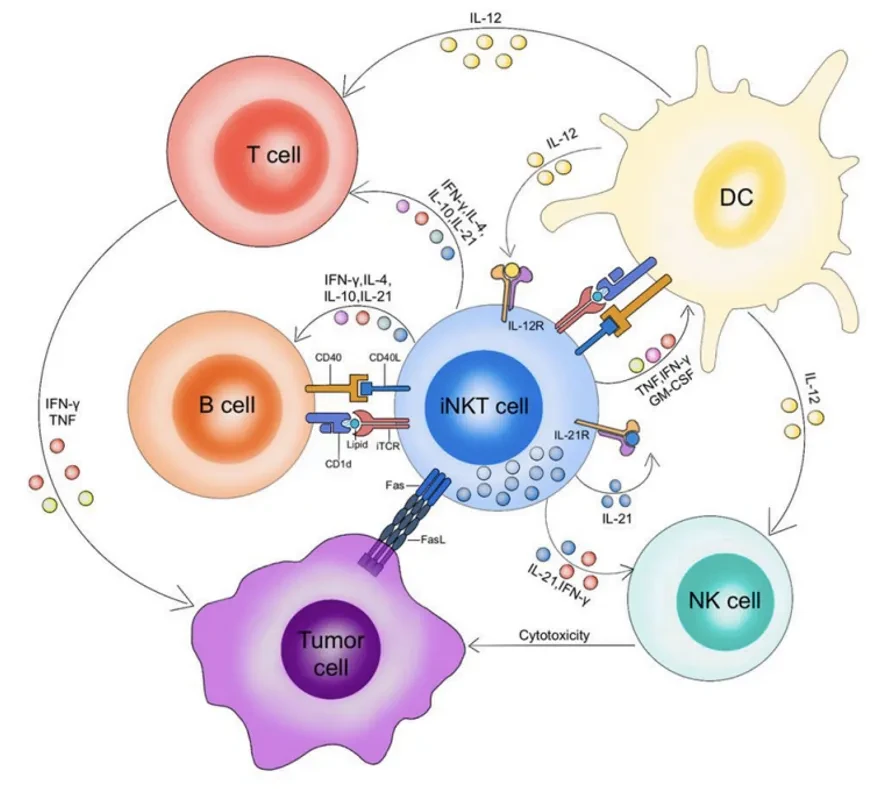
▲ Schematic diagram of iNKT cells exerting immune effects
iNKT Cells (Invariant Natural Killer T Cells) belong to the non-MHC-restricted T cell subset, combining characteristics of both T cells and natural killer (NK) cells. They can rapidly secrete large amounts of cytokines in the early stages of immunity, acting as a bridge between innate and adaptive immunity (as shown in Figure 1). These cells recognize specific lipid antigens presented by CD1d molecules, including lipids derived from commensal microorganisms, pathogenic microorganisms, and certain self-antigens, demonstrating significant anti-tumor effects. Studies have shown that iNKT cells are closely associated with cancer patient prognosis and are not restricted by polymorphic HLA. They also help prevent GvHD (graft-versus-host disease), making them an ideal vector for allogeneic CAR therapy. These advantages position iNKT cell therapy as a new focal point in the field of cancer immunotherapy.
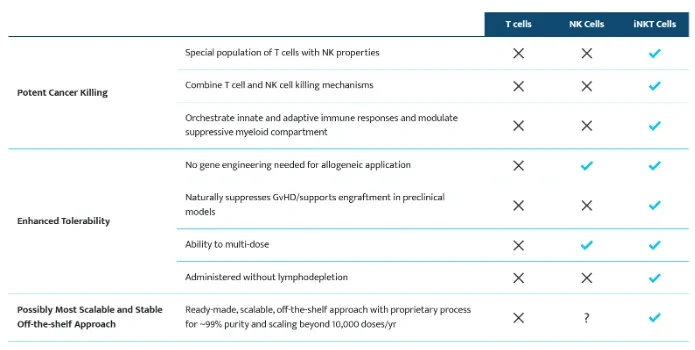
▲ Compared with T cells and NK cells, the advantages of iNKT cells
The iNKT Cell Therapy Product Process aims to isolate iNKT cells from patients or healthy donors, activate and expand them in vitro, and ultimately obtain a sufficient number of highly functionally active iNKT cells for subsequent immunotherapy.The iNKT Cell Production Process of MiNK TherapyAs shown in the figure。
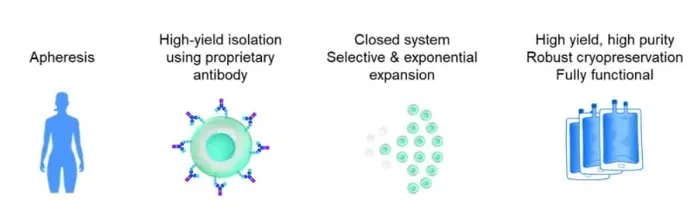
▲ iNKT Cell Therapy Product Process Flow
Despite the encouraging progress in iNKT cell therapy research, numerous obstacles must still be addressed to translate it more efficiently into clinical treatment. For instance, ensuring effective migration of iNKT cells into solid tumors, overcoming the immunosuppressive effects of the TME, enhancing the survival and proliferation capacity of iNKT cells, and optimizing CAR design to strengthen its specific recognition and cytotoxic efficacy against tumor antigens.
In response to the aforementioned challenges, researchers are exploring a variety of strategies. Among these, the use of cytokines such as IL-15 and IL-21 to promote the proliferation, survival, and functional enhancement of iNKT cells has garnered significant attention. IL-15 can protect iNKT cells from suppression by tumor-associated macrophages and enhance their anti-metastatic activity, while IL-21 exhibits a dual role, capable of both activating the immune system and potentially causing immunosuppression. By incorporating IL-15 or IL-21 signaling elements into CAR constructs through engineering approaches, it is expected to improve the anti-tumor efficacy of CAR-iNKT cells. Additionally, studies have revealed that iNKT cell subsets possess distinct functions and differentiation states; understanding and modulating the characteristics of these subsets could optimize iNKT cell therapy. For example, selectively activating specific iNKT cell subsets, precisely targeting them via cytokine receptor complexes, and optimizing CAR design using costimulatory domains such as 4-1BB may all enhance the safety and efficacy of iNKT cell therapy.
In summary, iNKT cell therapy, as an emerging cancer immunotherapy strategy, combines the unique advantages of T cells and NK cells, with the potential to overcome the limitations of traditional CAR-T cells in solid tumor treatment, and is expected to become an important method for treating various types of cancers in the future.
E.N.D
ForPromote Cooperation and Technical Exchange in the Cell and Gene Therapy IndustryThe team of the WeChat Official Account "Cell and Gene Therapy Field" under the media platform has established a professional exchange group for cell and gene therapy. Press and hold the QR code below to add the editor's WeChat and join the group. Due to the large number of applicants, please include the following information when adding WeChat: Institution/Enterprise—Major/Position—Name. If you are a PI/Professor/Manager or above, please also specify.
Previous article recommendations:(Click on the article title below to open the original text)
Another Cell Drug Approved for Marketing
Breakthrough in iPSC Technology! Increases Cell Reprogramming Efficiency by Over 50 Times
$250 Million! A Cell Therapy Company Acquired
A Cell Drug Company in China Completes New Round of Financing
An AAV Gene Therapy Company Completes a New Round of Financing Worth $313 Million
Another Breakthrough Gene Therapy Approved for Marketing
Over 300 Million Yuan! A Cell Regenerative Medicine Company Completes Series C Financing
First Breakthrough! New Delivery Technology Unveiled, mRNA Drugs Achieve Oral Administration
Another AAV Gene Therapy Drug Submitted for Marketing Approval in China
A Gene and Cell Therapy Company in China Initiates Sci-Tech Innovation Board IPO
¥93,000/bottle! The pricing of China's first marketed AAV gene therapy drug released
Stock Price Surges Over 700%! Breakthrough Progress in a Cell Therapy Product