

Lung Cancer Therapeutics Revolution: New Horizons for Antibody-Drug Conjugates (ADCs)

Qilu Pharmaceutical
Specialty Formulations and Active Pharmaceutical Ingredients (API) Developer
The 2025 World Conference on Lung Cancer (WCLC) was held from September 6 to 9 in Barcelona, Spain. The conference covered hot topics such as targeted therapy, immunotherapy, and screening standards, and announced several significant research findings.
At the WCLC, research progress on antibody-drug conjugates (ADCs) has become a significant focus, covering multiple targets and treatment scenarios. This article will review the relevant advancements of ADCs presented at the WCLC to help you stay informed about the latest developments in the industry:
Product Recommendation:Comprehensive Solutions for ADC Drug Development Process

SHR-4849 is independently developed by Hengrui.Targeting Delta-like Ligand 3 (DLL3) The payload is a topoisomerase inhibitor (TOPOi) ADC innovative drug,This is the world's first to enter clinical trialsDLL3-Targeted ADC, the conference disclosed that it had conducted a multi-center, open-labelPhase I Trial (NCT06443489): In preclinical study models, SHR-4849 has demonstrated excellent anti-tumor effects. According to the trial data as of December 10, 2024, among 11 small cell lung cancer patients, 8 achieved partial response (PR), with an overall objective response rate (ORR) calculated at approximately 73%. Additionally, in terms of safety, no adverse events leading to treatment discontinuation have been observed so far, and the overall safety profile remains within a controllable range., in relapseSafe and controllable with preliminary activity in SCLC, dose expansion is ongoing to determine the recommended Phase II dose (RP2D), providing a new treatment option for SCLC.
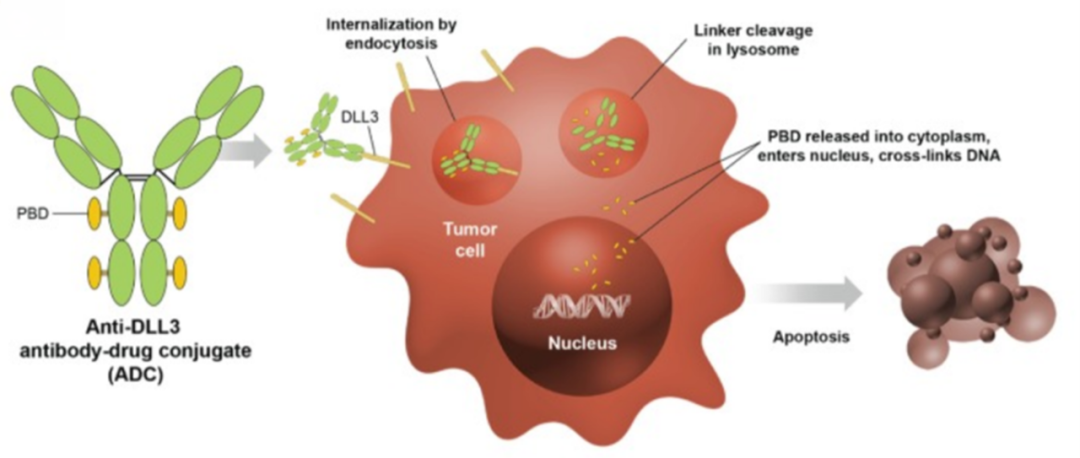
Image Source:doi:10.1186/s13045-019-0745-2
QLC5508(B7-H3ADC: Innovative Achievements of Chinese Pharmaceutical Companies
QLC5508 isQilu PharmaceuticalAn innovative product introduced from Minghui Pharmaceutical Ltd.B7-H3ADC drugs, by specifically binding to B7-H3 on the surface of tumor cells, deliver a potent topoisomerase inhibitor payload precisely into the tumor, thereby achieving highly efficient anti-tumor activity.Its payloadSuperTopoiTMThe efficacy ratioDxd 5 to 10 times higher. As a targeted anti-tumor drug,The core advantage of QLC5508 lies in"Dual Action of Precise Targeting + Broad-Spectrum Killing": On the one hand, it can accurately target the surface of tumor cellsB7-H3 target and complete binding, after entering the cell via endocytosis, releases a topoisomerase inhibitor to block DNA replication as the key step, inducing apoptosis in tumor cells; on the other hand, its unique bystander effect allows the released toxin to act on surrounding tumor cells within the tumor microenvironment, breaking the limitation of single targeting, further expanding the killing range, ultimately achieving highly efficient anti-tumor activity.Phase I study preliminary data shows efficacy in solid tumors (including extensive-stage small cell lung cancer,ES-SCLC) is promising, overall showing longer survival with manageable safety in previously treated ES-SCLC patients.。
I-DXd: Breakthrough Therapy for SCLC
Ifinatamabderuxtecan (I-DXd) Is a targetedB7-H3The ADC, designed using Daiichi Sankyo's proprietary DXd ADC technology, is composed of a humanized anti-B7-H3 IgG1 monoclonal antibody linked via a cleavable tetrapeptide linker to a topoisomerase I inhibitor payload (a derivate of exatecan, DXd). The published results indicate that I-DXd demonstrates significant efficacy in pretreated ES-SCLC patients, a population with substantial unmet needs. Clinical benefits were observed regardless of platinum sensitivity or prior treatments. As of March 3, 2025, among 137 patients receiving the same dose, the ORR reached 48.2%. On August 18, 2025, the U.S. Food and Drug Administration (FDA) granted I-DXd Breakthrough Therapy Designation for the treatment of adult patients with extensive-stage SCLC who progressed after platinum-based chemotherapy. This important designation brings more hope for patients suffering from this malignant tumor with poor prognosis and limited treatment options!
SEZ6(Human epilepsy-related homolog 6), as a key regulatory factor in neurite formation and signal transmission, plays an important role in NETs (neuroendocrine tumors), especially SCLC. ABBV-706 is proposed for the treatment of relapsed/refractory SCLC.AbbVieABBV-706 is an ADC drug targeting SEZ6,Conjugated with the toxin Top1i through the linker Valine-alanine, with a DAR of 6. ABBV-706 can target tumor cells expressing SEZ6, rapidly internalize, and deliver the Top1i payload to kill tumor cells. ABBV-706 demonstrates significant anti-proliferative activity across various SCLC cell lines and induces sustained tumor regression in SCLC PDX models. In a Phase I study (NCT0559984), results showed higher ORR in patients who had not received Top1i and/or second-line treatment (62.1% and 81.3%, respectively). As the only SEZ6-targeting ADC drug globally under development for treating SCLC, the progress of ABBV-706 has drawn significant attention. The data presented by AbbVie at this conference shows that ABBV-706 exhibits manageable safety and promising efficacy in R/R SCLC patients, offering potential new precision treatment options for NET patients in the future.

BL-B01D1 is the world's first targeted drug independently developed by China's Baili Pharmaceutical.EGFRAndHER3Dual AntibodyADC, alsoThe world's first to enter clinical trialsEGFR/HER3 Bispecific ADC Armed with Topoisomerase I Inhibitor ED-04. Studies show its use as monotherapy for locally advanced or metastatic solid tumors (including EGFR mtNSCLC). Iza-Bren monotherapy for EGFR mtNSCLC (post-third-generation TKI progression or untreated with chemotherapy) demonstrates promising prospects with manageable safety, and only 1.2% of patients discontinued due to adverse events. Currently, a Phase III study targeting third-generation TKI-resistant patients is underway in China, bringing new hope to resistant patients.
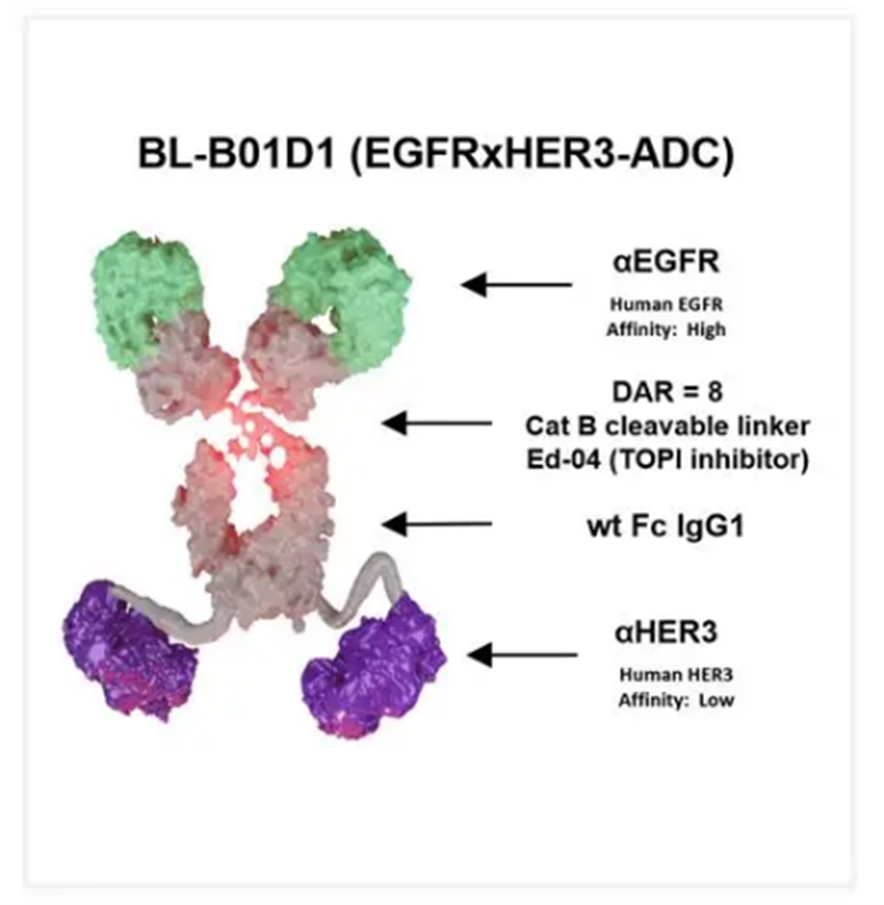
Image Source: Baili Pharmaceutical Official Website
TQB2102 is the first ADC drug developed by Zhengda Tianqing., which has currently entered the Phase III clinical stage. Reports indicate that the total pathological complete response rate of TQB2102 is 73.1%, setting a new global record for the highest response rate in neoadjuvant treatment of HER2-positive breast cancer. TQB2102 is a targetedHER2TQB2102 is a bispecific antibody-drug conjugate (ADC) targeting non-overlapping epitopes of ECD2 and ECD4. Its antibody component enhances affinity and internalization efficiency for tumor cells through dual-epitope binding, while the topoisomerase I inhibitor payload is released via lysosomal enzymatic cleavage, precisely inducing DNA damage and cell death. Compared with traditional monoclonal antibody ADCs, the dual-target synergistic effect of TQB2102 significantly reduces the risk of tumor escape and drug resistance. Overall, TQB2102 demonstrates potent efficacy, particularly in NSCLC patients with HER2 mutations and concurrent HER2/EGFR mutations, and exhibits excellent safety, supporting further research to optimize its clinical application for this challenging patient population.
HLX43 isFuhong HanlinThe first batch to enter the clinical trial stageOne of the ADC products, featuring a dual mechanism of action: Immune checkpoint blockade and cytotoxicity of the effective payload, with a DAR of approximately 8, aimed at addressingPD-1 / PD-L1Non-Response or Resistance to Immunotherapy: Addressing Unmet Clinical Needs in More Patients with Advanced/Metastatic Solid Tumors. HLX43, a PD-L1 ADC, Achieves an ORR of 31.9% in Pretreated NSCLC Patients, with an ORR of 47.4% in the EGFR Wild-Type Non-Squamous NSCLC Subgroup, Independent of PD-L1 Expression Levels. The drug blocks immune checkpoints via a PD-L1 antibody while delivering a topoisomerase inhibitor to kill tumor cells. Some patients experience immune-related adverse events (irAEs), but overall, it demonstrates low hematotoxicity and good safety. HLX43 exhibits manageable safety and preliminary antitumor activity in heavily pretreated advanced NSCLC patients, including those who progressed after PD-(L)1 inhibitor therapy.HLX43 is the world's first PD-L1 ADC targeting thymic cancer, with the potential to fill the gap in ADC treatment for this rare and highly aggressive cancer type.
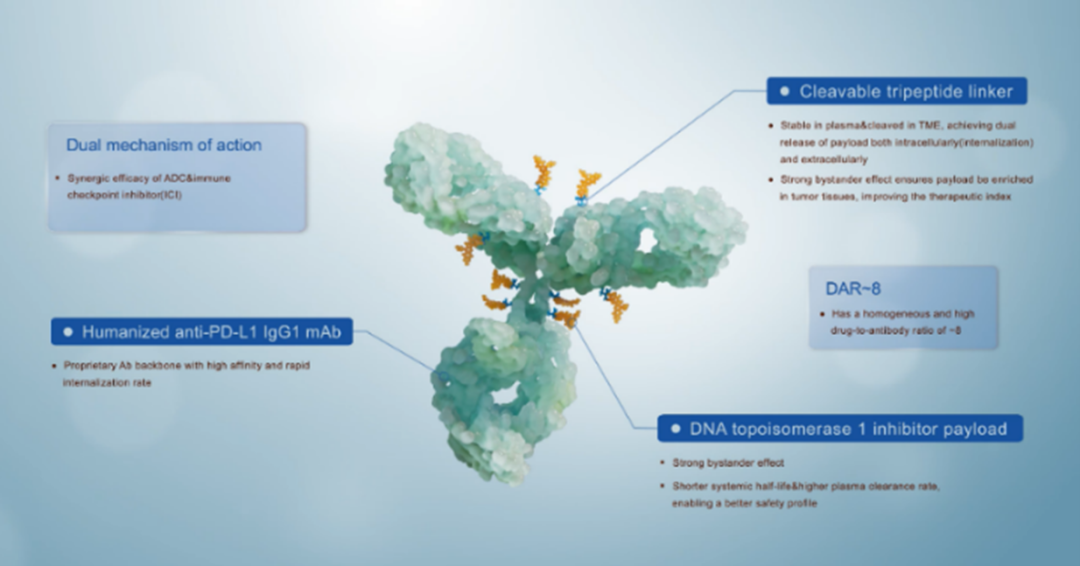
Image Source: Henlius Official Website
Product Recommendation:
> Bispecific Antibody Targeting Immune Modulatory Checkpoints for Cancer Treatment
From2025 WCLCTo see,The R&D of ADC is showing three core development trends:
Target Diversification: Expanding from HER2, TROP2 to DLL3, B7-H3, PD-L1, etc., covering more refractory lung cancer subtypes;
Design Innovation:Dual-target ADCs, immune-modulating ADCs, and bystander effect-enhanced ADCs (such as IDE849) have become research and development hotspots;
Combined StrategyEnrichment:For example, BNT324/DB-1311 (B7H3ADC) combined with BNT327 (PD-L1×VEGF-AbsAb) for the treatment of SCLC or NSCLC, combination regimens are increasingly being explored, shifting from "single-agent breakthrough" to "synergistic enhancement" to overcome treatment bottlenecks.
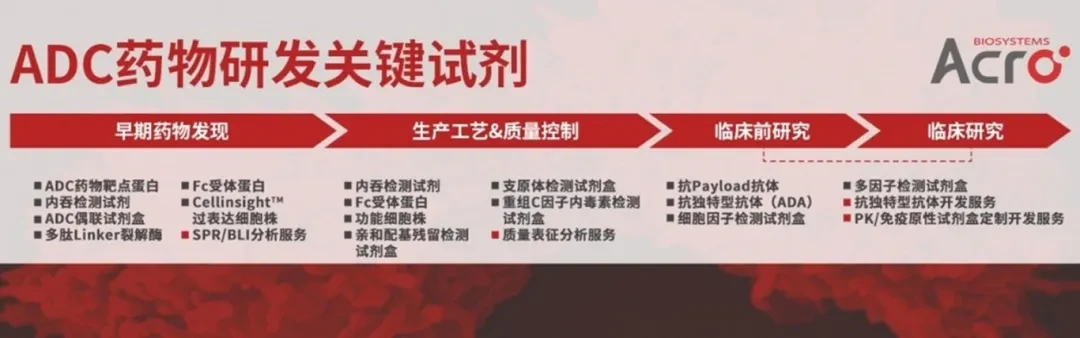
To accelerate the R&D of ADC drugs, ACROBiosystems Bai Biosystems has developed a series of ADC drug R&D solutions, covering the entire ADC drug R&D process. The main products include:
> Antibody Drug Screening:90+ ADC Drug Target Proteins;ADC Site-Specific Conjugation Kit;ADC Target Overexpression Cell Line
> Endocytosis Mechanism Validation:ADC Endocytosis Detection Reagent
> Fc Effector Function Validation:Fc Receptor Protein;ADCC/ADCP Functional Validation Cell Line
> Screening and Validation of Linkers:Peptide Linker Cleavage Enzyme
> ADC Clinical/Preclinical PK Analysis:Multiple Anti-Payload Antibodies;Anti-Idiotype Antibodies and Development Services


ACROBiosystems
inquiry@acrobiosystems.com
15117918562
(Note: Name + Company)