In Vivo CAR-T Ignites a New Battle: Chinese AI Unicorn Unveils Breakthrough Platform, Shattering Industry Efficiency Ceilings

Gilead Sciences
Innovative Drug Developer, Distributor

Capstan Therapeutics
Biotechnology Developer

AbbVie$2.1 Billion Acquisition of Capstan Therapeutics Ignites CompletelyIn Vivo CAR-TThe Fuse of the Outbreak.
In July, the first human trial data of EsoBiotec's in vivo CAR-T therapy ESO-T01 was published in The Lancet. The results showed that the therapy was safe and effectively treated four patients with relapsed or refractory multiple myeloma.
In August, Kite Pharma, a subsidiary of Gilead Sciences, announced the acquisition of Interius, a biotechnology company developing in vivo CAR-T therapies, for $350 million, becoming another multinational pharmaceutical company to enter the in vivo CAR-T field.
Compared with traditionalCAR-T, in vivo CAR-T can significantly simplify the treatment process, offering higher efficiency and patient accessibility.The track's popularity continues to rise.
According to incomplete statistics from publicly available data, the global count has exceeded20 CAR-T pipelines are in the preclinical or early clinical trial stage.
Sanofi, Novartis, AstraZeneca, AbbVie, Astellas and other international giants have proactively established a presence. In China, Everest Medicines, Immorna, CSPC Pharmaceutical Group,Agent Therapeutics,Abogen Biosciences, Starry Medicine, Grail Biotechnology, and Hongxin Biotechnology have also made arrangements, sparking a wave of developments around in vivo applications.A New Wave of "Gold Rush" in CAR-T.
In vivoThe key to CAR-T's success as a drug lies in the success of the vector, with innovations and continuous optimization of delivery vectors forming the technical foundation for the explosive growth in this field over the past year.
For example,Capstan Therapeutics Develops In Vivo Delivery Technology Based on Targeted Lipid Nanoparticles (tLNP), Enabling Precise Recognition and Efficient Delivery to Specific Immune Cells Such as T Cells, Becoming a Hotspot in the In Vivo CAR-T Field.
On September 13, at the China Cell & Gene Therapy (CSGCT) Conference,Agent TherapeuticsCo-Founder and CEOLai CaidaPh.D., Co-Founder of Capstan TherapeuticsHamideh ParhizProfessor, a profound dialogue was held around the development of tLNP.

Hamideh Parhiz pointed out that the LNP delivery, as the core technology of the mRNA COVID-19 vaccine, has been administered and validated in billions of people worldwide, fully proving the feasibility of this technological pathway.
She further stated,One of the main advantages of tLNP lies in its highly flexible platform attributes — it can encapsulate almost any functional payload, whether it is a CAR structure, gene editing tool, or immunomodulatory molecule, all of which can be precisely delivered in vivo through the same delivery system, demonstrating broad application prospects.
However,Professor Hamideh Parhiz also pointed out that, despite the great potential of tLNP in in vivo CAR-T, its engineering design still faces many key challenges.
For example, currentlytLNP mainly targets the blood and lymphatic systems, while delivery to organs other than the liver (such as the lungs, muscles, heart, and kidneys), and even crossing the blood-brain barrier (BBB), still presents significant challenges.
This pairThe design of LNPs presents higher requirements, and only by achieving the synergistic optimization of precise targeting, efficient delivery, and controllable expression can the clinical value of in vivo CAR-T therapy be fully unleashed.

AI "Nano Rocket Factory"
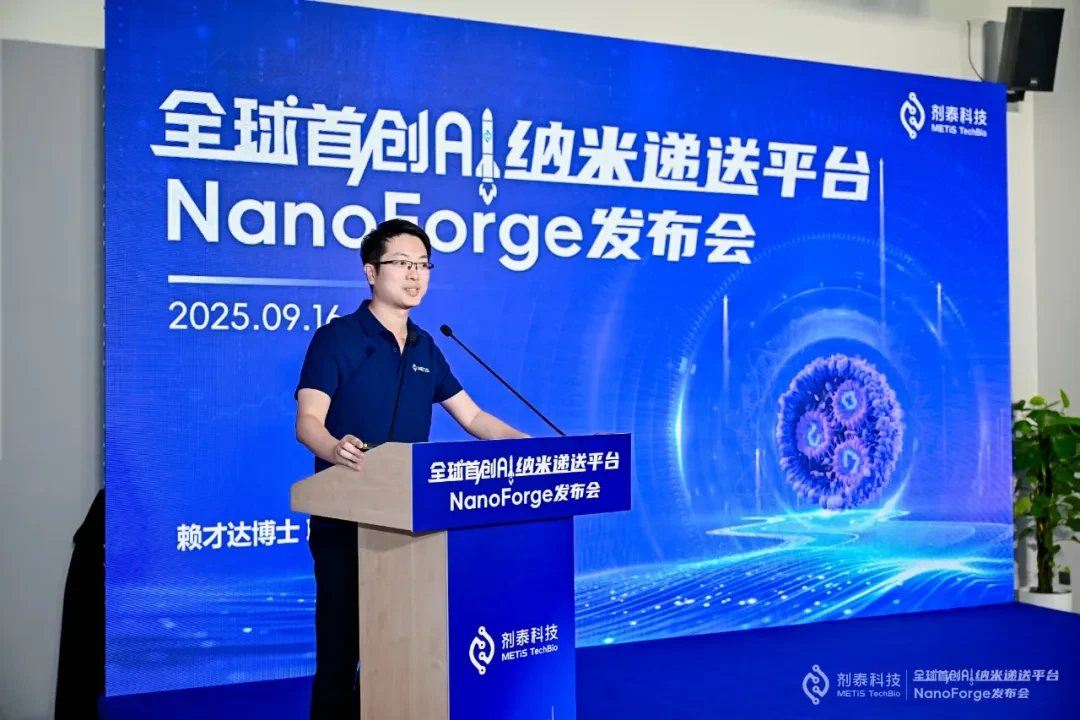
On September 16, Jetty TechnologyIn Beijing Cell and Gene Industry ParkOfficially Released the World's FirstAI Nano-Delivery PlatformNanoForge,InAI Empowered Breakthrough to Build "Nano Rocket Factory", Providing a New Paradigm for LNP Delivery.
TraditionalLNP delivery is limited by a restricted molecular design space and highly concentrated patent layouts, with most existing lipid molecular structures that have high delivery efficiency already monopolized by large pharmaceutical companies. This forces new entrants to often work within areas that have already been extensively explored.“Red Sea”In China, it is easy to get caught up in internal competition.Risk of infringement.
NanoForge has exclusive de novo lipid generation models and lipid language models, achieving "freedom" in LNP design from the ground up, skillfully bypassing patented explored areas to explore a blue ocean space full of possibilities.
The power of AI lies in its ability to design lipid molecules beyond human cognition, discover unprecedented targeting structures, empower the development of LNPs targeting beyond the liver, bypass existing IP restrictions, and provide possibilities for developing first-in-class and best-in-class therapies.
Another pain point in LNP development is its long and expensive development cycle. The design and formulation space for lipids is 10 to the power of 12, and innovation in unknown spaces has been constrained by the inefficiency of traditional methods.
Dr. Lai Caida mentioned,In the past, developing a new material at a school might require3-5 Years, and the cost is extremely high. NanoForge, through Jitai's proprietary integrated dry and wet laboratory infrastructure,Shorten this cycle to a few months or even weeks.
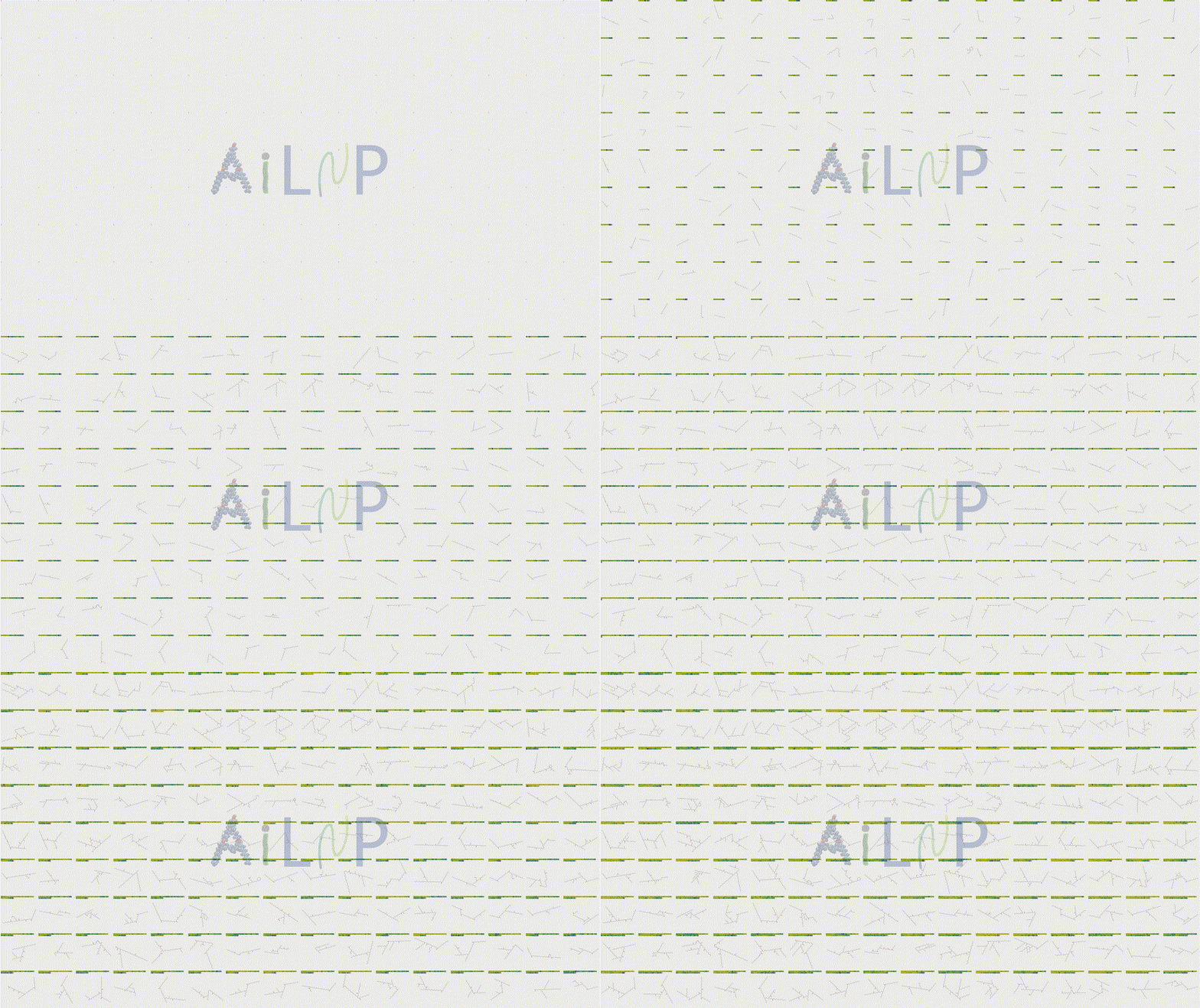
Specifically,NanoForge first conducts dry experimental computational simulations, simulating over 100,000 experiments at once in a computer to quickly screen out promising materials, significantly reducing the time and cost during the early exploration phase.
Subsequently, its independently developedMETiS DATALOTSThe system conducts high-throughput wet lab experiments, capable of testing hundreds of formulation combinations simultaneously and rapidly verifying the prediction results of AI models.
According to the estimation by the head of AI innovation at JiTai Technology, if traditional methods were used, the synthesis and testing of ten million lipids would cost at least 500 million RMB.AI can significantly reduce this cost.
In addition,The field of LNP delivery has long been in "No algorithm, no dry/wet data, no model"in a 'three-no' state, the uniqueness of NanoForge lies in its ability to build a high-quality 'data universe' from scratch through its self-developed dry and wet experimental platform, enabling robust model training and algorithm improvement.
Agent TherapeuticsWith overMore than 10 million types of lipid structuresAnd More Than100,000 data points available for model training, where a significant amount of lipids have been obtained exceeding20 Key FeaturesThe wet lab experimental data supports this, becoming a unique competitive barrier that is difficult to replicate.。
Relying onNanoForge Platform: METiS Therapeutics Achieves Multiple Breakthroughs in Targeted LNP Delivery, Enabling First-in-Class (FIC) and Best-in-Class (BIC) Delivery to Several Key Organs.
Company's Liver TargetingLNP Demonstrates Superior Delivery Efficiency Over Existing Clinically Approved Benchmarks in Head-to-Head Trials, with Enhanced Safety; It Has Now Entered the Clinical Stage. In Pulmonary Delivery, the Company Successfully Overcame the Bottleneck of Traditional Drug Administration Struggling to Penetrate Deep into the Alveoli, Achieving Efficient mRNA Delivery to Type I and Type II Alveolar Cells in Non-Human Primate Models. In the Challenging Field of Non-Viral Delivery to Myocardium and Skeletal Muscle, Agent Technology's First-in-Class Targeted LNP Also Enables Precise Delivery, Offering Hope for the Treatment of Hereditary Heart Diseases, Muscular Dystrophy, and Cardiac Aging.
At the press conference, Dr. Lai Cai-da also showcased the self-developed pipeline of Ji-Tai Technology.Latest Data of MTS-105.MTS-105It is delivered by Agent's liver-targeted LNP, encoding for a liver cancer-specific antigen.T Cell Engager (TCE)The mRNA. Due to the liver-targeting specificity of Ji Li De's LNP, this tumor-killing antibody drug can be produced within the patient's liver, especially inside liver cancer cells, attacking the cancer cells from within. This is like a Trojan horse, where conquering from the inside is much more effective than attacking from the outside.
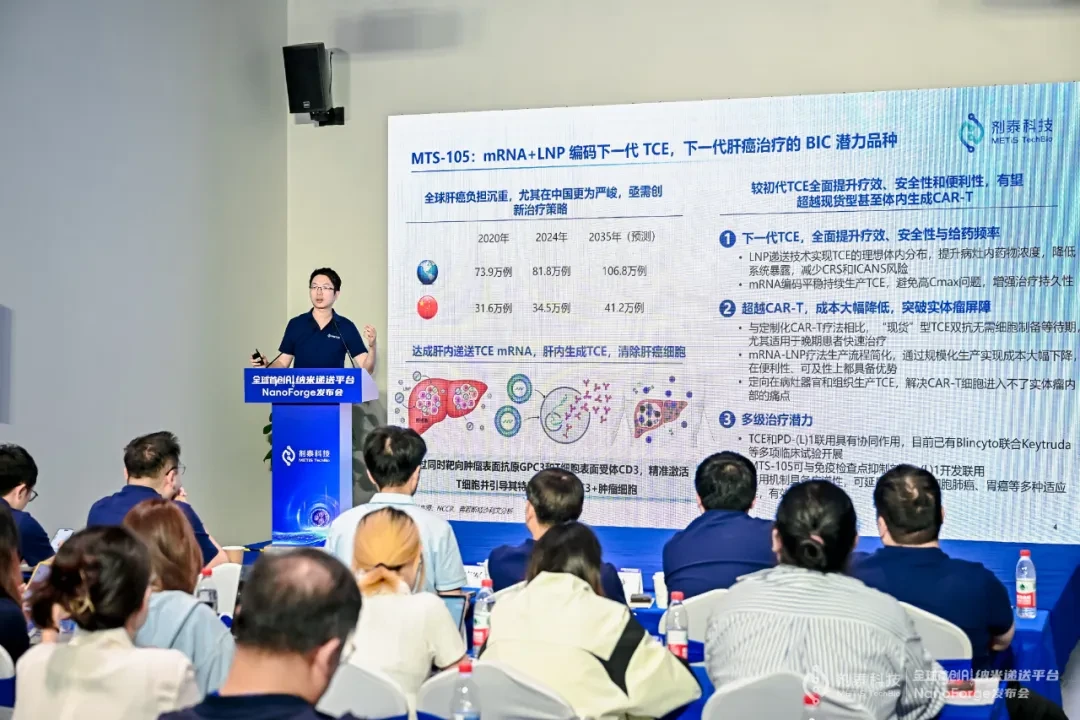
Head-to-head studies in mouse models have shown,MTS-105 can achieve efficient accumulation in the tumor microenvironment.Achieving over a thousand times greater efficacy with 1% of the dose of traditional antibodies, and achieving 100% complete remission, demonstrating best-in-class (BIC) potential.。
AndMTS-105 took only about 18 months from project initiation to the official launch of human trials, fully demonstrating NanoForge's strong capability in accelerating the development of innovative therapies.

Search for the NextCapstan
Capstan Therapeutics' tLNP delivery technology, despite its promising prospects, still needs to overcome several key obstacles in clinical translation.
tLNP currently faces significant challenges in delivering to organs outside the blood and lymphatic systems (such as kidneys, lungs, etc.), and Professor Hamideh Parhiz believes this may require the design of a dual-targeting strategy:First consider how to reach a particular tissue, then discuss its specificity at the cellular level.
At the NanoForge launch event, AgentTech presented its solution: The first layer isPassive Targeting, achieving natural enrichment in specific tissues by optimizing the physicochemical properties of nanoparticles; the second layer isEndogenous Targeting, analyzing the protein corona formed by the binding of LNP and serum proteins to decode the delivery mechanism; the third layer isActive Targeting, achieving precise delivery through antibody conjugation technology.
According to public information, Jitai Technology is able to target the liver, lungs, immune organs, heart, muscles, tumors, central nervous system, and gastrointestinal tract in the human body.Targeted Delivery of LNPs to Eight Identified Organs or Tissues Completed。
Not only that,During the launch of NanoForge, the company also revealed for the first timeLatest Achievements in T-Cell Targeted Delivery. Vice President of Agent Technology and Head of Technical PlatformWeigh:“We have obtained very beautifulT Cell-Targeting LNP Data. The delivery efficiency of our T cell-targeting LNPs has far surpassed the levels of the world's leading in vivo CAR-T companies, indicating that our technology can engineer T cells more efficiently and unlock the potential of in vivo CAR-T therapy.
As a new type of protein drug,TCE drugs can simultaneously bind to T cells and target cells (such as tumor cells), activate T cells through bridging, induce their specific killing of target cells, and thereby exert a therapeutic effect.
Previously,TCE drugs are mainly concentrated in the field of solid tumors, while Roche...Disclosed at the EULAR conferencePositive Clinical Trial Data of Mosunetuzumab in Systemic Lupus ErythematosusDemonstrates the application potential of such drugs in autoimmune diseases.
According to statistics,Since 2024, there have been approximately 20 partnership deals related to TCE drugs, with a total transaction value exceeding 10 billion US dollars.Recently, several Chinese companies such as Zhi Xiang Jin Tai, Harbour BioMed, Lepu Biopharma, and BeiGene have reached large-scaleBD。
It should be noted that,All currently marketedTCE DrugAll adopt direct protein infusion, whereas the strategy of JiTai Technology is to choose encodingTCEProteinmRNAWrapped inLNPIn China, and then injected into the body, such as its anti-liver cancer drug under development.MTS-105This entirely new "in vivo production" model not only extends the drug's efficacy but also makes the preparation process faster and cheaper.
Head of Technology Platform at JiTai TechnologiesIt is expected that in the future, devastating autoimmune diseases like lupus could be treated through technologies developed by Capstan Therapeutics.T cell-targeted LNP reprograms T cells in vivo to precisely eliminate abnormally activated B cells, effectively resetting the humoral immune system to its original, pristine state.
Similar toCapstan Therapeutics Accelerates the Application of In Vivo CAR-T with tLNP Technology, and Jeteck (AgentTech) is Also Pushing More Drug Fields into the "In Vivo" Era through Underlying Innovations in LNP Delivery, Bringing Disruptive Therapies.
This is actually in line withHamideh ParhizProfessor's judgment, she said"In theory, any specific cell type in the body, as long as it can be modified or engineered in vivo, has application potential... As long as any type of in vivo cell engineering technology can achieve acceptable engineering efficiency, I believe it can have a significant impact across multiple application areas."
CapstanAfterward, the market is betting on the next one.CapstanThe "technological positioning" around the core bottleneck of the delivery system has never stopped.

In Conclusion
By the first half of 2025, the total value of China's innovative drug BD overseas transactions has approached 500 billion US dollars, and China has become an important driving force for global biopharmaceutical innovation.
This is backed by continuously validated technical capabilities, and the strength of China's innovative drugs is steadily moving toward the world's first tier, completing the transition from"From 'Following' to 'Running Side by Side': A Stunning Transformation."
FacingThe New Wave of "In-Body Programming": When AI Becomes the Key to Speed, China’s Leapfrog in Cell Gene and Nucleic Acid Innovative Drug Development May Depend on the Acceleration Breakthroughs by Companies like JiTai Technologies."The Next Capstan" Is Expected to Emerge in China — This Is Not a Distant Dream, but a Reality That Is Currently Unfolding.
Recommended Reading