Home ScTIL Therapy Achieves 5-Fold Increase in Overall Survival: A Major Breakthrough in Solid Tumor Immunotherapy

ScTIL Therapy Achieves 5-Fold Increase in Overall Survival: A Major Breakthrough in Solid Tumor Immunotherapy

Sep 19, 2025 13:49 CST Updated 13:49
Chineo

Developer of Tumor and Immune Disease Therapeutics

Overall Survival (OS) Increased 5 Times! Major Breakthrough in Immune Treatment for Solid Tumors!

1 hour agoMedSci Original MedSci OriginalPublished in Shanghai

Recently, the clinical research on the treatment of advanced biliary tract tumors using ScTIL technology, a peripheral blood TIL-like cell technology originally developed in China, was published in "Cell Reports Medicine," a subsidiary journal of "CELL."
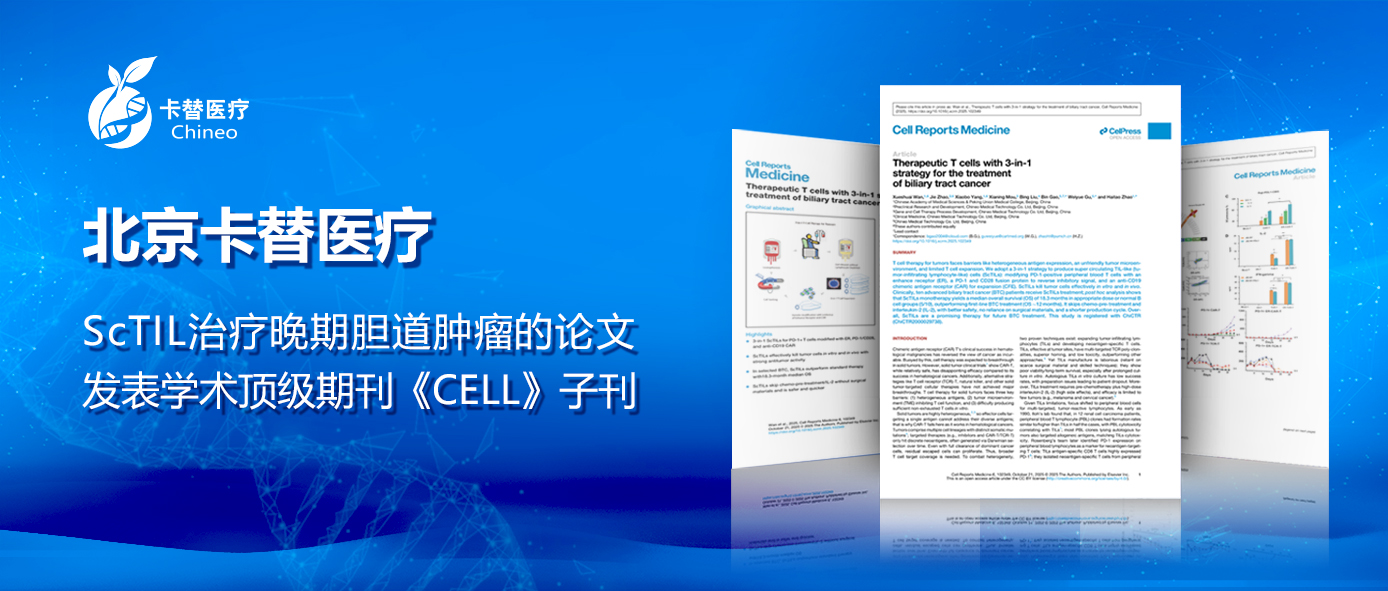
Recently, the clinical research on the treatment of advanced biliary tract tumors using ScTIL technology, a Chinese-original peripheral blood TIL-like cell therapy, was published in "Cell Reports Medicine," a subsidiary journal of "CELL." Although this is only a proof-of-concept clinical study, it has shown promise in solid tumors.ImmunityIn the field of treatment, it represents a major conceptual breakthrough—humanity's first successful isolation of TIL-like cells from peripheral blood and their genetic modification, with clinical efficacy verified in cholangiocarcinoma, the cancer with the highest malignancy. Research data shows that, compared to the control group, ScTIL demonstrated efficacy in advanced biliary tract cancers that were previously treatment-resistant.Cancer PatientsThe overall survival (OS) was extended by 5 times, and its OS was even significantly better than the first-line standard treatment. The PI of this study isPeking Union Medical College HospitalProfessor Haitao Zhao from the Hepatobiliary Surgery Department; ScTIL cell preparation and technical support were provided by Chineo (Beijing) Medical Technology Co., Ltd.
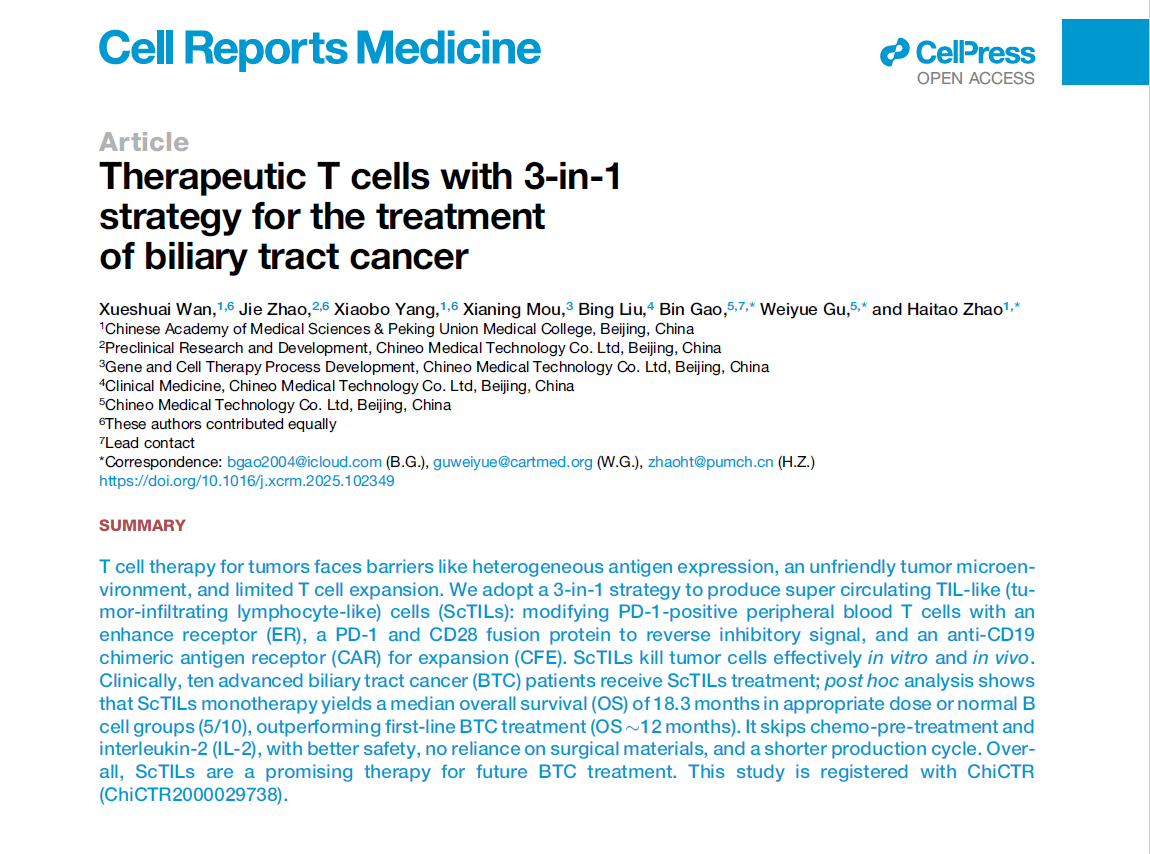
In recent years, PD-1 monoclonal antibody has become mainstream.Anticancer DrugThing, cell therapy technology such asCAR-TAnd tumor-infiltrating lymphocytes (TIL) have successively received approvals for new drugs to be marketed. However, conquering cancer (especially solid tumors) remains a formidable challenge. The article points out that the following "three major difficulties" need to be overcome to achieve this:

1) Heterogeneity, i.e., how to enable T cells to recognize all kinds of different antigens.Cancer CellsCAR-T and other targeted therapies can only recognize one or two targets while missing others, which is an important reason for the limited efficacy of such technologies.

2) The microenvironment, namely how to enable T cells to prevail when they come into direct contact with cancer cells. Cancer cells can suppress T cells, causing them to lose their functionality.

3) T cell expansion, namely, how to expand the "total force" of T cells in a way that is "fast, good, and economical".

PD1 antibody can only counteract the microenvironment, without considering the other two challenges. TIL therapy aims to overcome heterogeneity but relies on surgical sampling, chemotherapy-induced lymphodepletion preconditioning, high-dose IL2, and massive in vitro expansion. Hence, it has numerous limitations and drawbacks, including restricted application scenarios, high preparation failure rates, severe toxic side effects, high costs, and long preparation cycles.

ScTIL aims to simultaneously address three major challenges by integrating the following three innovative points:

First, bypass surgical sampling and only require peripheral blood apheresis to select cTILs (classical TIL-like cells) — natural T cells similar to TIL in specifically recognizing heterogeneous tumors, to overcome heterogeneity;

Second, with a "receptor enhancement" gene modification, the inhibitory signals that cancer cells exert on T cells are reversed into activation signals (brakes turned into accelerators) to overcome the microenvironment challenge.

Third, the gene modification with CAR targeting CD19 utilizes the stimulation of B cells in the patient's body to achieve the expansion of ScTIL in vivo, without the need for excessive expansion in vitro.

The integration of these three innovations can also spare patients from chemotherapy and IL2, while simplifying the cell production process—shortening the cycle and reducing costs.

This "three-in-one" strategy completely breaks away from the constraints of CAR-T and TIL in terms of technical routes, overturning the underlying technology.

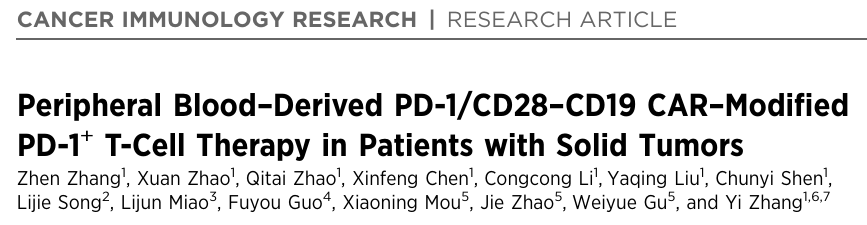
This is not the first clinical study of the "three-in-one" strategy. The first clinical study of ScTIL for treating pan-cancer solid tumors was published in *Cancer Immunology Research* in 2024, reporting cases of complete response (CR), a high disease control rate, and good safety.
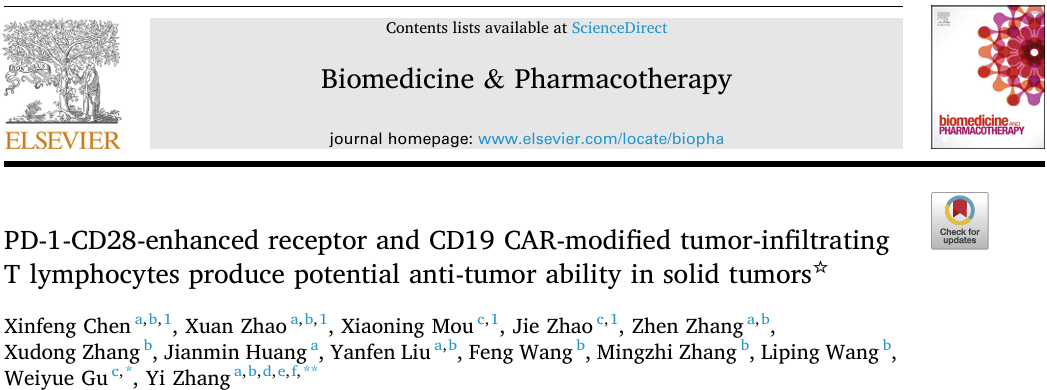
Chineo's earlier-generation "three-in-one" strategy — enhanced receptor, CD19-CAR-modified TIL cell (STIL, or "Super TIL") therapy for solid tumors — was published slightly earlier in *Biomedicine & Pharmacotherapy*, reporting partial response (PR) cases, a high disease control rate, and good safety.
This ScTIL study treated a total of 10 patients with advanced bile duct tumors who were ineffective after treatment or relapsed after surgery.

Preparation cycle significantly shortened:

The median time from peripheral blood collection to cell infusion (vein-to-vein) was 18 days – including a 7-day quality control cycle and the factor of patients being unable to receive timely reinfusion due to the pandemic at that time, which is significantly shorter than TIL therapy. (It has been reported that the latest generation ScTIL technology from Chineo has reduced the "vein-to-vein" cycle to 2 days.)

Safety: Exceeds expectations.

None of the subjects observed cytokine release syndrome (CRS) or autoimmune toxicity. The added advantage is that ScTIL does not require lymphodepleting chemotherapy or IL-2, significantly enhancing safety and patient tolerance.Quality of Life

Efficacy: Significant improvement in OS

Given that ScTIL, by design, utilizes CD19-CAR to stimulate and expand B cells, post-hoc analysis introduced grouping based on baseline B cell levels. Patients with baseline B cell levels far below normal are mechanistically unlikely to benefit and can be considered the control group, whereas others form the treatment group.

Data show that, compared with the control group, the disease control rate (DCR) in the treatment group was 100% versus 0%, a dramatic difference; the median overall survival (mOS) was 18.3 months versus 3.2 months, differing by more than five times. OS is the ultimate indicator for evaluating tumor efficacy.FDAwith particular emphasis on this indicator).

Compared to standard treatments, ScTIL demonstrates greater potential. The median overall survival (mOS) for the first-line standard treatment GC regimen (gemcitabine + cisplatin) in biliary tract cancer is 11.7 months, while the "GC + K drug" triple combination regimen extends it to 12.7 months. The K drug (a PD-1 monoclonal antibody and a long-time global best-selling "blockbuster drug") only adds one extra month of overall survival (OS) for first-line patients when combined with chemotherapy. In contrast, ScTIL monotherapy achieves an mOS of 18.3 months in later-line patients, not only surpassing the performance of the K drug but even extending survival by 50% compared to the first-line triple combination regimen.

As a cell therapy, ScTIL brings a paradigm revolution compared to traditional TIL and solid tumor CAR-T: First, ScTIL only requires apheresis without surgery, which not only significantly expands application scenarios but also greatly improves preparation success rates; Second, it has better safety as ScTIL eliminates the need for chemotherapy-induced lymphodepletion and IL2, with no severe CRS or On-Target-Off-Tumor toxicity; Third, ScTIL does not require excessive in vitro expansion, significantly reducing preparation time and cost; Fourth, ScTIL can basically be infused on an outpatient basis, significantly decreasing the occupation of medical resources (beds, medical staff).

This study confirms the scientific and feasibility of the ScTIL technology route. Although larger sample-sized confirmatory studies are still needed, it must be said that as an original底层platform innovation technology in China, ScTIL has brought a breakthrough in the paradigm of solid tumor cell therapy and shown great potential for future clinical applications.

Comment Section(1)
#Insert Topic
  1. [GetPortalCommentsPageByObjectIdResponse(id=2281873, encodeId=5e6e22818e3ce, content=<a href='/topic/show?id=5b4640e04a' target=_blank style='color:#2F92EE;'>#CAR-T Therapy#</a> <a href='/topic/show?id=c92340e325' target=_blank style='color:#2F92EE;'>#CAR-T Cell Immunotherapy#</a> <a href='/topic/show?id=1a3e13021959' target=_blank style='color:#2F92EE;'>#ScTIL Technology#</a>, beContent=null, objectType=article, channel=null, level=null, likeNumber=2, replyNumber=0, topicName=null, topicId=null, topicList=[TopicDto(id=4070, encryptionId=5b4640e04a, topicName=CAR-T Therapy), TopicDto(id=4073, encryptionId=c92340e325, topicName=CAR-T Cell Immunotherapy), TopicDto(id=130219, encryptionId=1a3e13021959, topicName=ScTIL Technology)], attachment=null, authenticateStatus=null, createdAvatar=null, createdBy=cade5395722, createdName=MedSci Administrator, createdTime=Fri Sep 19 13:52:17 CST 2025, time=56 minutes ago, status=1, ipAttribution=Shanghai)]

Relevant Information

LANCET HAEMATOL: Efficacy and Safety of Cilta-cel in Relapsed/Refractory B-cell Malignancies: A Multicenter Study

This study aims to evaluate the efficacy and safety of Cilta-cel in patients with R/R B-cell malignancies. The results show that Cilta-cel demonstrates promising efficacy and manageable safety in these patients.

Professor Shen Lin's Team Research Published in International Journal | Results of the World's First CAR-T Cell Therapy for Solid Tumors Released!

Peking University Cancer Hospital's Shen Lin Team Conducts the World's First Randomized Controlled Phase 2 Trial of CLDN18.2 CAR-T for Gastric Cancer, Showing Satri-cel Significantly Extends PFS in Advanced Gastric Cancer Patients Compared to Traditional Treatments, with Controllable Safety, Providing a New Option for Third-line Treatment.

Nature Medicine: CAR-T Efficacy "Prophet": InflaMix Model for Precise Prediction, Assisting Patient Selection

Study Constructs InflaMix Predictive Model, Integrating 14 Pre-CAR-T Treatment Indicators to Assess Inflammatory Status, Finding High Inflammation Predicts Nearly Triple the Risk of Relapse or Death, Multicenter Data Validates Its Strong Predictive Power, Potentially Leading CAR-T Personalized Treatment.

Nature: Gene Editing + Immunotherapy: The New Upgrade of CAR-T Therapy

This study successfully developed an innovative strategy based on CRISPR knock-in, achieving specific transgenic expression of CAR-T cells in the tumor microenvironment by precisely integrating therapeutic genes into endogenous tumor-restrictive gene sites (such as NR4A2 and RGS16).

Advancing CAR-T Cell Therapy: Insights into the Impact of Patient Biology, Leukapheresis, and Cryopreservation

Failure in autologous CAR-T manufacturing is often associated with the quality of the starting material from leukapheresis. A review in "Molecular Therapy" pointed out that factors such as the patient's treatment history, disease status, apheresis procedures, and cryopreservation conditions affect material quality, proposing optimization directions to reduce failure rates.

Professor Liu Mingyao on UCAR-T Technology: A New Pathway Breaking Through Traditional CAR-T Therapy

This article aims to provide readers with a comprehensive perspective on UCAR-T technology, exploring its potential and future prospects in treating major diseases.

Recently, the clinical research on ScTIL technology, a Chinese-original peripheral blood TIL-like cell therapy for advanced biliary tract cancer, was published in *Cell Reports Medicine*, a subsidiary journal of *CELL*. Although this is only a proof-of-concept clinical study, it shows promise in solid tumors.ImmunityIn the field of treatment, it is a major conceptual breakthrough—humans have successfully isolated TIL-like cells from peripheral blood and genetically modified them for the first time. Moreover, its clinical efficacy has been validated in bile duct tumors, the most malignant type of cancer. Research data shows that, compared with the control group, ScTIL significantly benefits patients with advanced bile duct cancer who had failed previous treatments.Cancer PatientsThe overall survival (OS) was extended by 5 times, and its OS was even significantly better than the first-line standard treatment. The PI of this study isPeking Union Medical College HospitalProfessor Haitao Zhao from the Hepatobiliary Surgery Department; ScTIL cell preparation and technical support were provided by Beijing Chineo Medical Technology Co., Ltd.

In recent years, PD-1 monoclonal antibodies have become mainstream.Anticancer DrugSubstances, cell therapy technologies such asCAR-TAnd tumor-infiltrating lymphocytes (TIL) have successively received approvals for new drugs to be marketed. However, overcoming cancer (especially solid tumors) remains a formidable challenge. The article points out that this can only be achieved by solving the following "three major challenges":

1) Heterogeneity, i.e., how to enable T cells to recognize all sorts of different antigens.Cancer CellsCAR-T and other targeted therapies can only recognize one or two targets while missing others, which is an important reason for the limited efficacy of such technologies.

2) The microenvironment, namely, how to enable T cells to prevail when they confront cancer cells. Cancer cells suppress T cells, causing them to lose their functionality.

3) T cell expansion, namely, how to efficiently and rapidly increase the "total force" of T cells.

PD1 antibody can only counteract the microenvironment, without considering the other two challenges. TIL therapy aims to overcome heterogeneity but relies on surgical sampling, chemotherapy-induced lymphodepletion, high-dose IL2, and massive in vitro expansion. Consequently, it has many limitations and drawbacks, including restricted application scenarios, high production failure rates, severe toxic side effects, high costs, and long production cycles.

ScTIL aims to simultaneously address three major challenges by integrating the following three innovations:

First, bypass surgical procurement and only require peripheral blood apheresis to select class TIL (cTILs) cells — natural T cells similar to TIL in specifically recognizing heterogeneous tumors, to overcome heterogeneity;

Second, with a "receptor enhancement" gene modification, the inhibitory signals that cancer cells exert on T cells are reversed into activation signals (brake to accelerator) to overcome the microenvironment challenges;

Third, using gene modification with CAR targeting CD19, the stimulation of B cells in the patient's body is utilized to achieve ScTIL amplification in vivo, without the need for excessive expansion ex vivo.

The integration of these three innovations can also spare patients from chemotherapy and IL2, while simplifying the cell production process—shortening the cycle and reducing costs.

This "three-in-one" strategy completely breaks away from the constraints of CAR-T and TIL in terms of technical routes, overturning the underlying technology.

This is not the first clinical study of the "three-in-one" strategy. The first clinical study of ScTIL for treating pan-cancer solid tumors was published in *Cancer Immunology Research* in 2024, reporting cases of complete response (CR), a high disease control rate, and good safety.

Chineo's earlier-generation "three-in-one" strategy—enhanced receptor, CD19-CAR-modified TIL cell (STIL, or "Super TIL") therapy for solid tumors—was published slightly earlier in *Biomedicine & Pharmacotherapy*, reporting partial response (PR) cases, a high disease control rate, and good safety.

This ScTIL study treated a total of 10 patients with advanced refractory or postoperative recurrent biliary tract tumors.

Preparation cycle significantly shortened:

The median time from peripheral blood collection to cell infusion (vein-to-vein) was 18 days — including a 7-day quality control cycle and the factor of patients being unable to receive timely reinfusion due to the pandemic at that time, which is significantly shorter than TIL therapy. (According to reports, Chineo's latest generation ScTIL technology has reduced the "vein-to-vein" cycle to 2 days.)

Safety: Exceeds expectations.

None of the subjects observed cytokine release syndrome (CRS) or autoimmune toxicity. The added advantage is that ScTIL does not require lymphodepleting chemotherapy or IL-2, significantly enhancing safety and patient tolerance.Quality of Life

Efficacy: Significant improvement in OS

Given that ScTIL, by design mechanism, utilizes B-cell stimulation through its CD19-CAR for expansion, post-hoc analysis introduced grouping based on baseline B-cell levels. Patients with baseline B-cell levels far below normal are mechanistically unlikely to benefit and can be considered the control group, whereas others form the treatment group.

Data show that the disease control rate (DCR) was 100% in the treatment group and 0% in the control group, a stark contrast; the median overall survival (mOS) was 18.3 months and 3.2 months, respectively, with a five-fold difference. OS is the ultimate indicator for evaluating tumor efficacy.FDAwith particular emphasis on this indicator).

Compared with standard treatments, ScTIL demonstrates greater potential. The mOS for the first-line standard treatment GC (gemcitabine + cisplatin) regimen in biliary tract tumors is 11.7 months, while the "GC + K drug" triple combination regimen is 12.7 months. The K drug (a PD-1 monoclonal antibody, which has topped global sales for many years as the "king of drugs") can only extend OS by one month for first-line patients based on chemotherapy; whereas ScTIL monotherapy can achieve an mOS of 18.3 months for later-line patients, not only surpassing the K drug but also extending survival by 50% compared to the first-line triple combination regimen.

As a cellular therapy, ScTIL brings a paradigm revolution compared to traditional TIL and solid tumor CAR-T: First, ScTIL only requires apheresis without surgery, which not only significantly expands application scenarios but also greatly improves preparation success rates; Second, it offers better safety as ScTIL eliminates the need for chemotherapy-induced lymphodepletion and IL2, with no severe CRS or On-Target-Off-Tumor toxicity; Third, ScTIL does not require excessive in vitro expansion, significantly reducing preparation time and cost; Fourth, ScTIL can be infused on an outpatient basis, substantially decreasing the occupation of medical resources (beds, medical staff).

This study confirms the scientific and feasibility aspects of the ScTIL technical approach. Despite the need for larger sample-sized confirmatory studies, it must be said that as an original底层platform innovation technology from China, ScTIL has brought about a breakthrough in the paradigm of solid tumor cell therapy and demonstrated significant potential for future clinical applications.