

Five Million-Dollar CAR-T Therapies Secure Entry into China's Dual Insurance Negotiation Arena: Will 'Soul-Cutting' Price Talks Return?
Fosun Pharmaceutical
Healthcare Industry Group

Fosun Kairos
Developer of Tumor Immune Cell Therapy Technologies and Products
Another CAR-T product hits the market.
On September 24, the CDE website showed that Fosun Kite Biotechnology Co., Ltd. (formerly known as Fosun Kite), a subsidiary of Fosun Pharmaceutical, submitted the market application for Brexucabtagene Autoleucel Injection.
Recent Hotspots in CAR-T Therapy: On September 20, the National Healthcare Security Administration released the "Announcement on the Phase Results of Expert Review for Drug Applications Passed the Formal Examination for the Adjustment of the 2025 National Basic Medical Insurance, Maternity Insurance, and Work-related Injury Insurance Drug List and the Commercial Health Insurance Innovative Drug List," marking the conclusion of the expert review process for drug applications passed the formal examination for adjustment to the 2025 National Basic Medical Insurance and Commercial Health Insurance Innovative Drug List.
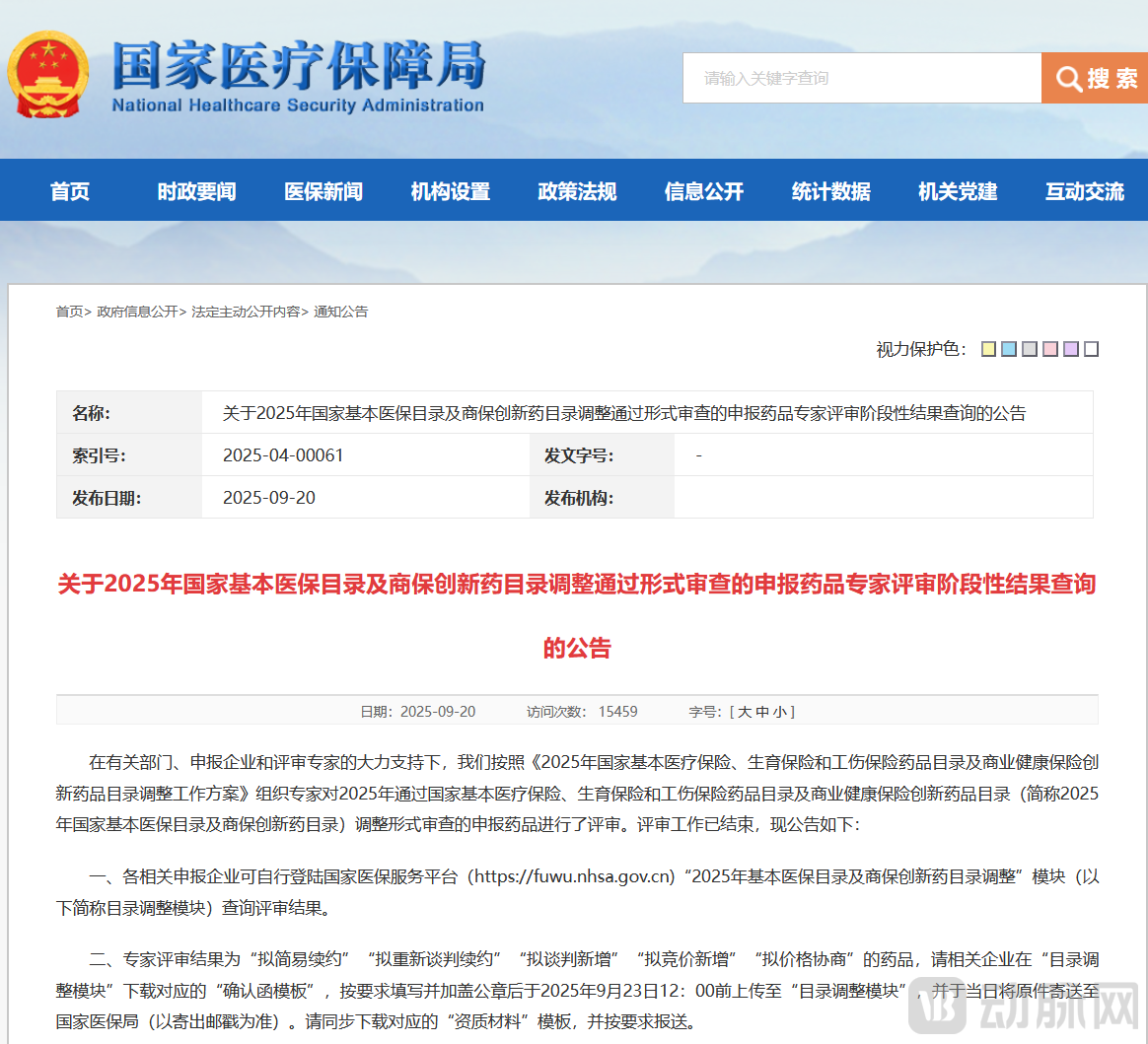
Source: National Healthcare Security Administration
According to the Economic Observer, five CAR-T cell therapy products, which had previously been excluded from medical insurance due to their million-yuan single-dose price, have all passed the expert review this time and obtained the qualification to enter the next round of negotiations.
According to the list previously disclosed by the National Healthcare Security Administration, these five products are Axicabtagene Ciloleucel, Relmacabtagene Autoleucel, Idecabtagene Vicleucel, Nacibotagene Autoleucel, and Zevocabtagene Autoleucel Injection, targeting indications such as large B-cell lymphoma, leukemia, and multiple myeloma. Among them, Nacibotagene Autoleucel from Hekin Bio has the lowest market price, priced at 999,000 yuan, making it currently the only option in China below one million yuan.
However, passing the review is merely one step on the long road to access, far from the final approval.
The above announcement pointed out that the directory-listed drugs classified as “Proposed for Negotiation Addition,” “Proposed for Competitive Pricing Addition,” or “Proposed for Price Consultation” have been included in the negotiation/competitive pricing/price consultation scope for the 2025 National Basic Medical Insurance Directory and the Commercial Health Insurance Innovative Drug Directory. These drugs have obtained the qualification for negotiation/competitive pricing/price consultation, but this does not mean they have been officially included in the National Basic Medical Insurance Directory or the Commercial Health Insurance Innovative Drug Directory. The National Healthcare Security Administration also revealed plans to hold an on-site communication meeting with companies proposed for negotiation/competitive pricing/price consultation in Beijing soon.
Industry experts also analyzed and pointed out that for CAR-T products that have already explored payment pathways through local commercial insurance projects such as "People's Benefit Insurance," their willingness to reduce prices may be relatively limited. The underlying reality is that although commercial insurance catalogs are inclusive, the scale of the specific patient groups they cover and the total amount of risk funds that can be shared are still "niche" compared to basic medical insurance, adding uncertainty to the price negotiations that follow.
It is reported that the expert review process this time was extremely strict, with less than half of the drugs passing the expert review. The expert approval rates for both the basic medical insurance catalog and the commercial insurance innovative drug catalog were not high. In terms of the composition of the expert team, this review placed special emphasis on diversity, including representatives from various parties such as the Medical Insurance Bureau, insurance companies, university scholars, and third-party technical institutions.
Although the pass rate is not high, the approved drugs cover a wide range. Several types of innovative drugs are prioritized for inclusion in the commercial insurance innovative drug directory, such as drugs already covered by local惠民保and commercial health insurance, Class 1 innovative drugs, and drugs with a high degree of innovation and strong patient satisfaction.
Particularly noteworthy is that five CAR-T drugs (priced at about a million yuan per dose), which had repeatedly failed to be included in the medical insurance due to their high cost, have all passed the expert review this time, demonstrating the inclusiveness of the commercial insurance innovative drug catalog towards high-value innovative drugs.
The five products are Fosun Kite's Axicabtagene Ciloleucel Injection, indicated for adult patients with large B-cell lymphoma who are ineffective with first-line immunochemotherapy or relapse within 12 months after first-line immunochemotherapy. JW Therapeutics' Relmacabtagene Autoleucel Injection is indicated for adult patients with relapsed or refractory large B-cell lymphoma (r/r LBCL) after second-line or later systemic treatment; adult patients with refractory or relapsed follicular lymphoma (r/r FL) within 24 months after second-line or later systemic treatment; and adult patients with relapsed or refractory mantle cell lymphoma (r/r MCL) after second-line or later systemic treatment including BTK inhibitor therapy.
The indication for Icarus Bio's Equecabtagene Autoleucel Injection is adult patients with relapsed or refractory multiple myeloma (r/r MM) who have progressed after at least three prior lines of therapy (including at least one proteasome inhibitor and one immunomodulatory agent). Currently, the indication for He yuan Bio's Nacartagene Autoleucel Injection is adult patients with relapsed or refractory B-cell acute lymphoblastic leukemia (r/r B-ALL) who have undergone two or more lines of systemic therapy. CARsgen Therapeutics' Zevorcabtagene Autoleucel Injection is indicated for the treatment of adult patients with relapsed or refractory multiple myeloma.
These CAR-T products each have their own unique features. According to the filing materials from WuXi Jumo, among the CAR-T drugs already on the market in China, only Relma-cel Injection has indications for follicular lymphoma and mantle cell lymphoma, making it currently the only CAR-T product in China approved for three non-Hodgkin lymphoma indications. Meanwhile, IASO Biotherapeutics' Eque-cel Injection is not only expanding its frontline indications (failure of 1-2 line treatments) but also conducting clinical research on autoimmune diseases such as myasthenia gravis and neuromyelitis optica spectrum disorders.
In terms of pricing, the injection of Najiolumab by HonyBio is priced at 999,000 yuan per dose, making it the only CAR-T product in China priced below one million yuan, offering a certain price advantage.
Notably, there have been precedents for collaboration between CAR-T drugs and commercial insurance. For instance, Shanghai's "HuHuiBao" has included Fosun Kite's Axicabtagene Ciloleucel Injection (market price approximately 1.2 million yuan per dose) in its special drug coverage directory for four consecutive years. Patients who meet the indications can receive reimbursement of up to 500,000 yuan for medication costs.
2025 marks the 8th adjustment of the national medical insurance catalog since the establishment of the National Healthcare Security Administration, and for the first time, a commercial insurance innovative drug catalog has been added outside the basic medical insurance catalog.
In terms of drug types, the commercial insurance innovative drug directory mainly focuses on high-demand areas such as oncology, immunology, and rare diseases. Among these, anti-cancer drugs account for a significant proportion, followed by new drugs in chronic disease areas like metabolic diseases and central nervous system (CNS) disorders. Regarding corporate composition, around 30 multinational pharmaceutical companies participated in the application process, accounting for approximately 20% of all applying enterprises, reflecting the high level of attention from both domestic and international pharmaceutical firms toward the commercial insurance innovative drug directory. In terms of specific drugs, the directory covers cutting-edge treatment methods such as PD-1 inhibitors, CAR-T therapy, and ADC drugs, while also including multiple new drugs for metabolic and CNS-related chronic conditions, demonstrating the broad coverage of the directory.
Open-source Securities analysis pointed out that, in response to the commercial insurance innovative drug list, there are also 20 anti-tumor new drugs that were first approved in China in the first half of 2025 and have passed the formal review in the basic medical insurance list. These include multiple small molecule inhibitors as well as biological new drugs such as CD38 monoclonal antibody, CD3×CD19 bispecific antibody, and HER2 ADC.
On August 28, 2025, the list of declared drugs that passed the formal review, published by the National Healthcare Security Administration, showed that 535 drugs passed the formal review for the basic medical insurance directory, and 121 passed the formal review for the commercial health insurance innovative drug directory. In this list, Axicabtagene Ciloleucel Injection and Relmacabtagene Autoleucel Injection only appeared in the commercial health insurance innovative drug directory, while Idecabtagene Vicleucel Injection, Nadofaragene Firadenovec Injection, and Zevor-cel Injection appeared in both the basic directory and the commercial health insurance innovative drug directory.
Although some pharmaceutical companies choose to apply for inclusion in both the basic and commercial insurance drug lists ("dual application"), industry insiders generally believe that such high-priced innovative drugs are more suitable for focusing on the commercial insurance innovative drug list. The reason for choosing "dual application" may simply be that the cost of applying for both lists simultaneously is not high.
In the field of rare disease treatment, the commercial insurance innovative drug list has also shown positive changes.
Drugs for rare diseases such as Gaucher's disease, Pompe disease, Fabry disease, and mucopolysaccharidosis were previously not widely covered, leaving patients to face high out-of-pocket costs, with annual treatment expenses exceeding millions of yuan. This time, Velaglucerase Alfa Injection, required by Gaucher's disease patients, has appeared in the commercial insurance innovative drug directory. Canbridge Pharmaceuticals Inc. revealed that all three of its marketed products, including Velaglucerase Alfa Injection, have passed the formal review for inclusion in the commercial insurance innovative drug directory.
However, passing the expert review only means that these CAR-T products have gained the qualification to participate in subsequent access negotiations, and does not mean they have been officially included in the catalog.
The National Healthcare Security Administration has also made it clear that, regardless of whether the final form review results are passed or not, feedback will be provided to enterprises through the application system. For some drugs with prices significantly exceeding the coverage of basic medical insurance, even if they pass the preliminary form review, they still need to undergo a strict evaluation process and can only be included in the catalog after successful negotiation or bidding.
Experts engaged in medical insurance work analyzed and pointed out that CAR-T products which have already tapped into the commercial insurance market, especially those establishing cooperation with local inclusive insurance projects, may not have a high willingness to cut prices. This judgment is based on a reality: although the commercial insurance innovative drug catalog provides a new access channel for high-value innovative drugs, its actual coverage might be limited. Specifically, medicines for major diseases like cancer and rare diseases are not in demand at all medical institutions. Moreover, many innovative drugs have been included in the special drug security scope of local inclusive insurance, and since the base of such insurance is relatively small, the potential market growth space allocated to a single innovative drug might not be significant.
According to the Economic Observer, experts predict that less than 30 drugs may ultimately pass through the expert review stage for the commercial insurance innovative drug list. Considering that there are 121 drugs on the commercial insurance innovative drug list that have passed the formal review, this indicates fierce competition with a survival rate of only about 25%.
CAR-T therapies have obtained the entry ticket, but whether they can pass the "double guarantee" is still uncertain. We will continue to follow up on the specific results.