China's First-in-Class XPIB Aspheric Intraocular Lens Receives NMPA Approval: EyeDelight Medical Files for IPO

Eyedea
Ophthalmic Medical Device R&D Developer

【Viewpoint · Ophthalmology Industry Navigation】
Major Events Monthly Report | Editor's Recommended Article
Winning Atlas· Centralized Procurement Scaling Up | Ophthalmic Optometry Column
Recently,Eyedeal Medical Technology Company Limited(abbreviation: "Eyedea") independently developed byCross-linked Polyisobutylene Aspheric Intraocular LensOfficially Approved for Marketing by the National Medical Products Administration, which means that China has achieved this for the first time in this field.From Material Source to Clinical ApplicationFull-chain independent controllability.This breakthrough represents not only a single device's advancement but also a footnote in the progression of China's ophthalmic implant industry from "substitution" to "original innovation."
The product entered the "Innovative Medical Device" special review process of the National Medical Products Administration (NMPA) in 2020.。Unlike products that previously relied on imported acrylate materials, this artificial lens adoptsCrosslinked PolyisobutyleneThisWorld's First Material System,兼具High Refractive Index (1.52) and High Abbe Value (50), capable of completing the implantation under a micro-incision ≤2.0 millimeters。
It is reported that Eyedea has exclusive global mastery of the technical capability for cross-linked polyolefins and has established a commercial platform for cross-linked polyolefin raw materials in Xi'an High-tech Zone.Guo Guangxu, Chairman and CEO of the company, stated that the enterprise holds the global exclusive patent for cross-linked polyisobutylene material and will expand its applications based on this material platform in the future.Glaucoma drainage tube, Phakic intraocular lens, Heart valveIn broader fields.
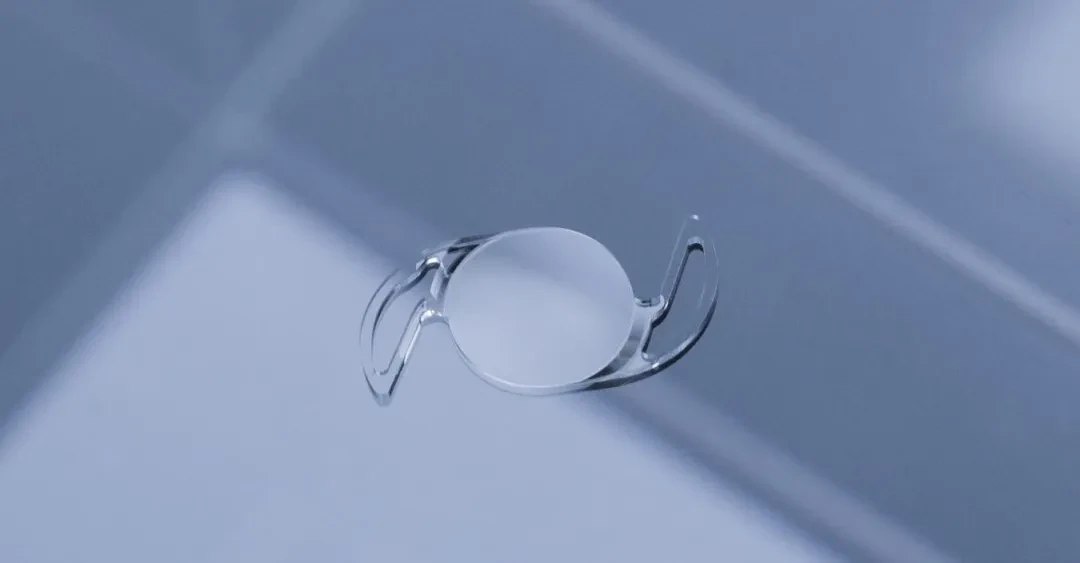
# From Material Dependence to Self-Reliance: The Crucial Leap
In the technical system of intraocular lenses, materials determine the optical performance, imaging quality, and postoperative stability of the device. For decades, the global market has been almost monopolized by a few types of materials—PMMA (Polymethyl Methacrylate), Silicone, and AcrylateAs a representative. Among them, acrylate materials, due to their foldability and biocompatibility, have become the current mainstream choice, but the key raw materials and formulation technologies have long been held by foreign companies.
For manufacturers in China, this dependence not only affects the supply chain but also limits the scope for innovation.Due to the fixed raw material system, the optical performance and processability of intraocular lenses produced in China are difficult to break through the bottleneck., even with continuous improvements in design and craftsmanship, it remains difficult to escape the competitive situation of "homogenization."
The emergence of cross-linked polyisobutylene (xPIB) has changed this situation.。
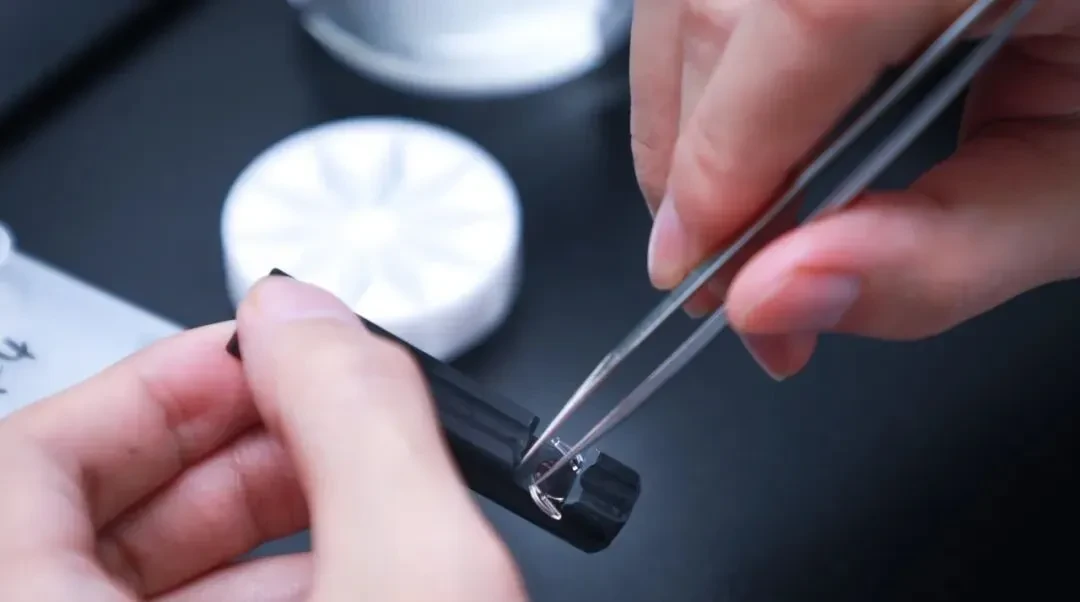
Researchers Conduct Light Transmittance Testing on Cross-Linked Polyolefin Intraocular Lenses
This novel polymer material features a unique combination of a high refractive index (1.52) and a high Abbe number (50), making it suitable for intraocular lenses.While maintaining a thinner thickness, it still achieves high imaging clarity and chromatic aberration control.More importantly, its molecular structure is stable, without reliance on imported monomers and additives, and is fully realized by China's domestic R&D system.
The establishment of this material system means that China has mastered the artificial lens from "Chemical Synthesis - Optical Molding - Clinical Application"The full-process core technology. It not only enables domestically produced crystals to approach or even surpass international high-end products in optical metrics, but also opens up an entirely new track for material innovation for Chinese companies — transitioning from the past 'design imitation' into the era of 'material definition.'"
In the global medical device industry accelerating "Supply Chain Security"Against the backdrop of this layout, the significance of this breakthrough goes far beyond the launch of a single crystal. It represents China's transformation in the field of ophthalmic implant materials from a 'participant' to a 'rule creator.'"
# An Optical Revolution of a Crystal
Eyedea's cross-linked polyisobutylene (xPIB) aspheric intraocular lens has advantages over traditional acrylic or silicone hydrogel lenses in three main dimensions:
Optical Design and Visual Quality Improvement
Aspheric Optical Surface: Precisely correct spherical aberration, which helps improve the clarity of central retinal imaging;
High refractive index (1.52) and high Abbe value (50): On the premise of ensuring diopter, the lens is thinner and the optical surface is larger, reducing visual interference caused by chromatic aberration;
6.5mm Large Optical Surface Design: Expanding the effective optical zone helps improve low-light or nighttime visual performance.
Compared with traditional acrylic materials, xPIB crystals exhibit superior performance in optical uniformity, light transmittance, and dispersion control.
Structural Design and Surgical Minimally Invasiveness
Single-piece posterior chamber structure, in cooperation withDouble C-loop, ensuring stable postoperative positioning;
Foldable DesignCan be passed through≤2.0mm Micro-Incision Implantation, reduce corneal trauma and lower the risk of postoperative astigmatism;
Built-in UV Absorber, providing basic protection for the retina after surgery.
Compared with traditional material IOLs, xPIB crystals have obvious advantages in minimally invasive surgical operability and postoperative stability, making them especially suitable for microincision cataract surgery and patients with high visual recovery requirements.
Clinical Value and Patient Experience
Optimized Optical DesignCombined with highly biocompatible materials, it can reduce postoperative glare, halos, and other adverse visual experiences;
Micro-incision and Material FlexibilityReduce the difficulty of intraoperative manipulation, shorten operation time and postoperative recovery period;
High Refractive Index and Large Optical SurfacePlan to provide patients with clearer and more comfortable visual experiences.
Through the combination of material and optical design, Eyedea's cross-linked polyisobutylene IOL is not only an intraocular lens, but also aTechnological Upgrade Balancing Minimally Invasive and Visual Quality, reflecting the innovative potential of domestically produced high-end IOLs in the entire chain of "optical performance - surgical convenience - clinical experience".
# China-Made Innovations Open Up New Horizons
For a long time, the high-end raw materials for intraocular lenses (IOLs) have relied on imports, limiting domestically produced high-end IOLs in terms of technology, cost, and supply chain. This breakthrough achieves full-chain self-control from "material source" to "clinical application."
From the clinical perspectiveThe combination of this type of material innovation with micro-incision design is expected to enhance postoperative visual quality, reduce the risk of complications, and make surgical procedures more stable and controllable, increasing the acceptance by doctors and hospitals.
From the perspective of the industrial chain,The mastery of core materials not only reduces reliance on imports but also lays the foundation for the development of a future series of products, including phakic intraocular lenses, glaucoma drainage tubes, and even other implantable devices. Chinese-produced IOLs are thus expected to become competitive in the high-end market, driving the entire industry to shift from "following innovation" to "leading innovation."
Combined with national policy support for innovative medical devices, this milestone approval will help accelerate the clinical implementation and industrialization of high-end domestically produced ophthalmic devices and provide technical support for the implementation of the "Healthy China" strategy.
# Company Profile

Eyedeal Medical Technology Company Limited was established in January 2015, with its headquarters located in the High-tech Zone of Xi'an City, Shaanxi Province. It is a Hong Kong, Macao, and Taiwan-invested enterprise specializing in the research, development, production, and sales of high-end ophthalmic medical devices, wholly owned by EYEDEAL HONGKONG LIMITED.
The company focuses on "cross-linked polyolefin (xPIB)" material and has developed multiple products, including foldable dual-C haptic intraocular lenses and glaucoma drainage tubes, applicable in the fields of cataract, glaucoma, and optical correction. These products feature high refractive index and strong biocompatibility, and have obtained EU CE certification and China NMPA certification.

GOC2025


Ophthalmology Solutions Case


Ophthalmic Instruments Industry Research