Home Iktomab (Eque-cel), a BCMA-Targeted CAR-T Therapy Developed by IASO Bio, Demonstrates Safety and Efficacy in Progressive Multiple Sclerosis in Groundbreaking Study Published in Cell

Iktomab (Eque-cel), a BCMA-Targeted CAR-T Therapy Developed by IASO Bio, Demonstrates Safety and Efficacy in Progressive Multiple Sclerosis in Groundbreaking Study Published in Cell

Oct 16, 2025 18:00 CST Updated 18:00
IASO Biotechnology

Cancer Treatment New Drug Developer

Image
Image

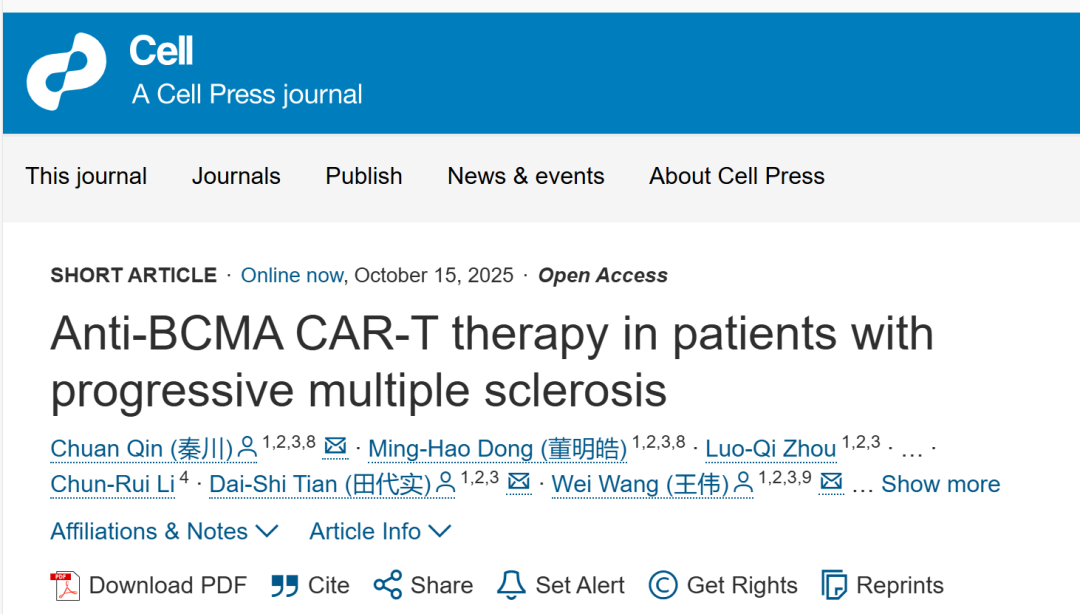
On October 16, 2025, IASO Bio announced that the internationally renowned academic journal *Cell* published online the research results of its self-developed fully human BCMA-targeted CAR-T cell therapy, Ixcellen (generic name: Equecabtagene Autoleucel) Injection, for the treatment of Progressive Multiple Sclerosis (PMS).This study not only globally confirmed for the first time the safety and efficacy of CAR-T cell therapy in treating progressive multiple sclerosis, but also became the first research成果 published in《Cell》on the successful treatment of autoimmune diseases using BCMA-targeted CAR-T cell therapy, marking an important scientific breakthrough in this field.
Image

The article published in "Cell" is titled "Anti-BCMA CAR-T Cells in Progressive Multiple Sclerosis(Targeted BCMA CAR-T Cell Therapy for Progressive Multiple Sclerosis)" (Full text available at: www.cell.com/cell/fulltext/S0092-8674(25)01088-8). This research is based on an investigator-initiated clinical study (NCT04561557) led by Professor Wang Wei's team from the Department of Neurology, Tongji Hospital, Tongji Medical College, Huazhong University of Science and Technology.


This study enrolled five patients with progressive multiple sclerosis (PMS), including one patient with primary progressive MS (PPMS) and four patients with secondary progressive MS (SPMS). The mean age of onset was 38.2 years, and the baseline mean EDSS score was 6.2. After all patients received a single infusion of Icarus cell injection, it was observed that:


Significant efficacy:All patients showed significant improvements in EDSS scores, Nine-Hole Peg Test (9-HPT), and Timed 25-Foot Walk (T25FW); cerebrospinal fluid oligoclonal bands (OCBs) completely disappeared, and Kappa free light chain (κFLC) levels significantly decreased; furthermore, MRI follow-up revealed no new or enlarging gadolinium-enhanced T1 lesions or T2 hyperintense lesions.


Good Safety:80% of patients only experienced transient Grade 1 cytokine release syndrome (CRS), with no ≥Grade 2 CRS; no immune effector cell-associated neurotoxicity syndrome (ICANS) or other neurotoxicity reactions were observed.

Professor Wang Wei

Tongji Hospital, Tongji Medical College, Huazhong University of Science and Technology

Image

We are thrilled to announce the publication of our team's research in *Cell*, marking a significant step forward in the field of cell therapy. For the first time, we have successfully applied CAR-T therapy targeting B lymphocytes to treat multiple sclerosis and other refractory neuroimmunological diseases, demonstrating its safety and efficacy in progressive multiple sclerosis patients on a global scale. Encouragingly, 83% of refractory patients achieved long-term clinical remission without the need for ongoing medication after treatment. This study not only challenges existing treatment paradigms but also uncovers a novel regulatory mechanism of the immune microenvironment in the central nervous system, paving the way for new directions in the immunotherapy of chronic neuroinflammatory diseases.


Based on the significant efficacy of Idecabtagene Vicleucel in depleting plasma cells and B cells, we are actively advancing the application of this therapy in more autoimmune diseases, including Neuromyelitis Optica Spectrum Disorders (NMOSD) and Myasthenia Gravis (MG), with encouraging clinical outcomes already observed. We look forward to this CAR-T therapy offering a new treatment option for more patients with autoimmune diseases.

Image


Image

Ms. Zhang Jinhua

Founder, Chairman and Chief Executive Officer of IASO Bio

Image

We are delighted that the breakthrough clinical research results of Ixcell injection for the treatment of multiple sclerosis have been published in the top international journal "Cell". We sincerely congratulate Professor Wang Wei and his team for the significant achievements in this exploratory study. This achievement once again demonstrates the therapeutic potential of Ixcell in the field of autoimmune diseases with high unmet needs, and also highlights IASO Bio's R&D capabilities and clinical execution ability oriented towards global innovation.


Autoimmune diseases are one of the focused areas of IASO Bio. Currently, the injectable product Ixalizumab has been approved for multiple autoimmune indications in clinical trials in both China and the U.S., covering conditions such as multiple sclerosis, myasthenia gravis, and systemic lupus erythematosus. In the future, we will continue to accelerate our global presence, relying on a complete self-developed and production system to promote the clinical transformation of more innovative cell therapies, bringing fundamental treatment breakthroughs to patients with autoimmune diseases.

Image


(Article information source: People's Daily Health Client)

Image

About Multiple Sclerosis (MS)

Multiple sclerosis is a neuroinflammatory disease that affects the central nervous system (CNS), leading to demyelination and neuronal damage. It is one of the most common causes of non-traumatic disability in young adults (aged 18 to 40).1According to the Frost & Sullivan Analysis report, there were approximately 3.07 million patients with multiple sclerosis globally in 2023, including about 400,000 in the United States and around 50,000 in China. The prevalence of multiple sclerosis shows significant gender differences, with an overall female-to-male ratio of 3:1.2Multiple sclerosis is characterized by localized lymphocytic infiltration of the central nervous system, leading to myelin destruction and axonal damage, which can result in neurological syndromes and physical disability.3The clinical manifestations of multiple sclerosis depend on the location of damage in the central nervous system. Common symptoms include sensory and visual disturbances, motor and coordination disorders, as well as spasticity, fatigue, pain, and cognitive deficits.4Approximately 85% to 90% of patients with multiple sclerosis experience a relapsing-remitting course, characterized by acute exacerbations of symptoms followed by periods of relief. However, as the disease progresses and recovery becomes incomplete, about 50% of patients eventually develop secondary progressive multiple sclerosis, which is marked by the gradual and irreversible accumulation of neurological dysfunction.5

References

1. Thompson AJ, Baranzini SE, Geurts J, Hemmer B, Ciccarelli O. Multiple sclerosis. Lancet 2018; 391: 1622–36.

2. GBD 2016 Multiple Sclerosis Collaborators. Global, regional, and national burden of multiple sclerosis 1990-2016: a systematic analysis for the Global Burden of Disease

Study 2016. Lancet Neurol 2019;18: 269–85.

3. Compston A, Coles A. 2008. Multiple sclerosis. Lancet 372(9648):1502–17.

4. BDendrou CA, Fugger L, Friese MA. 2015. Immunopathology of multiple sclerosis. Nat.Rev. Immunol.15(9):545–58.

5. Sospedra M, Martin R. 2016. Immunology of multiple sclerosis. Semin. Neurol. 36:115–27.

About Eque-cel Injection

Eque-cel (Idecabtagene Vicleucel) Injection is a CAR-T cell therapy targeting B-cell maturation antigen (BCMA). It transfects autologous T cells using a lentivirus as the gene carrier. The CAR comprises a fully human scFv, CD8a hinge and transmembrane domain, 4-1BB co-stimulatory molecule, and CD3ζ activation domain. Based on stringent molecular structure screening and comprehensive in vivo and in vitro functional evaluation, Eque-cel Injection demonstrates rapid and potent efficacy with remarkable in vivo persistence, enabling patients to achieve deep and durable remission.


Image