

In Vivo CAR-T Enters Clinical Validation Phase: Over 15 Companies Globally Race to Advance Therapies

Capstan Therapeutics
Biotechnology Developer

MagicRNA
mRNA Drug Developer
October 21 (Tuesday) 19:00-20:30
Focus on Flow Cytometry: Interpreting the Full-Cycle Research Strategy for Innovative Drug Development
Scan the QR code to make an appointment right away:

Recently,ScienceA breakthrough study was published in the journal, confirming thatIn Vivo CAR-T(in vivo CAR-T)The Dual Application Potential of Technology in Cancer and Autoimmune Disease Treatment. The first unit of this research, which was just acquired by AbbVie for 2.1 billion US dollars, isCapstan, the team members also include the "Father of CAR-T"Professor Carl Juneetc.

The study adopts novel lipid nanoparticles(tLNPs), which can efficiently and accurately deliver anti-CD19 CAR mRNA to T cells in vivo and engineer them, thereby achieving deep depletion of B cells. In mouse and cynomolgus monkey models, this therapy has demonstratedPotential "Reset" Effect on the Immune System, showing good prospects for the treatment of cancer and autoimmune diseases.
Coincidentally, China has also made a critical breakthrough in this field. In September 2025,Hongxin BiotechThe clinical trial research data of its in vivo CAR-T drug HN2301 for the treatment of systemic lupus erythematosus patients was disclosed for the first time. This is also...The World's First Clinical Validation of In Vivo CAR-T Therapy Based on mRNA-LNP in Humans。
Many breakthrough advancements have once again brought in vivo CAR-T into the industry spotlight.
Compared with traditional ex vivo CAR-T, in vivo CAR-T therapy is becoming a key pathway to solving the current scalability challenges of CAR-T therapy due to its advantages such as no need for ex vivo preparation, potentially lower costs, and the ability to be administered intravenously.
Over 15 Clinical Trials Accelerate Progress, Global Competition Intensifies
Currently, the clinical development of in vivo CAR-T therapy is accelerating worldwide. According to incomplete statistics, dozens of companies globally are competing in this field. Below are some examples:More than 15In-body CAR-T Representative Companies and Pipelines(The order is not ranked)。
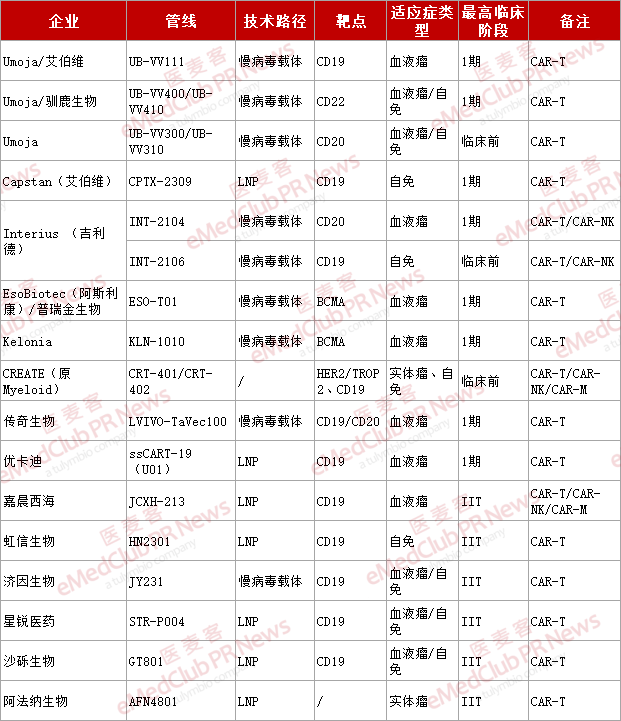
▲ Global In Vivo CAR-T Therapy Representative Companies and Pipelines (Organized by EMedClub, corrections are welcome if any errors are found)
It can be seen that most of the current candidate pipelines are still in the preclinical stage, but some have entered the clinical validation phase, targeting indications such as hematologic tumors, solid tumors, and autoimmune diseases, with targets mainly being verified ones like CD19 and BCMA.
From the perspective of the technical path to realization, the main strategy adopted by these enterprises is"Lentiviral Vector" and "LNP"。
Lentiviral vectors, with theirGenomic Integration and Long-term ExpressionThe advantages in this aspect have made lentiviral vectors the mainstream choice for in vivo CAR-T therapy. However, lentiviral vectors also have some limitations, such as the need for strict quality control during production and the potential risk of gene insertion. This also drives companies to continuously optimize production processes and enhance safety assessments when using lentiviral vectors.
The LNP technology route is known for its safety and hasLower ImmunogenicityIts preparation is relatively simple, making it easier for large-scale production, but its circulation time in the body is limited. How to improve its delivery efficiency remains one of the key challenges to be addressed.
Key Applications and Pain Points of Flow Cytometry in Innovative Drug Development
Despite significant advances in in vivo CAR-T therapy, its clinical translation still faces many core technical challenges, including insufficient delivery efficiency and targeting, balancing persistence and safety, and inadequate penetration of solid tumors and adaptability to the microenvironment.
AndFlow CytometryIt is a technology for multi-parameter quantitative analysis of suspended cells or particles, playing an irreplaceable role throughout the entire cycle of innovative drug development. This technology can monitor the generation, expansion, and functional status of CAR-T cells in real time by detecting specific markers on the surface and inside of cells, while also evaluating target cells.(such as B cells)The clearance effect. Its application spans all stages from target discovery, preclinical research, CMC, clinical research to post-marketing surveillance, providing critical data support for the efficacy and safety of drugs.
InPreclinical StageFor example, flow cytometry can be used for carrier efficiency evaluation and pharmacodynamic studies. Lentiviral vectors require the detection of the proportion of CAR-positive T cells, transduction kinetics, and the transfection preference of different T cell subsets; mRNA-LNP requires the assessment of transfection efficiency and expression kinetics.
CMC StageIt is a critical stage for the in vivo CAR-T therapy to move from laboratory research to clinical application. During this stage, flow cytometry is mainly used for production process optimization, intermediate product and final product quality control to ensure the safety, efficacy, and batch-to-batch consistency of the products. For example, quality control in lentiviral vector production relies on flow cytometry to evaluate viral titer, infectivity, and purity, etc.; while quality control for cellular products covers cell viability, phenotype, function, etc., with flow cytometry being the core detection method.
However, in the development of innovative drugs,The accuracy of flow detection highly depends on the core tool — high-quality antibodies.. However, the current flow detection still facesInsufficient multi-species antibody adaptability, lack of standardized methodological validation, and increasing demand for multiparameter detectionAnd many other pain points.
The insufficient adaptability of multi-species antibodies is a major bottleneck in preclinical in vivo CAR-T research. Preclinical studies require the evaluation of efficacy and safety in various animal models, such as mice, rats, and cynomolgus monkeys, but traditional flow antibodies primarily target humans and mice.
AndNon-human primates possess the closest characteristics to humans, with highly translatable data.Such advantages are increasingly in demand as critical models for drug development, but there is a lack of specific antibody tools for their detection. Taking experimental monkeys as an example, traditional mouse-derived antibodies have low cross-reactivity with monkey immune cells, which often leads toKey Subpopulation Clustering Ambiguity, which in turn leads to an inability to accurately assess the efficacy.
First-in-Monkey CD19 Flow Antibody,
The Technical Advantages of Capstan Therapeutics' Flow Cytometry Overall Solution
In response to the tool gap in non-human primate model research, domestic companies in China have been actively deploying in the flow cytometry antibody track in recent years.
May 2025,ABclonalOfficial LaunchThe world's first developed with cynomolgus CD19 as the immunogen, and the monkey CD19 flow antibody verified by flow cytometry has filled the long-standing gap in tools that has troubled non-human primate immunology research. As a classic B-cell marker, CD19 is expressed in almost all stages of B-cell development and holds significant value in drug development and autoimmune disease research.
This antibody is based on Abcam's SMab.®Single B cell cloning platform preparation, featuring high specificity, high affinity, and excellent batch-to-batch consistency,Clearly distinguishable monkey B cell populations, compatible with both monkey and human samples.Significantly improve the accuracy and reproducibility of detection.
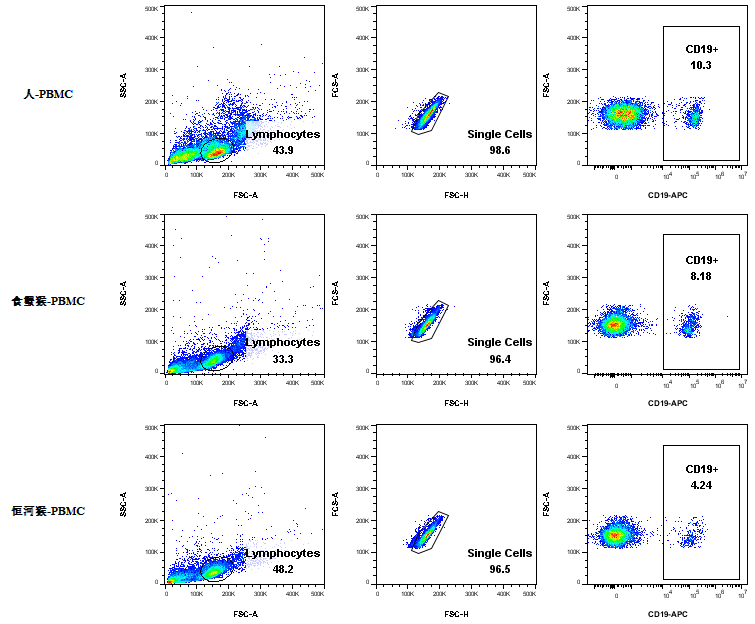
▲ Single staining with CD19-APC antibody was performed on PBMC samples from humans, cynomolgus monkeys, and rhesus monkeys, respectively. Clear positive and negative populations were observed in all three samples, demonstrating high antibody resolution.
This milestone breakthrough is not only an innovation of a single antibody but also a strong testament to the quality of ABclonal's monkey-free recombinant rabbit monoclonal antibodies. Its next-generation ABflo®Flow Recombinant Rabbit Monoclonal Antibodies Surpass Traditional Hybridoma Technology, Offering Multiple Advantages:
High specificity: Compared with traditional mouse monoclonal antibodies, the rabbit immune system is more robust, enabling the production of a larger scale and more refined epitope antibody library.
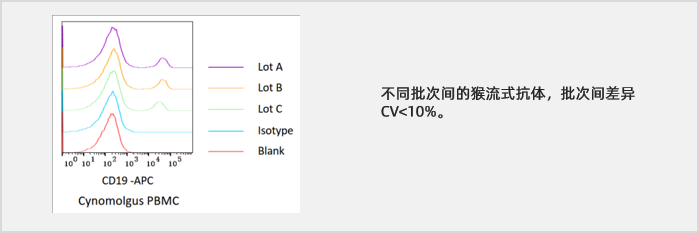
Good batch-to-batch consistency: Produced in bulk through ex vivo recombinant expression, the production process is highly controllable and reliable, avoiding the impact of genetic drift and instability inherent in traditional hybridoma systems on batch variability, ensuring consistency between batches of the final product and the reproducibility of test results.
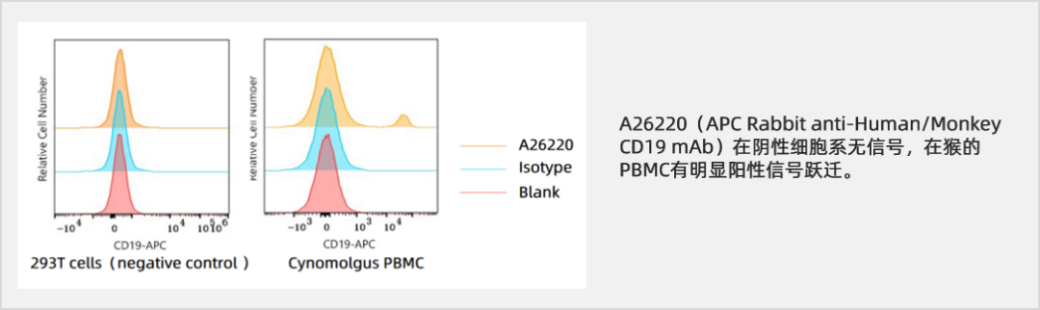
Excellent signal-to-noise ratio: Each ABflo®The flow-recombinant rabbit monoclonal antibodies have undergone rigorous internal optimization experiments for the best usage, demonstrating an excellent signal-to-noise ratio.
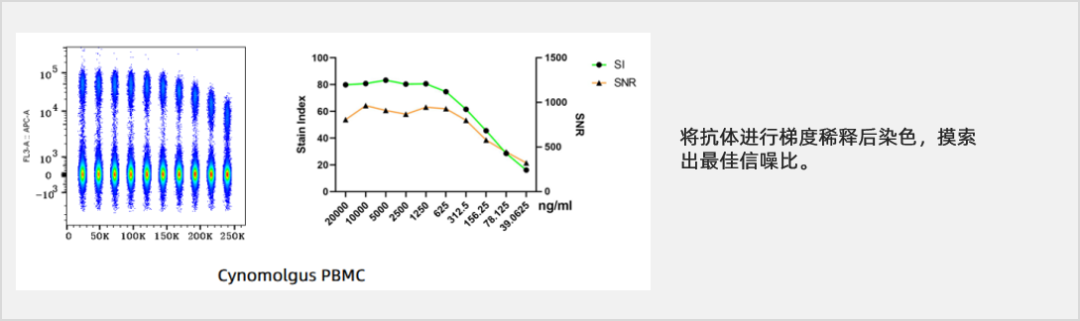
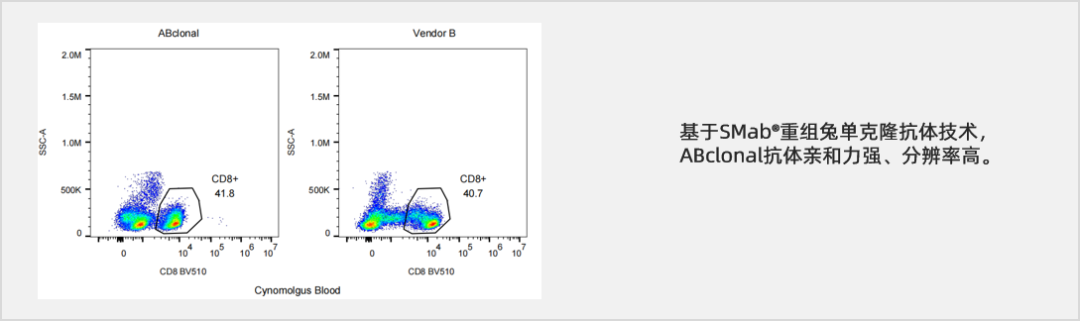
High resolution: Thanks to ABflo®The high specificity and high affinity of flow-recombinant rabbit monoclonal antibodies result in excellent positive-negative population separation and high resolution.
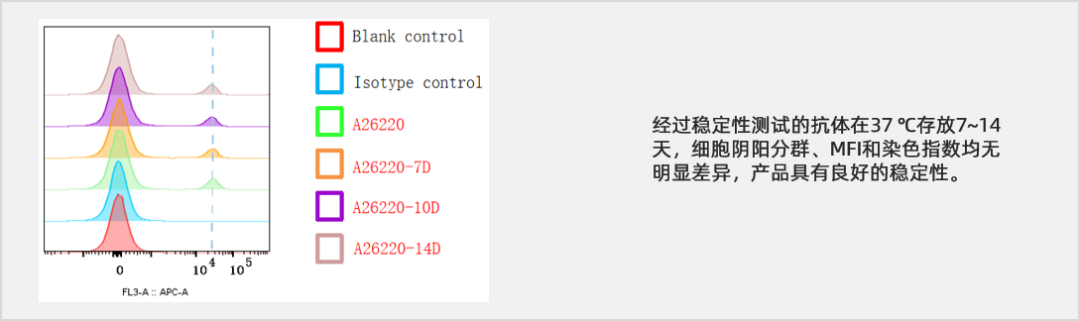
Good stability:ABflo®In the development of flow-recombinant rabbit monoclonal antibodies, accelerated degradation experiments are conducted based on thermodynamic kinetics, storing them at 37°C for 7 to 14 days to simulate storage at 4°C for 1 to 3 years, in order to evaluate their stability.
Tested Case:
Human/Monkey TBNK Panel
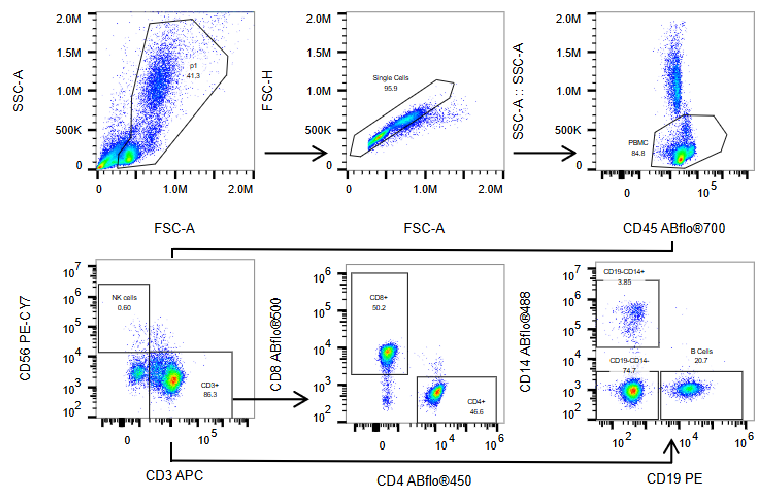
▲ Sample: Cynomolgus Blood
Human/Monkey Treg Panel
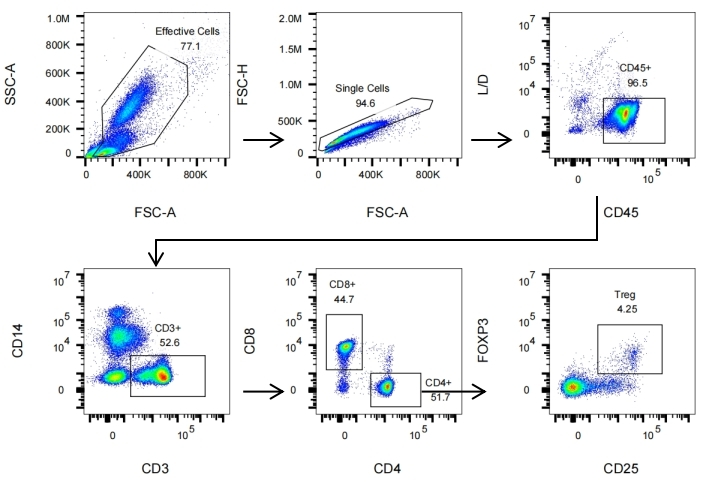
▲ Sample: Cynomolgus Blood
Conclusion
2025 is called the "Year of Focus" for in vivo CAR-T, with its application potential in hematologic tumors, solid tumors, and autoimmune diseases continuously being validated.
Currently, companies in China and abroad have advanced multiple candidate drugs into clinical stages through differentiated technical approaches, preliminarily verifying the clinical feasibility of in vivo CAR-T. As more pipelines enter clinical trials and technical pathways are optimized, in vivo CAR-T is expected to truly achieve a leap from "niche cure" to "accessible by the masses."
However, the achievement of this goal cannot be separated from the support of flow cytometry. As"Visualization" ToolsThe development of high-quality antibody tools plays a crucial role throughout the drug development lifecycle. In the future, with continuous technological breakthroughs and industry maturation, in vivo CAR-T therapy is expected to achieve broader clinical applications. Flow cytometry detection technology will continue to play an irreplaceable role, accelerating the transition of innovative drugs from the lab to clinical settings, benefiting more patients.
To help companies address the demand for detecting antibodies in innovative drugs,October 21, 2025 (Tuesday) 19:00-20:30, we will focus on"Focus on Flow Cytometry: Interpreting the Full-Cycle Research Strategy for Innovative Drug Development"Theme, specially invited toDr. Min Wang, Vice President of Capstan Therapeutics; Hua Yang, Deputy General Manager of the Laboratory Testing Division of Innost; and Dr. Hai Wu, Vice President of R&D at Abcam." Lentiviral In Vivo CAR-T Therapy: The Industrialization Path from R&D to CMC," "Applications and Experience Sharing of Flow Cytometry in Clinical Research," and "Addressing the Core Tool Antibody Challenges in Innovative Drug Development: Aiboi’s Comprehensive Flow Cytometry Solution" were the three major topics for technical干货 sharing. We sincerely invite everyone to register, exchange ideas, and learn together to explore the applications of flow cytometry in innovative drug development!
【MedE Classroom】Live Broadcast Registration Entrance:

Warm Tips
MedClass
References:
1.https://www.science.org/doi/10.1126/science.ads8473
2.https://mp.weixin.qq.com/s/F5_nrlRVmJ_DbVxLp761Bg