Science Corporation Submits IPO Prospectus Following NEJM Publication of PRIMA Bionic Vision System Restoring Functional Central Vision in 80% of Blind Patients with Geographic Atrophy

Science
Medical Device Developer
"The New England Journal of Medicine,"NEJM》Today released an article aboutScience CorporationBrain-computer interface productsPrimaTreatment Due toClinical Research Data on Blindness in Dry Age-Related Macular Degeneration (AMD).Research shows,PrimaCan help due toDrynessPatients with age-related macular degeneration who have lost functional central vision due to geographic atrophy regain their functional central vision.
This study was conducted in five countriesConducted at 17 clinical centers, with 38 patients implantedPrimaConduct an evaluation, the study found:
ETDRS Visual Acuity Chart: Average Increase of 25.5 Letters Identified (Over 5 Lines)
84% of patients regained the ability to recognize letters, numbers, and words, reconstructing functional central vision.
At the 12-month follow-up, 80% of patients showed a significant improvement in visual acuity of at least logMAR 0.2 (equivalent to 10 letters on the ETDRS chart) (p<0.001).
The patient's peripheral natural vision has not shown significant decline.
Implant surgery can be safely performed in the atrophic macular region, with "severe adverse events" mainly occurring within two months after implantation, and 95% of them resolved within two months.
PI Evaluation
"This study provides the first evidence that we can restore functional central vision in patients blinded by geographic atrophy. This implant represents a fundamental shift in the treatment paradigm for advanced macular degeneration."
---Frank Holz University Hospital of Bonn
"This is the first time that vision restoration research has been successful in such cases — and covered such a large patient population." Over 80% of patients can recognize letters and words, and some can even read book pages. This far exceeds our expectations when we started the collaboration with Professor Palank more than ten years ago.
---José-Alain Sahel University of Pittsburgh School of Medicine
"Geographic atrophy is one of the leading causes of vision loss, and prior to this technology, the medical field had no effective means to restore lost vision. Patients often hear about experimental treatments like gene therapy, but these methods can only slow down the progression of vision loss. Artificial vision is the only way that can help patients regain their sight—this is exactly what patients with severe vision loss desire the most when communicating their needs."
---Mahi Muqit Moorfields Eye Hospital
Executive Evaluation
"This breakthrough reaffirms our commitment: to ignite hope and reshape the trajectory of life for patients in need through pioneering technology," said Max Hodak, founder and CEO of Science Corporation. "We are highly optimistic that PRIMA will redefine the standard for vision restoration in these patients."
---Max Hodak Science CorporationFounder and Chief Executive Officer
The data from this clinical study will be used forPrimaA part of the registration application materials for marketing authorization in the European Union. CurrentlyScience CorporationAlready submitted to CEPrimaRegistration application, expected to be approved next yearListed. Dry age-related macular degeneration (AMD) has a large patient population globally (Affecting more than 5 million patients worldwide), which is also a globalOne of the main causes of blindness.PrimaTo provide new solutions for these patients to avoid blindness.
Prima
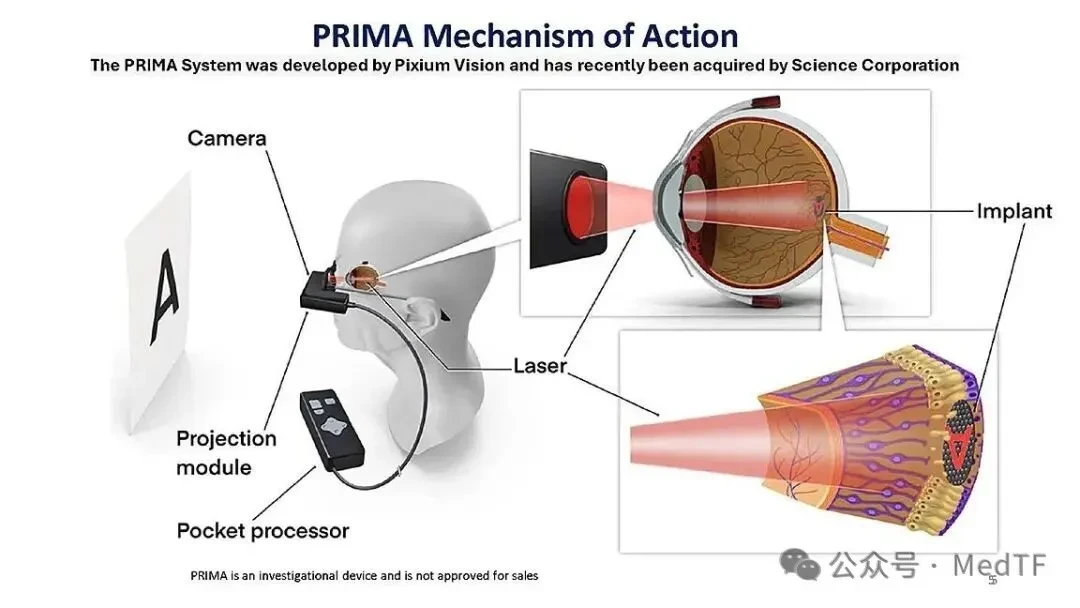
PrimaIt is an advanced visual prosthesis brain-computer interface technology aimed at providing assistance to patients with specific types of severe vision impairment, especially thosePatients with central vision loss due to dry age-related macular degeneration (AMD) or other retinal degenerative diseases。
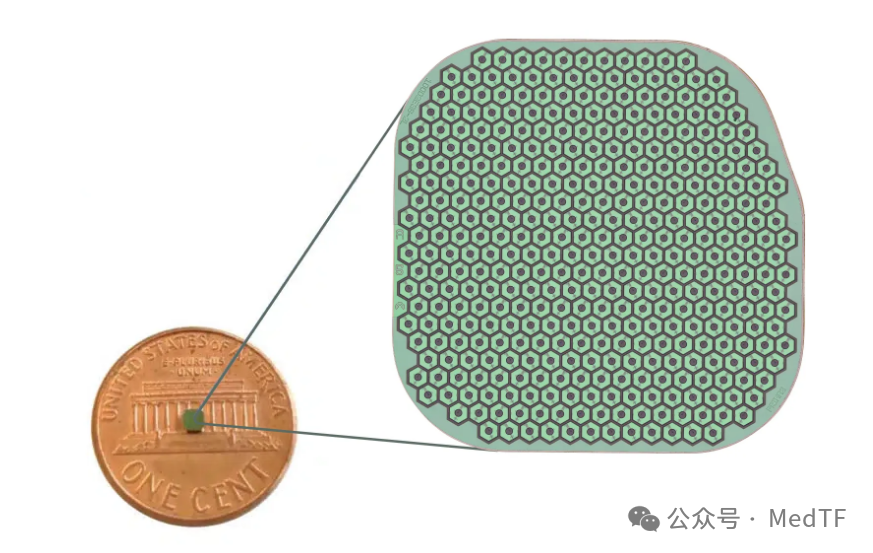
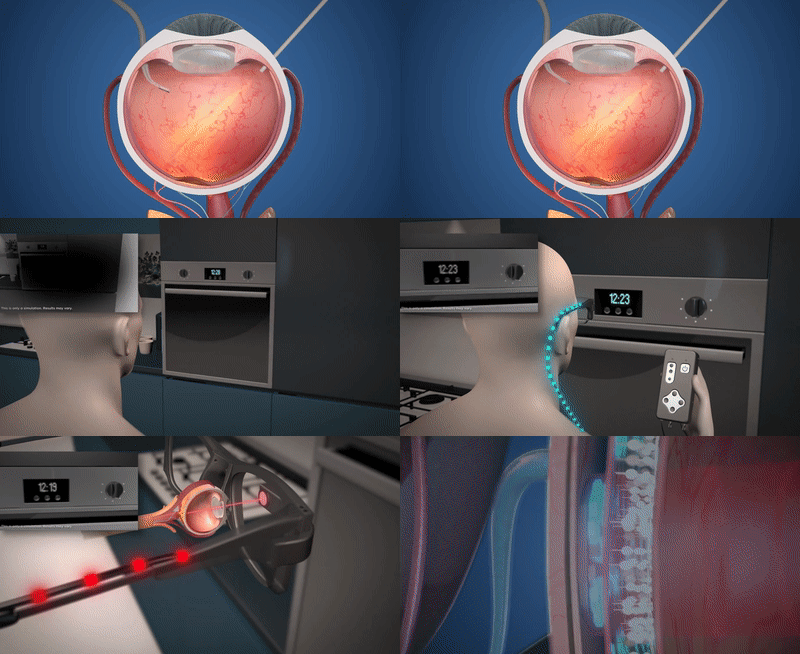
PrimaBy implant andComposition of Smart Glasses.
Implant
The implant is a miniature photovoltaic stimulation array, alsoPrimaTechnical CoreHeart.The implant acts like a tiny solar panel, converting light into electrical stimulation signals and transmitting these electrical impulses to the brain. The brain then interprets these signals as images, mimicking the natural visual processing.
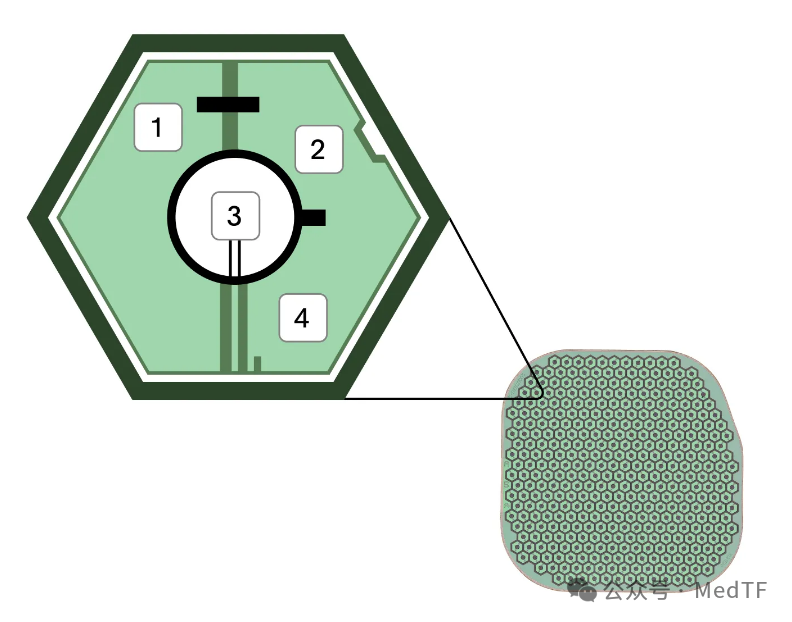
ImplantCore parameters:
378 photovoltaic-driven pixel units: Honeycomb-shaped independently controlled pixel array capable of converting infrared light into electrical signals
Principle of Pixel Operation: Each pixel contains tandem dual diodes (labeled 1, 2), connected to the active electrode (3) and the return electrode (4).
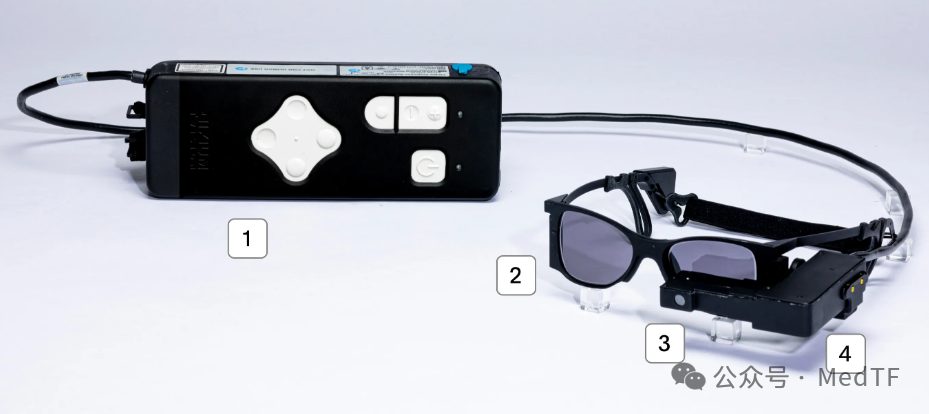
Smart Glasses
Smart glasses consist of four main modules.
Portable Processor: Controls Image Scaling and Brightness Adjustment
Light-blocking lenses: Reduce ambient light interference, optimize user experience
Camera: Real-time capture of visual information
Projection Module: Projects infrared light encoded patterns into the eye
Prima Demo
Science Corporation
Science CorporationIt is an innovative medical device company. It aims to restore the vision of patients who have lost their sight and support the advancement of the entire industry.