

Science Corporation Acquires PRIMA Retinal Implant Technology for $4.7M, Paving Way for IPO

Science
Medical Device Developer

Pixium Vision
Bionic Vision System and Device Developer
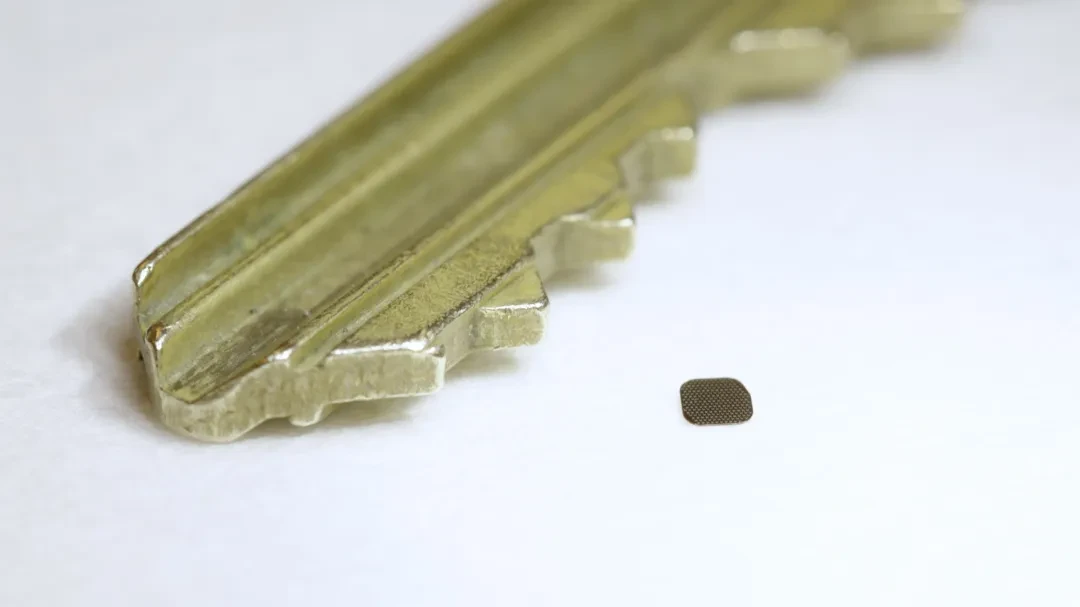
Recently, byElon Musk (Science Corporation, a brain-computer interface company founded by Max Hodak, Elon Musk's former partner, has announced the low-cost acquisition of an advanced visual implant technology.
This implant can generate a kind of "artificial vision," which some patients can use toReading texts, or even doing crossword puzzles. Specifically, the device isOneMicroelectronic chip placed under the retinaPatients wear augmented reality glasses equipped with a built-in camera to capture their field of view. The content "seen" by the camera is transmitted to a chip implanted in the eye in the form of infrared light. The chip converts the light into an electric current, stimulating the remaining healthy cells in the macular area in a realistic manner, allowing the brain to interpret the signals sent by the cells as vision. Additionally, users must carry an image processor that allows patients to magnify the images they see.Image toBlack and White FormatDisplay。
The relevant research findings were published in The New England Journal of Medicine.
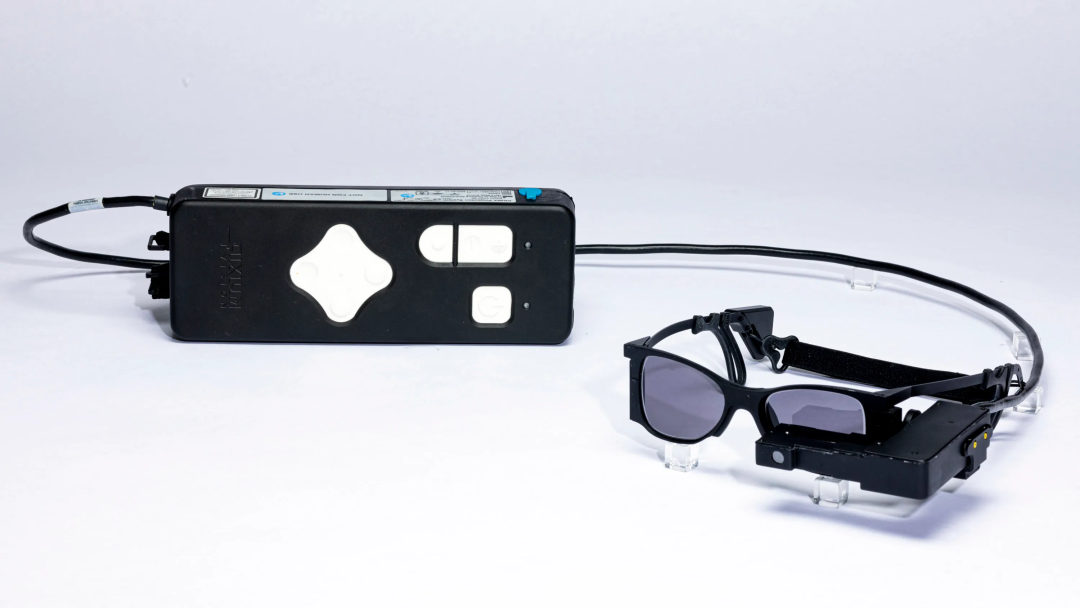
Figure |PRIMA Artificial Vision System has a battery pack/controller and a goggle-mounted camera.
"The significance of the effect is impressive. A patient in the UK is already able to read the pages of a regular book," said José-Alain Sahel, a vision scientist at the University of Pittsburgh and head of system testing.

Acquired from the Brink of Bankruptcy
Until last year, the device was still being developed by the French start-up Pixium Vision, which was co-founded by Sahel. However, due to financing difficulties, Pixium was on the verge of bankruptcy. It was at this point that Science Corporation stepped in withAbout$4.7 millionThe price acquired Pixium's assets.
Science Corporation was founded in 2021 by Max Hodak, the first president of Neuralink, after he left Musk's company. Since its establishment, the company has raised funds.Approximately$290 million, and carry outBrain-Computer Interface and New Vision Therapy"The frontier research. 'Our goal is to build an independent large medical technology company that can stand shoulder to shoulder with giants like Apple, Samsung, and Alphabet. We want to change the world in significant ways... but to invest in these projects, we must be profitable.' Hodak said in an interview."
Through the Acquisition of PRIMA Visual Implant Project, Science CorporationEquivalent toA leap across several years of research and clinical testing phasesCurrently, the company has applied for sales permits in Europe and is in talks with U.S. regulators.
Unlike Neuralink's brain-computer interface, which reads signals from the brain to help paralyzed patients control a computer cursor with their thoughts;AndPRIMA's retinal implant sends information to the brain to reconstruct vision.Since the retina itself is an extension of the brain tissue, the chip is also considered a type of brain-computer interface.
Artificial vision systems have been explored for a long time, one of which is namedArgus IIThe device has even been marketed, with about 400 patients implanted. However, it was later withdrawn due to losses and is now owned by Cortigent.
In this test trial, a total of38 namesEuropean PatientsThey all suffer from advanced dry age-related macular degeneration (AMD), also known as geographic atrophy. Currently, there is no cure for AMD, which is caused by lesions in the macular region of the retina, triggered by inflammation and waste accumulation. The photoreceptor cells in the macula are responsible for producing clear, detailed, and colorful vision. When the condition progresses to the stage of geographic atrophy, these photoreceptor cells degenerate and die, leading to the loss of central vision. This means that objects directly ahead may appear blurry or be obscured by dark spots.
Researchers implanted the PRIMA chip in one eye of 38 patients. Thirty-two patients were reexamined one year after the chip implantation, and 80% of them achieved clinically significant vision improvement. Patients did experience side effects, primarily related to the surgical procedure: the study reported that 26 serious adverse events occurred in 19 patients, including elevated intraocular pressure and periretinal hemorrhage. Most adverse events resolved within two months after implantation.Among the 6 participants who did not undergo evaluation, 3 have died, 1 has withdrawn, and 2 were unable to be tested.
Studies show that theyAverageCan read 5 more lines of letters on the vision chart.. Some improvements come from the "zoom" function, allowing patients to focus on the target text.
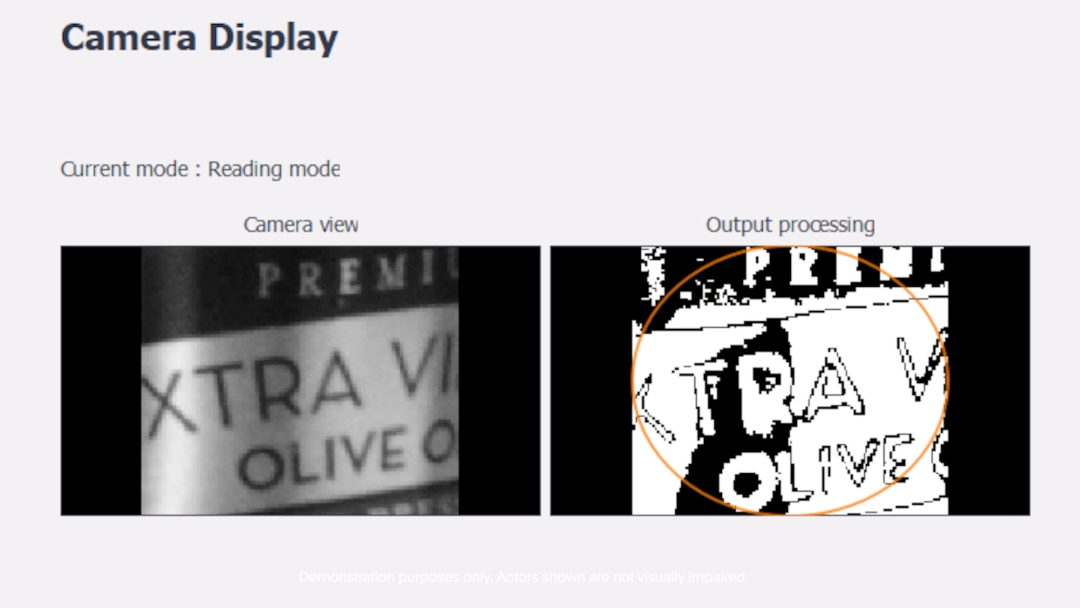
Fig | Diagram of how retinal implants present visual scenes

A Breakthrough in Optical Energy Originating from Stanford
According to publicly available information, the technology was first conceived 20 years ago by Stanford University laser expert Daniel Palanker. He discoveredThe beam can simultaneously provide power and information to the chip.Unlike the wired design of Argus II, PRIMA requires no cables. "The chip itself has no intelligence; it simply converts light into electrical current to stimulate retinal tissue. Patients describe the colors they see as yellow-blue or sunlight hues," said Palanker.
The principle of the system is: After the head-mounted camera captures the image, infrared light illuminates the eye. This light, invisible to the human eye, shines on the surface of the chip and is converted into electrical signals by an array of microscopic solar cells on the chip, thereby replacing the damaged photoreceptor cells.
Currently, the system can generate approximately400 "Light Spots"The vision is sufficient to recognize the outline of text.The "pixel" count of next-generation devices will increase fivefold., which should allow people to see more. The new chip has been tested on rats, and the upgraded chip is being produced for future human trials. Palanker said that with the camera's zoom function, theoretically, patients could achieve 20/20 visual resolution.
Moreover, Palank revealed that the next-generation software is still under development, which will allow patients to not only perceive black and white text,Can also perceive grayscale natural images, such as the human face.And explore treatments for other retinal diseases that cause blindness, such as Stargardt disease.
Notably, when Pixium Vision was on the verge of collapse, Palank also participated in the process of finding a buyer and met with Hodak. "It was a 'fire sale,' not a celebration. But for me, it was a fortunate outcome as the product could continue to move forward. The acquisition price was not important; what mattered was that the subsequent commercialization would require substantial investment."
At Science Corporation headquarters, Hodak also showcased their improvement plans. In the original system, patients not only had to wear cameras but also carryA bulky battery with a laser controller, zoom in and out via button operation.
Currently, Science Corporation has created a new prototype:Integrate all electronic components into a pair of oversized sunglasses"The implant itself is great, but we will soon have patients using completely new glasses. This way they..."CanAll-day natural wear。"Hodak said.
Other companies are also exploring the use of brain-computer interfaces to treat blindness, but some believe that sending signals directly to the visual cortex of the brain may be more effective. This year, Neuralink announced plans to launch the "Blindsight" project, attempting to directly stimulate the visual cortex and completely bypass the retina. However, this approach has not yet been tested in humans.
Original link:
1.https://www.technologyreview.com/2025/10/20/1126065/this-retina-implant-lets-people-with-vision-loss-do-a-crossword-puzzle/
