

Updated Efficacy and Predictive Biomarkers of QL1706, a Bifunctional PD-1/CTLA-4 Dual Blocker in Advanced Solid Tumors: A Phase I/Ib Study

Qilu Pharmaceutical
Specialty Formulations and Active Pharmaceutical Ingredients (API) Developer
Immune checkpoint inhibitors (ICIs) has become one of the core strategies in the treatment of advanced solid tumors, among whichPD-1AndCTLA-4Dual-target blockade gains clinical attention due to synergistic activation of anti-tumor immunity.QL1706As a novel bifunctionalPD-1/CTLA-4 CombinationDouble Antibody (MabPairForm), by optimizing anti-CTLA-4The clearance half-life of antibodies in reducing immune-related adverse reactions (irAEs) while retaining anti-tumor activity.
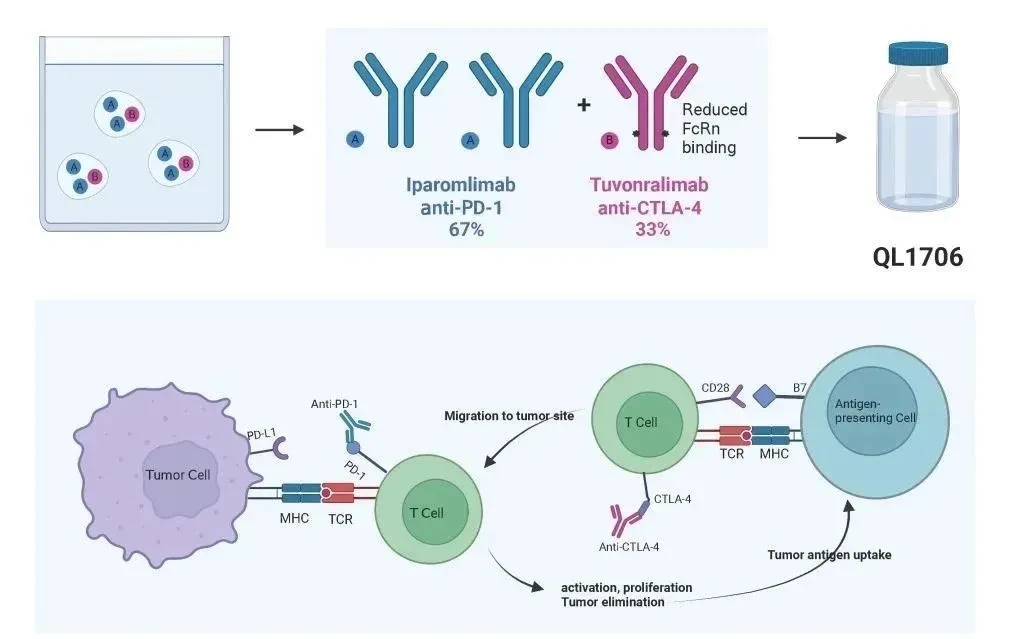
Recently, Qilu PharmaceuticalIn《Cell Reports Medicine》Publish an updatedⅠ/ⅠbPeriod Research,Not only confirmedQL1706Long-term survival benefits in a variety of advanced solid tumors, and for the first time,明确了针对鼻咽癌 (NPC) and non-small cell lung cancer (NSCLC) Exclusive predictive biomarker,Provide key evidence for precise immunotherapy.
One:QL1706Demonstrates Durable Antitumor Activity Across Multiple Tumor Types
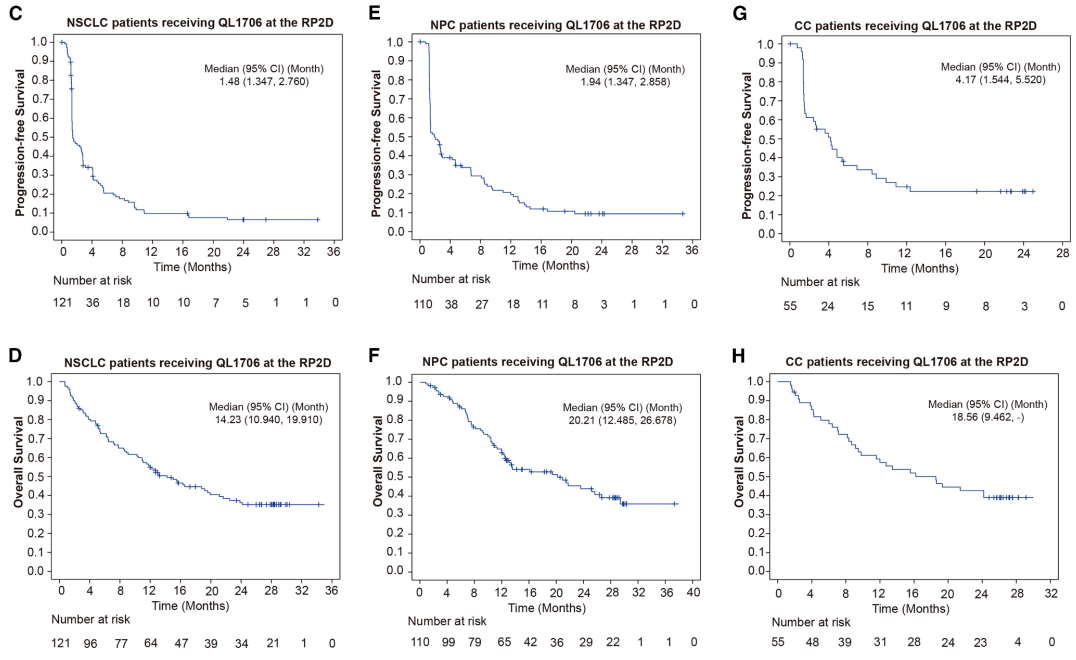
The study included518Patients with advanced solid tumors, among which468Example Acceptance RecommendationⅡPeriodic Dose (RP2D,5mg/kg, every3Once a week)QL1706Treatment, with a median follow-up time of26.8Months.The updated results show,QL1706Demonstrates significant long-term survival benefits in critical tumor types:
1)Non-Small Cell Lung Cancer (NSCLC): Median Progression-Free Survival (mPFS)1.5months, median overall survival (mOS)14.2Months, immunotherapy-naive patientsmOSEven longer21.1Months。2)Nasopharyngeal Carcinoma (NPC):mPFS 1.9Months,mOS 20.2Months, immunotherapy-naive patientsmOSPromoted to26.7Months, significantly better than existingPD-1Monotherapy Data。3)Cervical Cancer (CC):mPFS 4.2Months,mOS 18.6Months.
Two: Precise Identification of Clinical Risk Factors in Populations with Poor Prognosis
The study was conducted through univariate and multivariate analysesCoxRegression analysis clarified the impactQL1706Key Clinical Features of Treatment Outcomes:
1)NSCLC: Combined liver metastasis (OSHR=2.48,P=0.001) and previously received immunotherapy (OSHR=1.68,P=0.038`) have a worse prognosis`。
2)NPC: Lactate Dehydrogenase (LDH) level higher than the upper limit of normal (OS HR=1.78,P=0.022) and history of prior immunotherapy (PFS HR=2.28,P=0.002) Associated with adverse outcomes, while female patients demonstrated better treatment response.。
3)Cervical Cancer: Neutrophil-to-Lymphocyte Ratio (dNLR)>3(OSHR=2.73,P=0.010`) and liver metastasis (`OSHR=3.97,P=0.004`) is an independent risk factor for poor prognosis.`These findings provide a basis for clinical screening.QL1706Provided simple and feasible reference indicators for the treatment of patients.
ThreeExclusive Biomarkers: Ushering in a New Era of Precision Stratified Treatment
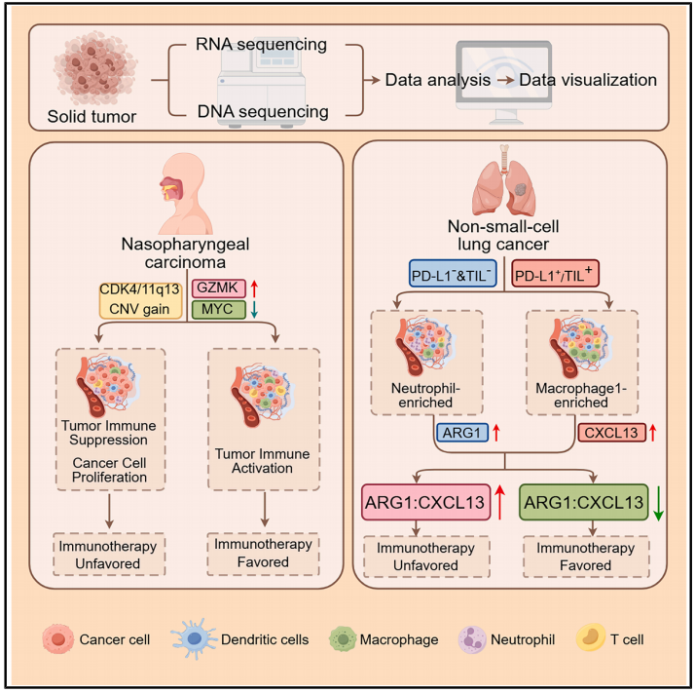
Based on genomic and transcriptomic analysis, identified for the first time targetingNPCAndNSCLCSpecific predictive biomarkers, addressing the key challenge of selecting benefiting populations in dual-target immunotherapy:
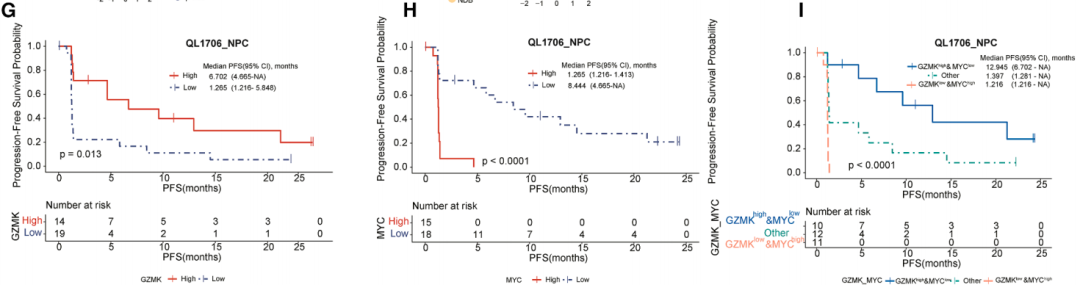
1. Nasopharyngeal Carcinoma:CDK4/11q13Ploidy andGZMK/MYCExpression Profile
1)CDK4/11q13Diploid:11q13Area includesFGF3、FGF19AndCCND1Oncogene, the region is associated withCDK4All are diploid.NPCPatient, toQL1706The response was significantly better (mPFS4.67Monthsvs1.25Months,P=0.0039). The tumor microenvironment of such patients (TME) Presenting an immune-activated phenotype, characterized by increased infiltration of pro-inflammatory cells,MYCInhibition of Pathways and Cell Cycle Pathways。
2)GZMKHigh Expression/MYCLow expression:GZMK(GranzymeK) is effectTMarkers of cell activation,MYCWhich is closely related to tumor proliferation and immune escape. The combination of both can accurately distinguishNPCBenefiting Population,GZMKHigh expression andMYCPatients with low expressionmPFSUp to12.95months, significantly better than other subgroups (P<0.0001), whose predictive performance is superior to traditionalPD-L1Immunohistochemistry andEBViral expression levels.
2. Non-Small Cell Lung Cancer:PD-L1/TILClassification andARG1:CXCL13Ratio
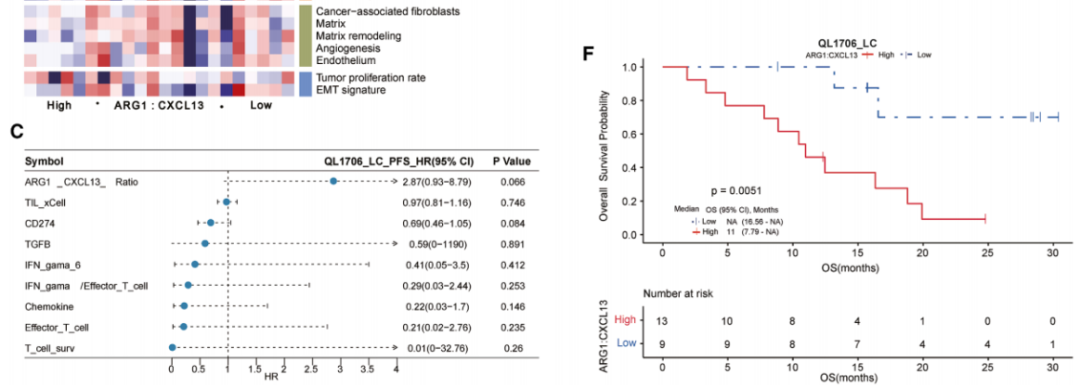
1)PD-L1Positive andTILEnrichment:According toPD-L1Expression andCD8+Tumor-Infiltrating Lymphocytes (TIL) Level, canNSCLCTheTMEDivided into four categories. Among themPD-L1+&TIL+Subtype patients receiveQL1706TherapeuticmPFSAchieve10.9Months, significantly better thanPD-L1-&TIL-Subtype (2.6Months,P=0.021), and the predictive value of this classification was validated in an external immunotherapy cohort (OAK) has been verified。
2)LowARG1:CXCL13Ratio:ARG1(Arginase1) Mainly expressed by neutrophils,CXCL13(Chemokine Ligand13) andM1Related to the infiltration of type macrophages. The expression ratio of the two can reflectTMEThe balance between immunosuppression and anti-tumor phenotype in China, low ratio patientsmPFS(10.9Monthsvs 2.6Months,P=0.034) andmOS(Not reachedvs 11Months,P=0.0051) were significantly better, and this biomarker can be further refined.PD-L1/TILBenefiting populations of each subtype.
Summary and Reflection
The study is currently targeted atPD-1/CTLA-4One of the largest long-term follow-up studies on dual-anti therapy, itsThe core value lies not only in confirming thatQL1706InNSCLC、NPCAnd the long-lasting efficacy in cervical cancer, a precise prediction system specific to tumor types has been constructed through multi-omics analysis:TargetingNPCTheCDK4/11q13Ploidy andGZMK/MYCExpression profile, as well as targetingNSCLCThePD-L1/TILClassification andARG1:CXCL13Ratio, addressing the issue in dual-target immunotherapy“"One-size-fits-all"”Clinical Dilemma.
It is worth noting that,QL1706Already approved in China for the treatment of relapsed cases/Metastatic cervical cancer, and multipleⅢPhase Research (e.g.NCT05576272、NCT05690945) is exploring its combination with chemotherapy inNPCAndNSCLCThe first-line treatment value. In the future, patient stratification based on the biomarkers discovered in this study is expected to further improve treatment response rates and promote dual-target immunotherapy from“Broad-spectrum benefits”To“Precise Benefits”A leap forward.
Updated efficacy and predictive biomarkers of QL1706, a bifunctional PD-1/CTLA-4 dual blocker in advanced solid tumors-A phase 1/1b study. Cell Rep Med. 2025 Oct 21;6(10):102396. doi: 10.1016/j.xcrm.2025.102396. Epub 2025 Oct 3.