

Big Vision Medical's MIAS-3000 Secures World’s First Class III NMPA Approval for AI-Powered OCT Diagnostic System, Ushering in a New Era of Precision Ophthalmology

Big Vision
Developer of Artificial Intelligence Analysis and Diagnosis Products for Ophthalmic Imaging
On October 27, 2025, Suzhou Big Vision Medical Technology Co., Ltd. independently developedOphthalmology OCT Image-Assisted Diagnosis Software MIAS-3000Officially obtained the Class III Medical Device Registration Certificate from the National Medical Products Administration (Registration No.: 20253212107), becoming the world's first medical OCT artificial intelligence-assisted diagnostic system to be approved with a Class III certificate. This milestone not only marks the leap of China's ophthalmic AI technology from "catching up" to "leading," but also heralds a new era of intelligent, efficient, precise, and inclusive screening and diagnosis for ophthalmic diseases.
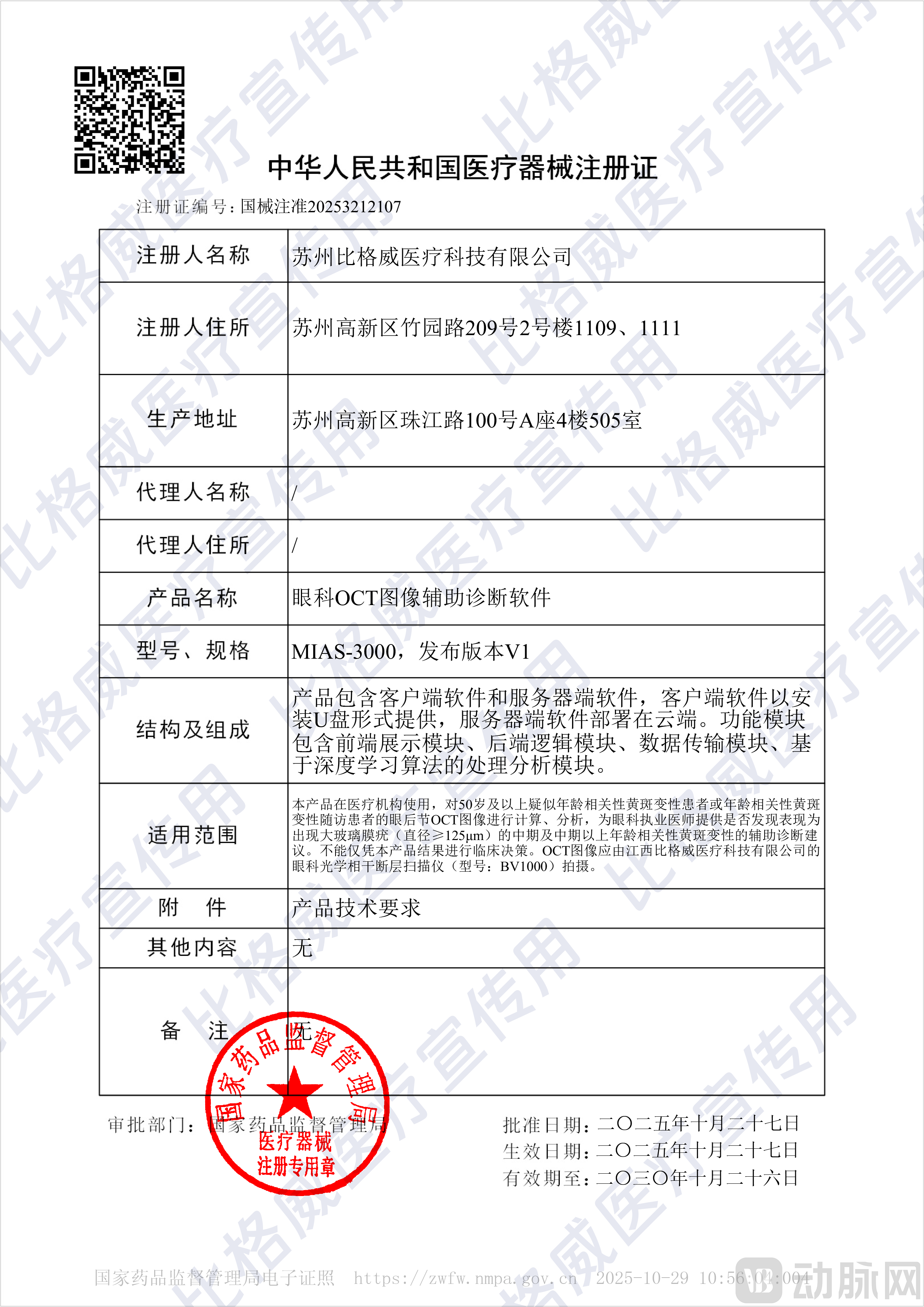
A Decade of Refinement: Leapfrog Innovation from Lab to Clinic
As one of the pioneers and leading enterprises in China's ophthalmology AI field, Big Vision has gathered top AI algorithm experts from around the world and senior clinical ophthalmology experts to form an interdisciplinary innovative R&D team, focusing on the development of ophthalmology AI software and hardware systems. In 2018, the company launched MIAS 2000, the industry's first dual-modal ophthalmic imaging AI system, which obtained a Class II medical device registration certificate. In 2020, the world’s first fully automatic artificial intelligence OCT BV1000, independently developed by the company, was launched and has served more than 600,000 people across over 800 medical institutions.
As a new phenomenon, the clinical implementation of medical AI is full of challenges. Big Vision's MIAS-3000 took four years to successfully complete an innovation path fraught with difficulties, from completing product testing in 2021, initiating clinical trials in 2022, to obtaining final approval in 2025. The clinical trial adopted a rigorous multi-center, prospective validation protocol; as a Class III medical device, MIAS-3000’s registration required comprehensive review by the National Medical Products Administration (NMPA) for safety and efficacy, making it significantly more difficult than products requiring Class II certification. During the clinical trial period, the global pandemic brought substantial difficulties to patient enrollment and data collection. The team not only had to overcome technical challenges but also face multiple tests such as clinical validation, regulatory compliance, and the impact of the pandemic. From the laboratory to clinical practice, every step required in-depth dialogue with doctors, patients, and regulatory agencies. In this process, Big Vision not only successfully addressed various challenges but also gained growth from them. In 2024, MIAS-3000, as the only ophthalmic AI product in the auxiliary diagnosis category, was successfully selected as one of the "Top Units in the Innovative Tasks of Artificial Intelligence Medical Devices" by the Ministry of Industry and Information Technology of China; Big Vision's hard work and continuous innovation in the field of ophthalmic AI have been fully recognized.
Technological Breakthrough: Advanced AI Reconstructs Ophthalmic Diagnostic Paradigm
OCT images are three-dimensional images of the fundus, which can clearly display the layered structure and three-dimensional morphological characteristics of the retina and choroid. They provide crucial morphological evidence for the precise diagnosis of age-related macular degeneration (AMD) and other fundus diseases, serving as an important clinical diagnostic tool for ophthalmologists. Currently, most approved ophthalmic AI in the industry is based on the analysis of two-dimensional fundus color photos; OCT three-dimensional volume data contains more spatial information compared to two-dimensional images but also brings higher computational complexity and technical challenges.
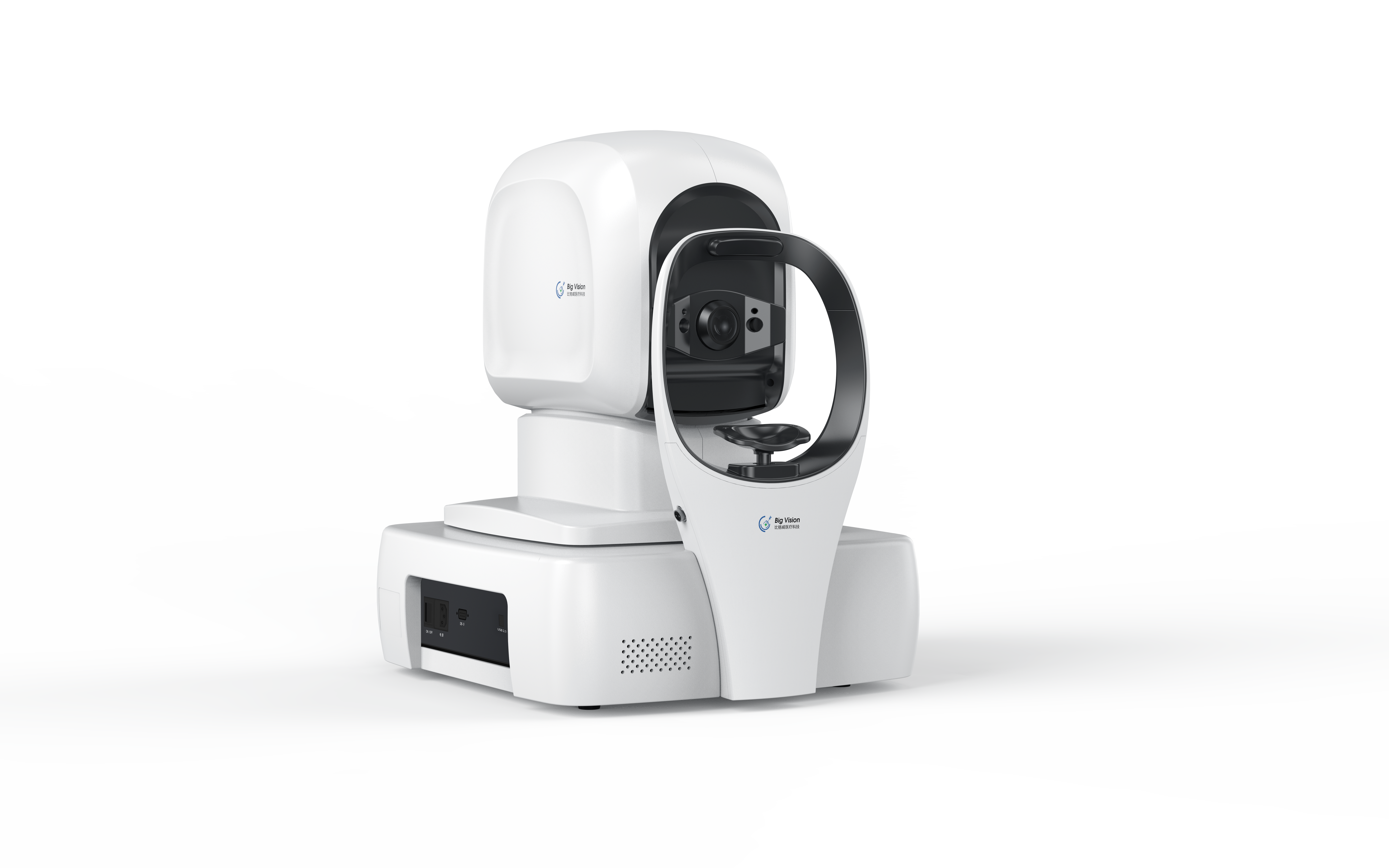
MIAS-3000 uses the Big Vision OCT device to capture images with a range of 12 x 9mm, simultaneously covering the macula and optic disc areas. MIAS-3000 automatically analyzes OCT slice images through a deep learning algorithm, accurately identifying lesion information such as drusen, fluid accumulation, and neovascularization, providing auxiliary diagnostic suggestions on whether patients aged 50 and above have intermediate or advanced age-related macular degeneration.
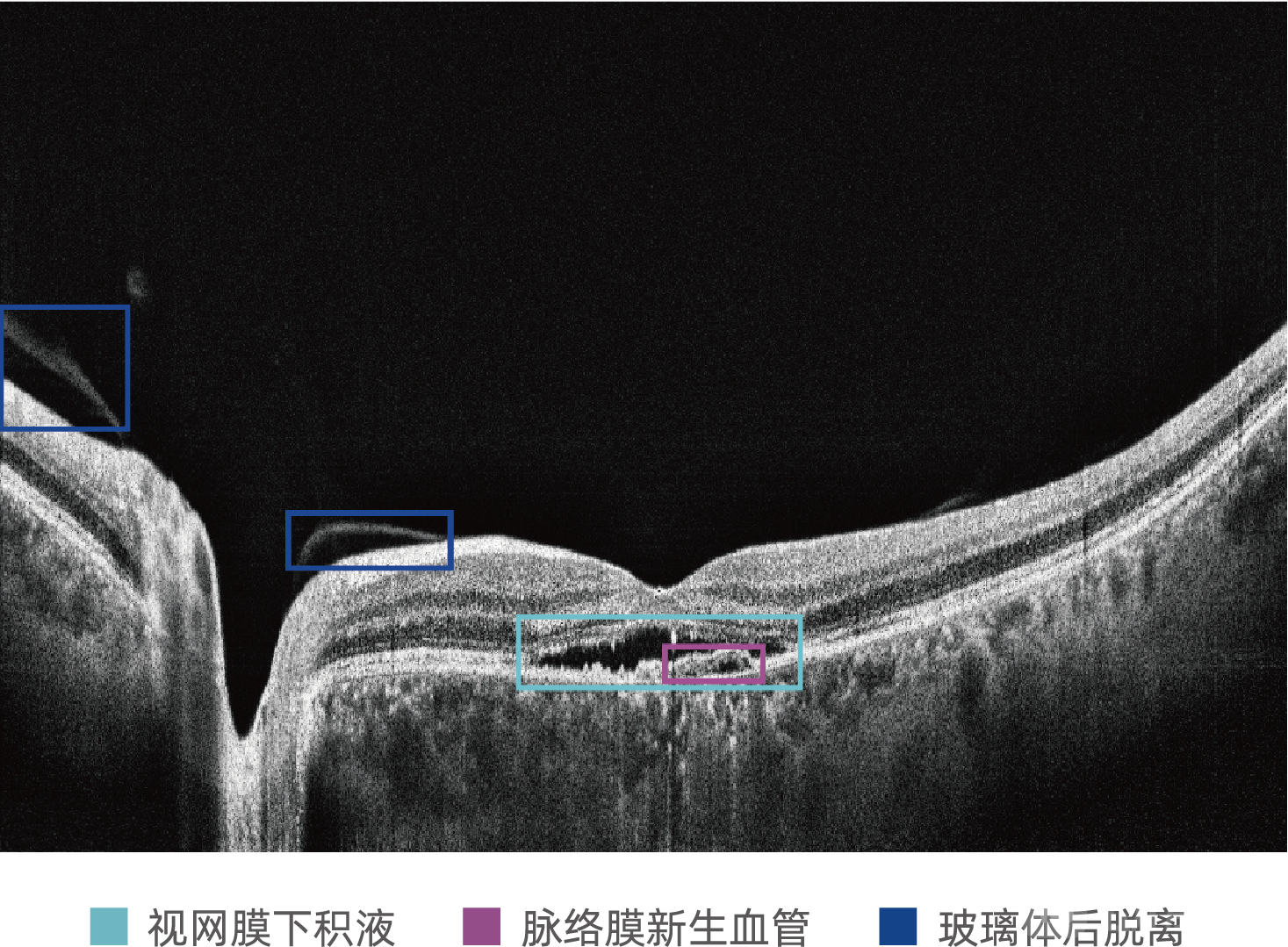
Case 1
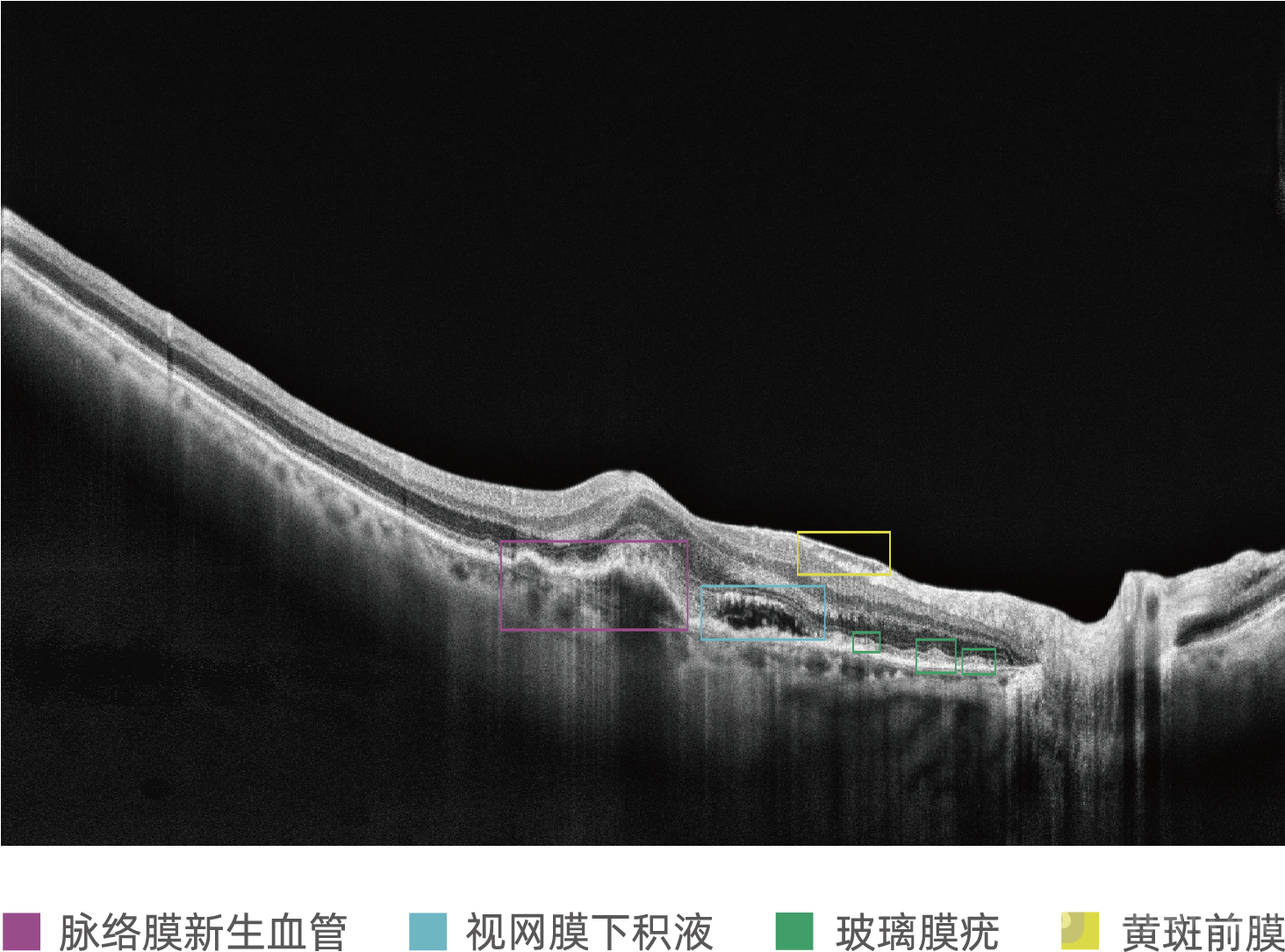
Case 2
Clinical trial results show that MIAS-3000 has a sensitivity of 95.5% (95% CI: 92.5%-97.5%) and a specificity of 92.1% (95% CI: 89.6%-94.2%) at the single-person, single-eye level, with an auxiliary diagnostic consistency rate of 94.7% (95% CI: 93.5%-95.7%). Subgroup analysis shows that in the clinical trial, the sensitivity and 95% confidence interval for non-neovascular AMD (dry) was 95.31% (91.96%, 97.55%), and for neovascular AMD (wet), the sensitivity and 95% confidence interval was 98.04% (89.55%, 99.95%). It also significantly reduces image reading time. All clinical indicators are ideal and can bring real benefits to the applicable population. MIAS-3000 can provide doctors with high-quality auxiliary diagnostic opinion support, effectively reduce the risk of missed diagnosis and misdiagnosis, and promote the extension of high-quality ophthalmic medical resources.
The Light of Inclusiveness: Making AI Diagnosis Accessible Everywhere It's Needed
The approval of MIAS-3000 represents not only a technological breakthrough in ophthalmic AI but also an accelerator for healthcare accessibility. With over 700 million people in China suffering from eye diseases, age-related macular degeneration and diabetic retinopathy have become the leading causes of blindness due to the deepening degree of an aging society and changes in lifestyle. Given the insufficient total amount and uneven distribution of ophthalmic resources in China, both OCT operation and image interpretation heavily rely on experienced ophthalmologists, resulting in seriously inadequate coverage of OCT screening for fundus diseases at grassroots levels. Through a "software-hardware integration" strategy, Big Vision Medical has embedded an AI diagnostic system into fully automatic OCT devices, lowering operational barriers and costs, enabling hospitals in border regions, county-level and grassroots hospitals, optometry centers, and physical examination centers to carry out precise fundus screening.
In terms of national policy guidance, the approval of MIAS-3000 is timely. Not long ago, the State Council released the "Opinions on Deeply Implementing the 'Artificial Intelligence+' Action" (State Council Document [2025] No. 11), and the Ministry of Commerce and the People's Government of Jiangsu Province jointly issued the "China (Jiangsu) Pilot Free Trade Zone Biomedical Industry Full Chain Open Innovation Development Plan". These documents explicitly proposed to "explore the pilot purchase service of artificial intelligence medical imaging auxiliary diagnostic technology, and expand the applicable scope of existing medical service price items such as outpatient diagnosis to include the introduction of auxiliary diagnostic technical services". This will open a breakthrough for the long-standing issue of charging in the medical AI industry and significantly promote the implementation of medical AI. As the world’s first medical OCT auxiliary diagnostic system to obtain Class III certification, MIAS-3000 has undergone rigorous review by the National Medical Products Administration for its technical parameters and clinical validation processes, making it a core AI tool for ophthalmic clinical diagnosis. By providing integrated services of "OCT examination + AI-assisted diagnosis," hospitals can improve diagnostic efficiency while achieving reasonable returns, forming a sustainable operating model that collectively builds an intelligent management ecosystem covering the entire cycle of eye health from "screening-diagnosis-treatment-follow-up".
"We have always believed that the ultimate goal of medical AI is to create value for human health," said Professor Chen Xinjian, founder and chairman of Big Vision. "The approval of MIAS-3000 is the best affirmation of our team's commitment to innovation and the integration of medicine and engineering. In the future, Big Vision will continue to fulfill its corporate mission of 'early detection of every pair of eyes with problems and providing the best treatment solutions' by empowering through AI, painting a beautiful picture of human eye health."