

Iantrek Files for IPO Following $42M Series C to Commercialize AlloFlo Uveo, a First-in-Class Biointerventional Therapy Targeting the Uveoscleral Outflow Pathway in Glaucoma

Iantrek
Ophthalmic Medical Device Developer
Glaucoma is the most common irreversible cause of blindness globally. As a multifactorial disease, there is currently no cure. Data shows that there were approximately 76 million glaucoma patients worldwide in 2020, and this number is expected to increase to 111.8 million by 2040.
A large number of patients are still trapped in a triple dilemma of treatment—poor lifelong medication adherence, diminishing laser treatment efficacy over time, and traditional surgeries prone to causing infections or damaging conjunctival tissue, leading to countless individuals gradually losing their vision amidst these challenges.
At a time when this treatment demand is in urgent need of breakthrough, Iantrek, an ophthalmic medical technology company, has recently announced new progress. The company declared the completion of a $42 million Series C financing round, jointly led by USVP and aMoon Fund. Reportedly, these funds will be mainly used to promote the global commercialization of the company's pioneering bio-interventional therapy — AlloFlo Uveo technology.
1Starting from Clinical Pain Points: Restoring Natural Pathways, Not Reconstructing
"Traditional surgeries are either highly invasive or rely on already damaged pathways, so we wanted to create a gentler solution." The entrepreneurial vision of Tsontcho Ianchulev, MD, founder of Iantrek and a Harvard ophthalmologist, stems from his insight into the persistent dilemma in traditional glaucoma treatments: either relying on the already diseased drainage pathway or creating a new one through surgery. The former has limited potential for lowering pressure, while the latter can easily lead to complications such as low intraocular pressure and conjunctival erosion, potentially leaving patients without future treatment options.
The team refocused their attention on the physiological structure of the eyeball itself. The human eye naturally has two aqueous humor drainage pathways—the trabecular meshwork and the uveoscleral pathway. Among them, the trabecular meshwork can become blocked due to aging or disease, while the uveoscleral pathway gradually narrows only with age. Based on this discovery, Iantrek established its core research and development direction:Activation of the uveoscleral pathway, rather than repair of damaged pathways or creation of new ones.
This idea eventually materialized as AlloFlo Uveo—a smart stent capable of transforming from "liquid to gel" inside the body. Unlike traditional metal or plastic stents, it is made from a special biomaterial that adapts to the characteristics of ocular tissues: after being injected into the eye, it quickly takes shape, gently propping open the blocked uveoscleral pathway, avoiding trauma while preserving the eye’s original physiological structure.
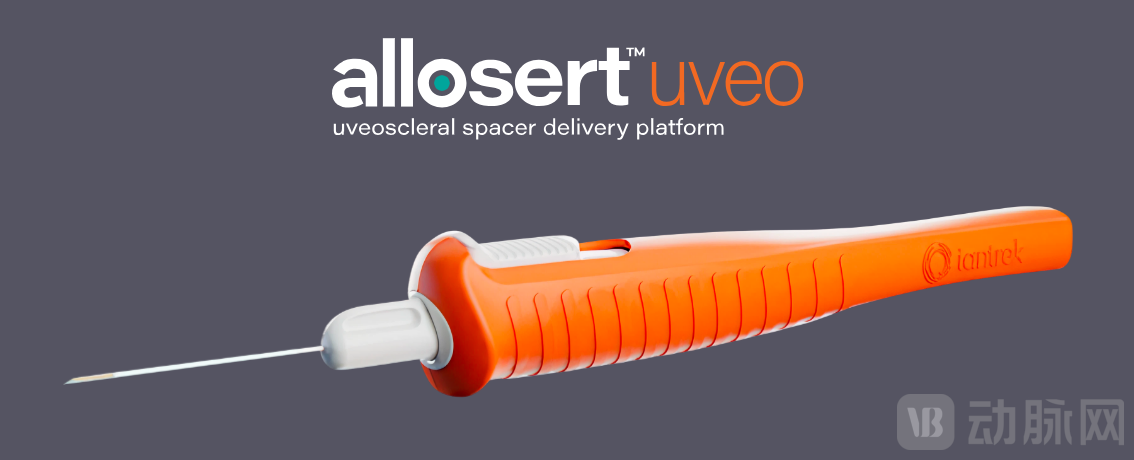
AlloFlo Uveo Product Diagram Source: Iantrek Official Website
2"Molecular-Level Engineering of 'Intelligent Phase Change' for Precise Support"
The core competitiveness of AlloFlo Uveo lies in the intelligent feature of "liquid injection, in vivo shaping," which is backed by the precise integration of biomedical engineering and materials science.
At the molecular design level, its core is an "amphiphilic" biopolymer copolymer with both hydrophilic groups and hydrophobic/thermosensitive groups present on the molecular chain. At 25°C room temperature, the molecule is dominated by hydrophilic groups, and the material is in a transparent liquid state, allowing for easy delivery through extremely fine catheters; once inside the 35°C intraocular environment, the thermosensitive groups trigger hydrophobic interactions, causing the molecular chains to rapidly entangle and crosslink within seconds, forming a three-dimensional network gel.
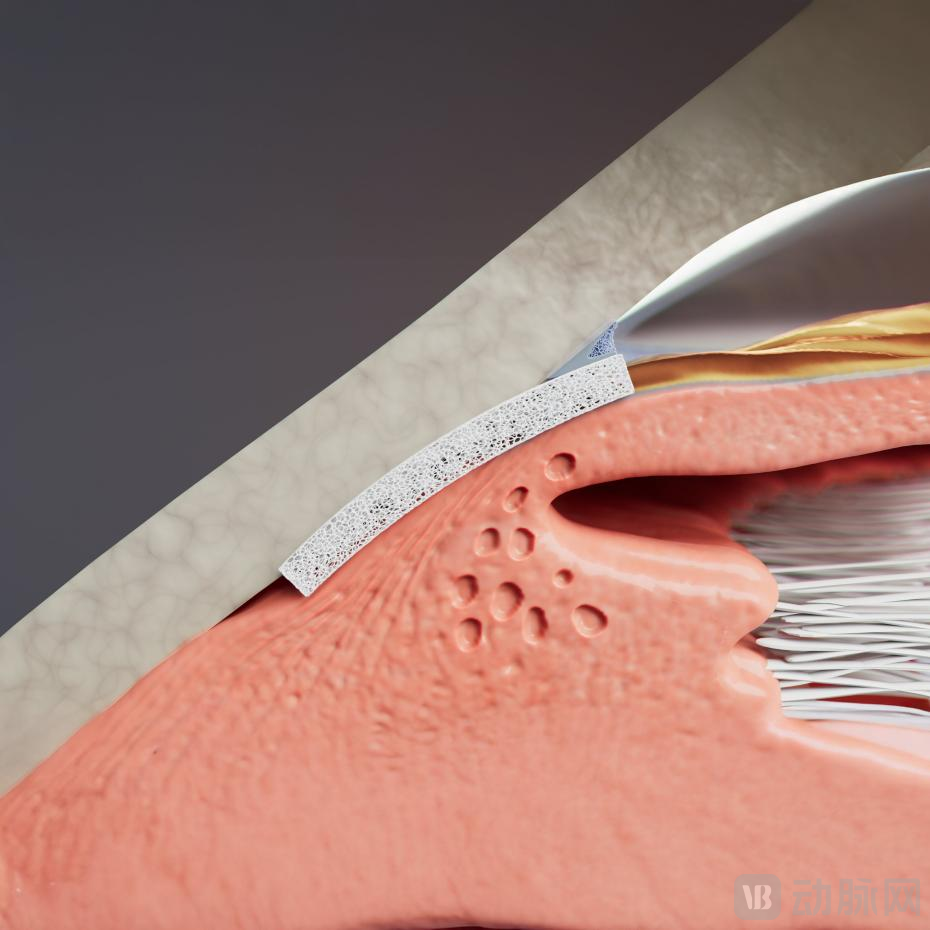
AlloFlo Uveo Molecular Material Diagram Source: Iantrek Official Website
To ensure safety and stability, the R&D team also precisely controlled the phase transition critical temperature (LCST) within 32-34°C, ensuring no accidental phase change occurs during storage and transportation, while enabling instant activation once inside the body.
In engineering, the team precisely matched the elastic modulus (softness and hardness) of the formed gel to the surrounding sclera and ciliary body tissues by adjusting the polymer molecular weight and crosslink density. This achieves flexible support that is strong enough to resist intraocular pressure and keep the passage open, yet soft enough to avoid tissue damage.
At the same time, the porous structure of the gel can not only ensure the smooth drainage of aqueous humor, but also block excessive cell proliferation, reducing the risk of pathway re-obstruction by design.
Currently, the material has passed the full set of ISO 10993 biocompatibility tests, and no rejection reactions have been found in clinical applications. Its non-degradable characteristic aims to provide permanent support, avoiding the drawbacks of efficacy attenuation associated with absorbable materials.
3From Liquid Stents to Ophthalmic Treatment Ecosystem: Building a Multi-Product Matrix
For a long time, the field of minimally invasive glaucoma treatment has been dominated by three types of technologies: trabecular meshwork stents (such as iStent), Schlemm's canal stents (such as Hydrus), and subconjunctival shunts (such as XEN). The emergence of AlloFlo Uveo has pioneered a fourth technological pathway — the uveoscleral pathway reconstructor.
In terms of technological breakthroughs, the advantages of AlloFlo Uveo are reflected in multiple dimensions. Compared with trabecular meshwork/Schlemm’s canal devices, it does not rely on potentially diseased anatomical structures, offering greater theoretical pressure-lowering potential, while preserving 100% of conjunctival tissue, thus retaining all future treatment options for patients. Compared with subconjunctival shunts, as an intraocular procedure, it does not require penetrating the eyeball wall to create a fistula, fundamentally avoiding risks such as conjunctival erosion and hypotony, making the surgery safer and postoperative management simpler.
The latest clinical study published in September 2025 further validates its value: after treatment, intraocular pressure (IOP) in 51 patients with refractory open-angle glaucoma decreased from a baseline of 25.7 mmHg to 15.4 mmHg, representing a 40% reduction, while medication usage was reduced by 42%. A concurrent systematic review covering 4,000 eyes also confirmed that this uveoscleral pathway enhancement technology achieved breakthroughs in efficacy, safety, and durability.
More crucially, its safety and minimally invasive characteristics significantly advance the timing of surgical intervention—previously, doctors had to wait until the patient's condition was severe before recommending invasive surgery. Now, early intervention can be achieved through AlloFlo Uveo, fundamentally preserving the patient’s visual function reserve and preventing irreversible vision loss.
As the first commercialized product of Iantrek's intelligent biomaterials platform, the success of AlloFlo Uveo is not the end point, but rather the beginning of the company’s efforts to build a multi-product portfolio — Iantrek’s ambition goes far beyond creating a single star product. Instead, it aims to leverage its core technology platform to develop a therapeutic ecosystem that covers multiple indications and operates in synergy.
Currently, AlloFlo Uveo has entered the commercialization phase and is scheduled for an official launch at the 2025 American Academy of Ophthalmology Annual Meeting. Its next-generation product, AlloSert, has also completed its first human trial and is expected to be launched in 2026. Compared to the first-generation product, AlloSert is expected to possess enhanced mechanical properties and superior drug-loading capabilities, further expanding its technical application scenarios.
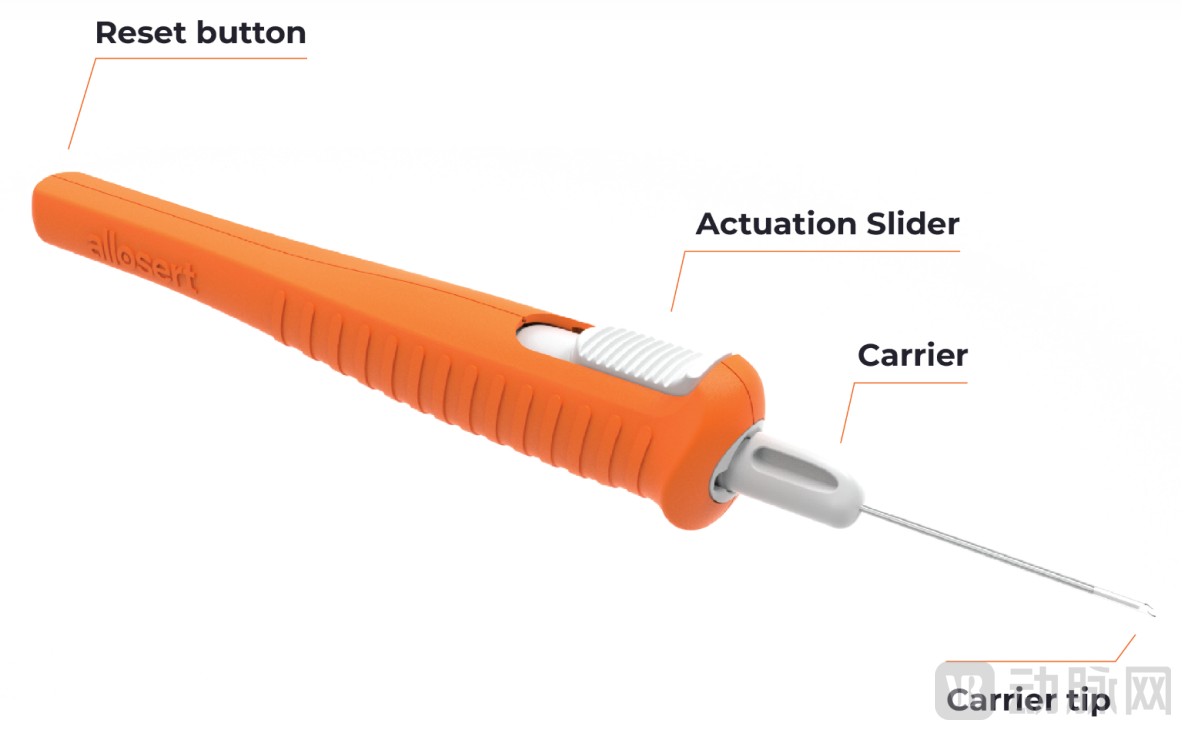
AlloSert Product Diagram Source: Iantrek Official Website
To enhance the precision and safety of AlloFlo Uveo's treatment effects, Iantrek has also developed the Cyclopen ergonomic instrument system. This system enables the precise implantation of structural reinforcement materials through micro-cannulas, achieving controlled and long-lasting ciliary body separation. It paves the way for AlloFlo Uveo by accurately opening the uveoscleral outflow pathway in advance, ensuring the safety and efficacy of subsequent biomaterial implantation.
The C.Rex system, on the other hand, is the key "synergistic force" in the product portfolio. As the only MIGS (Minimally Invasive Glaucoma Surgery) technology currently registered with the FDA that brings innovation to goniotomy, its core advantage lies in the use of a super-elastic, shape-memory nitinol tip, enabling 180-360 degree circumferential ablation goniotomy.
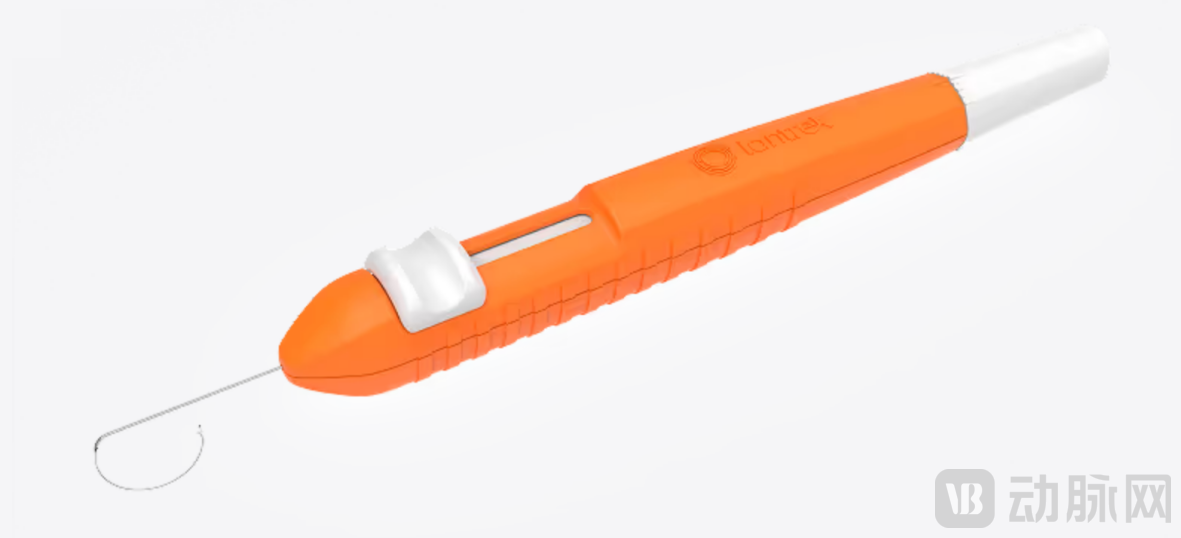
C.Rex System Product Diagram Source: Iantrek Official Website
This design breaks through the limitations of traditional intraocular interventions (such as micro-stents, lasers, and non-implant devices), which can only target local segments of the inner wall of Schlemm's canal, maximizing the treatment of diseased trabecular meshwork. This system, together with AlloFlo Uveo, which focuses on the uveoscleral pathway, forms a "dual-pathway treatment" strategy that can simultaneously clear the main pathway (trabecular meshwork) and the alternative pathway (uveoscleral) of the eyeball, thereby covering a wider range of patients.
In January 2025, Iantrek announced the completion of the first batch of clinical applications using the C.Rex minimally invasive interventional system to enhance the Schlemm's canal outflow pathway in glaucoma surgeries, marking the official launch of pre-market activities for this technology, which has now entered the early commercialization stage.
Moreover, the company's platform expansion path has become clear.
On the one hand, the company has developed the "pharmaceutical-device combination" product AlloFlo Uveo+, which loads anti-fibrotic drugs (such as MMC) or anti-VEGF drugs into a polymer matrix to achieve the dual effects of stent implantation and sustained drug release, actively suppressing postoperative scarring and further improving long-term success rates.
On the other hand, the company is expanding its indications. Based on the same material platform, Iantrek is developing minimally invasive products for retinal hole closure and targeted drug delivery formulations for the posterior segment of the eye. Early research has shown positive progress, with the first human trials expected to commence in 2026.
4Global Competition for a More Efficient, Minimally Invasive, and Personalized Glaucoma Treatment Market
Currently, Iantrek adopts a "breakthrough in the U.S., global follow-up" registration strategy, relying on the FDA Breakthrough Devices Program to accelerate approval while advancing European CE marking and Chinese NMPA registration, thereby simultaneously expanding into international markets.
In addition, Iantrek has established collaborations with over 200 top glaucoma experts worldwide to promote technical concepts through surgical demonstrations and case discussions. The European Glaucoma Society has incorporated the enhanced uveoscleral pathway technology into its 2025 clinical guidelines, recommending it as Level A evidence.
With AlloFlo Uveo entering the commercialization phase, the current glaucoma treatment market exhibits a dynamic landscape characterized by multi-layered competition and diverse technological pathways.
Multinational pharmaceutical and device giants such as Alcon, Allergan, Bausch + Lomb, and Johnson & Johnson Vision dominate the market with their extensive product portfolios and robust marketing networks; specialized MIGS companies like Glaukos (whose iStent was the first FDA-approved MIGS device), Santen, and New World Medical focus on the niche field of minimally invasive surgical devices; while local enterprises represented by Tianjin Ushi in China primarily rely on generic drugs and cost-performance advantages to develop within regional markets.
The future glaucoma treatment market may present a complementary coexistence pattern of drug therapy and MIGS, applied synergistically based on specific patient conditions. With the acceleration of technological integration, the deep fusion of biomaterials, laser technology, precision medicine, etc., with glaucoma treatment will lead to the development of more efficient, minimally invasive, and personalized treatment solutions. Iantrek's platform strategy aligns perfectly with this trend, enabling it to maintain a long-term competitive advantage in the market.
From the precise control of molecular design to the humanistic care in clinical applications, Iantrek is reconnecting glaucoma patients with a clear world through technological innovation. As its product pipeline gradually comes to market, this company, founded just a few years ago, will bring a new future of "early intervention, safe pressure control" to global glaucoma treatment.